
Last updated November 17, 2026
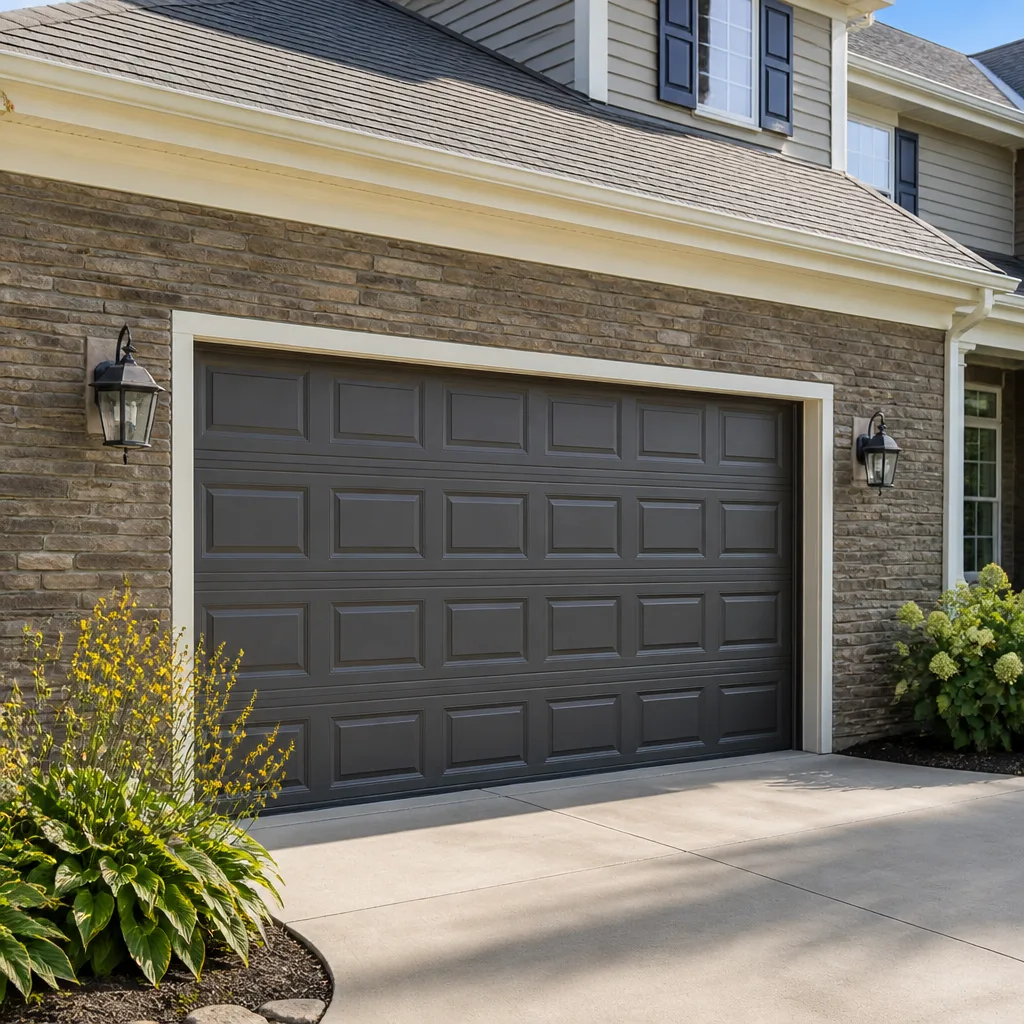 Raised-panel steel
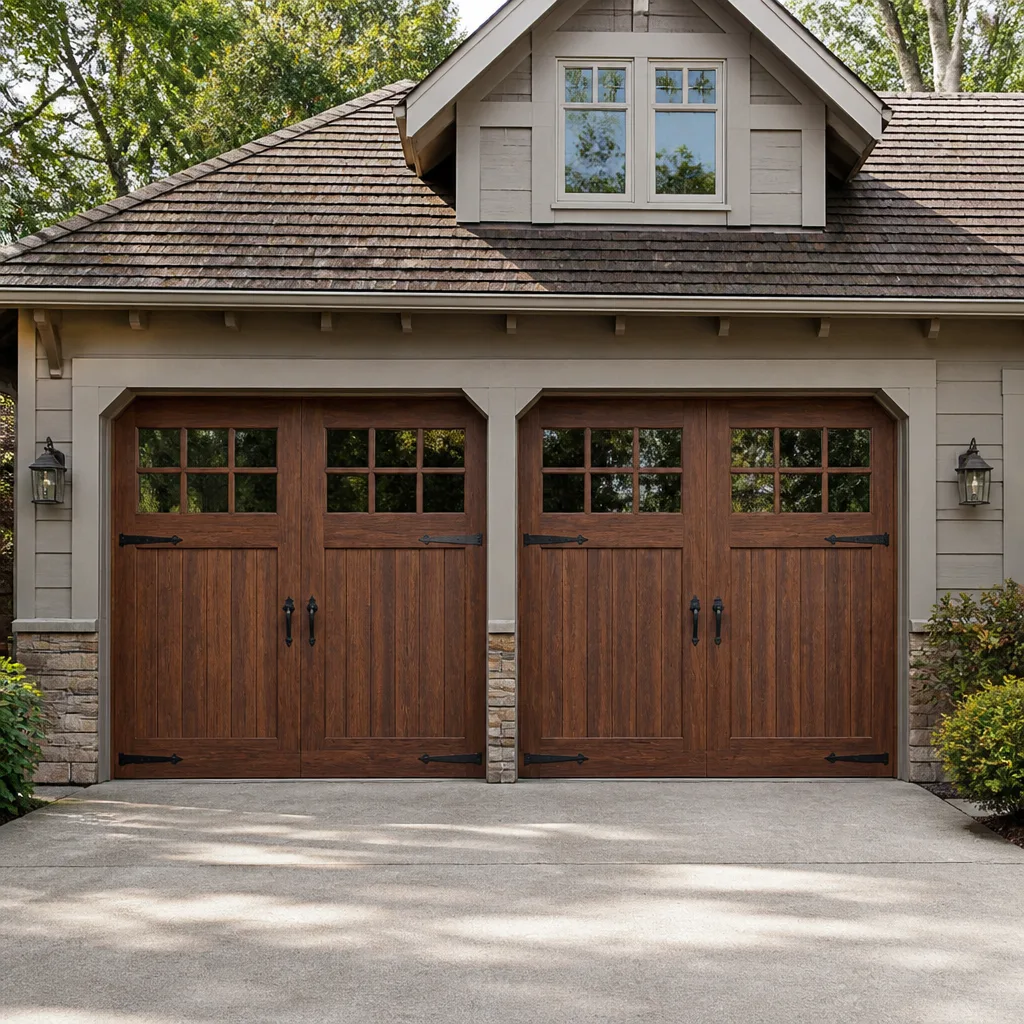 Carriage house
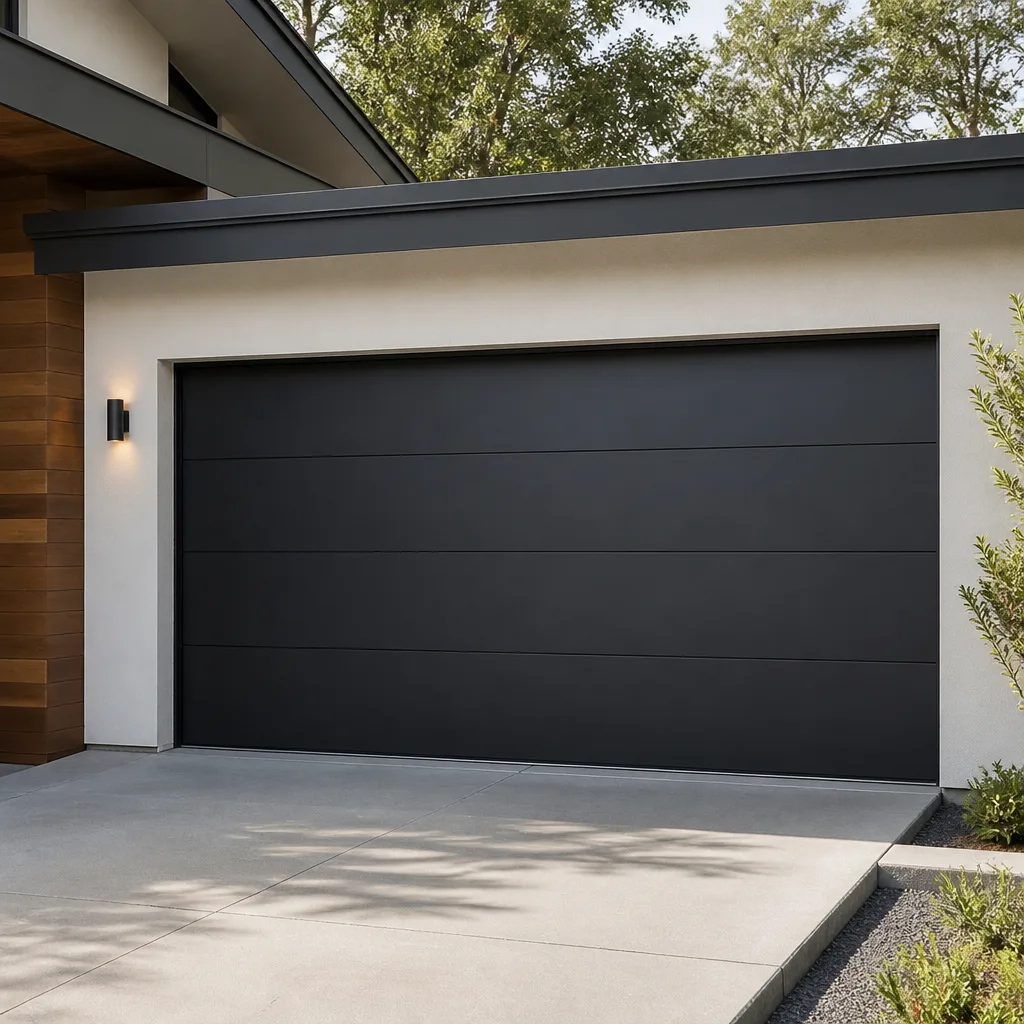 Modern flush
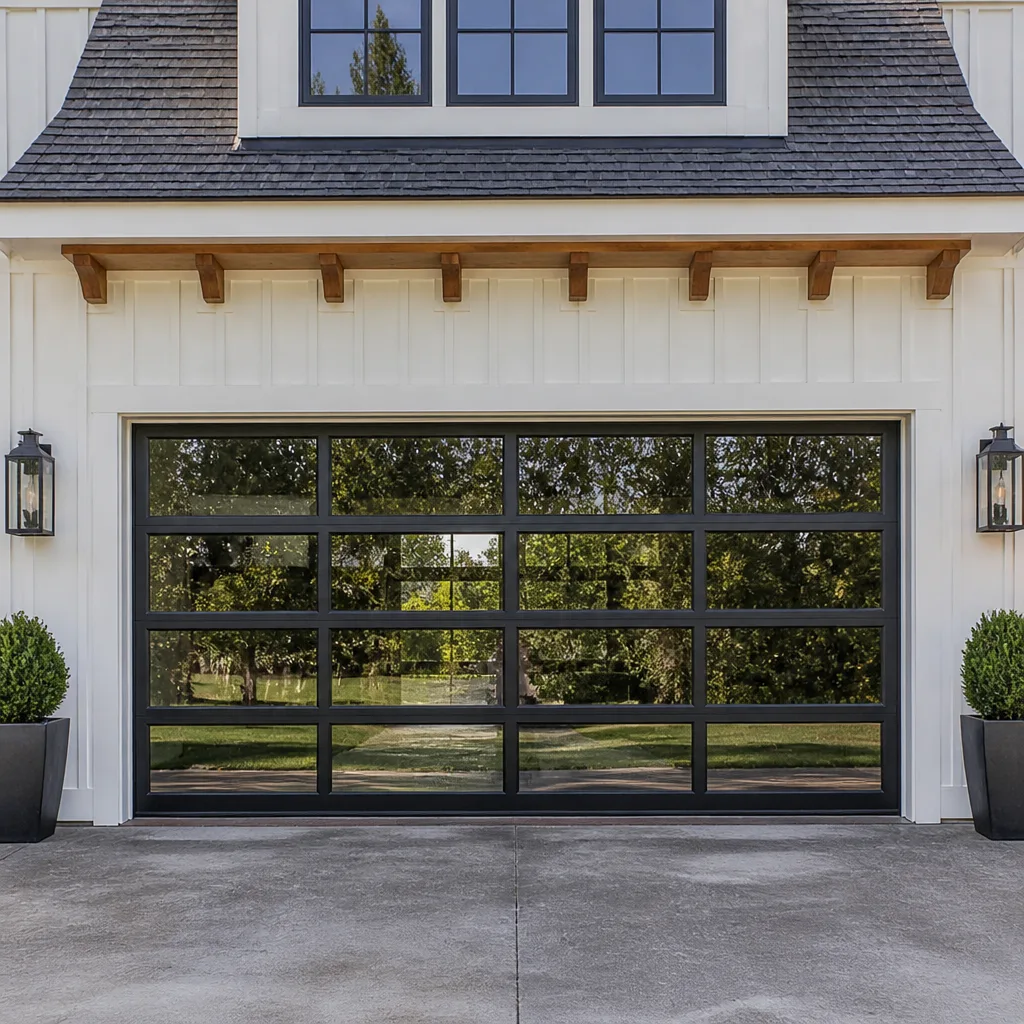 Full-view glass
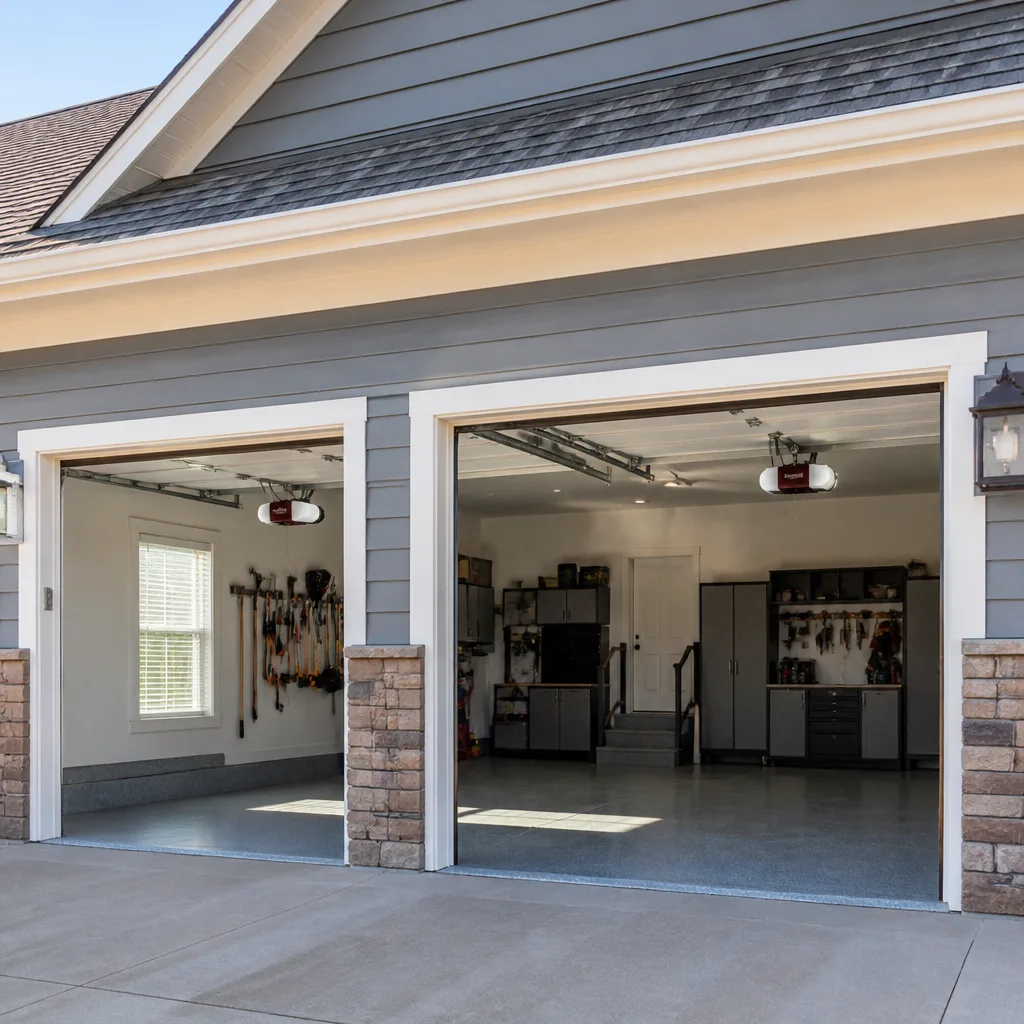 LiftMaster openers
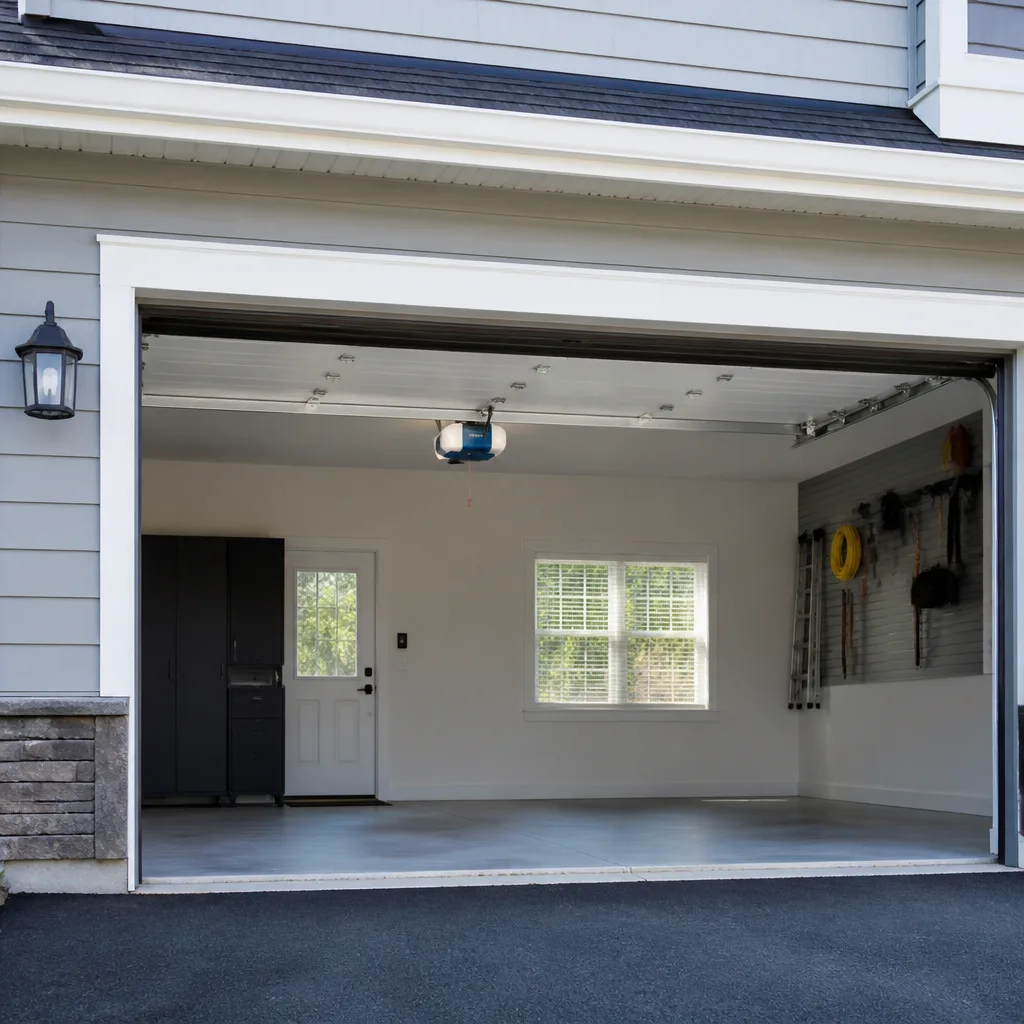 Chamberlain openers
Full 25-point door and opener safety check with every visit - springs, cables, rollers, tracks, and your LiftMaster or Chamberlain opener included
You get a price before we start. It does not change when the pro arrives.
Get your free estimateGarage Door Warning Signs: An Enterprise Homeowner’s Reference Guide
The most expensive repair call we make isn’t an emergency call. It’s the one where the homeowner heard the door grinding for two months, figured it would hold a little longer, and now needs a full spring assembly, two new tracks, and a cable drum because the whole system finally collapsed instead of coasting to a stop. That’s a $1,600 job where a $210 tune-up would have caught it. Garage doors don’t quit without warning. They telegraph for weeks before they fail, and the signals are easy to wave off until the door won’t move and your car is sealed inside at 7 a.m. This guide covers the sounds, the visuals, the opener behavior, and the safety test most folks have never run. Read it from an Enterprise perspective, because desert heat changes the timeline on all of it.
Quick Answer
The most common garage door warning signs in Enterprise are a grinding or popping sound, a door that looks slightly crooked, an opener that reverses on its own or needs two button presses, daylight showing under the bottom seal, and a door that fails the safety reversal test. Any one of these means the door is telling you something. A snap, grind, or pop means stop using it and get eyes on it now. In our experience, the dry desert air and summer heat over here speed up wear on springs, rollers, and seals compared to wetter climates, so those early warnings arrive a little sooner than a homeowner might expect.
Styles & brands we work with
- Raised-panel steel
- Carriage house
- Modern flush
- Full-view glass
- LiftMaster openers
- Chamberlain openers
Table of Contents
- What the Sounds Are Telling You: Squeak, Grind, or Pop
- Visual Warning Signs Homeowners Misread
- Opener Behavior Flags, Ranked by Danger
- The Floor Gap Test: Cosmetic or Costing You Money?
- The Safety Reversal Test Almost Nobody Runs
- Spring Cycles, Age, and the Enterprise Heat Factor
- Common Mistakes to Avoid
- When to Call a Professional
What the Sounds Are Telling You: Squeak, Grind, or Pop
Your ears are the cheapest diagnostic tool you own. The trick is knowing which sound is a “spray it and go back inside” and which is a “stop right now.” Here’s how we break it down when someone calls and tries to describe the noise over the phone.
The squeak
A high, even squeak that shows up as the door goes up or down is usually metal-on-metal friction at the hinges, rollers, or the track. It’s the most benign of the three. A little white lithium grease on the hinges and roller stems tends to quiet it down. If the squeak keeps coming back within a month, though, that’s a worn roller or a dry bearing talking, and grease is just masking it. Don’t use WD-40 as a long-term fix; it cleans and displaces, it doesn’t lubricate metal that’s grinding itself.
The grind
A low, gravelly grind means a roller has stopped rolling and is now dragging through the track, or a bearing has seized. Left alone, a flat-spotted roller will chew a groove in the track and take the door out of alignment. That turns a $15 roller swap into a track replacement. Grinding is your cue to stop cycling the door and have someone look at it.
The pop or snap
This is the one that should stop you cold. A sharp pop, sometimes followed by a bang and the door hanging partway down, usually means a torsion spring has broken or a cable is about to let go. A door is around 200 pounds riding on two springs, and when one lets go it stores that energy in a hurry. Don’t run the opener to “see if it still works.” Don’t get under the door. Call us, and we’ll talk through it with you on the spot.
If you’re not sure which sound you’re hearing, our Garage Door Repair in Enterprise team can tell you in about thirty seconds over the phone.
Visual Warning Signs Homeowners Misread
A door that looks a little crooked is a bigger problem than a door that’s just slow. That’s the counterintuitive part most folks get wrong. Slow is annoying. Crooked is dangerous and getting worse.
Here’s what crooked actually means. If the gap at the bottom of the door is wider on one side than the other, the door has gone out of level, and the usual culprits are a stretched or frayed cable on one side, a failing spring, or a bent track pulling the door off its line. When one side is doing more work than the other, the load shifts onto a single point, and that point fails. A door that’s been slightly crooked for a few weeks is a door one cycle away from a cable snap.
Other visuals worth a look:
- Bent or kinked track. Run your hand along the vertical track. A kink means the roller can’t travel smoothly and the door will bind.
- Frayed cables. The cables run along the sides of the door under tension. Any fraying, kink, or rust streak on the drum is a stop-use sign.
- Broken spring. On a torsion setup there’s a visible gap in the spring coil above the door. On extension springs along the sides, the spring will be obviously stretched out. A broken spring means the door won’t lift safely.
- Loose hinges and wobbly panels. Panels that flop or hinges that pull loose throw the door out of square.
- Sagging top section. A bowed top panel often means the opener is pulling against a binding door, and something is about to give.
We’ve walked out to plenty of Enterprise doors that looked “mostly fine” from the driveway and had a cable down to a few strands on one side. The homeowner had no idea.
Opener Behavior Flags, Ranked by Danger
People blame the opener for almost everything. If the opener is straining, the problem is almost never the opener. It’s usually the door itself: a dry spring, a binding track, a bad roller. The opener is the messenger. But some opener behaviors are genuinely dangerous right now, and here’s the ranking, from “get it looked at” to “stop using it today.”
1. The door reverses for no reason (most dangerous)
If your door goes partway down, reverses, and heads back up with nothing in the way, and it keeps doing it, the safety sensors or the opener’s force setting have gone out of whack, or the door is binding and the opener thinks it hit something. That’s the opener’s brain deciding the door is meeting resistance, and it’s reversing to protect whatever it thinks is underneath. If the door is actually binding, the force is building against the panels and the spring. Have it checked before you cycle it again. This is the flag we treat as urgent.
2. Two button presses to close
If it takes two presses to get the door to go down, you or a previous owner has probably disabled the wall-mounted close control, or the sensor alignment is off. Programming a remote into the wrong channel, or a stuck wall button, can do it too. Less dangerous than a phantom reverse, but it usually means something isn’t communicating the way it should.
3. Runs slow or strains
A door that used to snap up in ten seconds and now drags out to twenty is telling you about your spring or your rollers. Slow isn’t a motor problem; it’s a load problem. The opener is working against more resistance than it was designed for. Catch this early and it’s a tune-up. Wait and the motor wears prematurely, and now you’ve got two repairs instead of one. A quick read on this is on our Garage Door Opener Repair & Installation page.
We work on LiftMaster, Chamberlain, Genie, Clopay, Amarr, Wayne Dalton, Craftsman, and Raynor, so whatever the brand on your opener, we’ve likely seen this exact behavior before. If the opener is original to the house, tell us the model and roughly how old it is when you call, and we’ll have a good idea what you’re looking at before we get there.
The Floor Gap Test: Cosmetic or Costing You Money?
Here’s a test you can run tonight. Close the door, then look along the bottom edge from the inside with the lights off during the day, or shine a flashlight along the floor from inside after dark. Any light leaking under the door is air leaking out of your house.
In Enterprise, that gap matters more than it does in a wet climate. Our summers are brutal, the afternoon wind kicks up desert grit, and every cubic foot of cooled air escaping under a bad seal is AC you’re paying to re-cool. A worn bottom seal also lets in plenty of sand, dust, and bugs, and over a summer it can leave grit in the tracks that scrubs your rollers. What looks like a cosmetic rubber strip is really the weatherproofing line for the whole garage, and up here a bad seal works harder against your power bill than most folks realize.
How to tell the two apart:
- Gap smaller than a quarter of an inch, even all the way across: the seal is probably fine, maybe a little flattened. Cosmetic.
- Ragged edge, chunk missing, or hardened and cracked rubber: replace it. Dry desert air bakes the rubber out.
- Gap wider on one side than the other: that’s the crooked-door problem from above, not a seal problem. Fix the alignment first; a new seal won’t stick to a door that’s out of level.
- The bead that holds the seal is cracked or pulling: the whole bottom section might need attention.
- Ground looks like it sank under one corner: a sunken slab will leave a gap no seal can close. Worth knowing before you spend money on rubber.
Replacing a bottom seal is one of the cheaper jobs on the whole door. It’s also one of the ones that pays you back the fastest in an Enterprise summer.
The Safety Reversal Test Almost Nobody Runs
Federal law has required an automatic reversal feature on garage door openers since 1993 (UL 325), which means unless your opener is somehow older than that, your door is supposed to stop and reverse when it meets an obstacle. Nearly every homeowner has never tested it. It takes a couple minutes and a 2×4, and it’s the single most important check on this list.
Here’s how it works:
- Stand on the inside of the garage and lay a 2×4 flat on the floor, centered under the close path of the door. A roll of paper towels works if you don’t have a scrap of wood sitting around.
- Press the wall button (not a remote from outside) and let the door come down onto the 2×4.
- The door should contact the 2×4 and reverse back up within a couple of inches. If it presses down and grinds to a stop against the board, your safety reversal is off or broken.
If the door doesn’t reverse, stop. Call us and don’t cycle the door while someone could be standing under it. Also run the photo-eye test: with the door open, wave an object in front of the sensors on either side of the door track. The opener should not accept a close command while the beam is blocked. If the sensors are misaligned, dirty, or dead, the door can close on a person or a pet, and no force setting will save you.
We check both of these on every repair job and will show you the result on the spot. If you haven’t run the test in a few years, do it tonight.
Spring Cycles, Age, and the Enterprise Heat Factor
Springs don’t wear out by calendar, they wear out by cycle. One cycle is one open and one close. Standard torsion springs are rated for something like 10,000 cycles. If your household opens and closes the door four times a day, that’s about seven years of cycles. If you’re opening and closing that door ten times a day, you’re looking at closer to three years. We count spring cycles the way you count tire miles, and when we look at your door we’ll tell you what’s likely left on yours so you can plan for it instead of getting surprised.
Enterprise makes this interesting. The dry air and big temperature swings, hot afternoons in summer and cool desert nights, work the springs harder. Heat expands and contracts the metal, the grease on the torsion bar dries out faster, and the door cycles a little more heavily than it would in a mild climate. The rubber on the bottom seal bakes and cracks sooner. Rollers dry out; bearings lose their grease. That means our citizens tend to see the wear signs a little earlier in their door’s life than homeowners in wetter parts of the country. Same door, same spring, different timeline, and the warning signs arrive sooner.
We’re not telling you to replace springs on a schedule. We’re telling you that if your door was installed in 2018 and you’re a two-car household where everybody comes and goes all day, the “it’s only seven years old” math might be off. Listen to the door.
A new door or a full opener install is a measured, scheduled job, not an emergency. If you’re leaning that direction, our Garage Door Installation in Enterprise page walks through the free measure and written price, and you’ll want Clopay, Amarr, or one of the other brands quoted with an actual number on paper before anything is ordered. Installation is a scheduled job; repair is where we move fast.
Common Mistakes to Avoid
We see the same handful of missteps over and over, and every one of them turns a small repair into a big one.
- Running the opener on a broken spring “to be sure.” With a spring gone, the motor is lifting the full weight of the door against a jammed mechanism. Running it stretches the cables and can bend the tracks. Leave the door down and call.
- Greasing everything in sight. The torsion bar, the spring, and the track’s flat surfaces should stay mostly dry. Grease the hinges and rollers, not the whole assembly, or you’ll collect desert grit in the grease and make a worse abrasive than you had.
- Ignoring the slightly crooked door. A door that’s out of level is the number one early warning we see before a cable snap. It’s a two-minute adjustment when you catch it and a track-and-drum job when you don’t.
- Skipping the safety reversal test. This one is a safety issue, not a money issue. Test it with a 2×4 and a sensor block every few months. A door that won’t reverse can hurt a kid, a pet, or a grandkid running under it.
- Letting the bottom seal bake for four summers. In Enterprise’s heat, a worn seal turns your garage into a wind tunnel for cooled air and desert dust. It’s one of the cheapest fixes on the door and one of the most ignored.
- Calling a national number and trusting the phone quote. The number quoted by a call center three states away and the number billed at your driveway are often two different things. Neither is written down. Get the price in writing before anyone starts.
- Fixing a symptom and not the cause. A door that “keeps stopping halfway” isn’t an opener problem. The opener is doing its job; the door is binding. Fix the door.
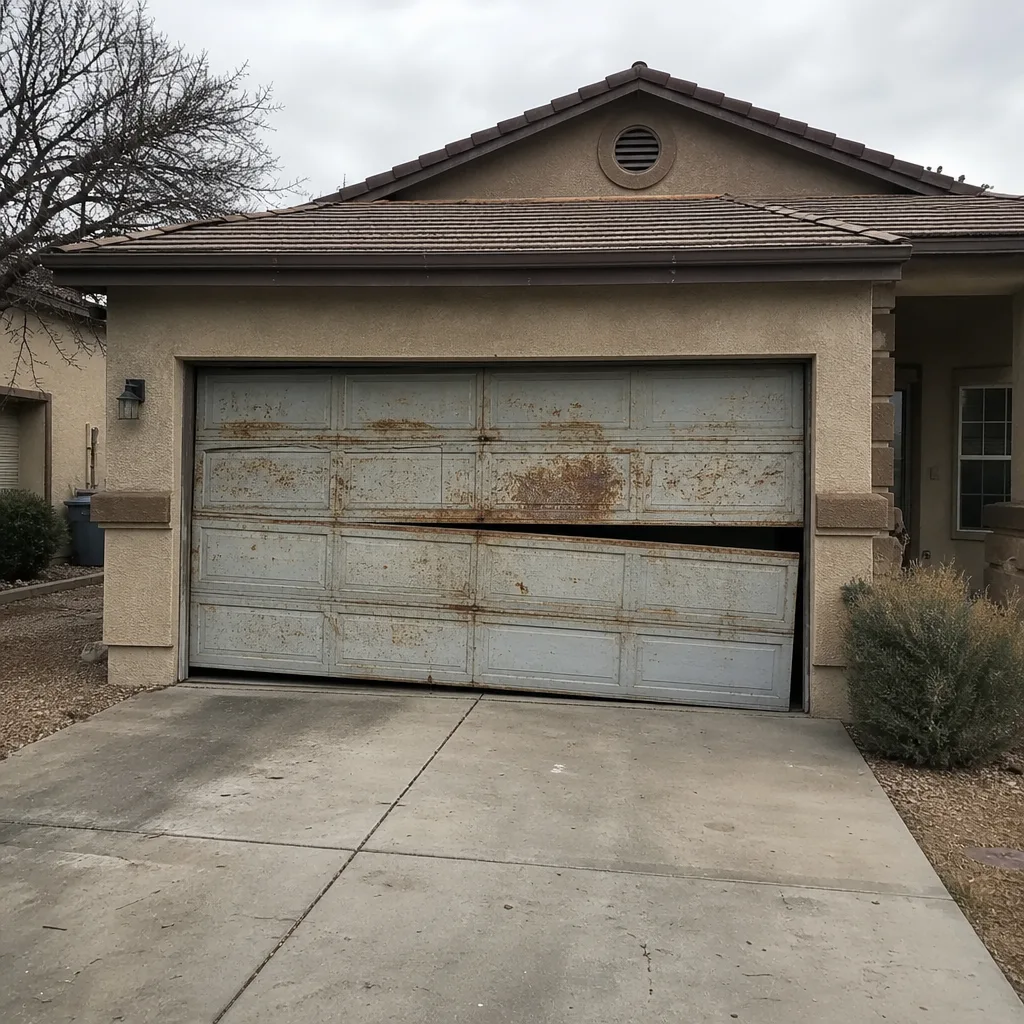
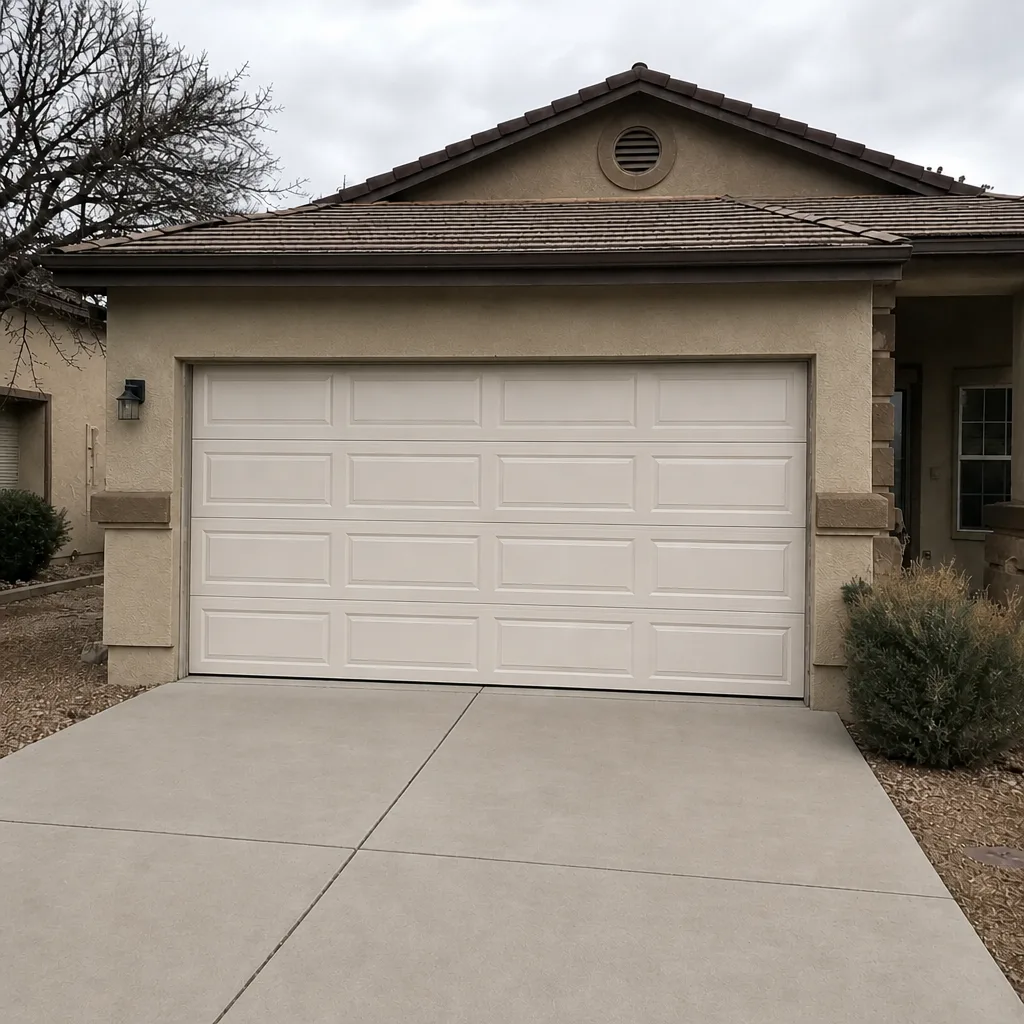
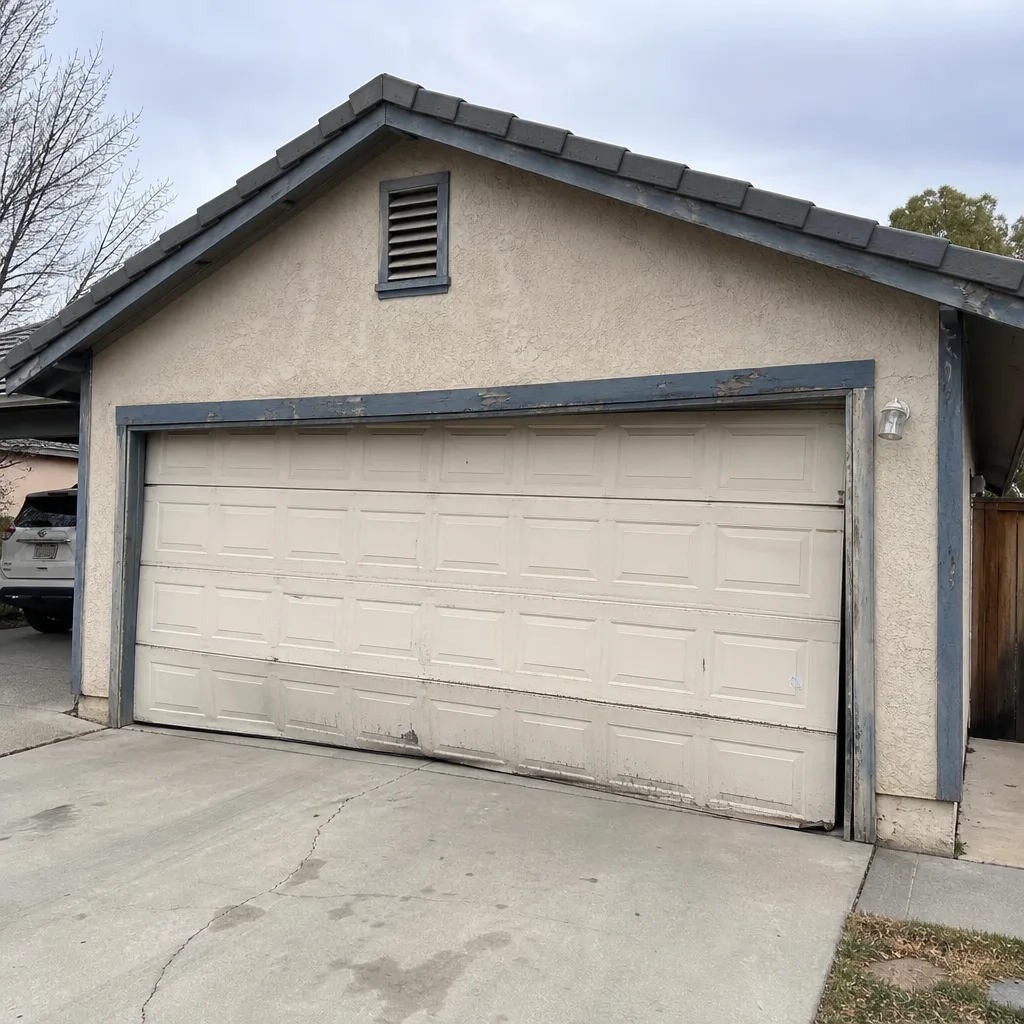
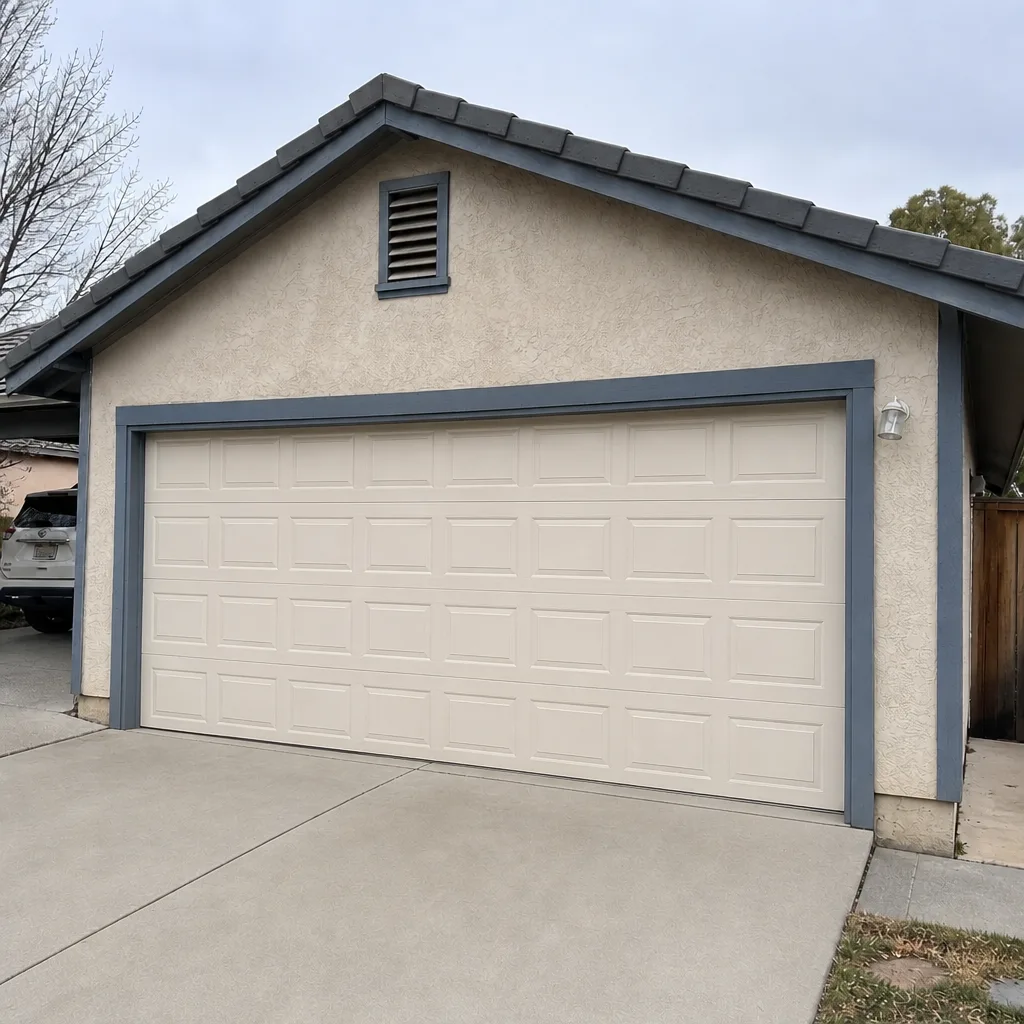
See the difference
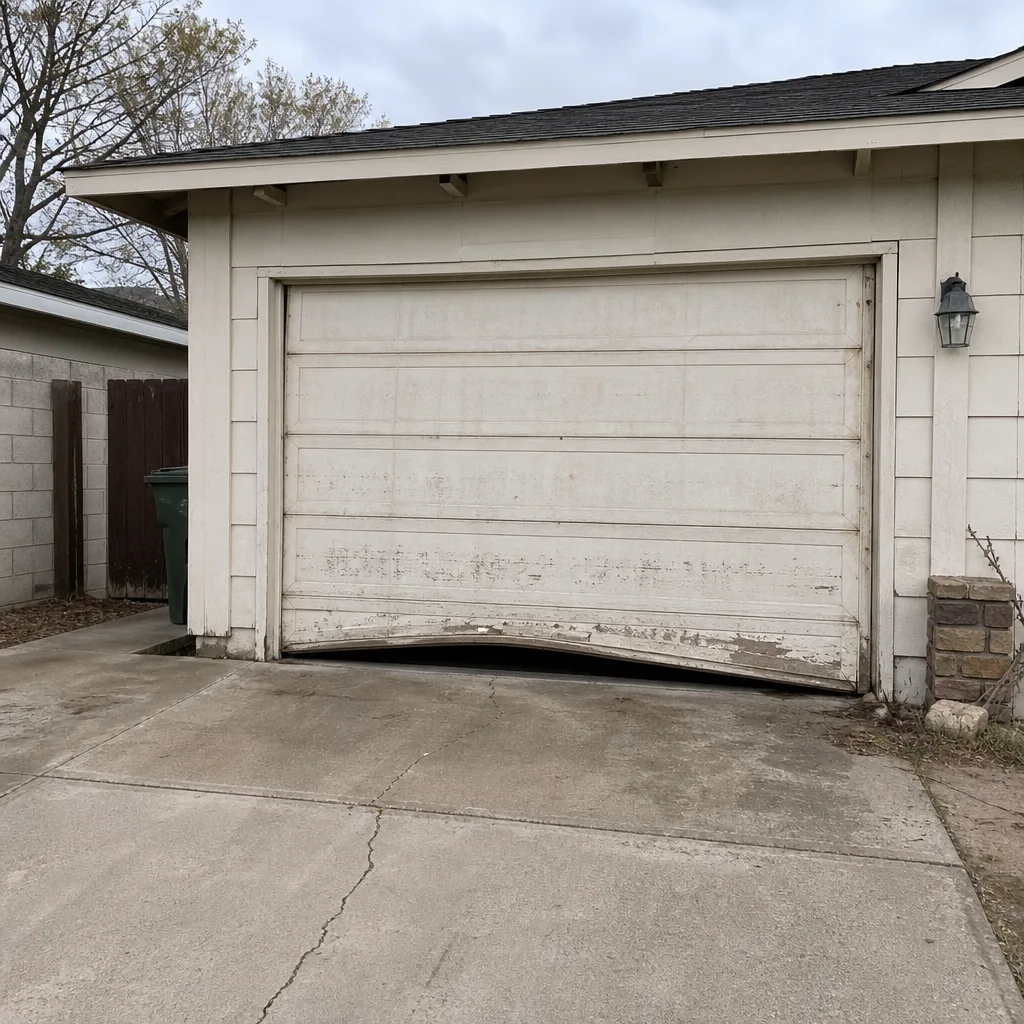 Before
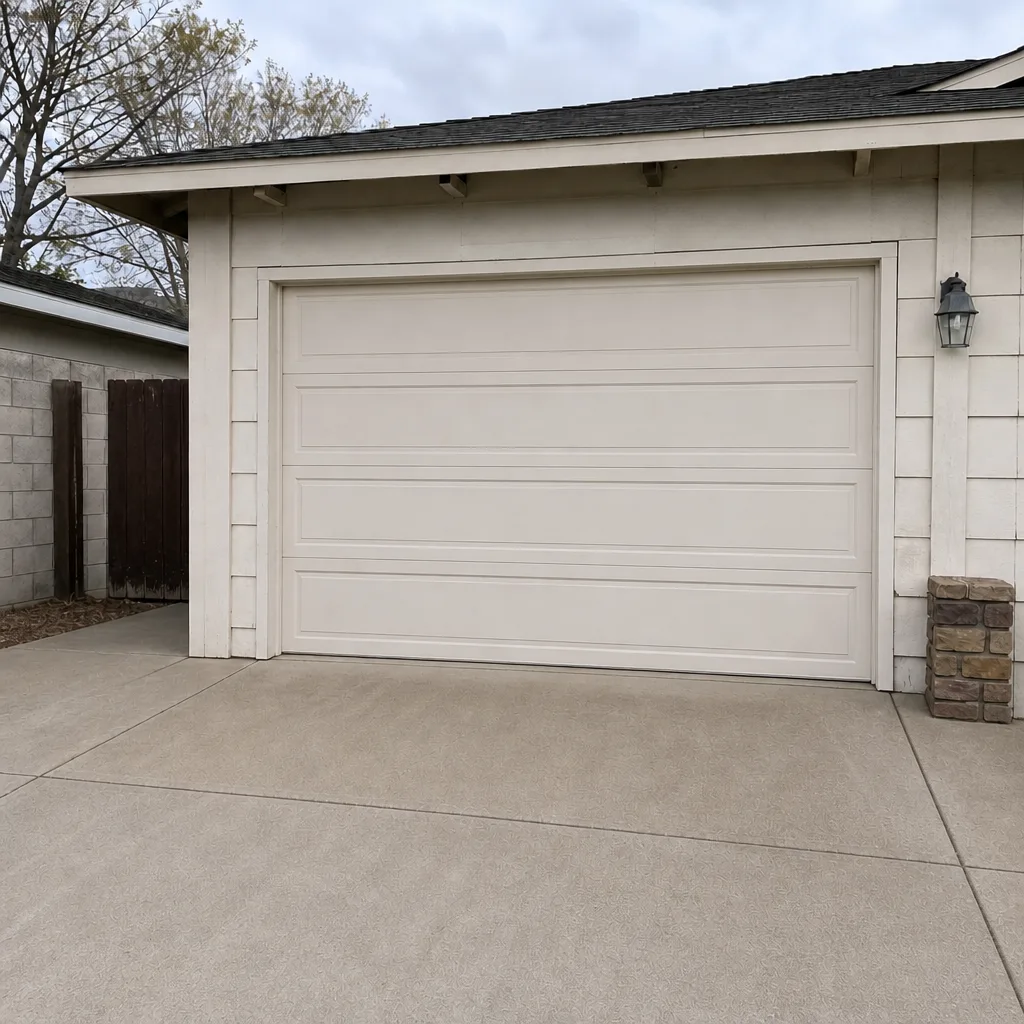 After
 Before
 After
 Before
 After
When to Call a Professional
Some of this you can do yourself: grease the hinges, check the floor gap, run the reversal test, look for daylight. But a few situations are not a maybe. Call us if you hear a pop or a snap, if the door is crooked, if a cable is frayed or down to a few strands, if a spring is visibly broken, if the door won’t reverse, or if the door reverses for no reason and keeps doing it. Those are the situations where a trained set of hands matters, because a garage door under full spring tension is genuinely dangerous stuff and nobody should be reaching for a pair of vice grips above their head.
Otto’s Garage Door Enterprise offers free estimates in Enterprise, and our technicians have up to 22 years of experience with every major brand. Call (833) 620-7107 and a live person answers, usually Otto himself. He’ll talk through what you’re hearing, quote the job on that call, and hold the number when he gets there. It’s the same price on the phone and in the driveway, and the 90-Day Done Right Promise is written on every invoice.
Frequently Asked Questions
The earliest signs are usually a new grinding or popping sound, a door that looks slightly crooked from the driveway, and an opener that’s begun to run slow or reverse on its own. In Enterprise’s dry heat, these show up a little earlier because the springs and seals wear faster. If you notice any of them, a short call about what you’re hearing will tell you whether it’s a tune-up or something more urgent.
Most repairs in this market land in a few common ranges. A tune-up and lube runs roughly $95 to $150. A broken torsion spring on a single-car door typically runs $220 to $340; doubles a bit more. Replacing a bottom seal is usually $90 to $180 depending on length. A full set of rollers runs $120 to $200. A new opener install runs $350 to $650 depending on the model. We quote the job on the phone and hold that number, and the price is agreed before any work starts. Call (833) 620-7107 for an exact quote; estimates are free.
We answer around the clock and yes, we make same-day emergency work a priority in Enterprise, including evenings when a spring lets go and your car is trapped inside. Call (833) 620-7107 and we’ll tell you honestly where you land in the schedule. Installation and new-door jobs are measured and scheduled, so those don’t fit a same-day promise.
No. We quote on the phone, we hold that number at the door, and you agree to it before we turn a wrench. If we get there and the scope is genuinely different than what we discussed, we’ll show you what we found and re-quote it before touching anything, never after. If you’ve got a written estimate from another outfit, our free second opinion will tell you whether it’s fair. We also take $40 off any repair over $200.
Lay a 2×4 flat on the floor under the closing door, then press the wall button. The door should hit the board and reverse within a couple of inches. If it grinds to a stop against the board, the reversal is off and the door isn’t safe to use until it’s fixed. The photo eyes are the other half of that test: wave an object through the beam and the door shouldn’t accept a close command.
Yes. The technicians who come out are background-checked, trained across all major brands including LiftMaster, Chamberlain, Genie, and Clopay, and the license number and address are published and on file, so you can check them before anyone pulls into your driveway. Every job carries the 90-Day Done Right Promise in writing. Call (833) 620-7107 if you’d like to verify before you book.
The Bottom Line
Garage doors don’t fail without warning. They grind, squeak, pop, lean, reverse, and leak daylight for weeks before they quit, and nearly every expensive repair we see started as a free warning sign the homeowner talked themselves out of. Learn the three sounds. Check the door for crooked before you check the opener. Run the safety reversal test with a 2×4. Look for daylight under the seal. And in Enterprise, where the desert heat eats springs and seals faster than most climates, listen a little closer than you think you need to. Catch it early and it’s a tune-up. Catch it late and it’s a whole system. The door is telling you which one you’re getting. If you hear it, call (833) 620-7107 for a free estimate, and we’ll give you the straight answer on what’s actually going on.
Written by the team at Otto’s Garage Door Enterprise.