
Last updated November 17, 2026
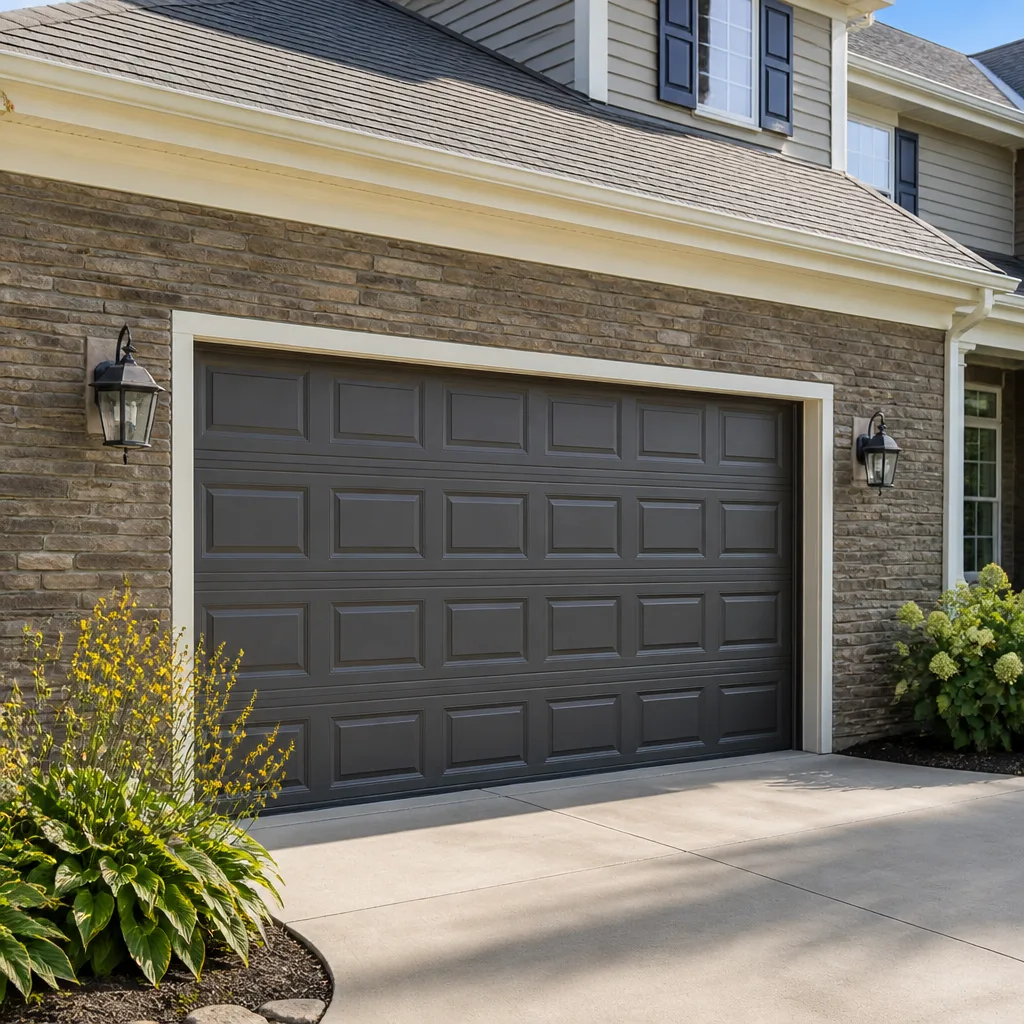 Raised-panel steel
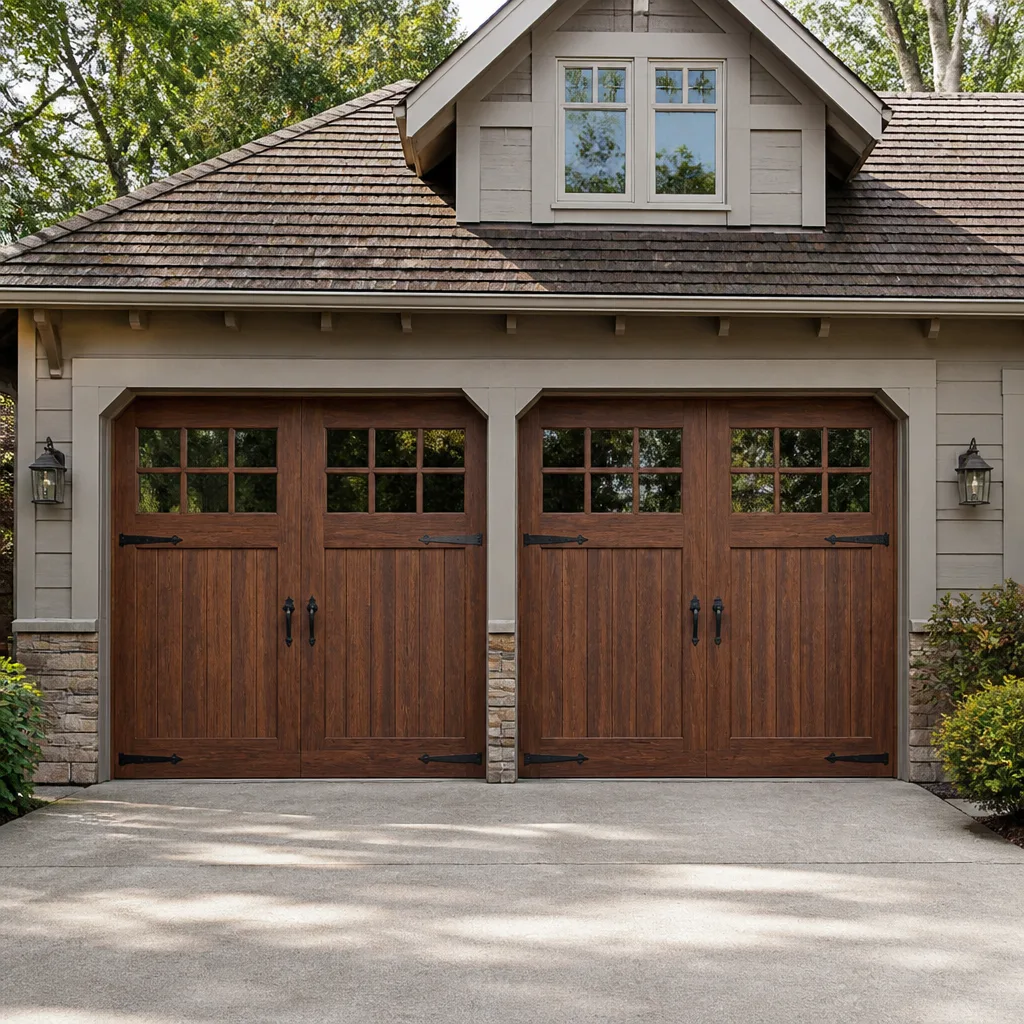 Carriage house
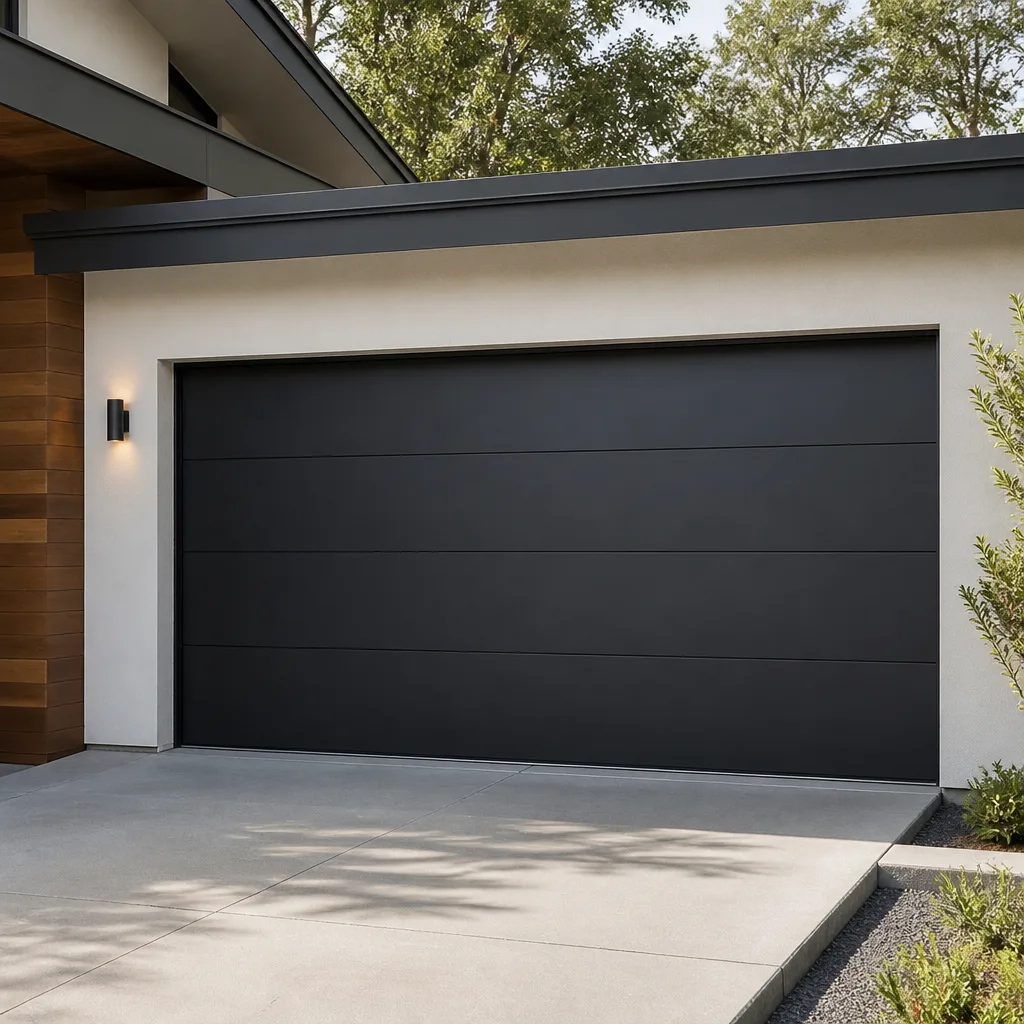 Modern flush
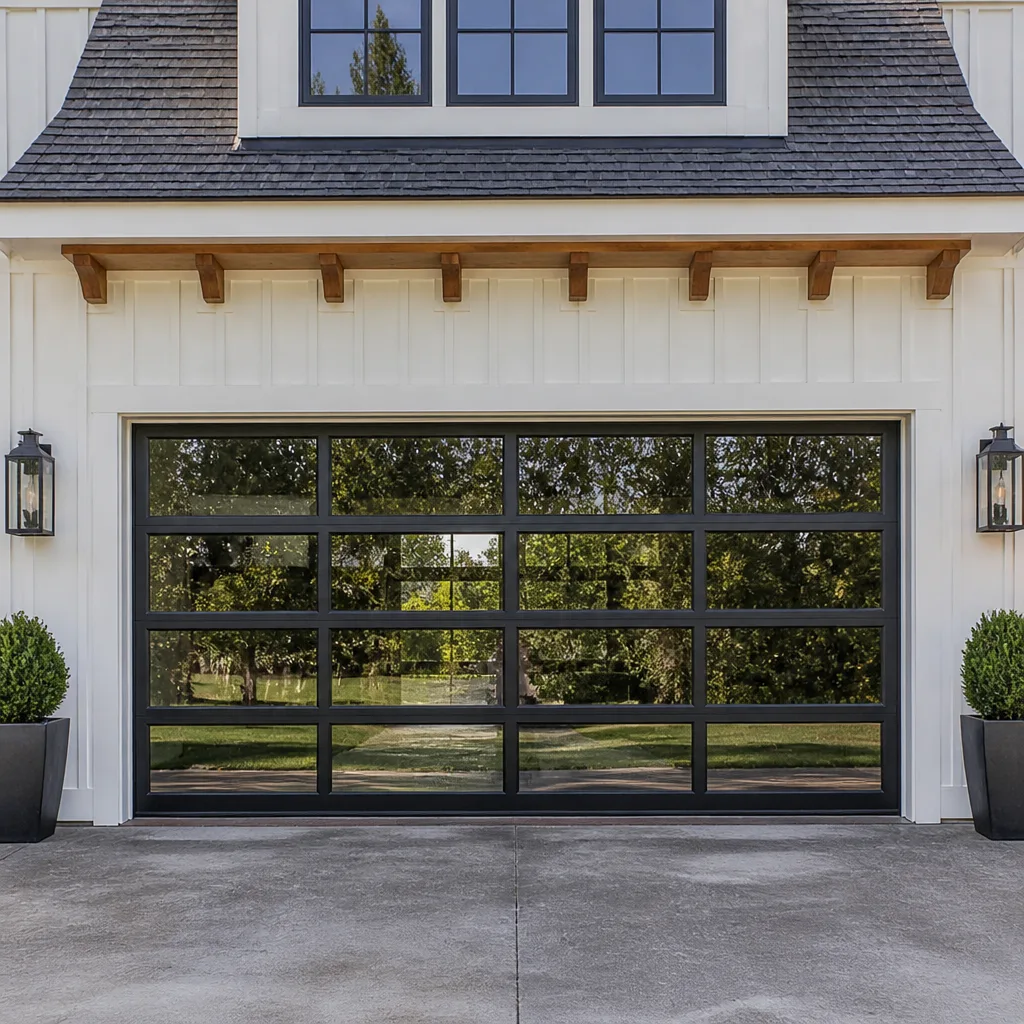 Full-view glass
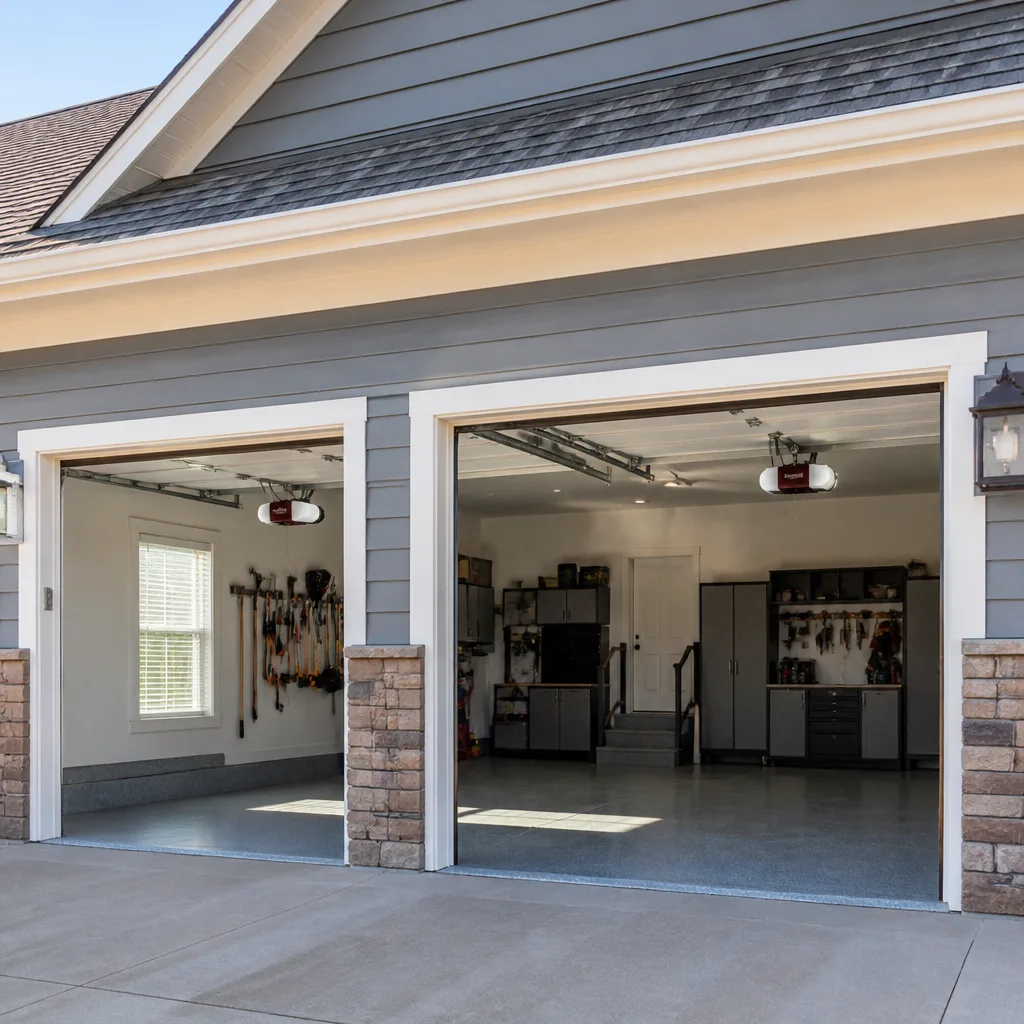 LiftMaster openers
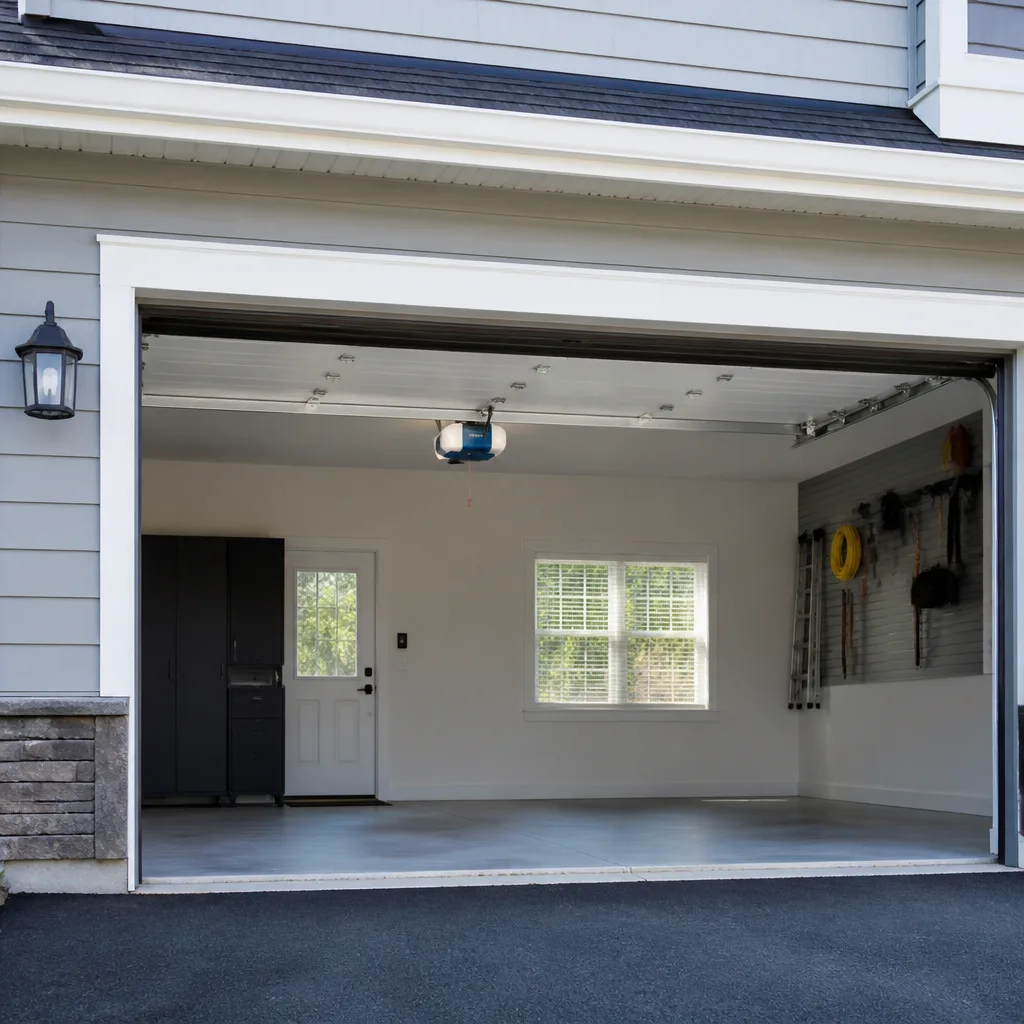 Chamberlain openers
Full 25-point door and opener safety check with every visit - springs, cables, rollers, tracks, and your LiftMaster or Chamberlain opener included
You get a price before we start. It does not change when the pro arrives.
Get your free estimateGarage Door Repair Troubleshooting: Common Problems and How to Fix Them
When your door stops mid-track and reverses, three completely different things could be causing it: a dirty sensor lens, a broken spring, or a logic board fault. The fix for each is nothing alike. Guess wrong and you’ve wasted a Saturday, or worse, you’ve put your hand somewhere it shouldn’t be. Nine out of ten service calls we take in Enterprise could have been diagnosed correctly by the homeowner before we ever pulled into the driveway. This guide gives you the same diagnostic logic we run on-site, symptom by symptom, so you can figure out what’s actually wrong before you decide whether to tackle it or call someone.
Quick Answer
Most garage door failures fall into three buckets: opener and sensor problems (fixable by most homeowners), spring and cable problems (never a DIY job), and track or roller issues (sometimes fixable, sometimes not). Start by watching and listening to the door for thirty seconds before you touch anything. That one habit tells you which bucket you’re in and keeps you away from the parts that can hurt you.
Styles & brands we work with
- Raised-panel steel
- Carriage house
- Modern flush
- Full-view glass
- LiftMaster openers
- Chamberlain openers
Table of Contents
- Start With What the Door Is Doing: The Symptom-First Diagnostic Tree
- How to Tell a Spring Problem From a Cable Problem From an Opener Problem
- The 60-Second Sensor Test You Can Do Safely (and the Wiring Check That Can’t)
- What the Noise Is Telling You: Grinding, Popping, and Squealing
- When the Door Works for Your Spouse but Not for You
- The Balance Test: Is It the Door or the Opener?
- Why Enterprise Doors Fail Differently Than Doors Anywhere Else
Start With What the Door Is Doing: The Symptom-First Diagnostic Tree
Don’t start with what you think is broken. Start with what the door is actually doing. The symptom narrows the suspect list fast, and it keeps you from replacing an opener when the real problem is a five-dollar sensor bracket.
Work through this in order. It takes two minutes and saves you from guessing.
- Door won’t move at all, no sound from the opener. Check the wall button first, then the breaker, then whether the manual release has been pulled. If the wall button works but the remote doesn’t, you have a remote or programming issue, not a door issue.
- Opener hums but the door doesn’t move. This usually means the motor is trying but the door is stuck, or the gear and sprocket assembly inside the opener has stripped. Stop running it. A humming opener that isn’t moving can burn out the motor in minutes.
- Door goes down a foot or two, then reverses. Sensor problem, nine times out of ten. Sometimes a bind in the track, but start with the sensors.
- Door goes up a little, then stops or reverses. Could be a broken spring (the opener is trying to lift a 200-pound door on its own and can’t), a limit switch setting, or a force adjustment that’s too low.
- Door moves but grinds, pops, or squeals. Mechanical. Rollers, hinges, track alignment, or a cable that’s jumped its drum.
- Door is crooked, or one side hangs lower than the other. Broken spring on one side, or a cable off the drum. Stop and call. Don’t run the opener again.
That’s the whole tree. Every call we take in Enterprise starts with one of those six answers. If you can tell us which one matches your door, we already know what to bring.
How to Tell a Spring Problem From a Cable Problem From an Opener Problem
This is the diagnosis that saves the most money and prevents the most injuries. Three components, three completely different failure signatures. You can tell them apart with your eyes and ears, standing safely on the floor, without touching anything.
Spring problem. Torsion springs live on the shaft above the door. Extension springs run along the tracks on either side. A broken torsion spring shows a clean gap in the coil, usually a quarter-inch to an inch, right where the metal snapped. Extension springs will have a visible stretched-out section or a broken hook. The tell that’s easiest to miss: with the door closed, look at the springs. If there’s a gap, that’s your answer. Don’t pull the manual release. Don’t try to lift the door. The door weighs 150 to 250 pounds, and it’s now riding on nothing. Springs and cables are the two parts of a garage door that hurt people, and they’re the two parts we tell every homeowner in Enterprise to leave alone.
Cable problem. Cables run from the bottom corners of the door up to the drums at the top. A cable that’s frayed, kinked, or hanging slack is a cable problem. So is a door that’s visibly crooked, with one corner sitting higher than the other. Cables are under the same tension as springs; when they let go, they whip. We’ve seen them take chunks out of drywall.
Opener problem. The door itself is fine, level, and moves freely by hand (if the springs are intact), but the opener won’t run it, runs it partway, or makes a straining noise. If the opener is straining, the problem is almost never the opener. It’s almost always the door, the springs, or a bind. A properly balanced door should lift with one hand and stay put at the halfway point. If it won’t, the opener is doing work the springs should be doing, and it’s telling you so.
The 60-Second Sensor Test You Can Do Safely (and the Wiring Check That Can’t)
Photo-eye sensors are the number one cause of “door won’t close” calls, and the test is dead simple. Two sensors, one on each side of the door, about six inches off the ground. One sends an invisible beam, the other receives it. If the beam is broken, the door reverses.
Here’s the safe test:
- Look at both sensors. Each should have a small LED light. Solid on both sides means the beam is good. Blinking or dark on either side means trouble.
- Wipe the lens on both sensors with a dry cloth. Dust, cobwebs, and in Enterprise, the fine desert grit that gets everywhere, will block the beam. This fixes more doors than any other single step.
- Check for obstructions. A stray leaf, a garden hose, a kid’s toy, or the garbage can the wind blew over. Remove it and try again.
- Look at the alignment. Both sensors should be pointed at each other, roughly level. If one looks knocked askew, gently nudge it back and watch for the light to go solid.
That’s the safe zone. Here’s the line: the wiring check belongs to a technician. If the lights stay dark after cleaning and alignment, the problem is in the wiring, the transformer, or the logic board, and you’re now inside a low-voltage circuit that’s tied to a 120-volt opener. We’ve seen homeowners chase a bad sensor splice into a wire nut that came loose behind the drywall. That’s a job for someone with a meter and a ladder, not a Saturday project.
What the Noise Is Telling You: Grinding, Popping, and Squealing
Your door is talking to you. Each sound is a specific mechanical clue, and once you learn to hear them, you’ll know what to check before you even open the door. In our experience, the noise a door makes is more diagnostic than anything else.
- Grinding. Metal on metal. Usually rollers that have lost their bearings, or a track that’s bent and rubbing the roller. On older doors, the hinge plates wear and the roller shafts start grinding against them. If it’s coming from the opener head itself, the gear and sprocket inside the unit are stripping, which is common on older Craftsman and Genie units after years of pushing a heavy door.
- Popping. Sharp, sudden, and usually happens at the same spot in the door’s travel. That’s a hinge plate catching, a panel seam working loose, or a torsion spring that’s starting to fail at the coil. If a pop happens once and the door suddenly gets easy to lift, check for a broken spring right away.
- Squealing. High-pitched, continuous, follows the door. Rollers, hinges, or the torsion shaft bearings need lubrication. White lithium grease on the hinges and rollers, and a proper torsion-spring lubricant on the springs, quiets most of it. Don’t use WD-40 as a lubricant; it’s a solvent and it’ll strip the grease you already have.
- Rattling. Loose bolts on the hinges, the opener rail, or the door panels. Tighten, don’t over-tighten. A rattle that started after a windstorm usually means a bent track.
If you hear a sound once and it never comes back, don’t ignore it. A one-time pop is often the last thing a spring does before it breaks. That’s the moment to look, not the moment to file it away.
When the Door Works for Your Spouse but Not for You
This one stumps people, and it’s not in most troubleshooting guides. The door works fine for your spouse, but when you hit the remote, nothing. Or it works from the driveway but not from inside the house. There are three real causes, and none of them are ghosts.
Remote frequency interference. Modern openers, especially LiftMaster and Chamberlain models with Security+ 2.0 or MyQ, use rolling codes on a 315 MHz or 390 MHz band. LED light bulbs, some smart-home hubs, and even certain wireless doorbells emit on nearby frequencies and can swamp the remote’s signal. If your remote only fails when a specific light is on, that’s your culprit. Swap the bulb for a garage-door-rated LED and the problem often disappears.
Remote battery and button wear. The button on a remote gets pressed thousands of times. The contact wears, and the remote’s range drops until it only works when you’re right at the door. If your spouse’s remote works from the street and yours only works from the driveway, it’s the remote, not the opener.
Programming drift. This is the one nobody covers. If a remote was programmed to the opener years ago and the opener’s memory has been partially cleared (a power surge, a lightning strike, a battery replacement done wrong), that remote may only work intermittently. Re-pairing the remote to the opener usually fixes it. If you’ve got a Wayne Dalton or an Amarr door with a newer opener, the pairing process is in the manual and takes about 60 seconds.
Rule of thumb: if one remote works and one doesn’t, it’s the remote. If neither works from the street but both work up close, it’s interference. If nothing works reliably, check the opener’s antenna wire (it’s the thin wire hanging from the head unit; make sure it’s not coiled up or tucked behind metal).
The Balance Test: Is It the Door or the Opener?
Before you blame the opener, test the door. A properly balanced door is easy to lift by hand and stays put where you leave it. If your door is a chore to lift, your opener is working twice as hard as it should, and eventually it will give out on you. This is the single most useful test in the entire guide, and it takes two minutes.
- Close the door and pull the manual release cord (the red handle hanging from the opener rail) to disconnect the door from the opener.
- Lift the door by hand to about waist height. It should move with modest effort. If you’re straining, the springs are weak or the door is binding.
- Let go at the halfway point. A balanced door stays there. If it drops, the springs are weak. If it rises on its own, the springs are over-tensioned.
- Lower it back down and re-engage the opener by running it until it clicks back onto the carriage.
If the door passes this test but the opener still struggles, the problem is in the opener: force settings, limit switches, or a failing motor. If the door fails the test, the opener is the victim, not the cause. Replacing the opener without fixing the door just buys you a new opener that will fail the same way. We see this constantly in Enterprise: a homeowner replaces a perfectly good opener because the door was the problem all along. For opener-specific issues, our Garage Door Opener Repair & Installation in Enterprise page covers the electronics side in more depth.
Why Enterprise Doors Fail Differently Than Doors Anywhere Else
Garage doors in Enterprise take a beating that doors in most of the country don’t. The desert climate here is hard on three specific components, and if you live south of the 215 or out toward the Sloan Canyon side of town, you’re going to see these failures more often than a homeowner in a milder climate.
Heat and dust. Summer temperatures that push past 110°F bake the lubricant right out of your rollers and hinges. The dust that blows in from the open desert gets into the bearings and turns that dry grease into an abrasive paste. Our recommendation for Enterprise homeowners: lubricate rollers, hinges, and springs every six months, not once a year. The doors that get serviced spring and fall last noticeably longer than the ones that don’t.
Monsoon season. The summer thunderstorms that roll through in July and August bring wind gusts that bend tracks and pop rollers out of alignment. If a windstorm came through and your door suddenly sounds different, check the track with a level before you do anything else. A slightly bent track will wear out your rollers in weeks.
Spring cycle life. Standard torsion springs are rated for about 10,000 cycles. In a two-car household where the door runs eight times a day, that’s a little over three years. If you’ve been in your house since it was built and never replaced the springs, you’re living on borrowed time. We count spring cycles the way you count tire miles: we’ll tell you what’s left on yours during a service call, so you can plan the replacement instead of having it happen on a Sunday morning with your car trapped inside.
If you need service and you’re in Enterprise, our Garage Door Repair in Enterprise page covers the scheduling side, and our Garage Door Installation in Enterprise page is where to start if the door is past saving. Most of what we see in Enterprise is repairable, though. A door that looks worn out is often one spring and a tune-up away from running like new.
Common Mistakes to Avoid
- Pulling the manual release when a spring is broken. If the spring is snapped, the door is dead weight. Pull the release and the door comes down hard. If you’re not sure, don’t pull it.
- Running the opener on a door that’s crooked. A crooked door means a cable is off the drum or a spring is broken. Every time you hit the button, the opener pulls against a bind it can’t overcome. That’s how a $200 repair becomes an $800 repair.
- Using WD-40 on the springs, rollers, or track. It’s a solvent, not a lubricant. It thins what’s there and then evaporates. Use white lithium grease on the moving parts, and proper torsion-spring lubricant on the coils.
- Adjusting the force settings to compensate for a hard door. Turning up the force on a door that’s binding is like turning up the radio to drown out a check-engine light. The fix is to address the bind, not the symptom.
- Replacing the opener when the door is the problem. Run the balance test first. We’ve seen homeowners in Enterprise replace a working opener twice before someone told them the door was the problem.
- Ignoring a one-time pop. A single pop that doesn’t come back is often the last sound a spring makes before it breaks. Look at the springs the same day.
- Letting dust and heat go unmanaged. In Enterprise, a door that isn’t lubricated twice a year wears out its rollers, hinges, and springs faster than a door in a mild climate. Twice a year, every year.
See the difference
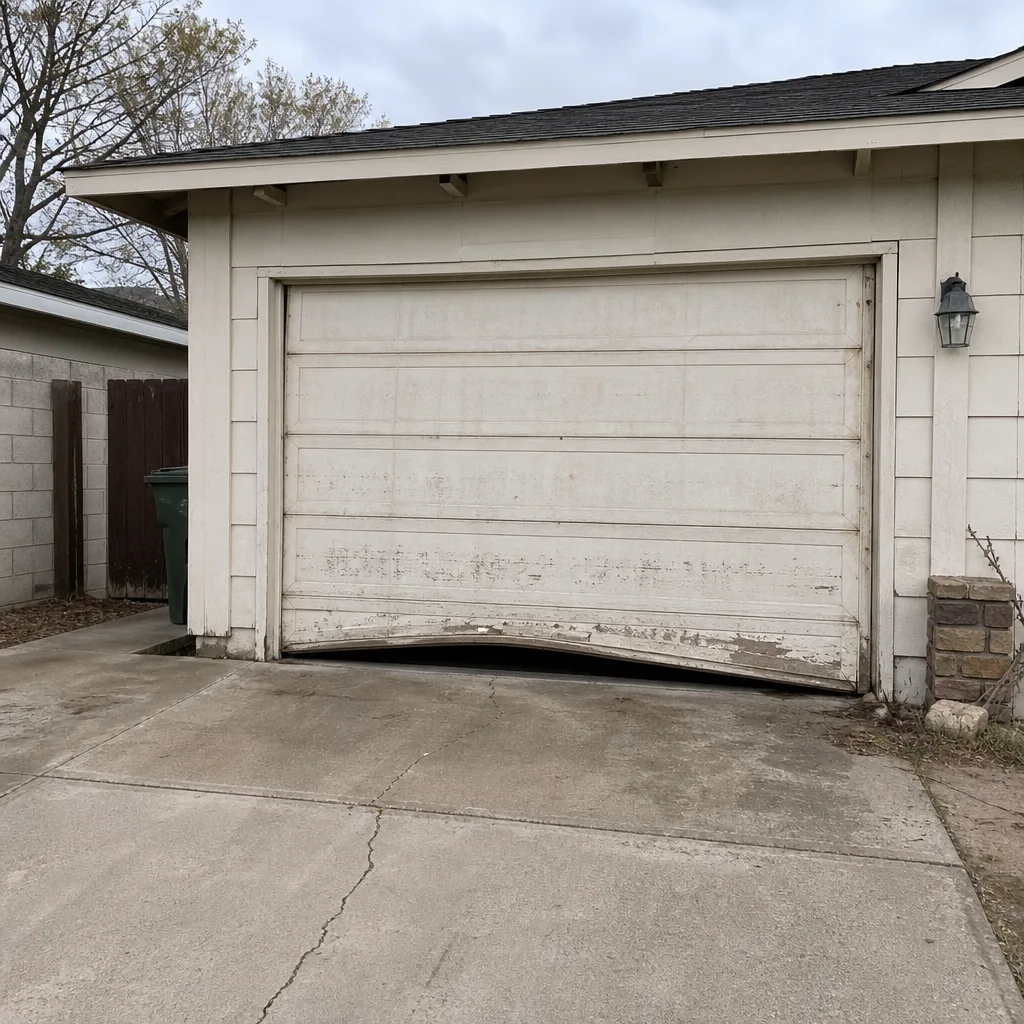 Before
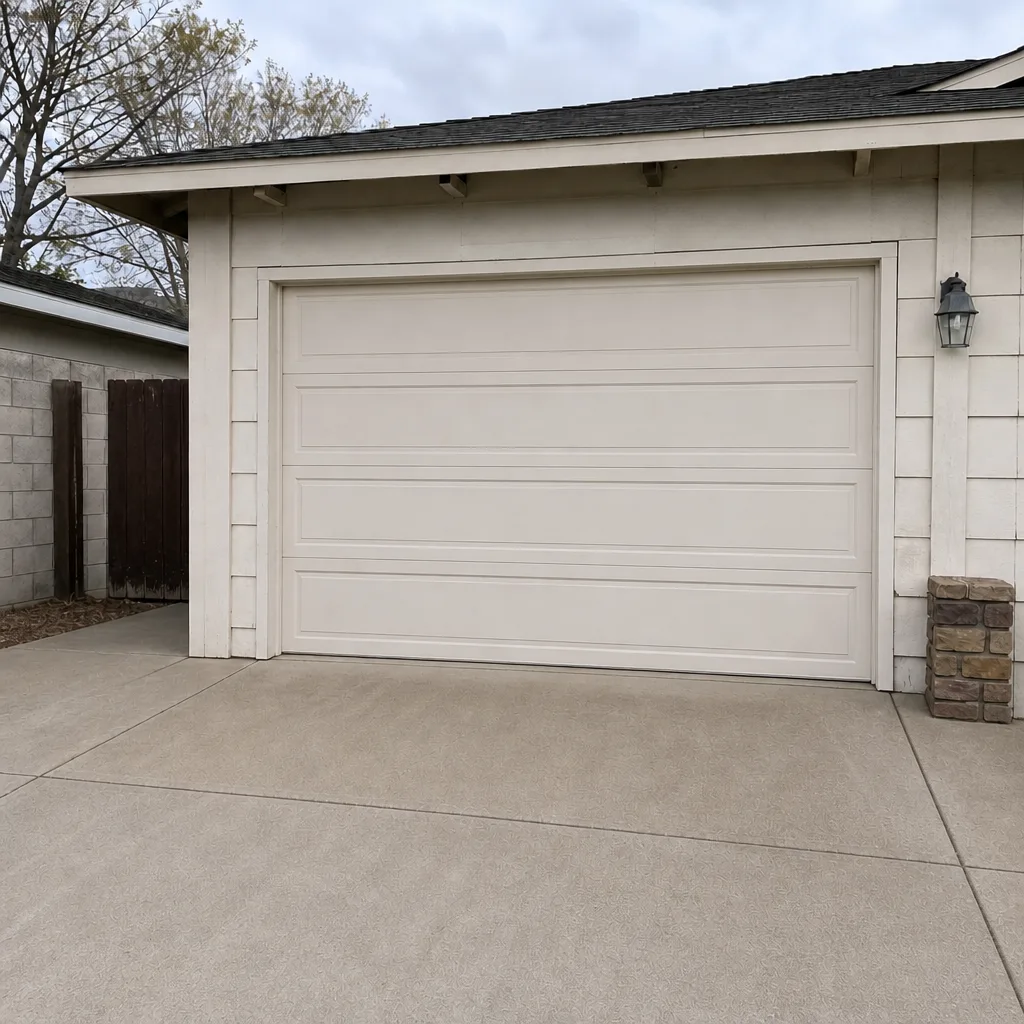 After
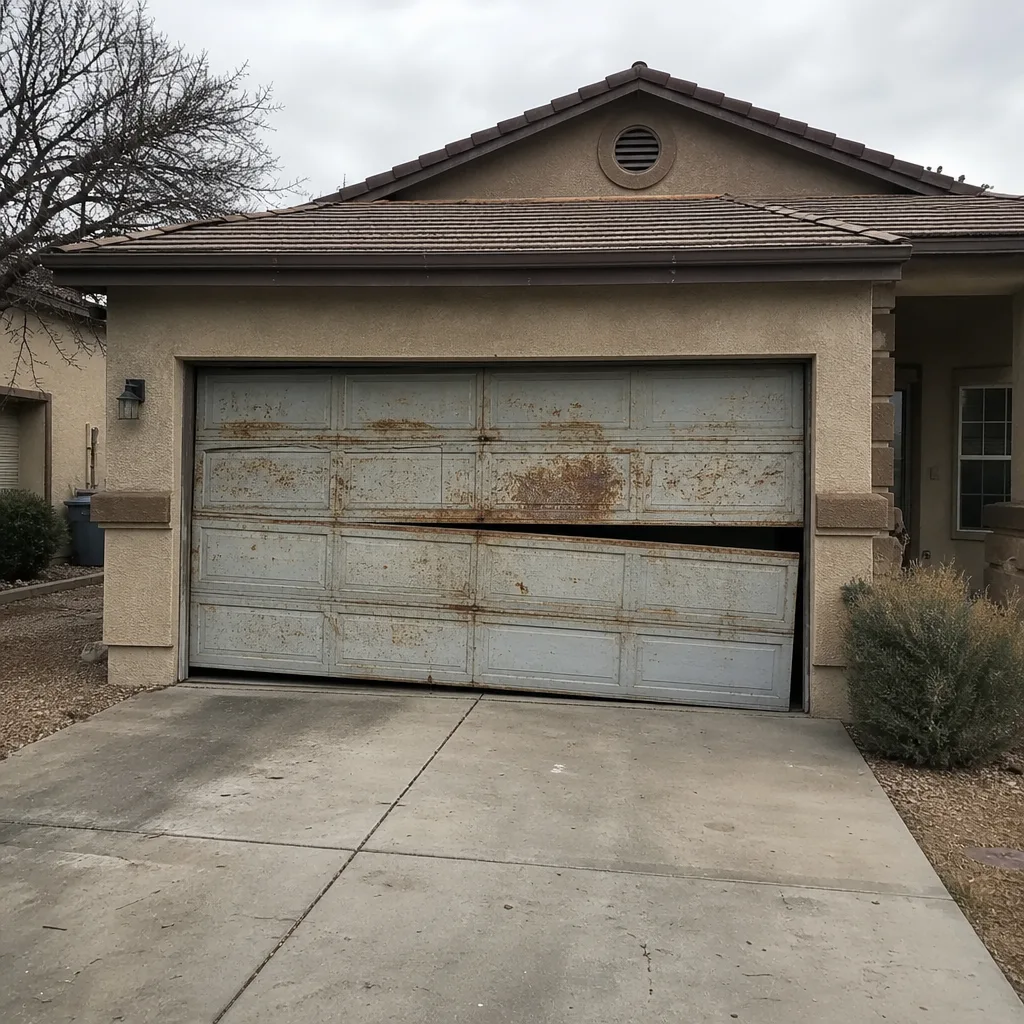 Before
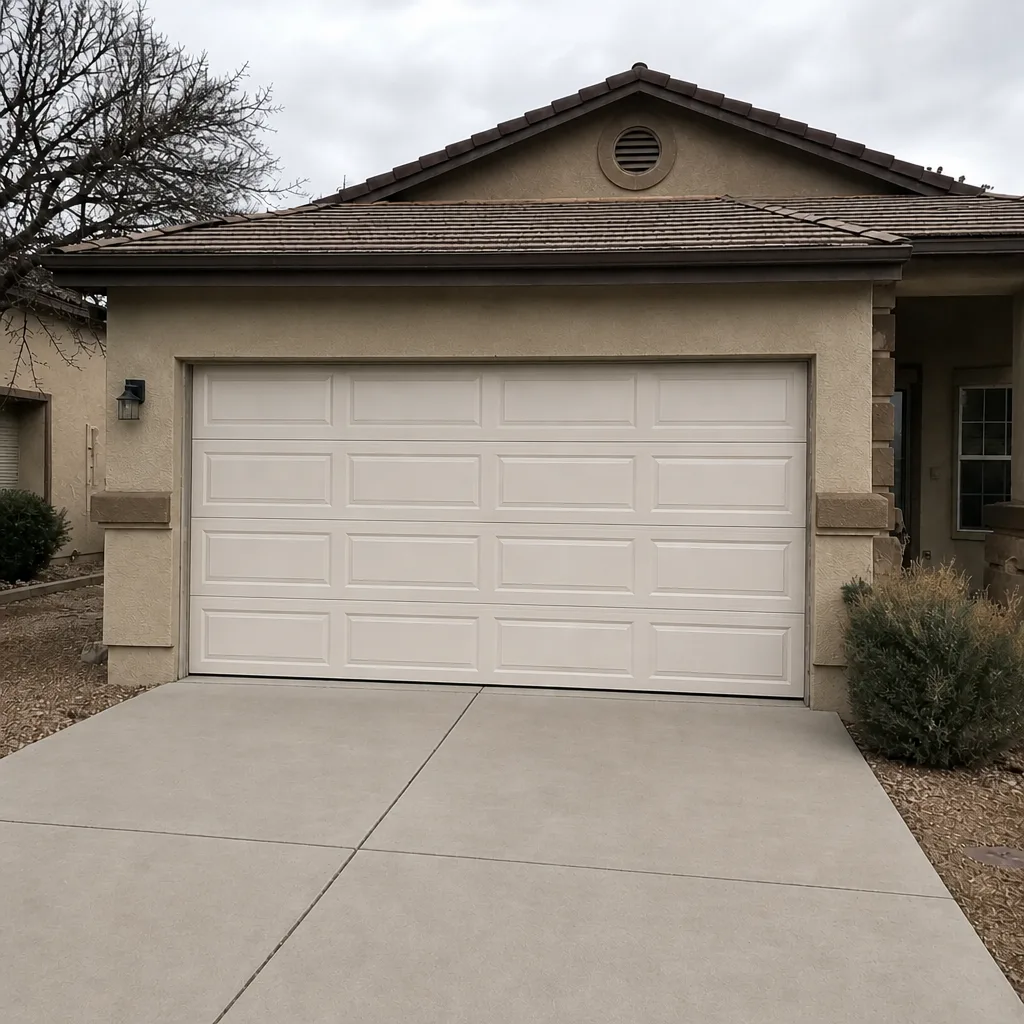 After
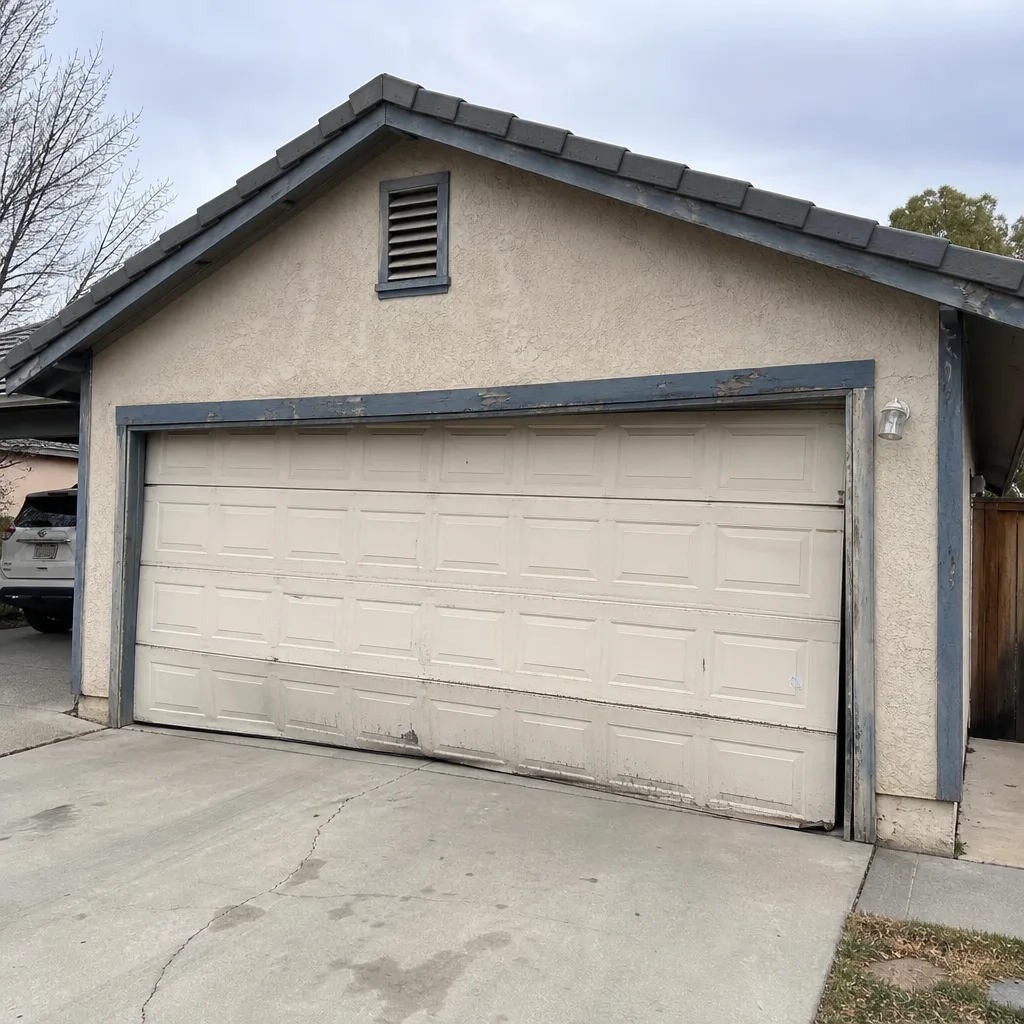 Before
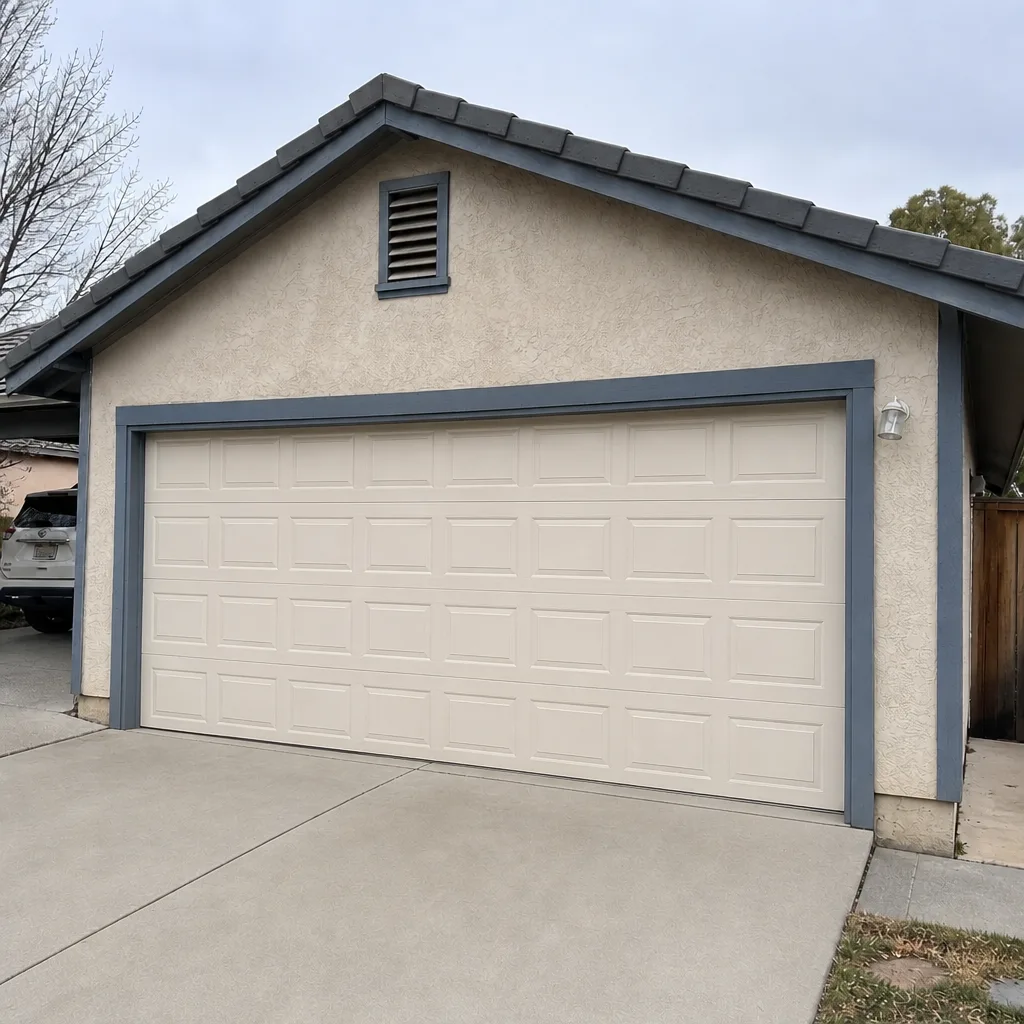 After
When to Call a Professional
Call a professional for anything involving springs, cables, or the torsion shaft. Those components are under hundreds of pounds of tension, and a mistake can cost you fingers, break bones, or send a cable whip into your face. Call us for anything involving the opener’s internal wiring, the logic board, or a power issue that isn’t a tripped breaker. Call us if the door is crooked, if one side hangs lower than the other, or if a spring has snapped and the door is now dead weight. Call us if the balance test fails and the door won’t stay at the halfway point. Call us if you’ve replaced the sensor and the door still reverses. And call us if the door is old enough that you’re wondering whether repairing it is worth it. Otto’s Garage Door Enterprise offers free estimates in Enterprise. Call (833) 620-7107 and a live person will pick up, quote the job on the call, and hold that number when we get there. No guessing, no surprise on the invoice.
Frequently Asked Questions
A door that reverses right at the floor is almost always a sensor problem, a force setting that’s too low, or a limit switch that’s set slightly off. Clean both sensor lenses and check for obstructions first, since that fixes most cases. If the sensors are clean and aligned and the door still reverses, the force or limit settings need to be checked by someone with a manual for your specific opener model, which is a job for a technician. Call (833) 620-7107 if you’ve done the sensor check and the door still won’t close; estimates are free.
Look at the spring above the door. A broken torsion spring will show a visible gap of a quarter-inch to an inch in the coil. Extension springs will look stretched out or have a broken hook at one end. If you see a gap, don’t run the opener, and don’t pull the manual release. The door is dead weight and could come down hard. Springs are under extreme tension and should only be replaced by a trained technician. And if you’re not sure what you’re looking at, don’t guess; call (833) 620-7107 and we’ll walk you through it over the phone.
If one remote works and another doesn’t, the problem is the remote, not the door. Dead batteries, worn button contacts, or a remote that lost its programming are the usual causes. If neither remote works from the street but both work up close, you’re dealing with frequency interference, often from an LED light bulb or a smart-home device near the opener. Re-pairing the remote or swapping to a garage-door-rated LED bulb fixes most cases. We can also re-program a remote during a service call; call (833) 620-7107 and we’ll get you scheduled.
No. Cables are under the same tension as the springs, and a cable that lets go under load can whip across the garage. The safe move is to leave the door alone and call a technician. Cables are also a matched system: the length, the drums, and the springs all work together, and swapping one cable without checking the rest is how doors end up crooked or worse. Otto’s Garage Door Enterprise handles cable replacements across Enterprise. Call (833) 620-7107 for a free estimate.
Grinding is metal-on-metal contact, and it’s usually one of three things: rollers that have lost their bearings, a track that’s bent and rubbing the roller, or worn hinge plates. If the grinding is coming from the opener head itself, the gear and sprocket inside the unit are stripping. In Enterprise, dust and heat accelerate roller and hinge wear, so a grinding door in the desert is often a lubrication and roller replacement issue. Call (833) 620-7107 to get it looked at before the wear spreads to the track.
Because the opener was probably never the problem. Run the balance test: disconnect the door from the opener with the manual release, lift it by hand, and see if it stays put at the halfway point. If it drops or takes real effort to lift, the springs are weak or the door is binding, and the new opener is working against the same problem the old one couldn’t overcome. Fix the door and the opener will behave. We do that diagnosis on every service call. Call (833) 620-7107 for a free second opinion on any written estimate.
The Bottom Line
Most garage door problems are diagnosable by the homeowner in less than five minutes, if you start with what the door is doing instead of what you think is broken. Watch it, listen to it, check the sensors, and run the balance test. Those four steps will tell you whether you’re dealing with an opener issue, a sensor issue, or a spring-and-cable problem that belongs to a professional. Don’t touch the springs or the cables. Do lubricate the rollers and hinges twice a year, especially in the Enterprise heat. And when you’re not sure, call someone who’ll answer the phone and tell you straight. You can reach us through Otto’s Garage Door Enterprise home or at (833) 620-7107 for a free estimate. A door is 200 pounds riding on two springs. Respect it, and it’ll last you years.
Still not sure what your door is telling you? Otto’s Garage Door Enterprise offers free estimates in Enterprise and a free second opinion on any written estimate. Call (833) 620-7107 and a live person will pick up, quote the job on the call, and hold that price when we show up. Our technicians have up to 22 years of experience with every major brand, and every job comes with our 90-Day Done Right Promise in writing.
Written by the team at Otto’s Garage Door Enterprise.