
Last updated November 17, 2026
 Raised-panel steel
 Carriage house
 Modern flush
 Full-view glass
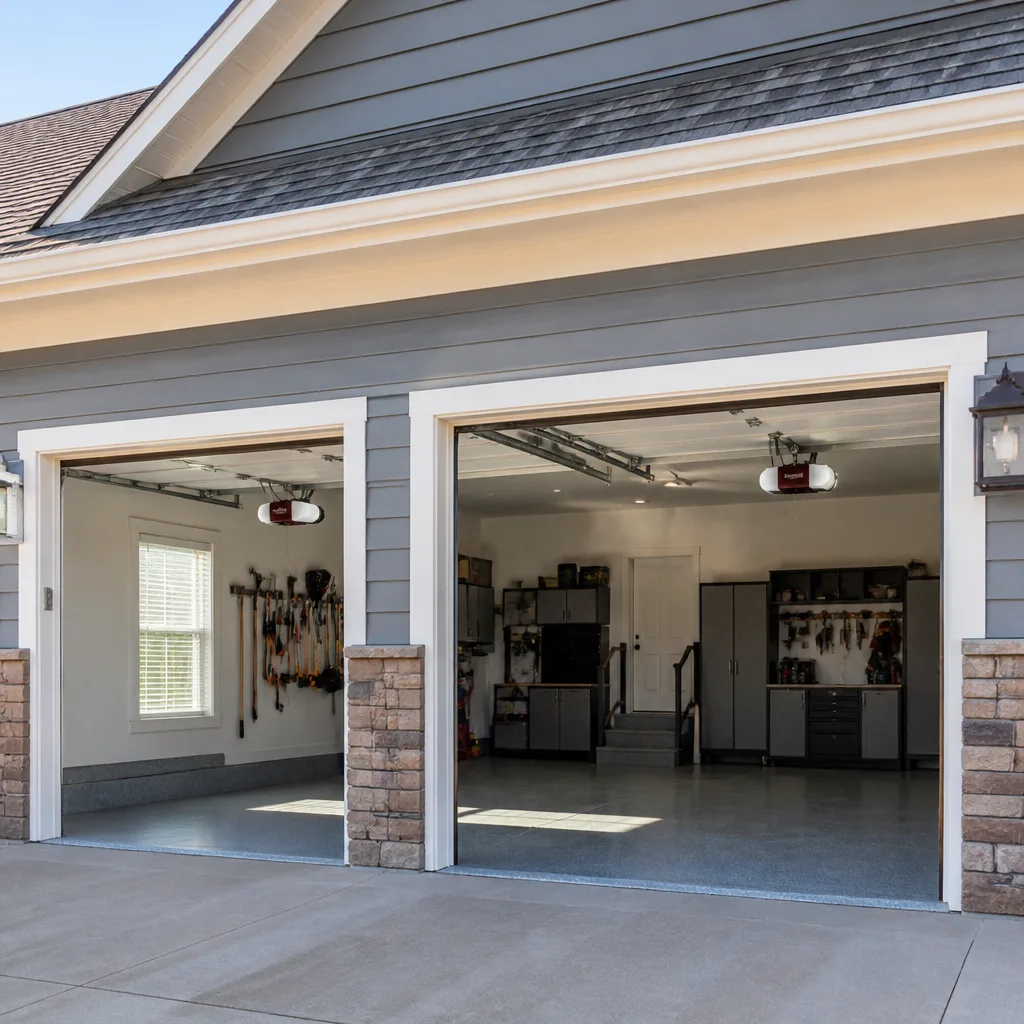 LiftMaster openers
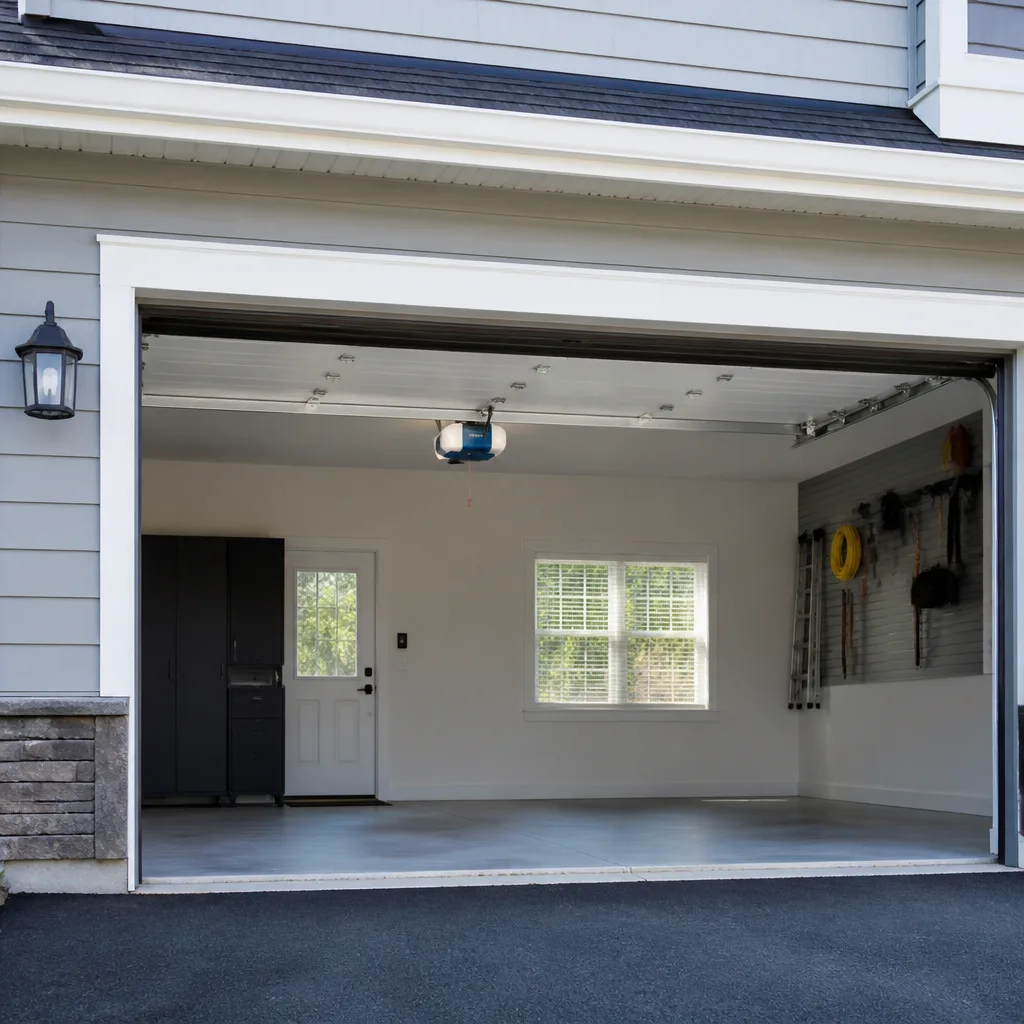 Chamberlain openers
Full 25-point door and opener safety check with every visit - springs, cables, rollers, tracks, and your LiftMaster or Chamberlain opener included
You get a price before we start. It does not change when the pro arrives.
Get your free estimateGarage Door Repair Maintenance Schedule: What to Do and When
Last spring we replaced a set of springs for a homeowner who had lubricated them faithfully every single year. The failure wasn’t neglect. It was timing. She was doing the work in August, when the metal in an Enterprise garage is already heat-stressed and any lubricant she applied cooked off within two weeks. A once-a-year checkup isn’t a maintenance schedule; it’s a hope strategy. In the desert Southwest, heat and dust compress a component that should last a decade into five or six years. What follows is a month-by-month schedule built around how doors actually fail in Enterprise, not around a manufacturer’s PR calendar.
Quick Answer
A real garage door maintenance schedule runs on a seasonal cycle: a light monthly visual check, deep lubrication and hardware tightening in October and March, and an annual balance-and-safety test each fall. In Enterprise, those two shoulder months matter more than any other time of year because the door is transitioning between extreme summer heat and cooler winter temperatures. Skip October and March and you’ll pay for it in springs and seals.
Styles & brands we work with
- Raised-panel steel
- Carriage house
- Modern flush
- Full-view glass
- LiftMaster openers
- Chamberlain openers
Table of Contents
- Why Timing Matters More Than the Task
- The Two Critical Windows: October and March
- The Right Lubricant for Desert Heat (and Where NOT to Put It)
- The 3-Minute Monthly Checklist
- Which Tasks Protect Your Opener Warranty and Which Void It
- Springs and Cables: Eyes Only
- How to Log Maintenance for Resale Value
- Common Mistakes to Avoid
Why Timing Matters More Than the Task
The single most important idea in this entire guide: when you do a maintenance task in Enterprise is often as important as what you do. A torsion spring is a wound coil of steel under constant tension. In July, that steel on a west-facing garage door can hit surface temperatures that will burn your hand through a glove. Lubricant applied then doesn’t stay put; it thins, migrates, and burns off, leaving the coils bare again within two weeks.
The desert also works on the other components. Vinyl weather seals that see 110-degree highs for months get brittle and crack, then leak dust and let the conditioned air out of your garage. Rollers dry out and start to drag. The hinges at the door’s pivot points collect grit that acts like sandpaper on the pins.
What we’ve seen after years of garage door repair in Enterprise is a clear pattern: doors fail in clusters, and the clusters line up with the temperature swings. Late fall, when the first real cool nights arrive, is when tired springs snap. Spring, when the heat ramps back up, is when dried seals start showing gaps. That’s why the schedule below isn’t advice to “check your door occasionally.” It’s a plan tied to the calendar.
The Two Critical Windows: October and March
October and March are your anchor months. Everything else in this guide hangs off them. Here’s what each one is for:
October: transition into cool, dry air. As the nights cool, metal contracts slightly and rubber seals that were pliable in the heat stiffen. This is the month to lubricate springs and hinges, tighten all the bolts you can reach, test the balance of the door, and check the weather seal along the bottom and sides for cracks. It’s also your best window for a professional tune-up, because a technician can feel how much tension is left in a spring before the cold snap finds the weak one.
March: transition out of cool nights into rising heat. This is your pre-summer hardening. Re-lubricate (October’s coat has been through five months), inspect the rollers, check the opener’s force and travel settings before the heavy summer heat cycles start, and look at the door’s paint and finish on steel doors. A Clopay or Amarr steel door that’s starting to show rust at the bottom edge in March is a door you can still save with a touch-up before the monsoon dust starts sticking to it.
Homeowners who only do the spring check tend to notice problems in July, when a failing roller has already worn a groove in the track. Homeowners who do both windows catch it while it’s a ten-dollar part.
The Right Lubricant for Desert Heat (and Where NOT to Put It)
Put the WD-40 away. Standard WD-40 is a solvent, not a lubricant, and in desert heat it evaporates and leaves the springs drier than before. The right product is a silicone-based or lithium-complex grease rated for high temperatures. A white lithium grease in a spray can works well on springs, hinges, and the bearing plates; a silicone spray is the better choice for the tracks and rollers because it won’t attract dust the way grease does.
Where to apply it:
- The full length of each torsion spring (if you have a torsion-spring door)
- Each hinge pivot point, top to bottom
- The bearing plates at each end of the torsion tube
- Roller stems (not the roller wheels themselves)
Where to absolutely NOT apply it:
- The tracks. Grease on the tracks attracts dust and grit, and grit wears the rollers fast. Tracks should be wiped clean and left dry, maybe a light silicone pass at most.
- The opener rail. Greasing the rail can cause the trolley to slip, especially on a belt-drive unit.
- The photo-eye lenses. Fogging them with spray causes intermittent safety reversals.
- The bottom weather seal. Most vinyl seals don’t want lubricant; it degrades the rubber.
Apply in the cool of the morning or evening in October or March, not at noon. Let it sit for a few minutes and wipe off the excess. A Genie or LiftMaster installer will tell you the same thing: a properly lubricated door is quiet and consistent. A poorly lubricated one squeals, jerks, or drags.
The 3-Minute Monthly Checklist
Tape this inside the garage door frame, on the wall next to the opener button. None of it is a repair task. It’s a look-and-listen, the kind of thing you can do in the time it takes to drink a cup of coffee. It catches roughly 80% of the problems that turn into failures.
- Look at the springs. Stand back and check for visible gaps, rust streaks, or a spring that looks noticeably more stretched than its neighbor. (Don’t touch. Just look.)
- Run the door and listen. Press the button and close your eyes for a second. Any new squeak, grind, or uneven rhythm is a flag.
- Watch the door travel. Does it go up smoothly, or does one side hesitate? Does it stop level at the top, or is one corner lower?
- Check the bottom seal. When the door is down, look for daylight under it, cracks in the rubber, or dried-out gaps at the corners.
- Test the safety reverse. Put a roll of paper towels on the floor under the door, close it. It should reverse on contact with the roll. If not, the opener needs adjustment. (This is a 30-second test and a real safety issue.)
- Look at the tracks. Are they straight? Any dents, or any debris in the channel?
Total time: about three minutes. If any of these six things look off, that’s your cue to call for a look before it becomes a bigger repair.
Which Tasks Protect Your Opener Warranty and Which Void It
This is where homeowners get burned most often, and it’s almost never on the big obvious jobs. It’s in the fine print. Most opener manufacturers, including Genie and LiftMaster, have warranty conditions that are specific and easy to breach without knowing it.
Tasks that protect your warranty:
- Annual professional tune-up and inspection, documented
- Lubricating moving parts with an approved lubricant on the recommended schedule
- Testing the safety reverse monthly (some manufacturers require this and will deny a claim if it’s clear the door was never checked)
- Replacing batteries in the remote and wall control yearly
Tasks that can void your warranty:
- Adjusting the force or travel limits on your own. Most manuals warn against this specifically. The opener’s force settings are factory-tuned to protect the motor; turning them up to force a dragging door is the number-one cause of opener motor failure.
- Installing a heavier door on the same opener without upgrading the unit. If you go from a lighter Wayne Dalton model to a heavier insulated Clopay, and your opener isn’t rated for the weight, that’s on you per the warranty.
- Cutting or extending the rail to fit a different ceiling height. Sounds obvious, happens all the time.
- Using an aftermarket remote or wall control that isn’t UL-listed for the unit.
- Lubricating the opener gear case. It comes pre-lubricated and is sealed for life; opening it voids the warranty.
When in doubt, schedule an opener service in Enterprise rather than guessing. It takes one call and holds the warranty intact. Read that fine print before you crack the manual open and start turning screws.
Springs and Cables: Eyes Only
A door is 200 pounds riding on two springs. Respect it. We can’t say this strongly enough: spring and cable repairs are not a maintenance task. They’re a professional repair, period. The tension in a torsion spring is enough to break bones or worse if it lets go while you’re working on it, and a stretched or worn cable under load can snap without warning. This is one of those situations where the safest thing you can do is notice it and call.
What you should do every month, as part of the checklist above:
- Look at the springs for visible gaps, rust, or sagging
- Look at the cables for fraying, kinks, or slack on one side
- Listen for a pop, snap, or sudden loud noise (that’s a spring breaking – stop using the door and call)
- Notice if the door suddenly feels much heavier to lift by hand (if you ever lift it manually)
If you see or hear anything on this list, don’t run the door. Call. We’ll come look at it, quote it, and tell you honestly whether it’s a repair, a replacement, or fine as-is. If you need an installation in Enterprise for a door that’s beyond saving, we’ll walk you through that too. But nobody, no matter how handy, should be adjusting or replacing springs on their own.
How to Log Maintenance for Resale Value
When you sell a house, buyers and their inspectors ask two questions about the garage: “Is the door in good working order?” and “Was it maintained?” A documented maintenance record answers both, and in our experience it moves the needle on a buyer’s confidence during inspection. It doesn’t have to be fancy. A simple notebook kept in the garage or a shared note on your phone works fine.
What to record:
- Date of each maintenance task or professional service
- What was done (lubricated springs, tested reverse, replaced bottom seal, tuned opener)
- Who did it (self or company name)
- Any issues noted (e.g. “small gap at bottom left corner – watch”)
- Next scheduled task (e.g. “March 2027 – full lubrication”)
When a buyer’s inspector looks at a door with a clean logbook, the tone of the conversation is different. Instead of “this might need replacing,” it’s “this was maintained, here’s the record.” That’s worth real money in negotiation. If you’ve had professional service done in Enterprise, keep the invoice with the log. It also makes a great case for the door’s remaining lifespan if anyone asks.
Common Mistakes to Avoid
- Lubricating in August. The heat has already stressed the metal, and the lubricant burns off in days. Save the deep lubrication for October and March when temperatures are moderate.
- Using WD-40 as a lubricant. It’s a solvent. It cleans, it doesn’t lubricate, and in desert heat it disappears in a day or two. Use a proper silicone or lithium grease.
- Greasing the tracks. Tracks should be dry. Grease attracts grit, and grit wears the rollers, the wheels, and eventually the door’s alignment.
- Turning up the force setting on a dragging opener. This masks a problem, doesn’t fix it, and is the single most common opener-killer in warranty claims. The problem is almost never the opener; it’s a dragging door or a failing roller.
- Skipping the safety reverse test. It takes thirty seconds and it’s a real safety issue, especially in homes where kids or pets use the garage. Do it monthly.
- Forgetting to re-do the March tune-up. October’s lubrication has been through five months, including most of summer. By March it needs a fresh coat and a re-check of everything.
- Trying to adjust or replace springs yourself. This is the biggest risk mistake on this list. Respect the tension and call it in.
See the difference
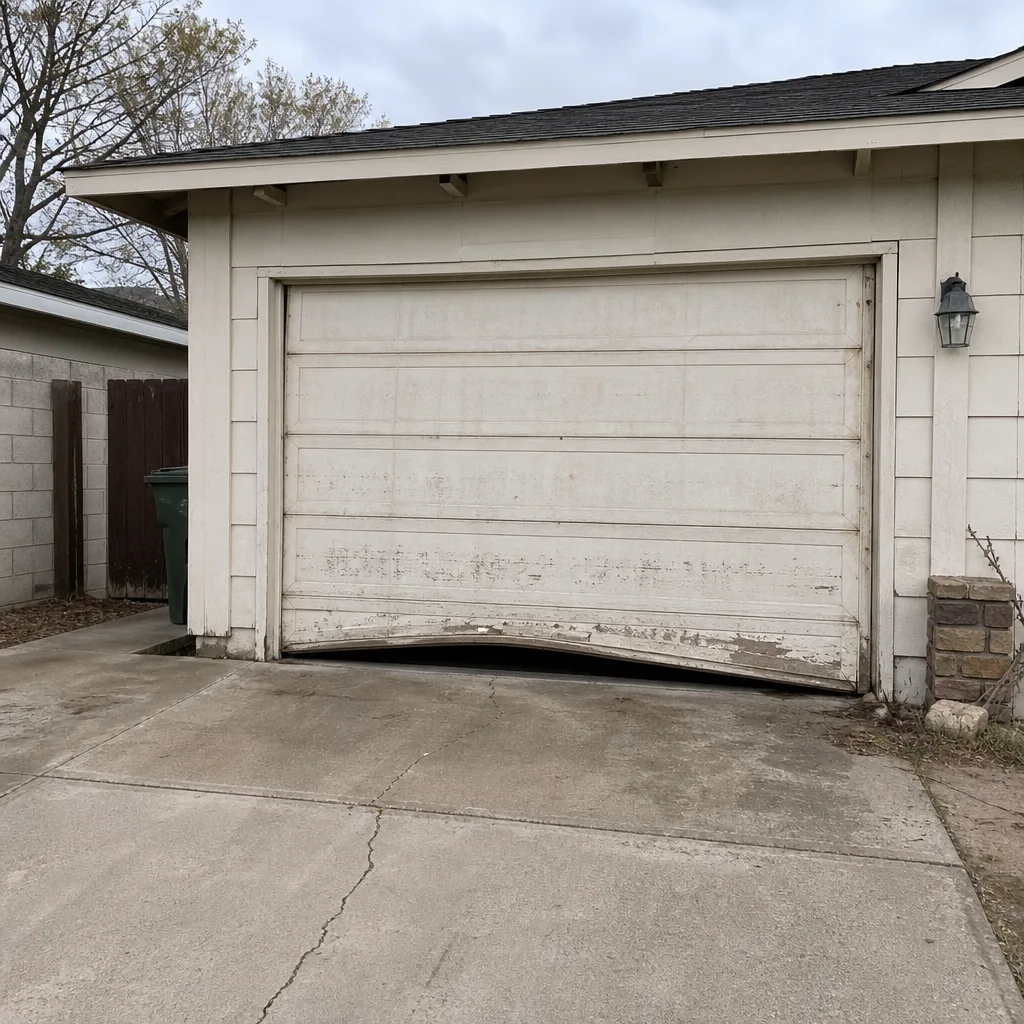 Before
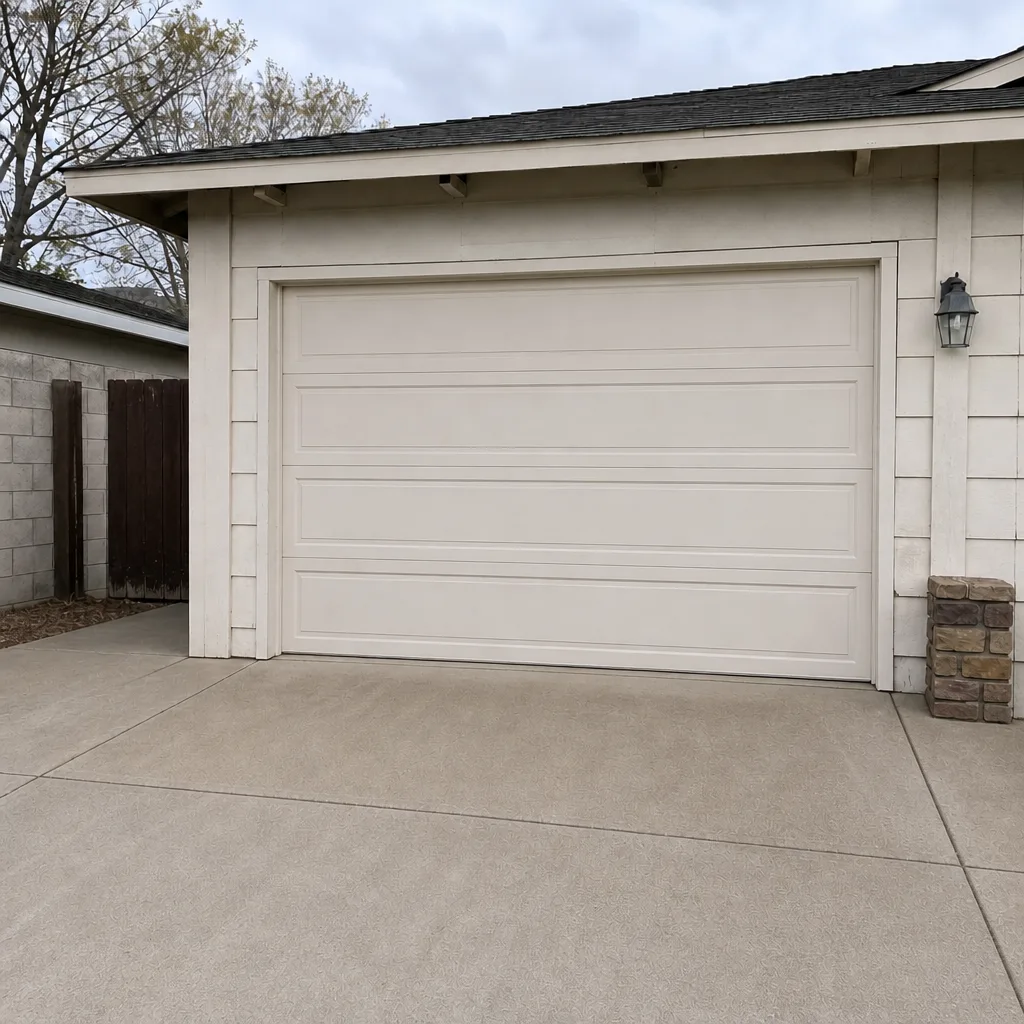 After
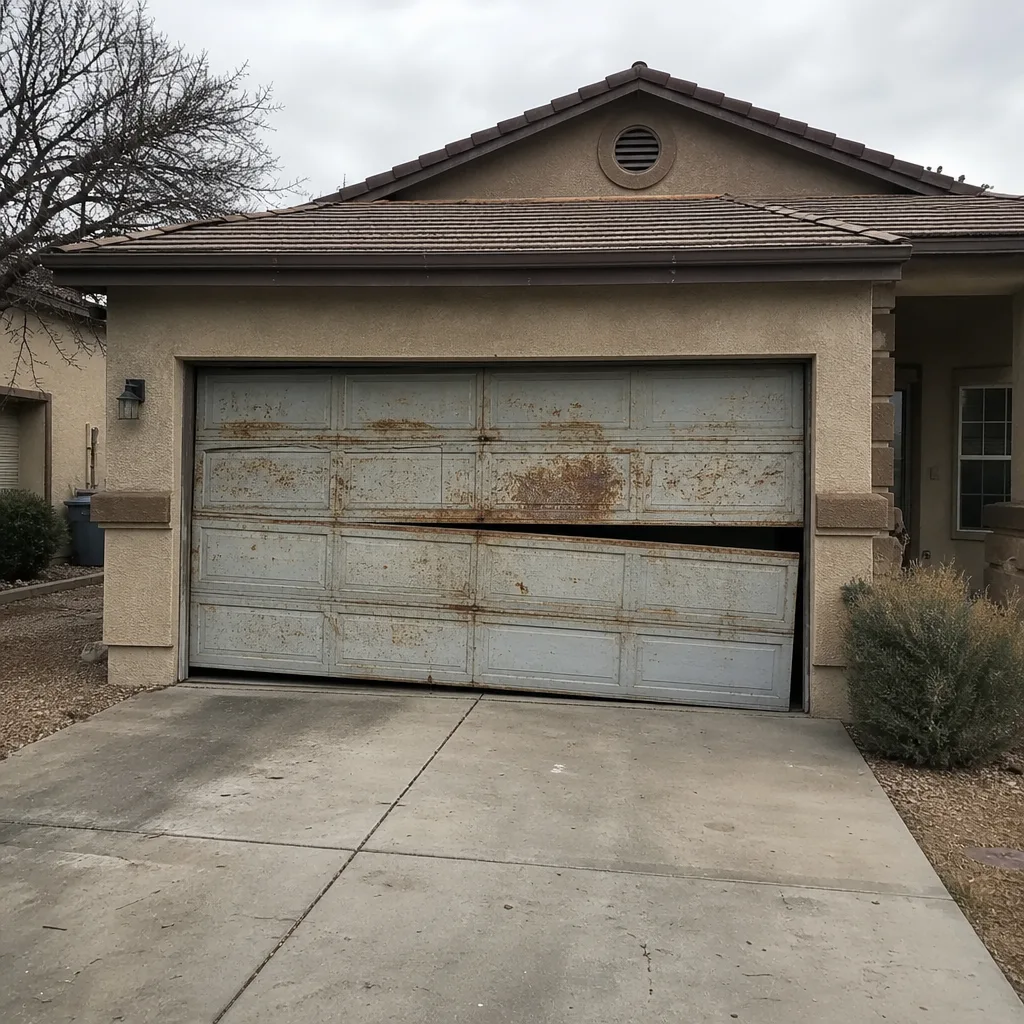 Before
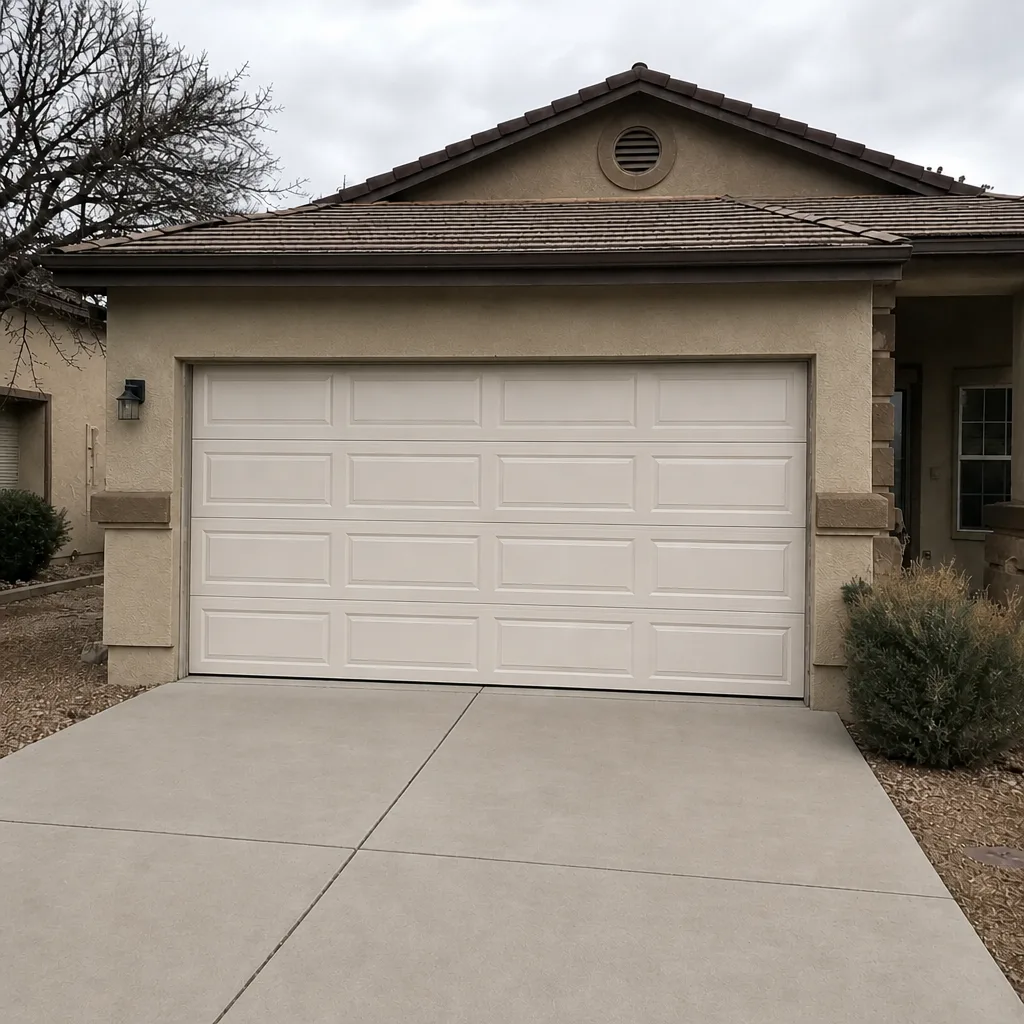 After
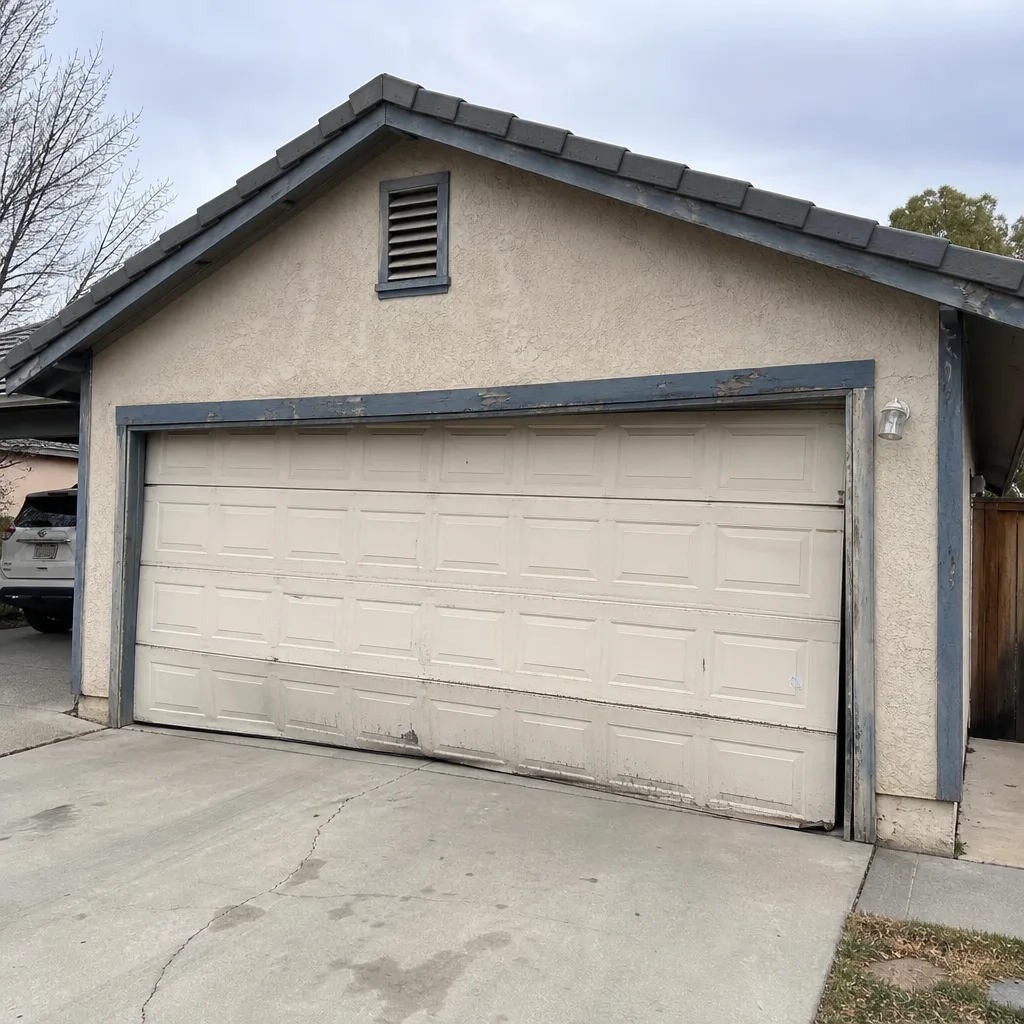 Before
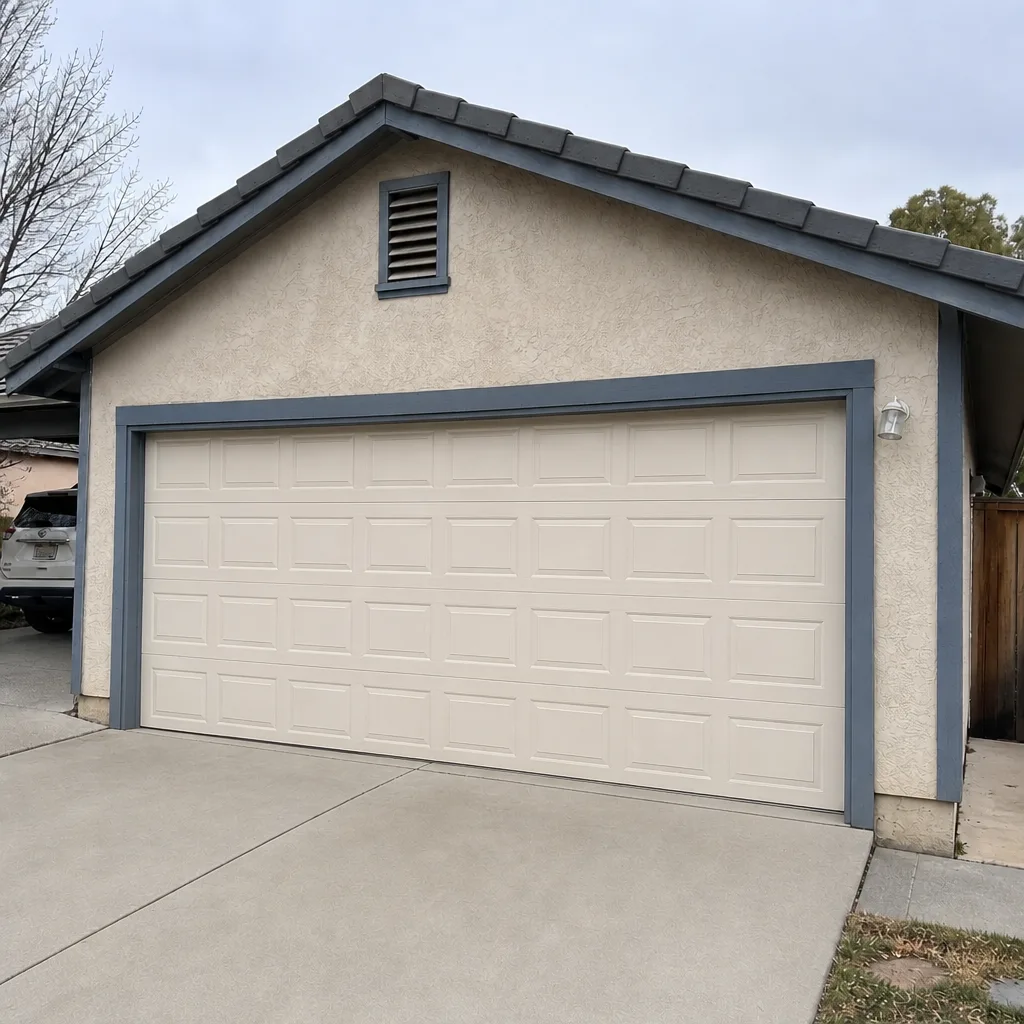 After
When to Call a Professional
Call us before you touch anything if: a spring is visibly broken, stretched, or making noise; a cable is frayed or slack; the door doesn’t reverse on contact with an obstruction; the door is significantly out of balance (it should stay put when released halfway up); the opener is straining, grinding, or stopping partway; you see a gap in the weather seal that’s letting dust or water in; or you hear anything that sounds like metal popping, snapping, or grinding. Any of those is a professional call. For everything else in this guide, a homeowner can handle the check and the lighter tasks with the schedule above. Otto’s Garage Door Enterprise offers free estimates in Enterprise. Call (833) 620-7107.
Frequently Asked Questions
Twice a year, at minimum, in October and March, plus a light monthly three-minute visual check. Enterprise’s extreme heat and dust make twice-yearly professional (or thorough DIY) service the floor, not the ideal. Many homeowners do a full professional tune-up once a year and handle the monthly checks themselves.
A silicone-based or lithium-complex grease rated for high temperatures. Avoid WD-40, which is a solvent and evaporates quickly in heat. Apply it after the summer heat has broken, in October or March, not during August. Call (833) 620-7107 for a quote on a professional lubrication tune-up if you’d rather not do it yourself.
Yes. It’s the fastest, cheapest safety check you can do, and it’s a legal requirement on all openers made since 1993. If it fails, the opener needs adjustment. Don’t put it off. Our technicians can adjust the reverse on most major brands in about ten minutes during a service call.
It won’t prevent it entirely, but it does help delay it and gives you warning before it happens. Springs break based on cycle count, not age, and in Enterprise the heat cuts that cycle expectancy roughly in half. A door rated for 10,000 cycles might go 10-12 years elsewhere but only 5-6 years here. Proper lubrication and a professional tune-up make sure the door isn’t straining the springs harder than necessary.
No. You can look at the springs and lubricate them (if you know what you’re doing and don’t touch the tension), but replacing or adjusting a torsion spring is a professional job. A door is 200 pounds riding on two springs. The forces at play are enough to cause serious injury. Call a trained technician for anything beyond visual inspection.
Yes. A documented maintenance log answers a buyer’s inspection questions directly and shows the door was cared for. In our experience it helps negotiations and reassures inspectors. It’s not the only factor, but it’s a real one, and it costs you nothing except a few notes in a notebook.
The Bottom Line
A garage door maintenance schedule isn’t one annual checkup. It’s a cycle. Light monthly checks, deep lubrication and tuning in October and March, and a professional look any time you see or hear something wrong. In Enterprise, the heat and dust mean this schedule matters more than it does in cooler, wetter parts of the country, and skipping the two transition months is where most homeowners get caught. Otto’s Garage Door Enterprise offers free estimates in Enterprise. Call (833) 620-7107. Upfront pricing before any work starts, no-hassle no changes at the door. That’s the deal.
Written by the team at Otto’s Garage Door Enterprise.