
Last updated November 17, 2026
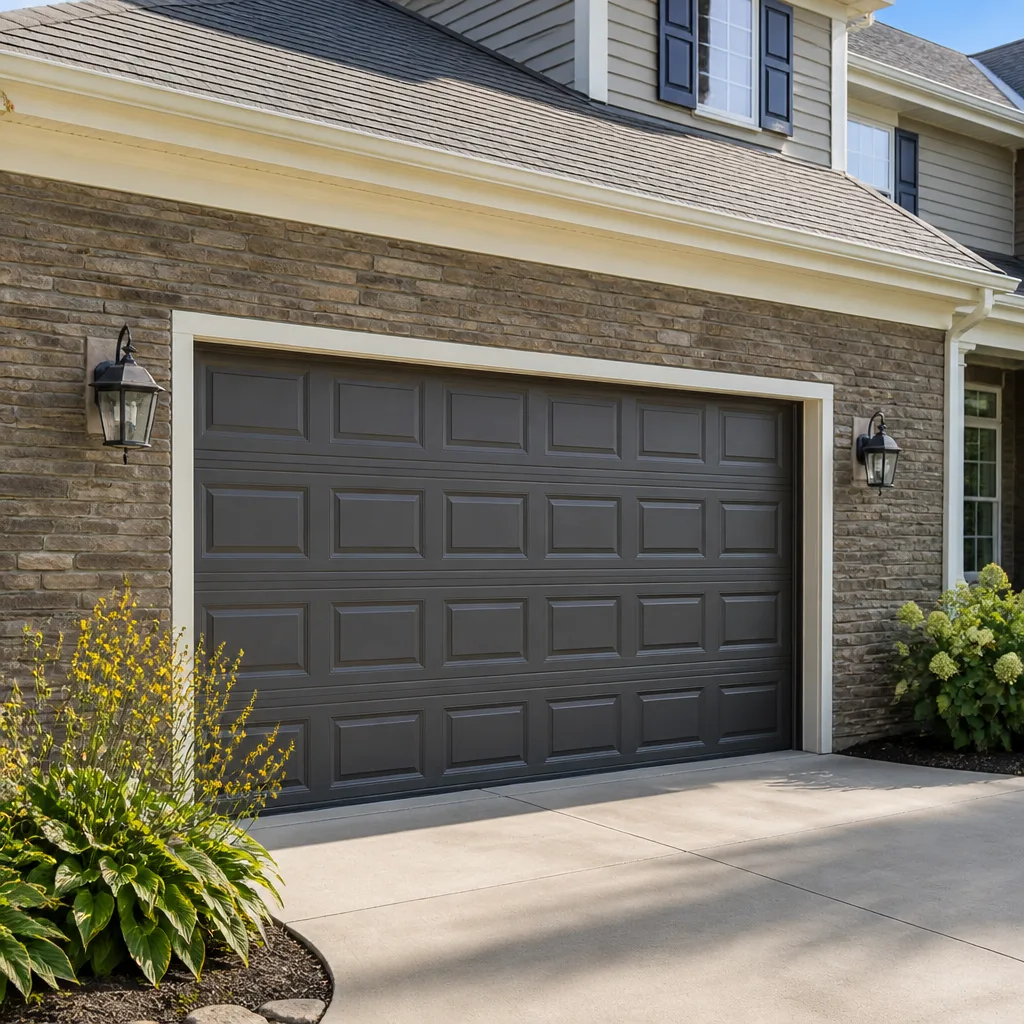 Raised-panel steel
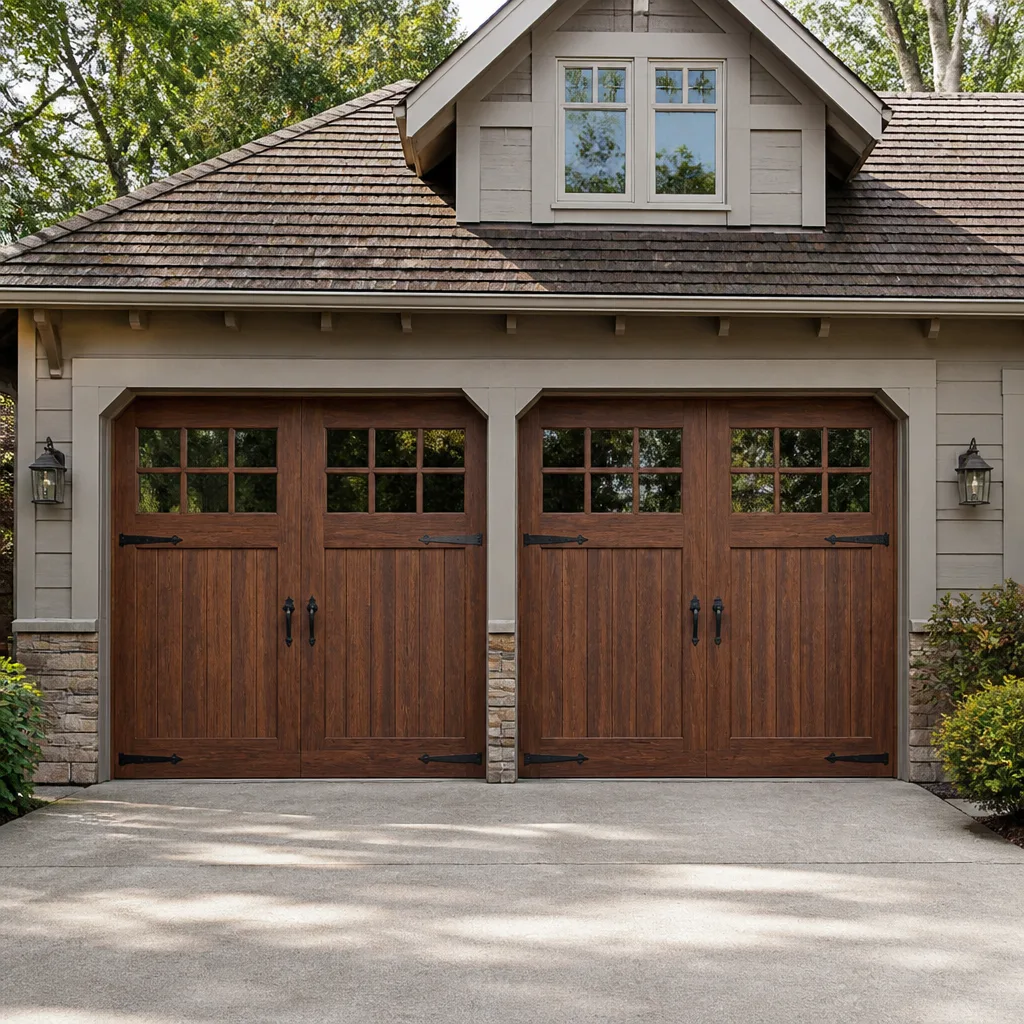 Carriage house
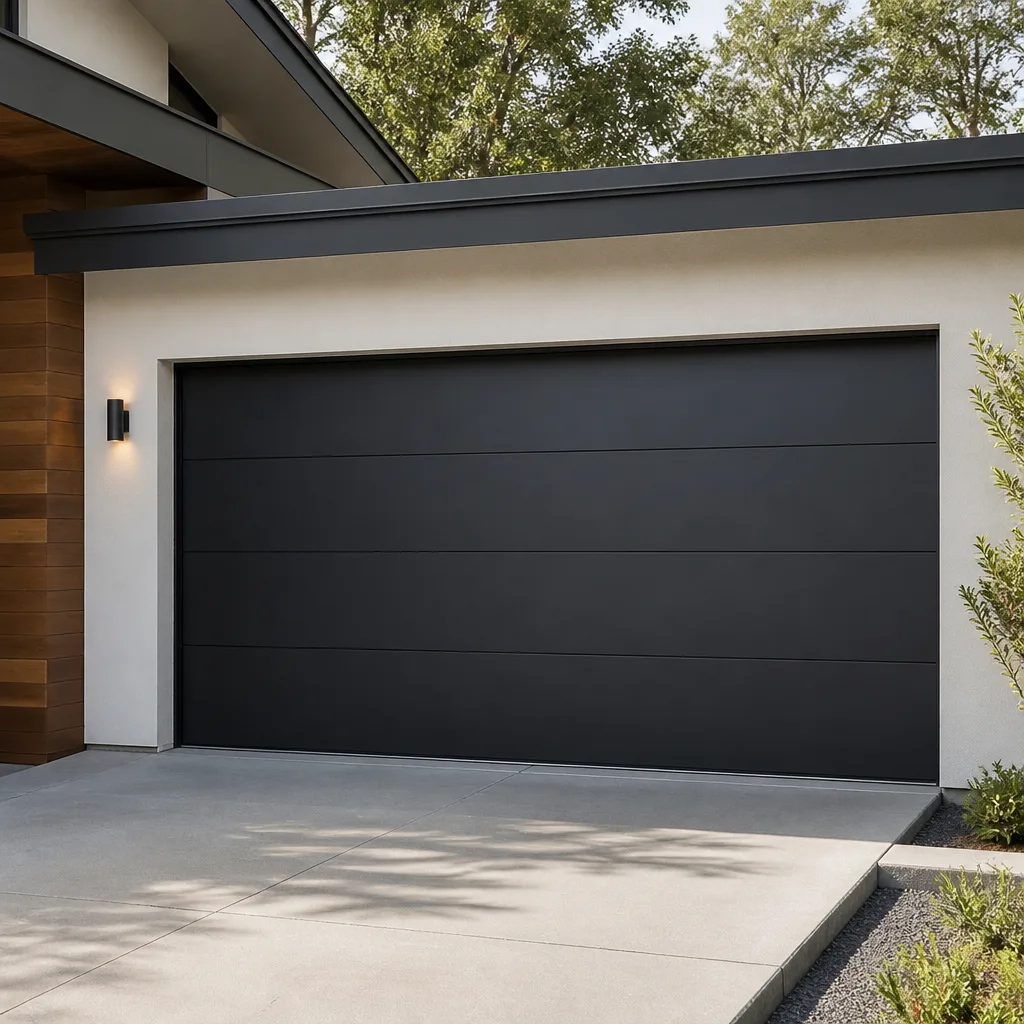 Modern flush
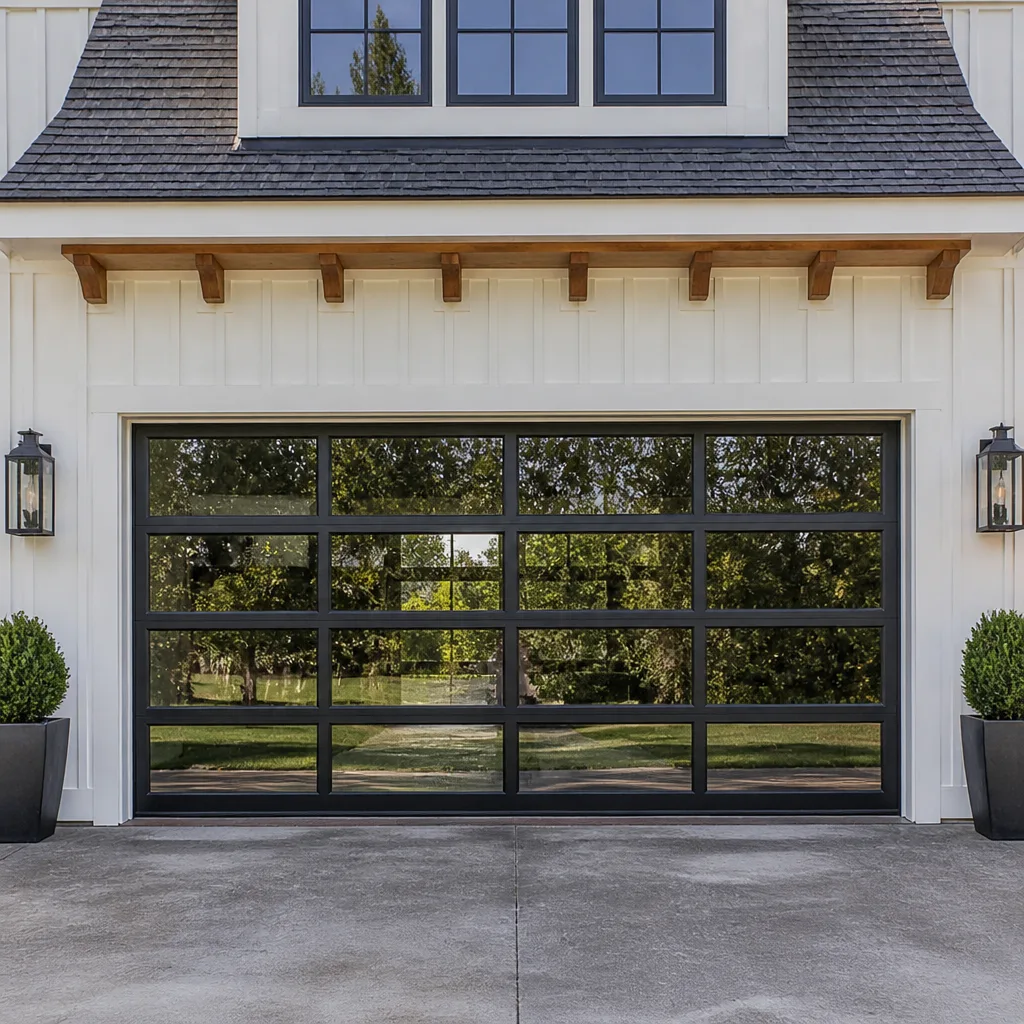 Full-view glass
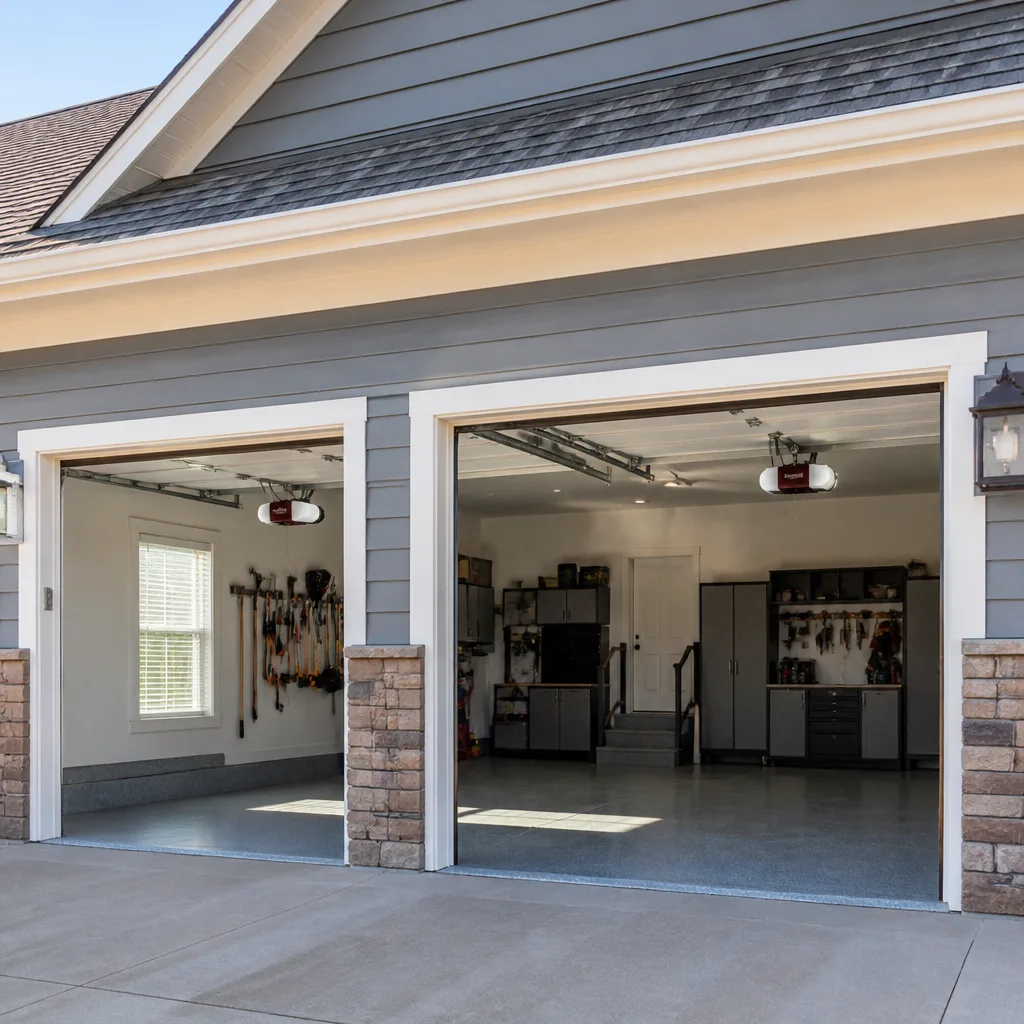 LiftMaster openers
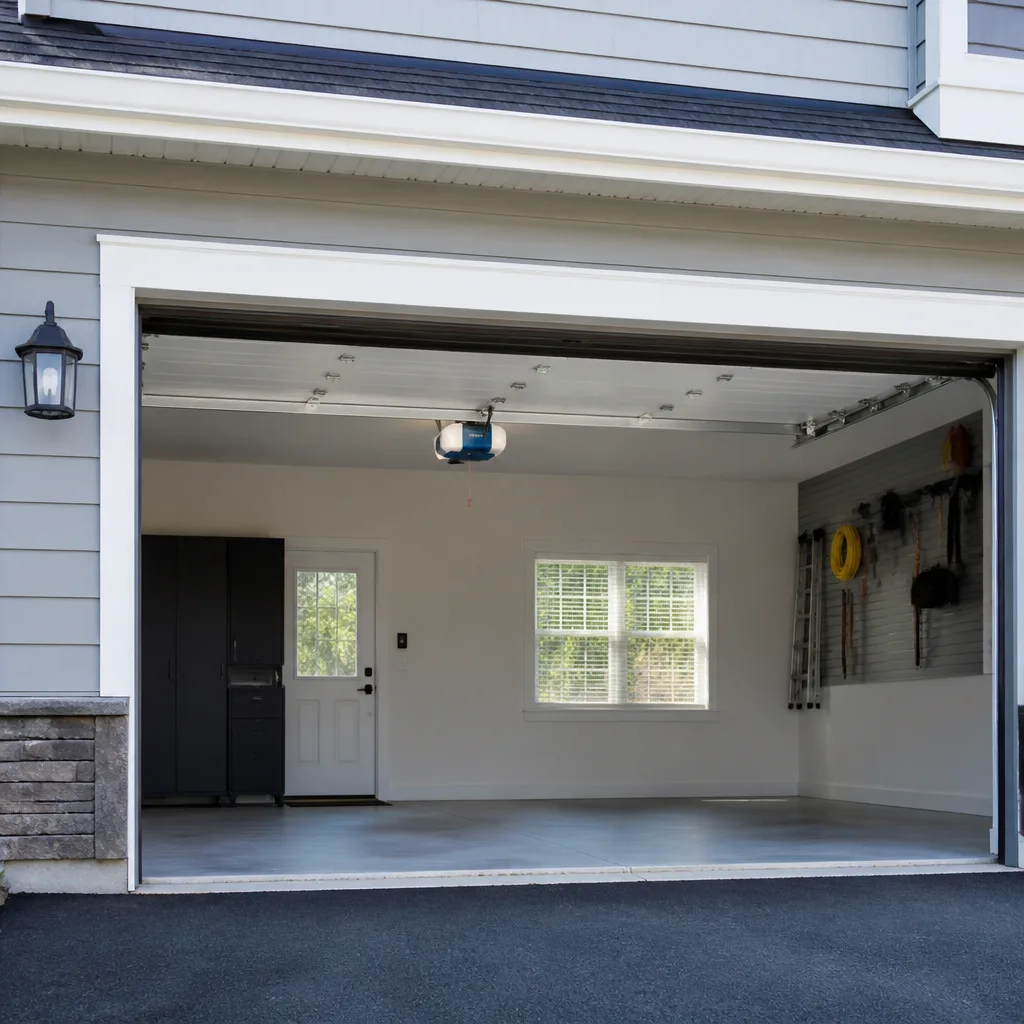 Chamberlain openers
Full 25-point door and opener safety check with every visit - springs, cables, rollers, tracks, and your LiftMaster or Chamberlain opener included
You get a price before we start. It does not change when the pro arrives.
Get your free estimateThe Complete Garage Door Installation Guide for Enterprise Homeowners
We’ve pulled out three brand-new garage doors in our time. Every one of them was installed by someone else first. One was an inch too short for the opening. One had almost no insulation on a garage bolted to a conditioned living room, so the bedroom above it never cooled right. One was a handsome carriage-style door that the HOA board would not approve in a hundred years. Each door had to come down, get returned or resold at a loss, and get reordered. In every case the labor to install it the first time got thrown away. The real cost of a bad installation isn’t the labor – it’s doing it twice. This guide walks Enterprise homeowners through every decision point before a single panel gets ordered.
Quick Answer
A garage door installation in Enterprise comes down to five decisions made in the right order: measure the actual rough opening (not the old door), pick the R-value that matches whether the garage shares conditioned space, confirm whether Clark County considers your job a like-for-like swap or a structural change that needs a permit, get HOA written approval before you order, and check that the new door’s weight and spring setup will work with your existing opener. Get one of those wrong and you’re paying for the door twice. A free measure and written quote before ordering is what protects you.
Styles & brands we work with
- Raised-panel steel
- Carriage house
- Modern flush
- Full-view glass
- LiftMaster openers
- Chamberlain openers
Table of Contents
- How Do You Measure a Rough Opening Correctly?
- What R-Value Actually Makes Sense in an Enterprise Garage?
- When Does a Clark County Permit Apply to a New Door?
- How Do You Get HOA Approval Before You Order?
- The Opener Compatibility Check Nobody Does First
- What Does Garage Door Installation Cost in Enterprise?
- What a Proper Installation Day Looks Like
- Common Mistakes to Avoid
How Do You Measure a Rough Opening Correctly?
Here’s the mistake we see on nearly every second opinion call in Enterprise: the homeowner measured the old door instead of the opening. Those are not the same number, and the gap between them is where expensive returns live. The old door hangs inside the opening with a little slack built into the track brackets. The rough opening is the actual framed hole in the wall – the concrete and wood the new door has to live inside. If you measure the old door, you’re measuring the thing being thrown away.
To measure the rough opening, you measure in three places and take the smallest number:
- Width at the top, middle, and bottom of the opening, from concrete edge to concrete edge, not from bracket to bracket.
- Height at the left, center, and right, from the floor (lowest point, allowing for slope) up to the underside of the header.
- Headroom – the space from the top of the opening to the ceiling, which decides whether you can use a standard torsion track or need low-headroom hardware.
- Backroom and sideroom – how far back the tracks can run and how much clearance exists on each side for springs and tracks.
A half-inch matters because standard doors ship in fixed increments. If you order a 16-foot door and your rough opening is a hair over 16 feet, a good installer pads it. If the opening is narrower, you’re returning a door that weighs 200 to 400 pounds. In Enterprise’s older stucco subdivisions the frames are sometimes out of square by an inch or more, which is another reason the measurement has to happen on-site, not over the phone. For a proper measure before you buy, we handle that during the Garage Door Installation in Enterprise step, and it’s free.
What R-Value Actually Makes Sense in an Enterprise Garage?
R-value is the insulation rating of the door, and in Enterprise it matters more than most homeowners expect – but only in certain houses. The Desert climate swings from 40°F winter mornings to 110°F summer afternoons, and the garage sits between the outside world and your conditioned living space. Whether that matters depends entirely on what the garage touches.
- Garage attached to conditioned living space (most Enterprise homes): You want R-12 to R-18. An insulated door slows heat transfer into the room sharing the wall or ceiling. This is where cheap, uninsulated doors quietly cost you money every July.
- Garage with a bedroom or living space above it: Go higher, R-16 or better. The door feeds the whole room above; heat and cold move up through the ceiling.
- Detached or non-conditioned garage: R-0 to R-6 is fine. You’re not cooling the garage, you’re just storing the car. Spending R-18 money here buys nothing.
The insulation must be continuous, with a thermal break at the edges. A “polyurethane injected” door with a plastic frame is different from a steel door with a styrene backer glued in. In Enterprise, where the late-afternoon summer sun hits west-facing doors hard, a well-insulated door also keeps the panel surface cooler, which reduces the thermal flex that ages the paint. We match the door’s R-value to the house during the measure, not after delivery – and Clopay and Amarr both build doors in ranges that suit Enterprise homes. If you’re not sure which side of the R-value line your house falls on, that’s a phone call, not a guess.
When Does a Clark County Permit Apply to a New Door?
Most simple garage door swaps in Enterprise do not require a permit – you’re replacing a door of the same size, in the same opening, with the same track layout. But a structural header change does, and that’s where homeowners get caught. If your installer has to cut into the header, widen the opening, reframe the wall, or change the structural support because the new door is taller or wider than the old one, that’s a building modification, not a door swap. Clark County treats that as structural work and wants it permitted and inspected.
How to know which bucket you’re in:
- Same-size swap, same track style: typically no permit; the work is a mechanical replacement.
- Different size door in an existing fit-able opening (raising the top only within the header): often no permit, but confirm with the county before ordering.
- Header change, reframing, or new opening: full Clark County permit, and the work must be inspected.
We flag which category a job falls into before we quote, because it changes both the scope and the price. If a permit is required, we don’t hide it in a number – we tell you the truth before any work starts. That’s part of what the 90-Day Done Right Promise covers: if a job needs a permit to be legitimate, the job gets a permit.
How Do You Get HOA Approval Before You Order?
Enterprise has a lot of master-planned and HOA-governed subdivisions where the architectural committee cares about garage doors – panel style, window layout, color, and carriage or raised-panel profiles. Ordering a door before that committee signs off is the fastest way to end up with a very expensive, very handsome door you cannot hang. We’ve watched this play out. The door sits in the driveway and the homeowner fights the board for months.
Here’s the order of operations that keeps you out of that trap:
- Pull your HOA’s architectural guidelines and find the garage door section – most name approved colors, panel styles, and whether windows are allowed.
- Grab the door manufacturer’s spec sheet for your candidate (Clopay publishes color chips and style sheets; Amarr does the same), so the committee is looking at the real product, not a photo.
- Put the request in writing and get the approval back in writing, with the door model and color spelled out.
- Keep the approval and the HOA contact on file until the door is on and inspected.
If the board asks for a survey of what the neighbors have, that’s often the fastest route – matching the profile of the houses around you tends to move the paperwork along. When in doubt, we’ve seen every approved color combination in the Enterprise subdivisions we work in, and we’ll tell you straight whether a door will clear a particular board before you order it.
The Opener Compatibility Check Nobody Does First
The opener is the part everyone deals with last, and it should be dealt with first. A garage door opener is matched to the weight and balance of the door it lifts. A heavier insulated door needs a stronger opener and the right spring setup to balance it. If you pick a 300-pound insulated Clopay for its R-value and try to lift it with the ½-horsepower opener that came with the old 120-pound door, the opener will strain and the springs will wear out years early. That’s the single most common compatibility mistake we see in Enterprise.
What to check while you’re still picking the door:
- Door weight: confirm it on the spec sheet, then match the opener’s rated lift capacity with a comfortable margin.
- Spring type: standard torsion springs are tuned to door weight; a heavier door needs heavier springs (and the right cycle rating).
- Opener brand and age: a LiftMaster or Chamberlain unit may still be in good shape but underrated for the new door; a Genie from the old days may not have the safety reverse features of a modern unit.
- Drive type: belt, chain, and screw drives handle weight differently, and a screw or belt drive is quieter for rooms above the garage.
Get this wrong and the opener becomes the weak link, then the springs, then the panels. For a full opener check before you buy, see Garage Door Opener Repair & Installation in Enterprise. Ask the question during selection, not on delivery day.
What Does Garage Door Installation Cost in Enterprise?
Garage door installation in Enterprise typically runs $1,100 to $3,800 for a standard single door, and $1,800 to $6,500 for a double, depending on insulation, style, size, and whether the opener needs replacing. Here’s a realistic line-item breakdown for the local market:
| Line Item | Typical Range |
|---|---|
| Single door, uninsulated steel, installed | $1,100 – $1,800 |
| Single door, insulated steel, installed | $1,600 – $2,600 |
| Double door, uninsulated steel, installed | $1,800 – $2,800 |
| Double door, insulated steel, installed | $2,600 – $4,200 |
| Carriage / premium style add | $600 – $1,500 |
| New opener installed, with door | $400 – $800 |
| Track and hardware, replacement | $200 – $500 |
| Clark County permit (if structural change) | varies; typically a few hundred |
Two things matter about the price. First, the price is quoted and agreed before any work starts – not revised upward when the installer sees the site. The measure happens first, the written quote happens after, and the number on the quote is the number on the invoice. Second, installation cost is not a repair cost. Installation is measured, ordered, and scheduled; it isn’t a same-day emergency call, and anyone promising a same-day new door should make you suspicious. If you want a free second opinion on a written estimate you already have, we’ll read it with you at no charge. The best way to get an accurate figure is to Otto’s Garage Door Enterprise home page for the offers, then call (833) 620-7107 for a free measure.
What a Proper Installation Day Looks Like
A good install day is orderly and unhurried. Here’s the sequence you should expect, and if any of it gets skipped, that’s a flag:
- Site protection: the crew lays down protection for the floor and surrounding stucco, because panels and old hardware come out before new ones go in.
- Old door and track removal: the old door and tracks come out, and the springs get their tension released safely before anything is cut or loosened.
- Opening prep: the rough opening gets squared up as needed, and the header and jamb get checked against the new door’s measurements.
- Track and hardware set: vertical and horizontal tracks are set true, with shims where the framing is out of plumb.
- Panel hang and balance: panels go on, and the door is balanced on the springs so it moves by hand with one finger.
- Opener fit and adjustment: the opener is fitted, travel limits set, and the safety reverse is tested with a block of wood.
- Walk-through and cleanup: you get a demonstration, the warranty paperwork, and a job cleaned up behind them.
One safety note: garage door springs are under high tension and can injure badly if released without the right winding bars and training. We never recommend a homeowner touch the springs on a new install or an old one. A door is 200 pounds riding on two springs. Respect it. That’s not a sales pitch, it’s the reason to leave the torsion work to someone who does it every day. If you have an old door that’s failing rather than being replaced, start with Garage Door Repair in Enterprise; not every tired door needs a whole new install.
Common Mistakes to Avoid
- Measuring the old door instead of the opening. The old door hangs with slack; the opening doesn’t. Measure the actual framed hole, in three places, before you order.
- Ordering R-18 for a detached garage and R-0 for an attached one. The R-value has to match how the garage is used. Most Enterprise garages are attached – one of these two choices is wrong by definition.
- Skipping HOA approval until the door is delivered. Get written approval on the specific model and color before the order goes in. We’ve seen the driveway sit for weeks.
- Keeping an underrated opener for a heavier door. Match the opener’s capacity to the new door weight and spring setup while you’re picking the door, not after the install.
- Assuming a permit is or isn’t required without asking. A same-size swap usually doesn’t need one; a header change in Enterprise does. Confirm with Clark County before the work starts.
- Accepting a phone price and getting a different number at the door. A written quote after a real measure, with the number held to the invoice, is the only price that means anything.
- Letting someone lift the new door onto standard track on an old, warped header. The header gets checked; a half-inch of deflection means the whole door runs crooked.
See the difference
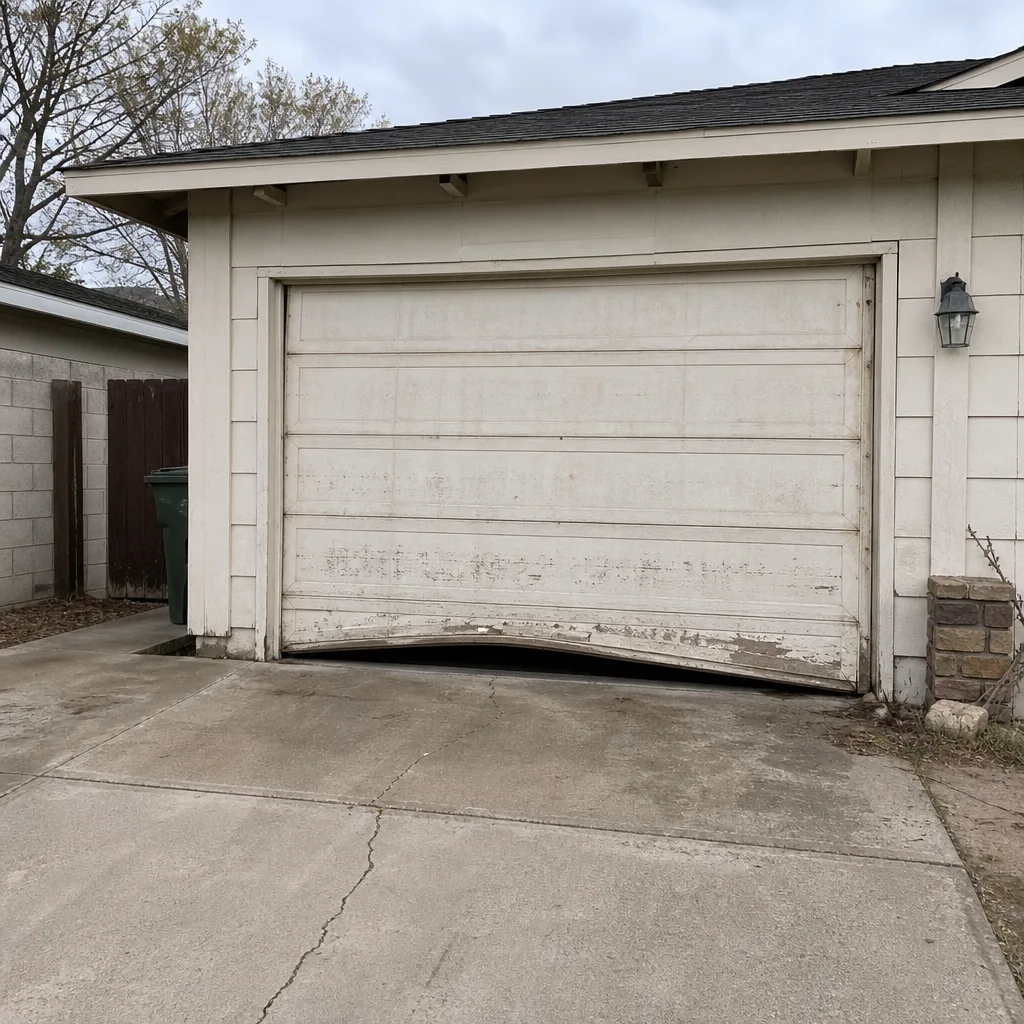 Before
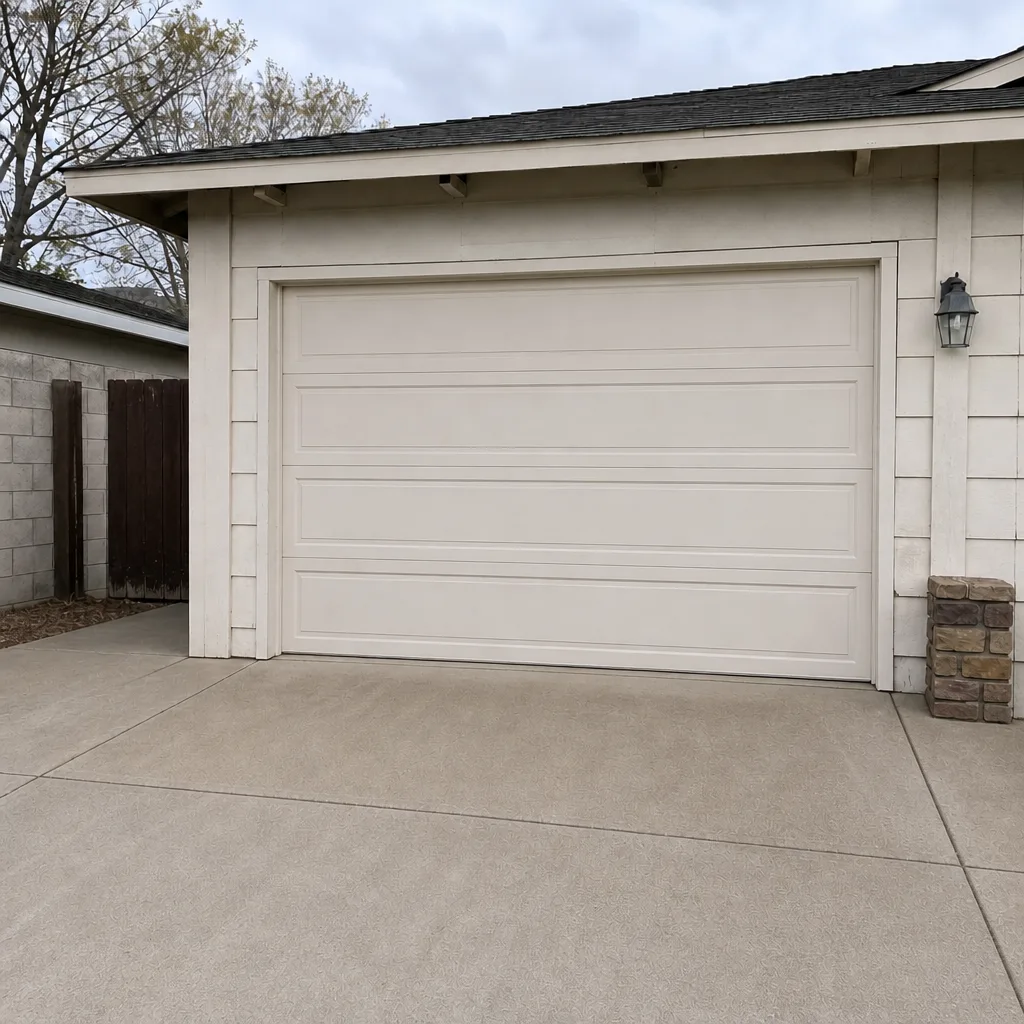 After
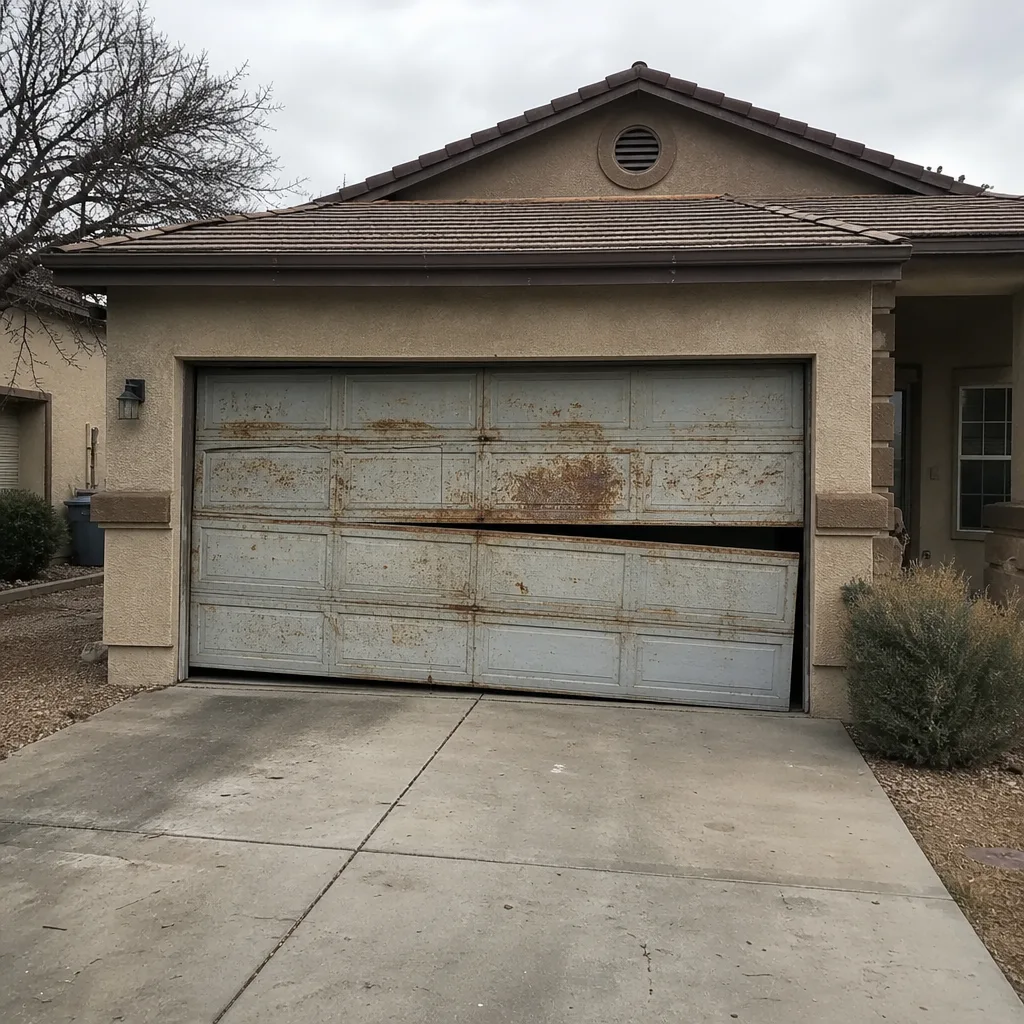 Before
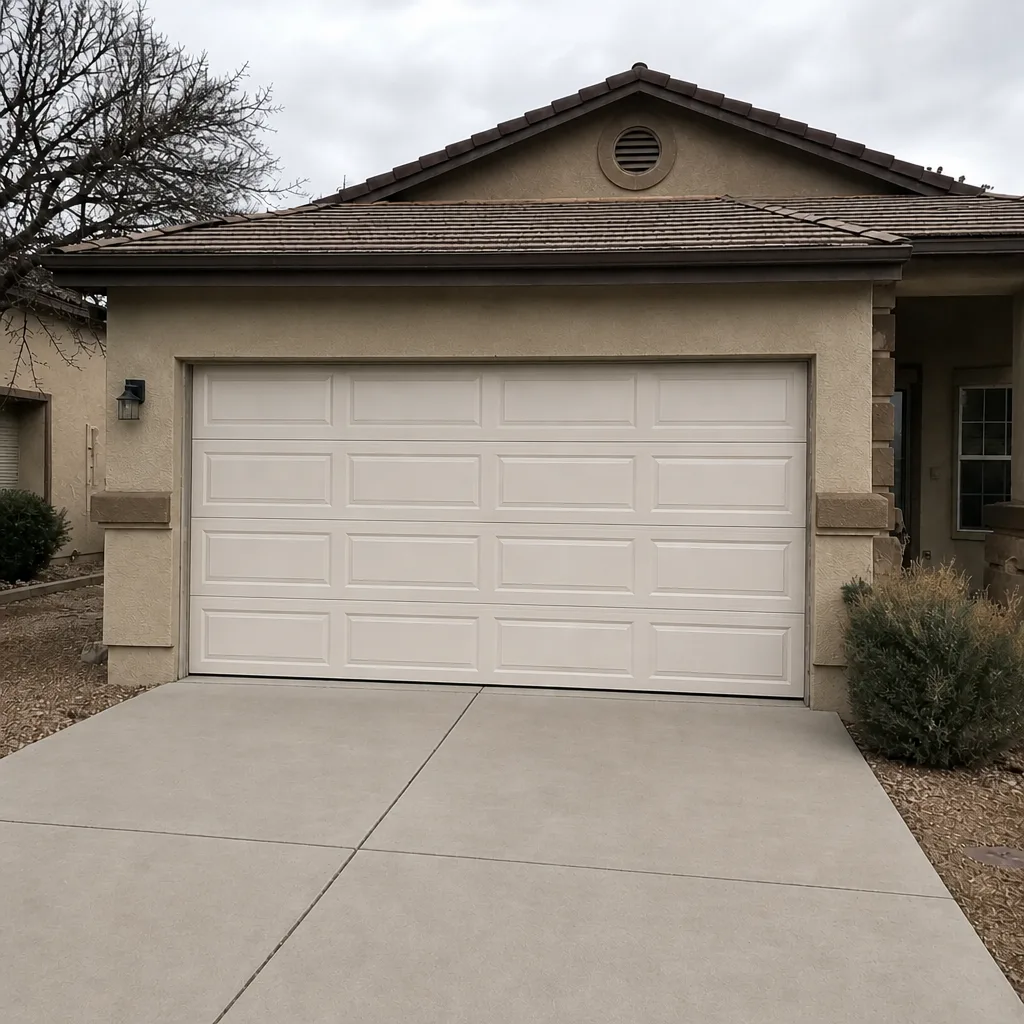 After
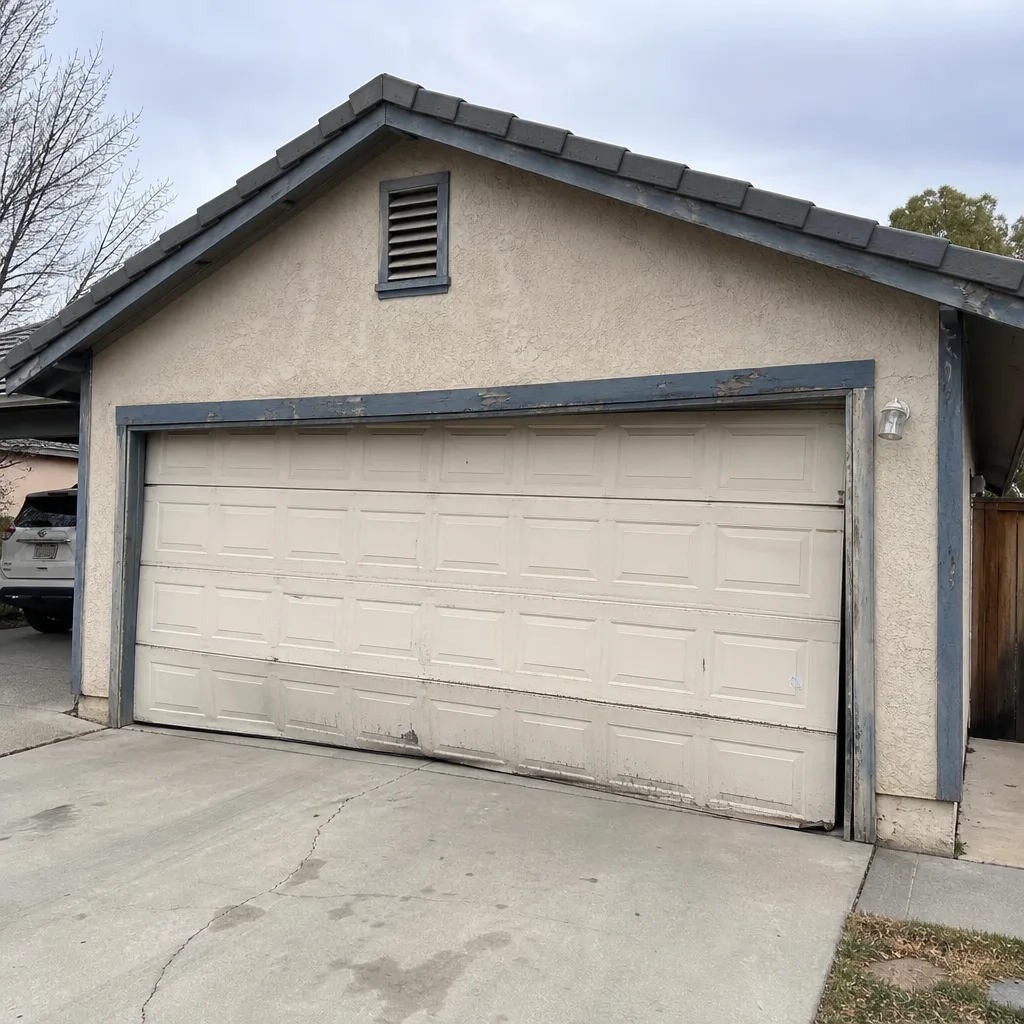 Before
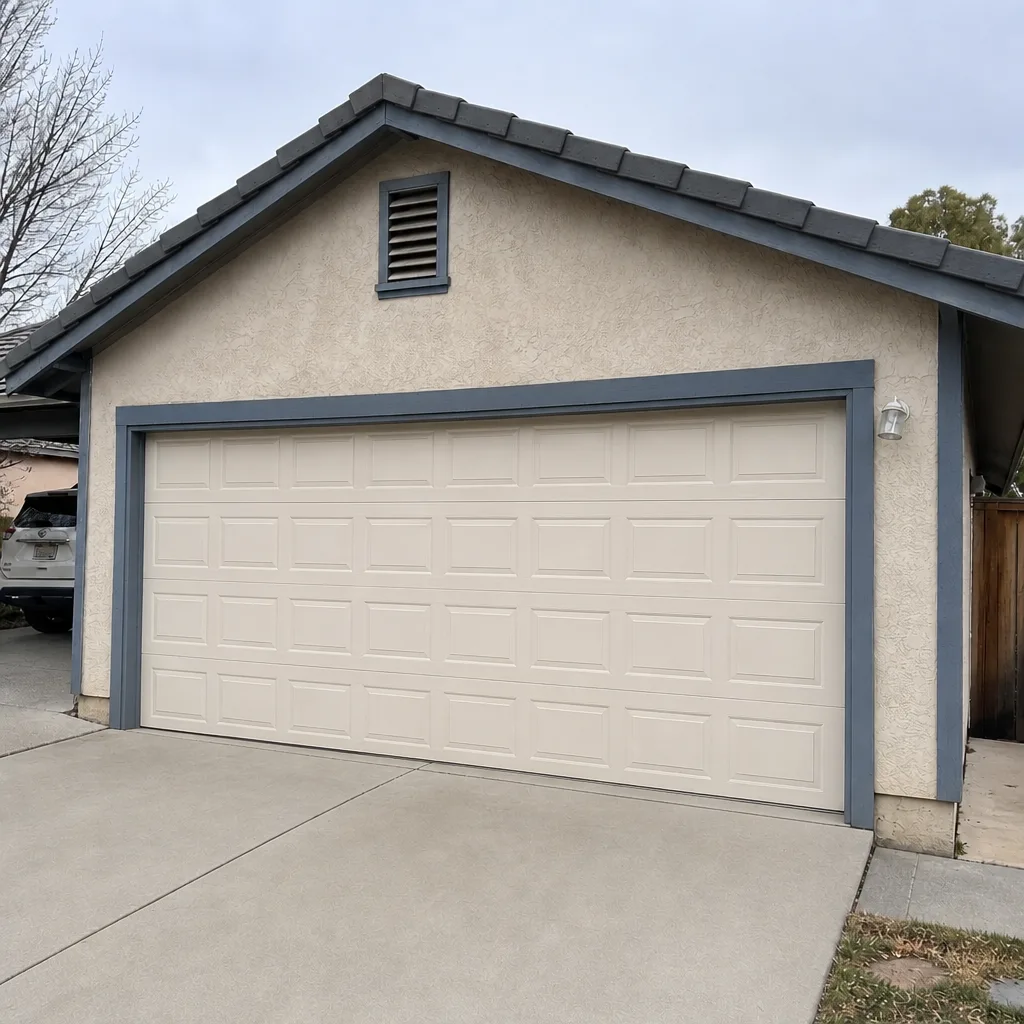 After
When to Call a Professional
Call us when any of the following is true: the opening is out of square or the header is questionable, the door you want is heavier than what your opener can lift, the HOA board has questions you need documentation for, the job might need a Clark County permit, or you already have a written estimate and want an honest read on it. The installation itself – hanging 200 to 400 pounds of door on tensioned springs, squaring tracks, and setting an opener’s safety reverse – is not a homeowner weekend project, and we don’t pretend it is. If you’re in Enterprise and the door is on its last legs, we give free estimates, honest pricing held from quote to invoice, and up to 22 years of experience behind the folks doing the install. Otto’s Garage Door Enterprise offers free estimates in Enterprise – call (833) 620-7107.
Frequently Asked Questions
Garage door installation in Enterprise typically runs $1,100 to $2,600 for a single door and $1,800 to $4,200 for a double, with insulated and carriage-style doors at the higher end. Opener replacement adds $400 to $800. The price is quoted and agreed after a free on-site measure and does not change at the door. Call (833) 620-7107 for an exact figure – the measure and the quote are free.
A like-for-like swap of the same size door in the same opening typically does not need a permit in Enterprise. A change that alters the header, reframes the opening, or otherwise changes the structure is structural work and needs a Clark County permit. We tell you which category your job is in before any work starts.
Match the R-value to whether the garage touches conditioned living space. Attached garages want R-12 to R-18; garages with a bedroom above want R-16 or better; detached or non-conditioned garages are fine at R-0 to R-6. In a Desert climate, an attached garage with a thin door costs money every summer. Call (833) 620-7107 and we’ll tell you which one your house is.
No, and you should be wary of anyone who says they can. A new installation is measured, ordered, and scheduled, and that takes days to weeks depending on the door. Same-day service applies to repairs and emergencies, not to new-door installs. We’ll give you a written schedule with the quote.
Often not, and that’s the reason to check before you order. A heavier insulated door can exceed the lift capacity of the opener that handled the old door, and the spring setup has to match too. We check compatibility during the measure so you’re not replacing the opener after the fact. If yours needs work, see our opener page or call (833) 620-7107.
The installers are experienced and the work is backed by the 90-Day Done Right Promise in writing on every job. We’re locally owned and owner-operated, the name on the van is the name on the invoice, and the license number is published. Call (833) 620-7107 for a free estimate before you commit to anything.
The Bottom Line
Installing a new garage door in Enterprise is a series of decisions, and the order you make them in is what separates a clean install from an expensive do-over. Measure the actual rough opening. Match the R-value to how the garage is used. Confirm the Clark County permit question before work starts. Get HOA approval in writing before you order. Check opener compatibility while you’re still choosing the door, not after delivery. Do those five things in order and the install is a one-time job. Skip one and you’re the person in the driveway with a door you can’t hang. For Enterprise homeowners who want a straight answer and a price that holds, we know the local doors and we’ll tell you what your house actually needs.
Ready to get a real number? Call (833) 620-7107 for a free measure and estimate in Enterprise. We’ll look at the opening, the header, and your opener, put the price in writing, and hold it – no surprises between the phone and the driveway.
Written by the team at Otto’s Garage Door Enterprise.