
Last updated November 17, 2026
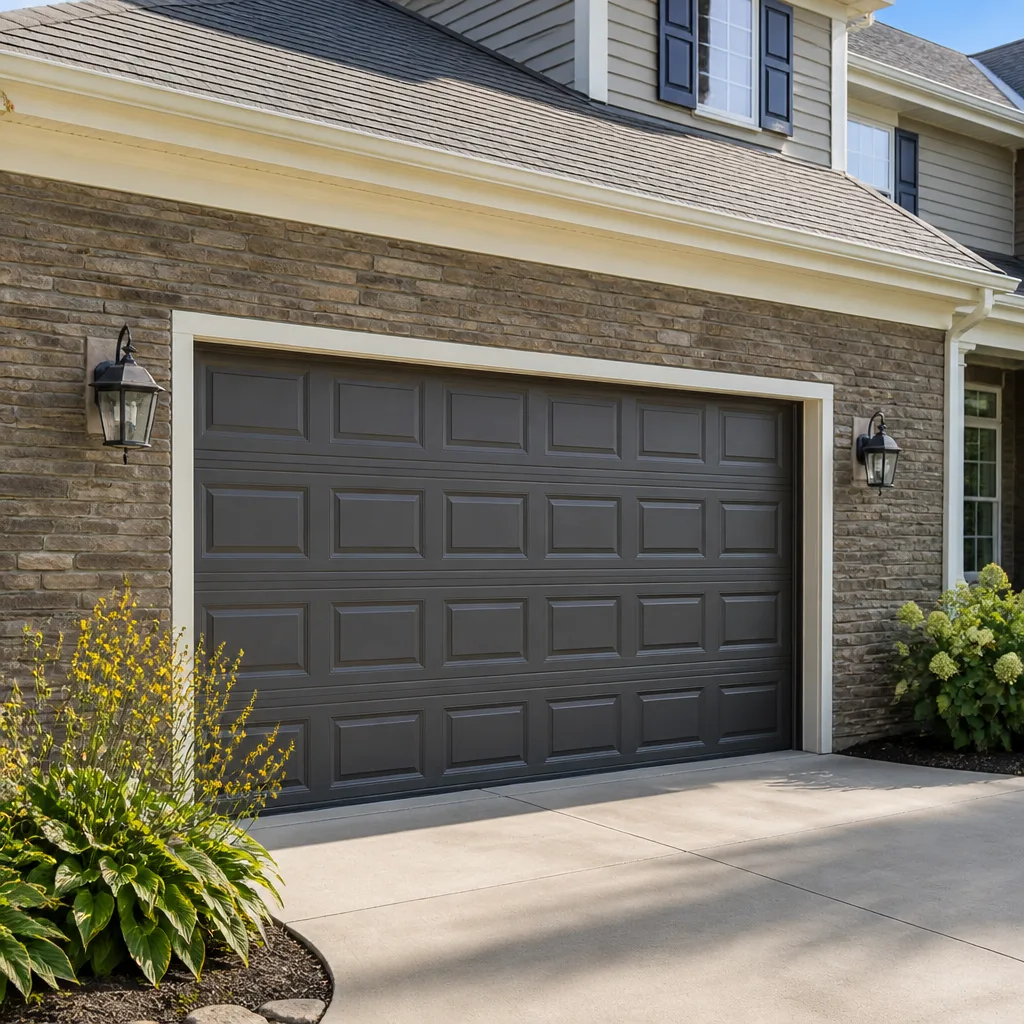 Raised-panel steel
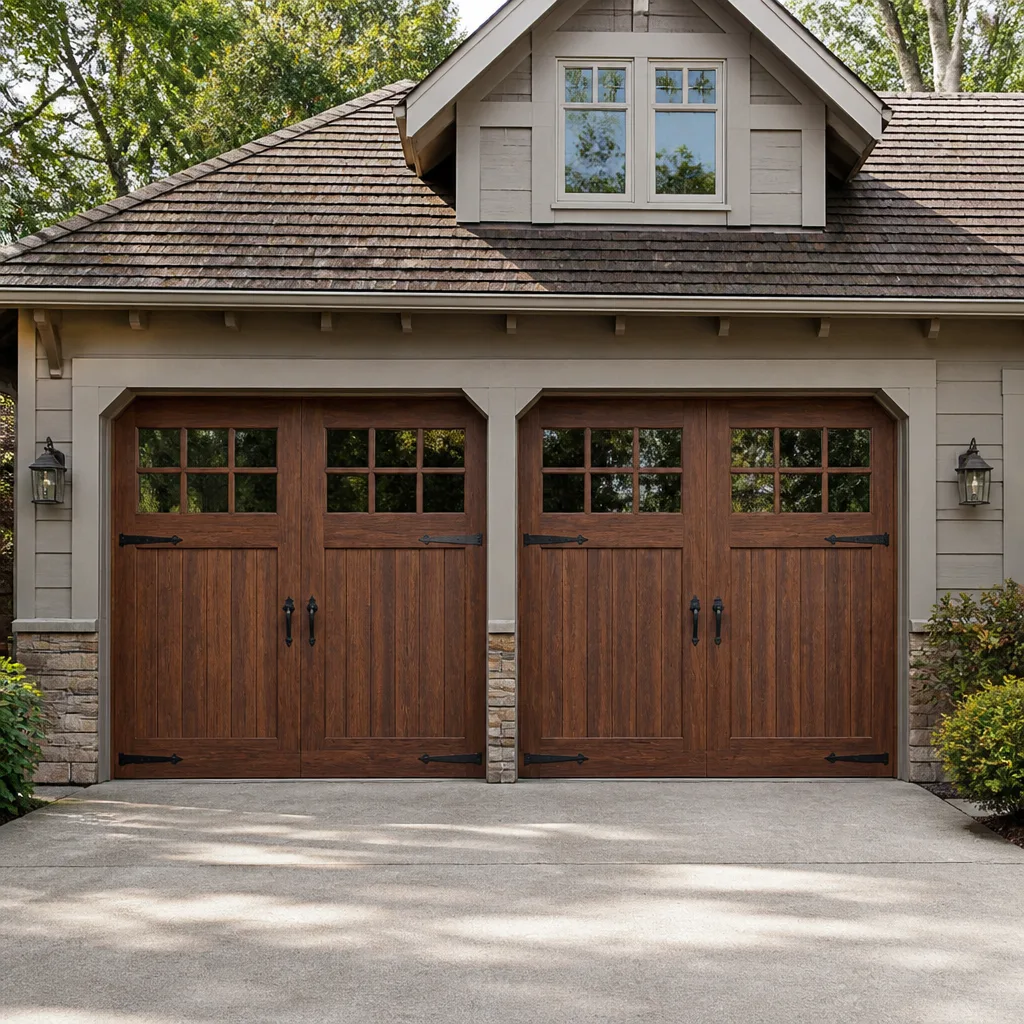 Carriage house
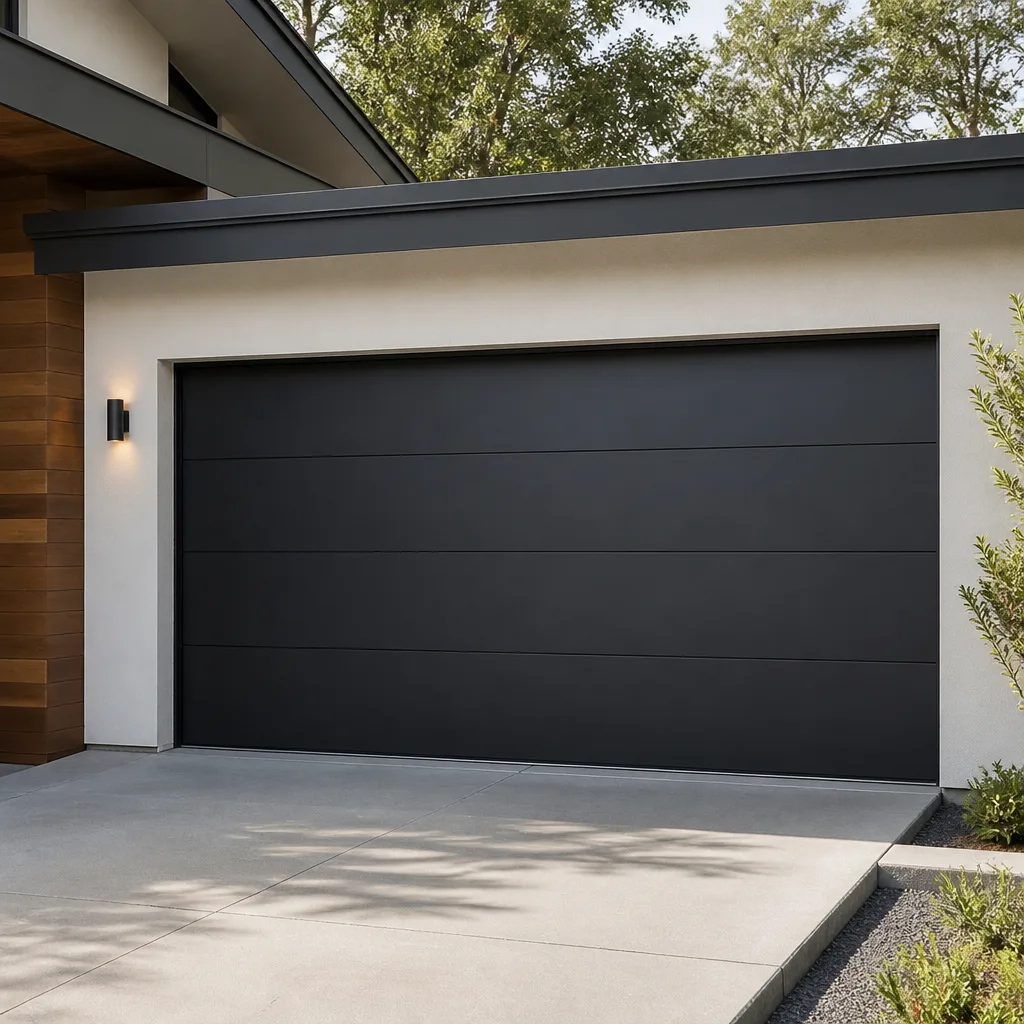 Modern flush
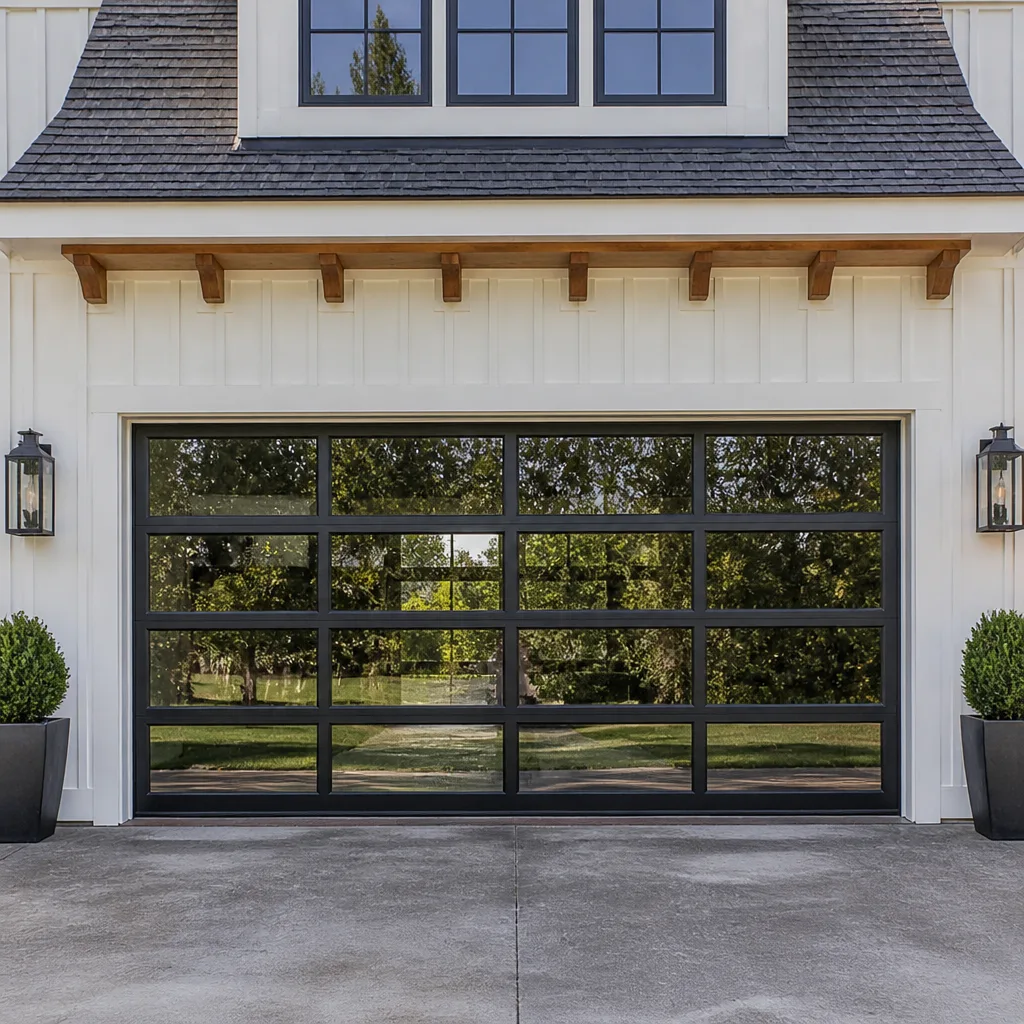 Full-view glass
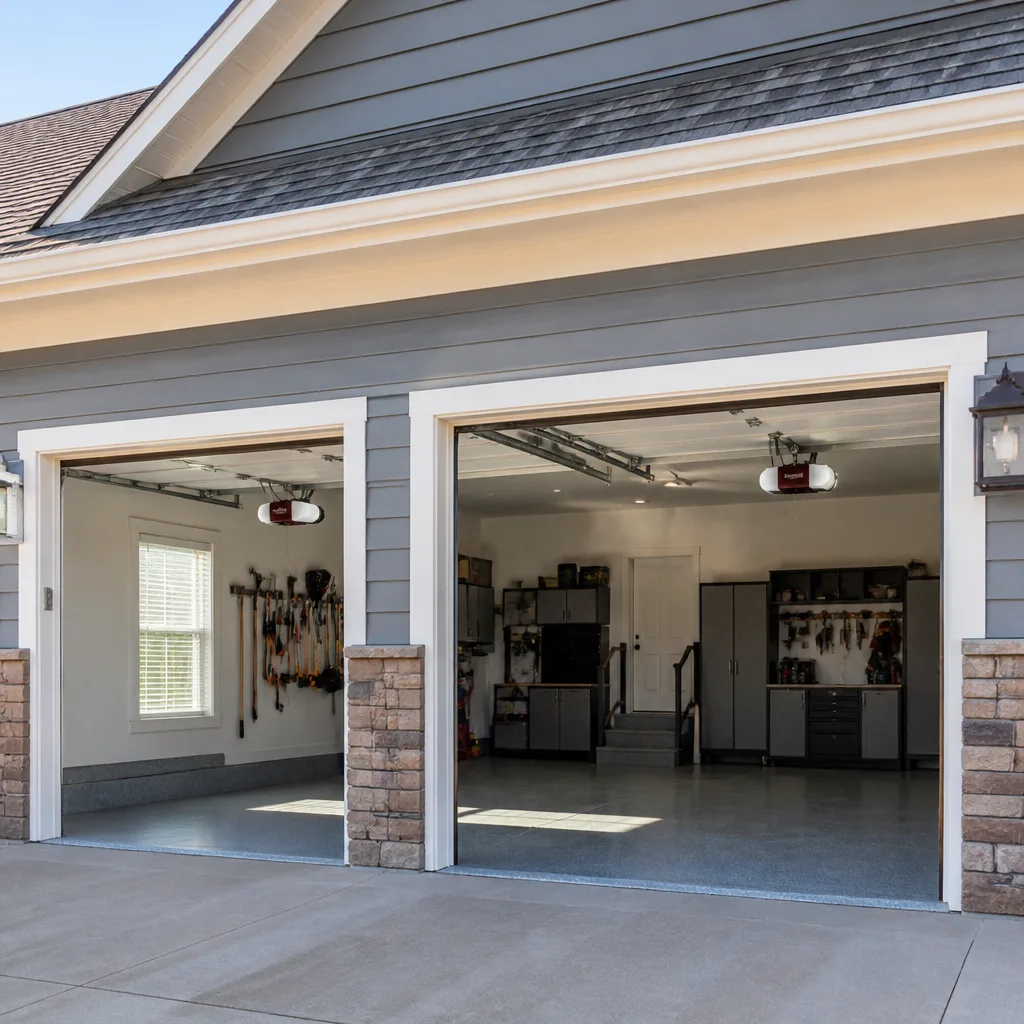 LiftMaster openers
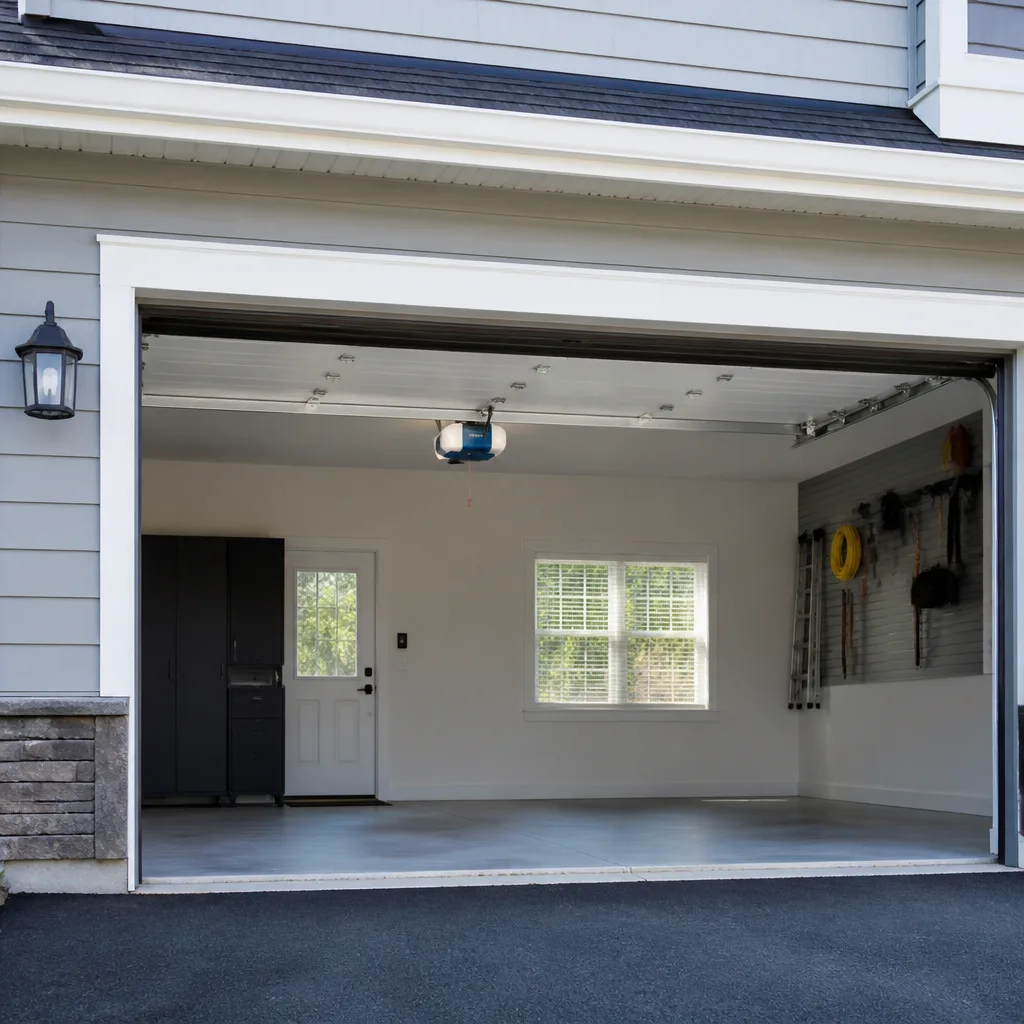 Chamberlain openers
Full 25-point door and opener safety check with every visit - springs, cables, rollers, tracks, and your LiftMaster or Chamberlain opener included
You get a price before we start. It does not change when the pro arrives.
Get your free estimateThe Complete Guide to Garage Door in Enterprise
The average Enterprise garage door opens and closes about 1,500 times a year. That’s higher than most national averages, and it’s not because people here are restless. It’s because in Enterprise, the garage is the front door. Families pull in, walk through the garage into the laundry room, and the formal entry gets used twice a year when relatives visit. The front door is decorative. The garage door is load-bearing life.
That one habit changes every timeline you’ve read online. Spring life, opener wear, panel fatigue, sensor drift: all of it runs faster here than the manufacturer’s chart suggests. This guide walks through what actually fails in Enterprise, why the heat and the stucco matter, and which repairs you can safely handle versus the ones that cost people fingers every year.
Quick Answer
A garage door in Enterprise usually lasts 15 to 25 years for the panels and 7 to 12 years for the springs, but the desert heat in this part of Southern Nevada shortens spring life by roughly 20 to 30 percent compared with the manufacturer’s rating. Most problems homeowners call about, torsion springs, opener strain, and off-track panels, are fixable in a single visit. The ones that go wrong are the ones someone tried to fix alone.
Styles & brands we work with
- Raised-panel steel
- Carriage house
- Modern flush
- Full-view glass
- LiftMaster openers
- Chamberlain openers
Table of Contents
- Why Enterprise Heat Eats Springs Faster Than the Label Says
- How Stucco and Block Construction Change Door Alignment
- Wind-Load Ratings That Actually Apply in the Southern Nevada Basin
- Door Styles That Fit Enterprise HOA Palettes
- Opener Strain: Why the Opener Is Almost Never the Real Problem
- What You Can Fix Yourself and What You Absolutely Shouldn’t
- A Maintenance Schedule Built for 1,500 Cycles a Year
- What Garage Door Work Costs in Enterprise
Why Enterprise Heat Eats Springs Faster Than the Label Says
Manufacturers rate torsion springs in cycles, usually 10,000 for standard oil-tempered wire and 15,000 to 25,000 for the upgraded stuff. Those ratings assume a moderate climate. Enterprise is not a moderate climate. From June through September, the air inside a closed garage regularly hits 110°F and can push past 120°F on a west-facing wall in the afternoon. That’s a metal fatigue problem, not a comfort problem.
Heat does two things to a spring. It relaxes the steel slightly, which drops the tension the door needs to balance, and it accelerates corrosion at the coil where microscopic cracks start. In our experience across Enterprise, we see oil-tempered springs fail at 6,000 to 8,000 cycles instead of the rated 10,000. That’s the difference between a spring that should last eight years and one that lets go in year five or six.
- Oil-tempered springs: fail earlier here than the cycle count predicts, especially on doors that face west or south.
- Galvanized or coated springs: cost a little more up front, hold tension longer in the heat, and are worth it in Enterprise.
- High-cycle springs: rated for 25,000 cycles or more, useful if your household is running the door four or five times a day.
Most homeowners don’t think about spring life until one snaps. But a spring is a wear part, same as a tire. It has a cycle count. We can look at a spring and tell you roughly how much is left on it, the same way a tire shop tells you how many miles you’ve got before the tread goes.
How Stucco and Block Construction Change Door Alignment
Most of the tract housing in Enterprise is stucco over block, sometimes over frame, and that construction behaves differently than the wood-framed homes you see in wetter parts of the country. Block doesn’t move much. Stucco, though, cures and shrinks over the first decade, and it doesn’t shrink evenly. The door opening can shift a quarter inch out of square over five or six years, and that quarter inch is enough to make a door bind on one side.
When a door binds, homeowners often assume the door itself is warped. Usually it’s the opening that moved. In Enterprise, we’ve seen this most on homes built in the 2000s where the stucco was applied over block and the header has crept with the seasonal expansion and contraction. The door didn’t get crooked. The frame did.
What that means in practice:
- A door that rubs on one side after a hot summer is a sign of frame movement, not a failing door.
- Track adjustment is often the fix, not a new door.
- If the gap at the top of the door grows visibly wider on one side, the header may need shimming.
- Stucco over block tends to hold up better in wind than wood-framed construction, but the door opening itself is what matters for alignment.
If you notice a growing gap or a door that suddenly catches, get someone to look at it before you force the opener. A binding door will strip the opener’s plastic gears inside a week.
Wind-Load Ratings That Actually Apply in the Southern Nevada Basin
Coastal wind ratings and Midwest tornado ratings don’t apply here. The Southern Nevada basin has its own wind profile. The gusts that matter aren’t hurricanes, they’re the dry microbursts and spring wind events that can hit 50 to 70 mph for a few minutes at a time, then disappear. What fails in those events isn’t the door’s structure. It’s the door’s ability to stay in the track when the wind pressure hits the inside face.
When you’re shopping for a door in Enterprise, you want a wind-load rating that reflects local code for the Southern Nevada basin, not a marketing sticker from a national manufacturer. The current building code adopted by the jurisdictions in this area specifies design wind speeds that are typically in the 110 to 130 mph range for basic wind speed, but the door’s rated strength has to match the home’s exposure category. In plain terms:
- Ask about the door’s wind-load certification and confirm it matches the code for your specific address, not just “wind-rated.”
- Add reinforcement struts to wide doors. A 16-foot residential door acts like a sail; a couple of struts stiffen it considerably.
- Check the track gauge. Standard 2-inch track gets bent out of shape in high-wind events. Heavier gauge track holds.
- Ask about the bottom seal and the wall seal at the sides. Wind finds the gaps before it finds the panels.
Most of the doors that come off track in Enterprise during a wind event aren’t structural failures. They’re doors that were never braced for the gusts in the first place.
Door Styles That Fit Enterprise HOA Palettes
A lot of Enterprise neighborhoods have an HOA with a written palette, and the palette usually runs to earth tones, tan, taupe, adobe red, and a narrow range of browns. That’s not a decoration question. If you order a door in the wrong color, the HOA can make you repaint or replace it on your own dime.
The good news is that the door styles that fit the palette don’t require custom pricing. Look for these in a standard manufacturer lineup:
- Raised-panel steel in a short-panel or long-panel configuration, painted to match the HOA tone. Steel panels take paint well and hold color in desert sun.
- Carriage-house styles with faux hardware. These read as more expensive than they are and are common in Enterprise neighborhoods.
- Flush or ribbed steel for contemporary HOA palettes. Simple, strong, and easy to color-match.
- Wood-look steel or composite if the HOA requires the wood appearance but you want the low maintenance. Steel with a wood-grain texture is the practical middle ground.
One note on color: the sun in Enterprise fades dark paint faster than light paint, and the color will look different in the summer than in the winter. A brown door that matches the HOA sample card in spring can drift toward orange by August. Ask for a color-fast finish and be specific about fade resistance when you order. Clopay and Amarr both make lines that hold color in this climate better than the entry-level options.
Opener Strain: Why the Opener Is Almost Never the Real Problem
We hear it several times a week: “the opener is dying.” Sometimes it is. But usually the opener is straining because it’s fighting a door that’s out of balance. If a door weighs 200 pounds and the springs aren’t carrying their share, the opener is pulling dead weight it was never built to lift. It’ll whine, it’ll stutter, and eventually the plastic drive gear strips.
Here’s how to think about it. The springs lift the door. The opener lifts you, not the door. If the door can’t be lifted by hand with a little effort, the springs are the problem and replacing the opener makes the next problem worse. If you replace the opener without fixing the balance, you’ll be back in six to twelve months with a stripped gear and a door that hums, doesn’t move, and needs a full reset.
The parts that actually fail on openers in Enterprise, in order of frequency:
- Plastic drive gears in the older Craftsman and Chamberlain units, which wear out faster when the door is heavy.
- Safety sensors, which drift out of alignment from heat, dust, or a knocked bracket. Nine out of ten “the door won’t close” calls are a sensor issue.
- Logic boards in units that live in a 110°F garage. The boards fry sooner than they do in cooler climates.
- Batteries in the remote and the keypad, which fail in the first cold snap of the winter and send everybody out to the driveway in a bathrobe.
If you’re replacing an opener in Enterprise, a LiftMaster or Genie belt-drive unit will hold up well in the heat if the door is properly balanced. A belt drive runs quieter and has fewer moving parts than a chain drive. If you want to know more about how openers fail and what to do about it, our guide on Garage Door Opener Repair & Installation in Enterprise goes deeper.
What You Can Fix Yourself and What You Absolutely Shouldn’t
We get asked this constantly, and we’d rather answer it honestly than pretend everything needs a professional call. Some things are genuinely homeowner jobs. Others are the reason people show up in the emergency room.
Fine to do yourself:
- Replacing the batteries in the remote and keypad.
- Wiping down the safety sensors and checking their alignment.
- Cleaning and lubricating the rollers, hinges, and track with a proper garage door lubricant. Not WD-40. White lithium or silicone spray.
- Tightening loose hinge bolts with a socket wrench.
- Checking the balance by hand: lift the door halfway, let go, and it should stay put. If it drifts down, the springs are weak.
Absolutely not:
- Replacing torsion springs. This is the one that costs people a hand. Torsion springs are under enough tension to break a wrist if they release, and loosening the winding bars wrong can send one through a wall. If you’ve ever seen the warning sticker on the door, that’s why.
- Replacing cables. Cables are under the same tension plus the spring force. A snapped cable flails.
- Adjusting the torsion bar or winding cone.
- Straightening a bent track under tension.
We’ve been doing this long enough to know that a spring isn’t a “give it a shot” job. A door is 200 pounds riding on two springs. Respect it. Call somebody who’s been trained. Our Garage Door Repair in Enterprise page covers the specific failure modes we see and what each one takes to fix.
A Maintenance Schedule Built for 1,500 Cycles a Year
Most maintenance schedules tell you to lubricate twice a year and inspect once. That schedule was written for a house with average usage. In Enterprise, with 1,500 cycles a year and the heat working on the springs every day, a tighter schedule pays off. Here’s the one we actually recommend to customers:
- Monthly: run the door, watch it, listen to it. A new squeak, a stutter, a wobble, or a light that doesn’t come on is worth a look. Doesn’t cost anything to pay attention.
- Every quarter: lubricate the hinges, rollers, and the bearing plates at the spring bar. Light white lithium spray is enough; don’t soak the tracks with grease.
- Twice a year, before and after summer: test the safety sensors by blocking the beam with a box. The door should reverse. Test the balance by hand at the halfway point. Tighten the hinge bolts and the track brackets.
- Once a year: have someone check the spring tension and the cycle count. A pro can tell you roughly how much is left, which lets you plan a replacement instead of dealing with it on a Friday night.
- Every two to three years: check the cable wear at the drum and the bottom bracket. Cables that show fraying should be replaced before they fail.
That’s maybe twenty minutes of homeowner attention a quarter and one professional visit a year. It’s the difference between a door that lasts its rated life and a door that lets go in year six. For more on new doors and how door choices interact with maintenance, see Garage Door Installation in Enterprise.
What Garage Door Work Costs in Enterprise
Prices in Enterprise line up with the wider Southern Nevada market, and they can shift with material costs, so treat these as typical ranges rather than quotes. What matters more than any single number is that the price you’re quoted on the phone is the price you pay at the door. We quote upfront and hold the number.
- Torsion spring replacement (one spring): $180 to $340, including the spring, labor, and a balance test.
- Torsion spring replacement (both springs): $300 to $550. Worth doing together if one has failed; the other has the same cycles on it and will go soon.
- Cable replacement (each side): $120 to $220.
- Roller replacement (full set): $100 to $200.
- Track repair or realignment: $150 to $400, depending on whether the track needs replacing.
- Opener repair, sensor alignment, gear replacement: $120 to $280.
- Opener replacement, including install: $350 to $700 for a belt drive.
- New door installation, standard steel: $800 to $2,500, depending on size, insulation, and style.
- HOA-compliant custom door: $2,500 to $5,500.
Active discounts can bring those numbers down. Right now we’re running $40 off any repair over $200, a free second opinion on any written estimate, and no trip charge inside our county. The 10% senior and veteran discount is permanent and stacks on most jobs. When you call (833) 620-7107, you get a quote on the call and the same number at the door. No surprise invoices.
Common Mistakes to Avoid
- Forcing a binding door with the opener. If the door rubs on one side, stop opening it. Every cycle you force it strips the plastic drive gear a little more, and the repair gets more expensive.
- Greasing the tracks. Tracks are meant to be clean and dry. Grease collects desert dust and turns into grinding paste. Lubricate the rollers and hinges, not the track itself.
- Ignoring the second spring. If one torsion spring snaps, the other has the same cycles on it. Replacing only the broken one is a false economy most of the time.
- DIY spring replacement. We’ve seen the aftermath more than once, and it isn’t pretty. The springs are under enough tension to break bones.
- Skipping the balance test. Homeowners rarely test the balance until the door stops moving. A two-second hands-on check tells you a spring is failing before the opener dies.
- Ordering a door color from a catalog card. The color in the catalog and the color in Enterprise summer sun are not the same. Look at the actual finish, and check with your HOA before you order.
- Calling a national hotline for a same-day repair. You won’t get the person who’s going to show up. You’ll get a call center. Ask for a published address and a license number before anyone shows up.
See the difference
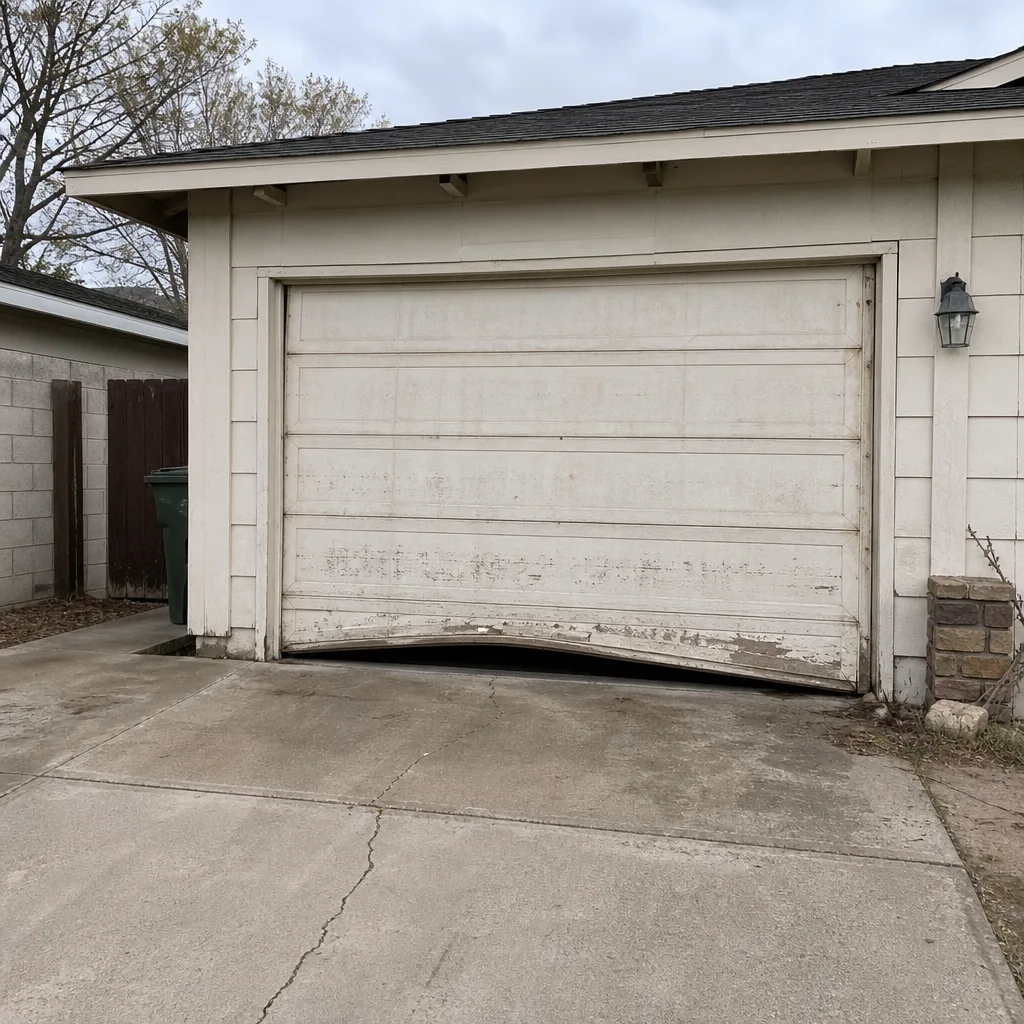 Before
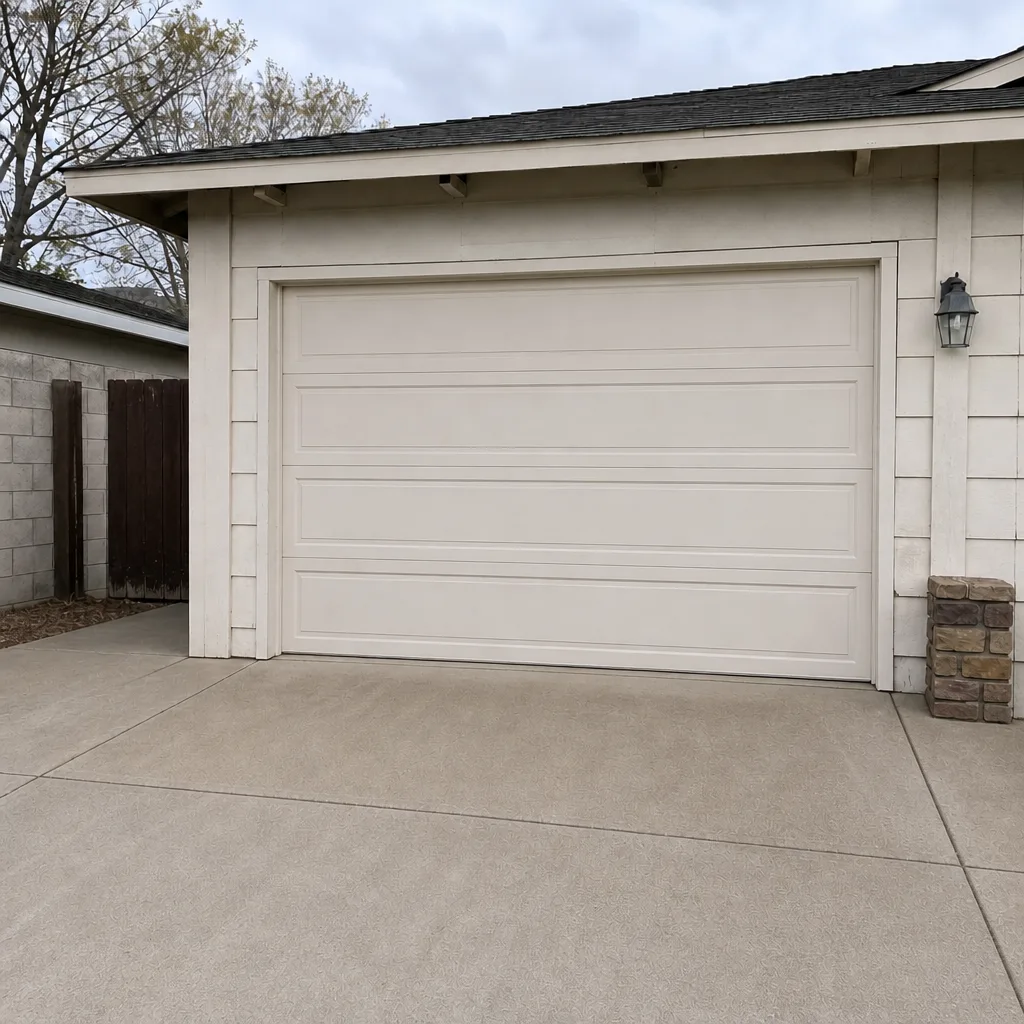 After
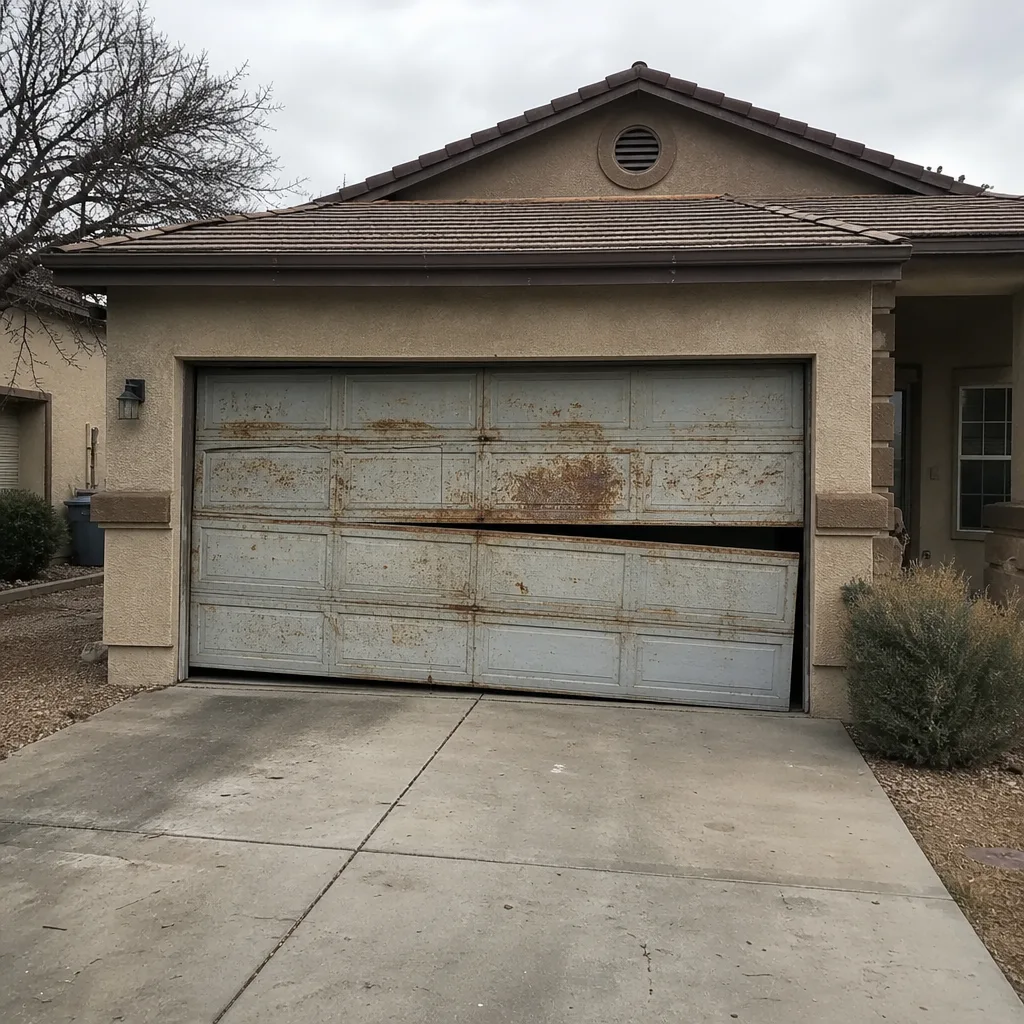 Before
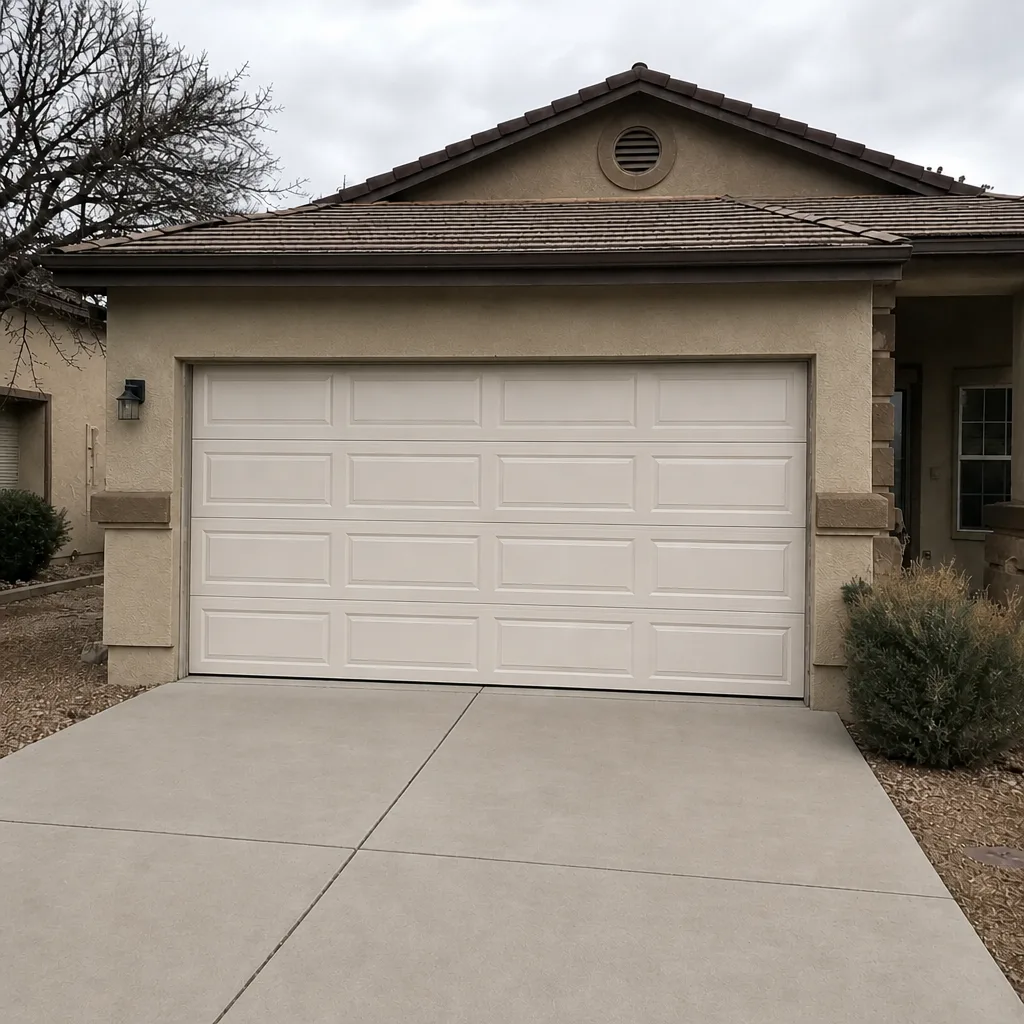 After
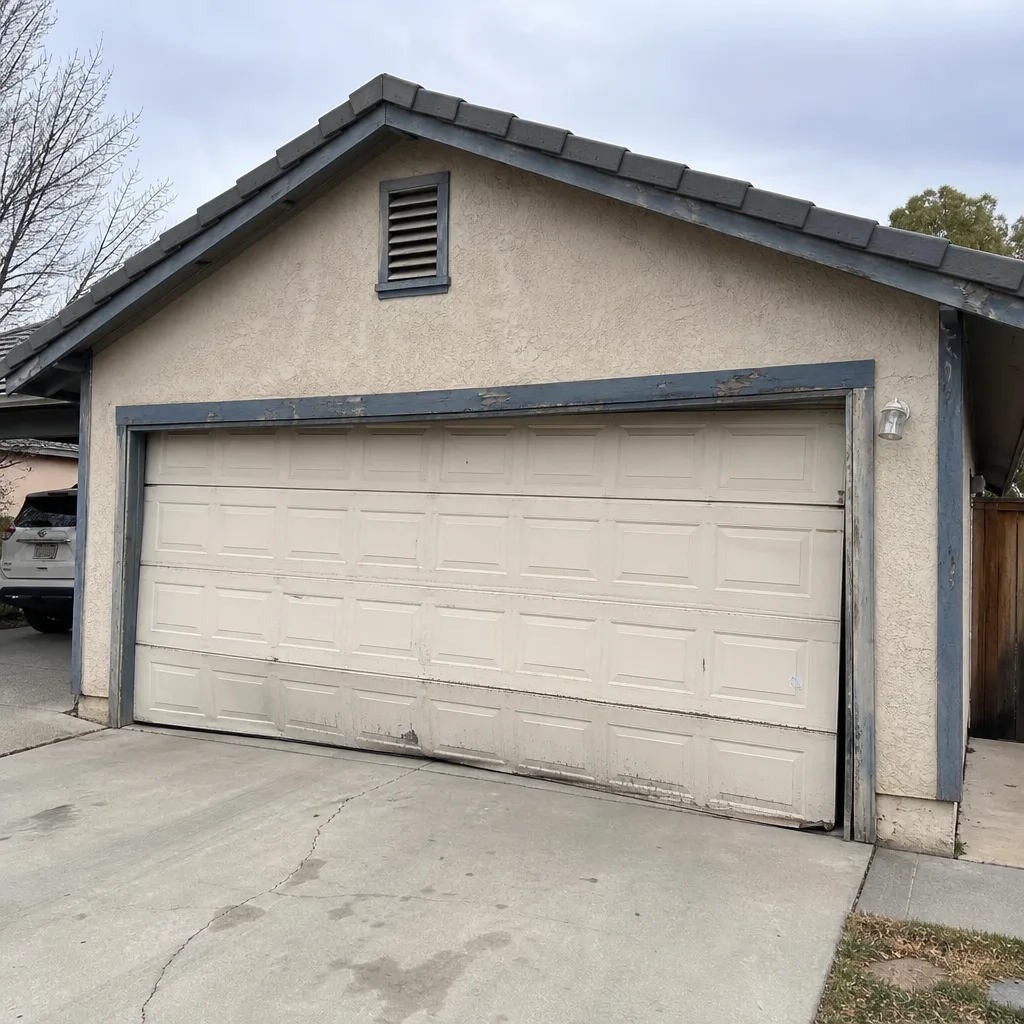 Before
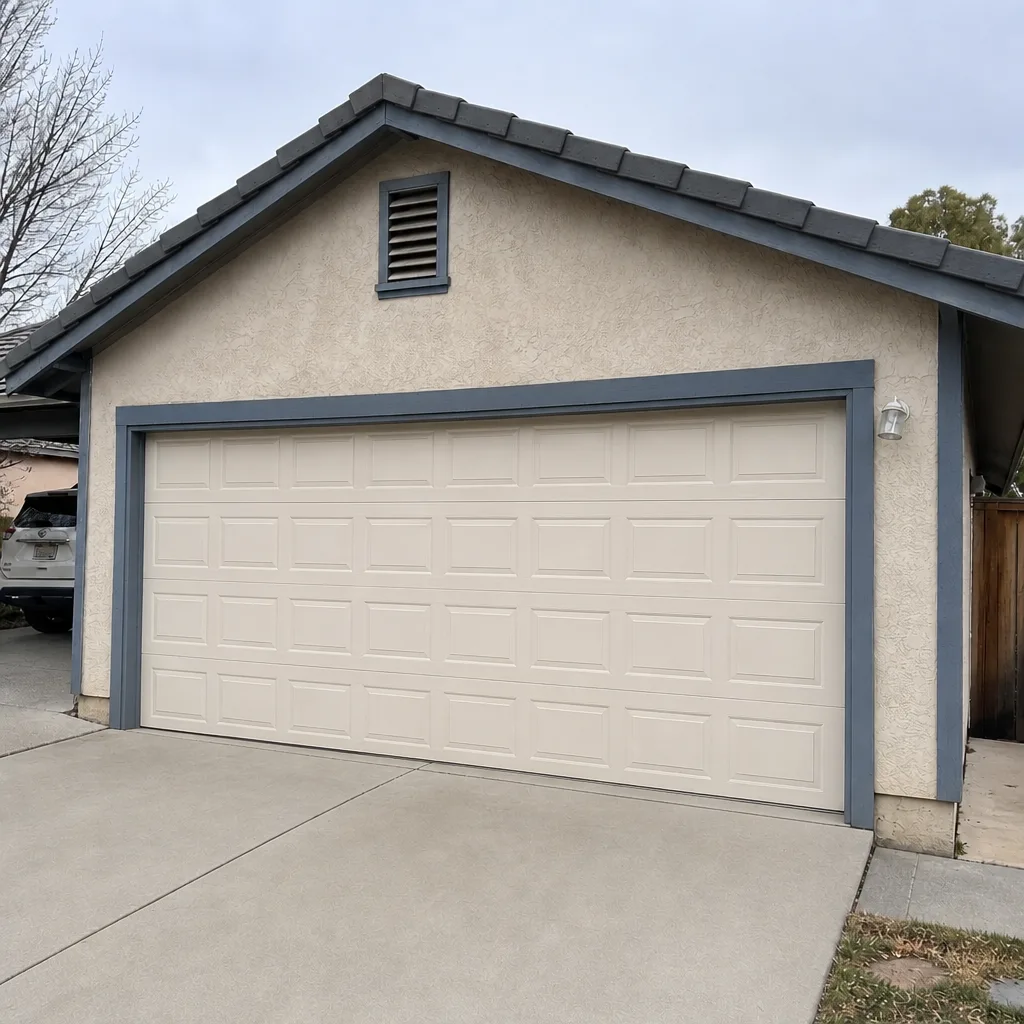 After
When to Call a Professional
Some jobs are homeowner jobs. Some aren’t. Call a professional when the door comes off the track, when a spring breaks (you’ll hear it, it sounds like a gunshot from inside the garage), when the cables are frayed or visibly damaged, when the opener runs but doesn’t lift, when the door goes up crooked, or when a child or pet ever gets caught under a closing door even once. Those are the calls that shouldn’t wait. The rest, worn rollers, noisy hinges, a sensor that drifted, can usually be handled in a single scheduled visit at a known price.
Otto’s Garage Door Enterprise offers free estimates in Enterprise. Call (833) 620-7107, we’ll get you a real number, and we’ll hold it.
Frequently Asked Questions
Typical spring repair in Enterprise runs $180 to $340 for a single torsion spring and $300 to $550 for both, including labor and a balance test. The quote on the phone is the price at the door. Call (833) 620-7107 for an exact number specific to your door.
Springs fail faster here than in cooler climates, typically 20 to 30 percent sooner than the manufacturer’s rating. The heat in the garage cavity accelerates metal fatigue, and the 1,500-cycle-a-year usage common in Enterprise homes speeds up the whole timeline. Most doors in Enterprise need spring replacement around year six to eight rather than the year ten you’d expect elsewhere.
Most repair calls in Enterprise are handled same day, and emergency calls get priority. Spring failures, doors stuck open, and doors that won’t lift get treated as urgent. Calls are answered by a live person around the clock, and the quote happens on that call. Dial (833) 620-7107 and we’ll tell you when we can be there.
Yes. Every technician is background-checked and the work is insured. The company publishes its address and license number so you can verify before anyone shows up. If you ever get a quote from someone who can’t produce both, don’t let them in the driveway.
No. The price quoted on the phone is the price on the invoice. If we get there and the job turns out to be bigger than described, we stop and give you a new written number before touching anything. Nothing gets added after the work starts.
Raised-panel steel in a short or long panel, carriage-house style with faux hardware, or ribbed steel in the HOA’s palette usually fits without going custom. Clopay and Amarr both make standard lines that work in most Enterprise HOA palettes. Check the actual finish against your HOA sample card in person before you order.
The Bottom Line
Enterprise is its own place, and garage door work here has its own rules. The heat eats springs faster than the label says. The stucco and block construction shifts the frame a little more than wood-framed homes. The wind gusts are short and sharp and hard on doors that were never braced. And the 1,500 cycles a year most families put on the door means maintenance timelines need to be tighter than a national chart suggests. If you remember one thing from this guide, remember this: the door is 200 pounds riding on two springs, and it deserves a real maintenance plan. If something feels off, call. We’re Otto’s Garage Door Enterprise, and we answer the phone ourselves.
Call (833) 620-7107 for a free estimate. We’ll quote it on the call, hold the number, and show up when we say we will.
Written by the team at Otto’s Garage Door Enterprise.