
Last updated November 17, 2026
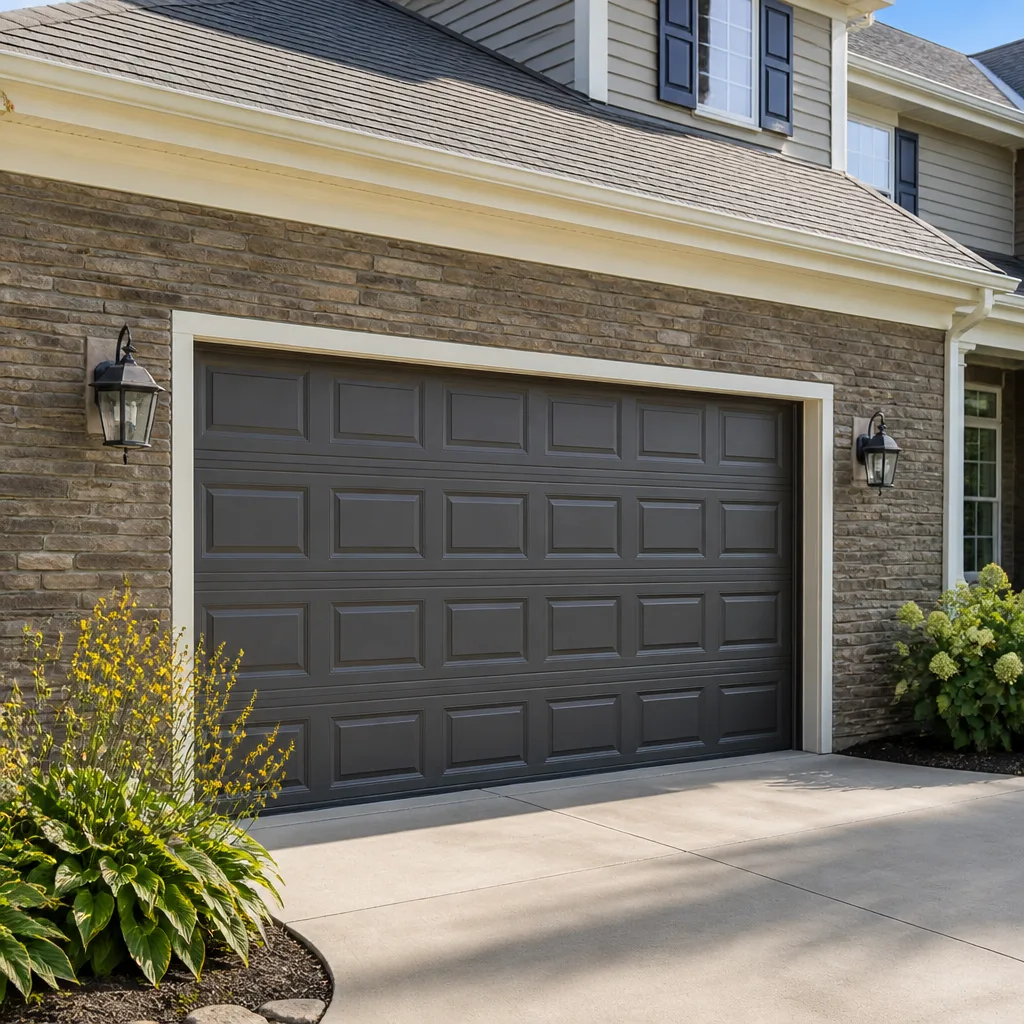 Raised-panel steel
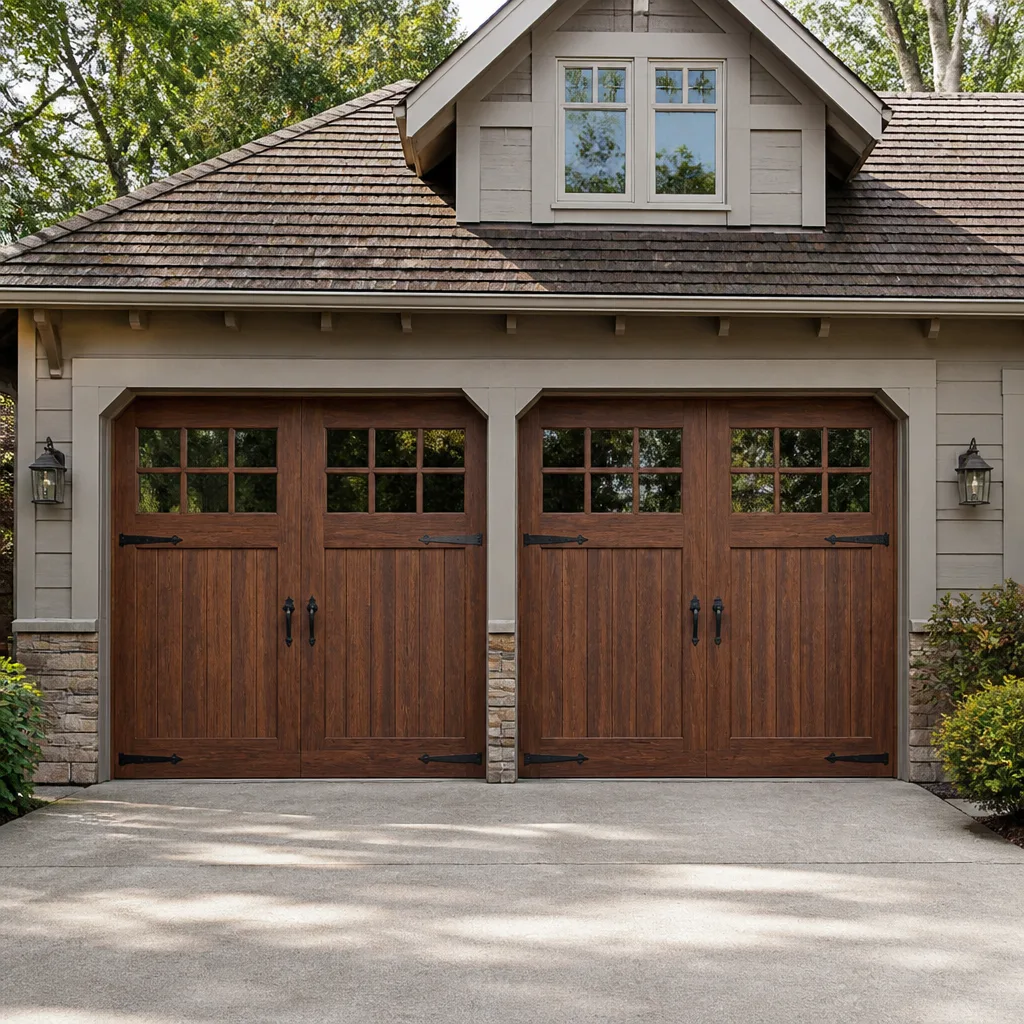 Carriage house
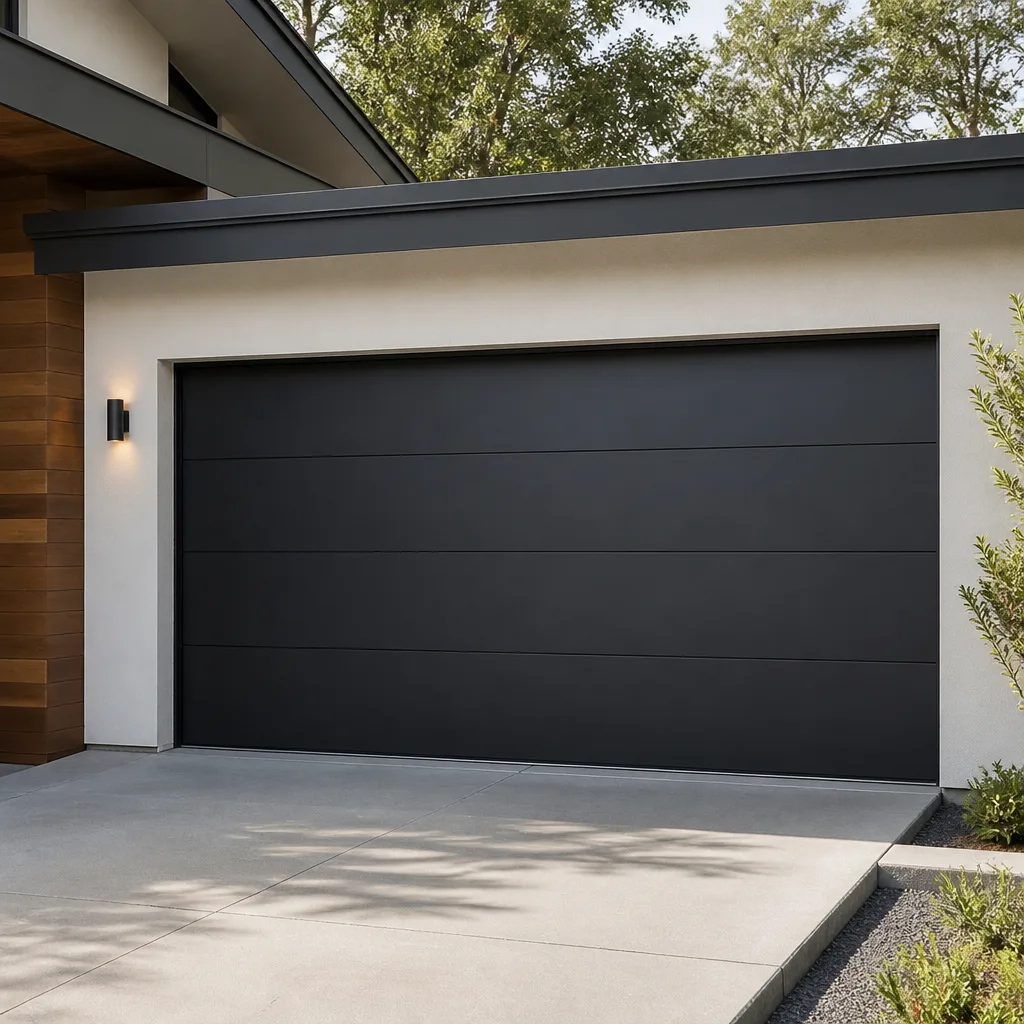 Modern flush
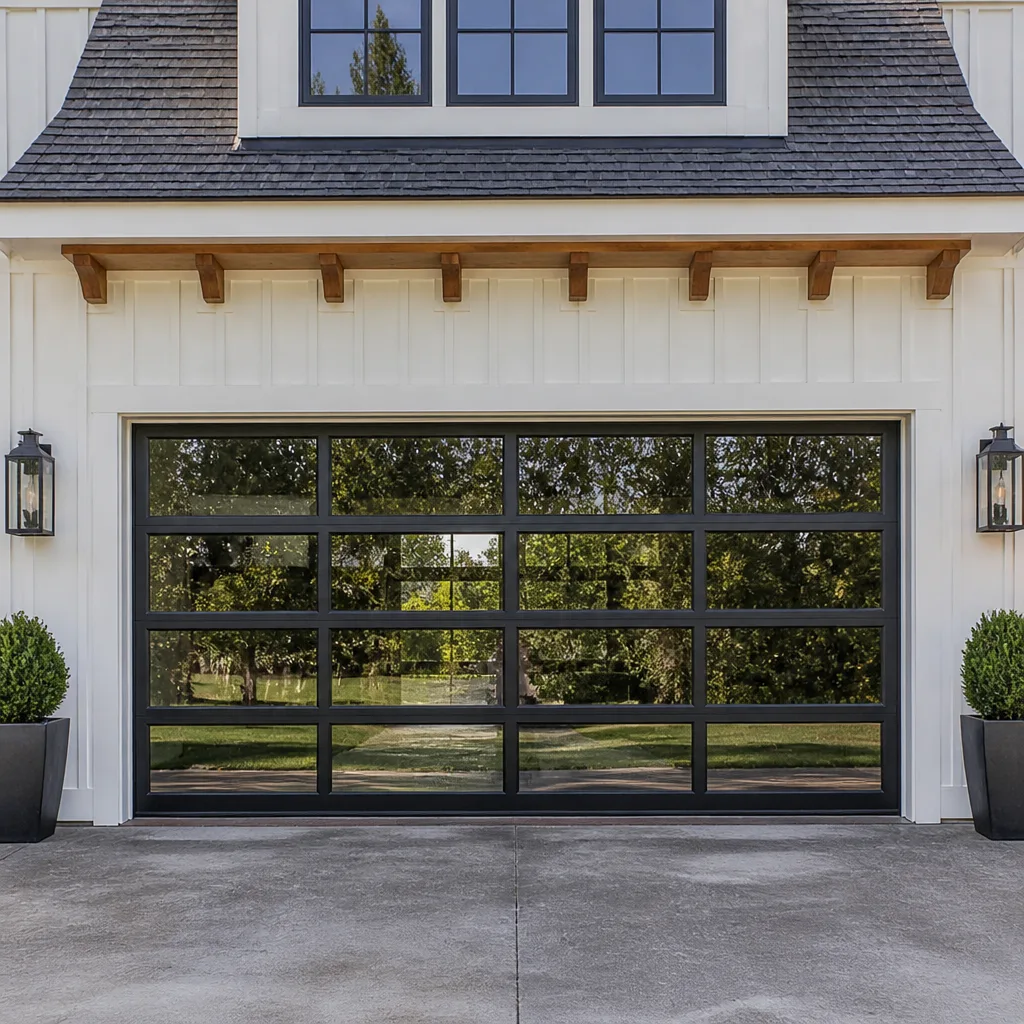 Full-view glass
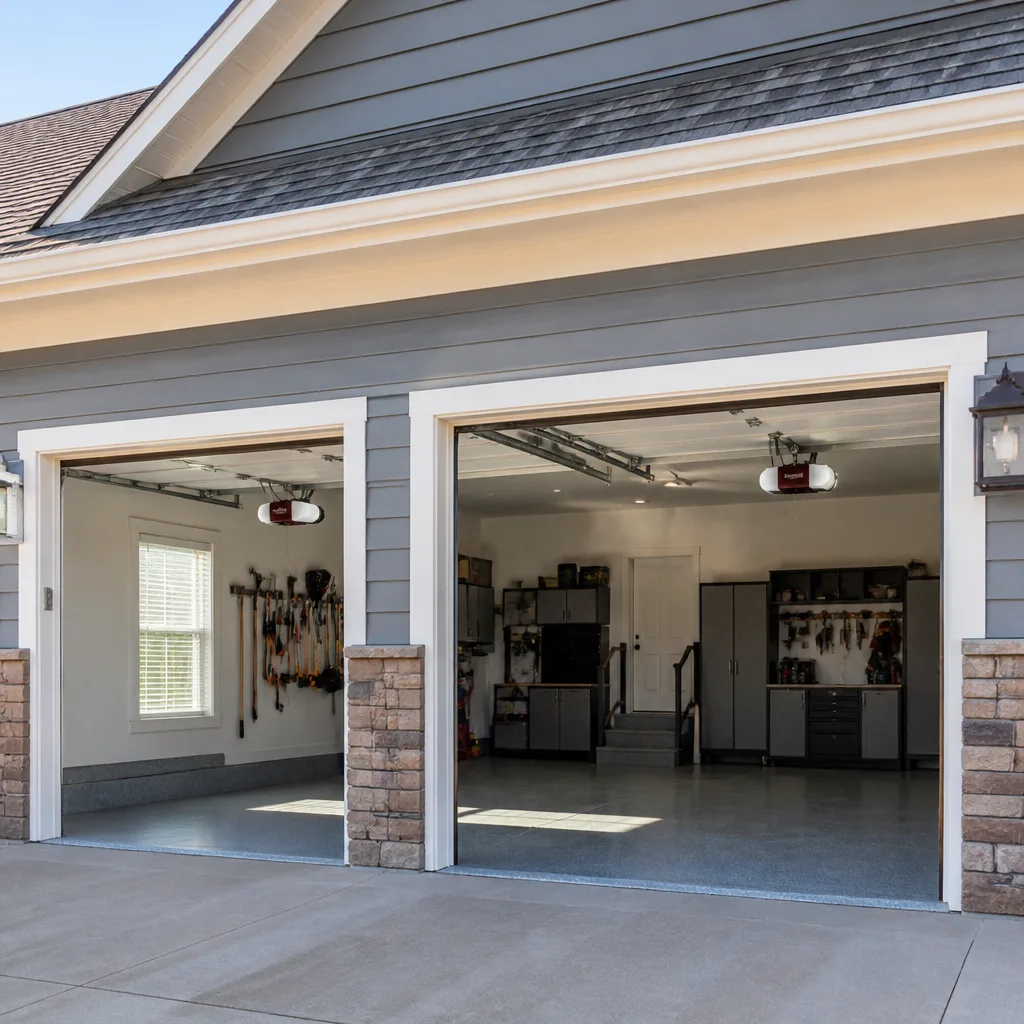 LiftMaster openers
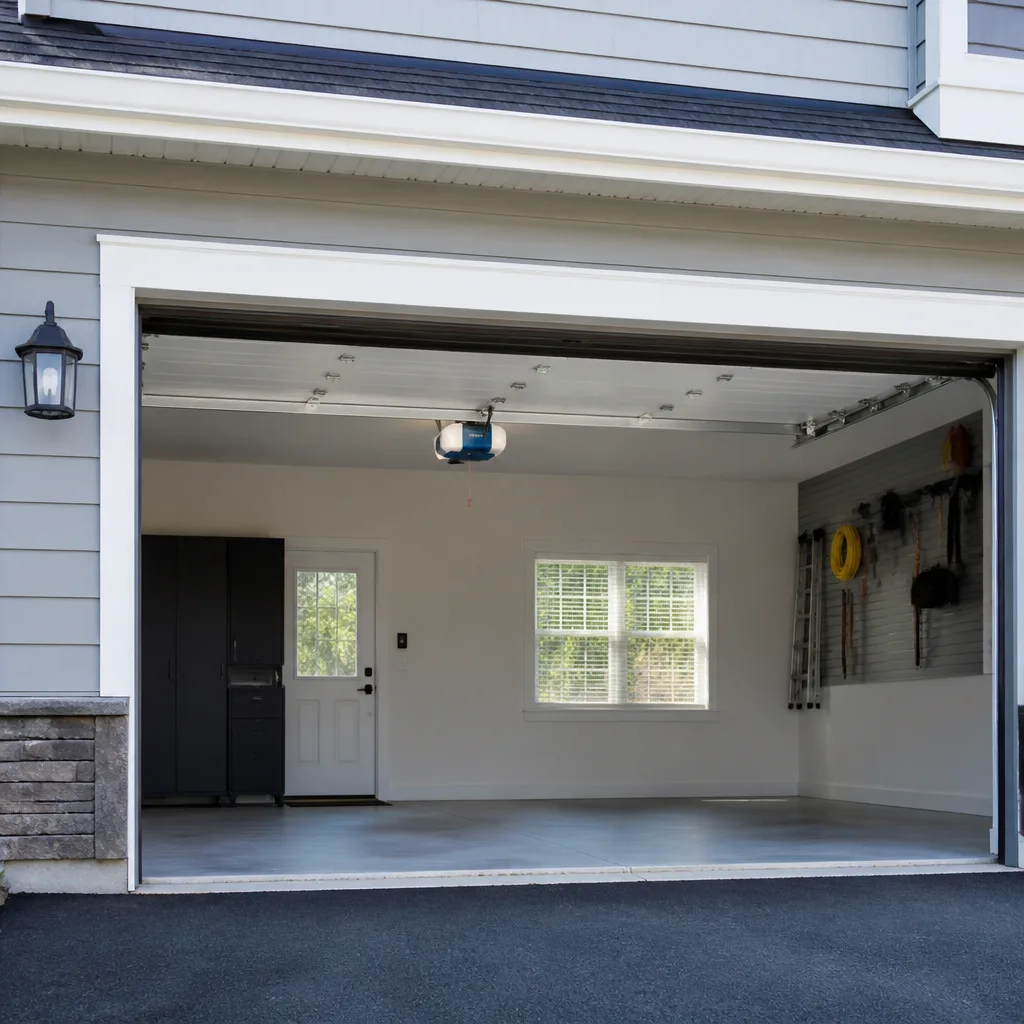 Chamberlain openers
Full 25-point door and opener safety check with every visit - springs, cables, rollers, tracks, and your LiftMaster or Chamberlain opener included
You get a price before we start. It does not change when the pro arrives.
Get your free estimateHow to Hire a Garage Door Contractor in Enterprise: A Step-by-Step Guide
Otto once got a call from a homeowner who’d hired “a local company” she found on Google. The dispatcher was in Arizona. The tech who showed up was a day laborer who’d been handed a company shirt that morning. The spring he installed snapped within 90 days. And when she looked up the name on the van, it didn’t match any Nevada contractor license on file. That’s the trap in Enterprise, and it’s not rare here: national outfits run local-sounding names and route every call to a dispatch center in another state. The person who answers your phone has no idea who’s coming to your driveway. This guide shows you how to check that before you book.
Quick Answer
To hire a garage door contractor in Enterprise, verify the Nevada contractor license number through the NSCB lookup, confirm the company has a published physical address, and ask whether you’re calling an owner-operator or a call center. Get a written estimate that itemizes spring grade, warranty terms, and haul-away before anyone touches the door. A licensed, insured, local shop will hand you all of that without flinching.
Styles & brands we work with
- Raised-panel steel
- Carriage house
- Modern flush
- Full-view glass
- LiftMaster openers
- Chamberlain openers
Table of Contents
- How do you verify a Nevada contractor license in Enterprise?
- The three questions to ask before you book
- Why the lowest bid is almost always missing something
- Reading reviews for real signals, not fake ones
- What a written estimate must contain
- How Enterprise’s desert heat affects your door
- Common mistakes to avoid
- Frequently asked questions
How do you verify a Nevada contractor license in Enterprise?
The Nevada State Contractors Board keeps a public lookup you can run in under two minutes at nscb.nv.gov. Type the company name or the license number from their website or van, and the record tells you whether the license is active, what classifications they’re approved for, and whether there are any disciplinary actions. Do this before you schedule, not after the truck shows up. In our experience, the companies that publish their license number prominently pass this check every time. The ones that bury it usually have a reason.
A valid license tells you the contractor met the state’s bonding and insurance requirements and passed the trade exam. What it does not tell you: whether the person actually knocking on your door is employed by that company, whether the work will be done by a trained technician or a subcontractor pulled off a gig app, or whether the company has any real presence in Enterprise. Those are separate questions, and you have to ask them directly.
Cross-check the license address against the address on the website. If a company claims an Enterprise address but the license says Las Vegas, Henderson, or another state entirely, that’s worth a follow-up question. Sometimes it’s a bookkeeping detail. Sometimes it means you’re about to hire a middleman who’ll subcontract the job to whoever’s cheapest that week. Call the number on the license record – not the one on the website – and see who answers.
One more move: ask the license to match the name on the invoice. It sounds obvious. It’s the single step that catches most of the bad actors. If the quote says “Sunrise Garage Pros” but the license belongs to “ABC Handyman LLC,” that mismatch is your answer before you spend a dollar.
The three questions to ask before you book
These three questions separate owner-operators from dispatch-center operations faster than anything else. Ask them on the first call. The answers tell you everything about who’s actually going to show up at your door in Enterprise.
- “Who’s coming to my house, and what’s their name?” An owner-operator can tell you. A dispatch center can’t, because they haven’t assigned anyone yet and may not know until the morning of. If the answer is “a technician,” press. If they still can’t name a person, you’ve got your answer.
- “Is this price quoted on the phone the price I’ll pay at the door?” A good shop will quote a firm number or a tight range, and will hold it unless the door turns out to be a different job than described. A call center will read a “starting at” price and let the tech revise it upward once he’s standing in your garage. That gap is where most complaints about garage door companies start.
- “Can I see the license number and address in writing?” Before the visit, ask them to text or email the license number and the physical street address. Legitimate shops do this without blinking. If you get a “the office will send that” or the number never arrives, book elsewhere.
Otto answers the phone himself more often than not – including at nine at night when a spring lets go and your car is sealed inside. He quotes the job on that call and holds the number when he gets there. That’s not a marketing line. It’s the difference between a shop with skin in the game and a phone bank in another time zone. For more on how our approach works from the first call, see Otto’s Garage Door Enterprise home.
Why the lowest bid is almost always missing something
A garage door spring job in the Enterprise market runs roughly $180 to $340 for a standard torsion spring replacement. If someone quotes you $120, they’ve cut something. Your job is to figure out what. In our experience it’s almost always one of three things.
- Spring grade. There are 10,000-cycle springs, 15,000-cycle springs, and cheap import springs that barely clear the low end. A 10,000-cycle spring on a door you use twice a day lasts four to six years. A 15,000-cycle spring adds maybe $30 to the ticket and buys you four extra years. When the bid is suspiciously low, the spring is often the reason.
- Warranty terms. A one-year parts warranty sounds fine until you read the fine print and realize labor isn’t covered, or the policy excludes “spring failures beyond the manufacturer’s threshold.” Get the warranty in writing before you book, and read what’s excluded, not just what’s covered.
- Haul-away of old hardware. Springs, cable spools, old openers, track sections – that junk has to go somewhere. A cheap bid often means the old parts end up in your trash can or your side yard. A proper bid includes disposal.
There’s a fourth, quieter cut: the tech’s time. A shop that budgets 30 minutes for a spring swap is a shop that will rush the balancing, skip the safety inspection, and leave a door that slams. Good work takes the time it takes. If the low bid depends on skipping that, the low bid is expensive.
For a full menu of what repair work actually costs in Enterprise, see Garage Door Repair in Enterprise.
Reading reviews for real signals, not fake ones
Online reviews are useful if you know what to look for. They’re useless if you don’t. Fake and incentivized reviews tend to fall into patterns that real customers never produce.
Red flags that signal a fake or incentivized review
- Bursts of five-star reviews posted the same week or the same day, all using similar phrases, with no detail about the actual job.
- Reviews that praise the “great customer service” but never mention what was fixed, what brand of door, or which neighborhood in Enterprise.
- Reviewers with a single review on their account, or a history of only reviewing garage door companies.
- Language that sounds like marketing copy (“highly recommend this amazing company!”).
- Genuine one-star reviews answered with a form letter instead of a specific response from someone who knows the job.
Signals of a real local shop
- Reviews that name a street, a neighborhood, or a specific problem solved (“torsion spring on a double door in Silverado Ranch, fixed same day”).
- A mix of ratings, with old negative reviews that got specific, respectful replies.
- Reviewers who mention the same technician by name repeatedly over years.
- Photos from the job site (not stock photos of a van).
If you have to choose one signal, look at the oldest reviews. A shop that has three years of steady reviews from real people in Enterprise is a shop that keeps customers. A shop that appeared six months ago with 200 five-star posts is a shop that spent money on reputation management. For more on what makes our brand of shop different, see our Garage Door Installation in Enterprise page – the installation side shows the same principles in action.
What a written estimate must contain
A verbal promise doesn’t survive a service call. The technician at your door has his own version of the story, his own price sheet, and his own incentive to add items. If it isn’t on paper before the visit, it isn’t real. A written estimate from a garage door contractor in Enterprise should include the following, at minimum:
- Company legal name and license number – the same license number that matches the NSCB record you checked.
- Physical business address – not a P.O. box, not a “service area” description.
- Scope of work – what’s being repaired or replaced, with brand names where relevant (LiftMaster, Chamberlain, Raynor, Genie, and so on).
- Parts specification – spring cycle rating, opener model number, door model number. If the estimate just says “spring,” that’s a problem.
- Price breakdown – parts, labor, disposal, tax. Not a single line item with a lump sum.
- Warranty terms – labor and parts separately, with the duration and exclusions in plain language.
- Total firm price – the number you’ll actually pay when the work is done. Ask explicitly whether anything could raise it.
- Payment terms – when payment is due, what methods are accepted, whether a deposit is required.
Otto’s Garage Door Enterprise quotes every job before it’s booked, never revises it upward at the door, and stands behind the work with the 90-Day Done Right Promise in writing. If a shop won’t put those things on paper for you, they’re telling you something. For the opener-specific version of this conversation, see Garage Door Opener Repair & Installation in Enterprise.
How Enterprise’s desert heat affects your door
Enterprise sits in the Las Vegas Valley, which means summer temperatures routinely pass 110°F and surface temperatures in an unshaded garage can push much higher. That heat does real work on garage doors and spring systems, and it’s why hiring a local contractor who knows the local failure patterns matters more here than it might in a cooler market.
Torsion springs lose tension faster in extreme heat. We regularly see spring failures in Enterprise clustered in late June through August, when a spring that would have lasted another year in Phoenix cools down at night and gets hammered by day. The wood and composite panels of many doors warp from sun exposure on south- and west-facing walls, especially on older homes in the Silverado Ranch and Mountain’s Edge subdivisions. Rollers dry out and cables fray faster than in cooler climates. LiftMaster and Chamberlain openers with heat-sensitive circuit boards tend to develop intermittent faults during the hottest weeks.
What that means for hiring: ask the contractor how familiar they are with the specific failure patterns in this valley. A shop that works only in Henderson or only in Summerlin will still know garage doors – but a shop that works in Enterprise will have seen the exact pattern your neighbor’s door is showing. When you call, ask what they see in this area at this time of year. If the answer is specific, you’re talking to someone local. If the answer is generic, you’re talking to a script.
See the difference
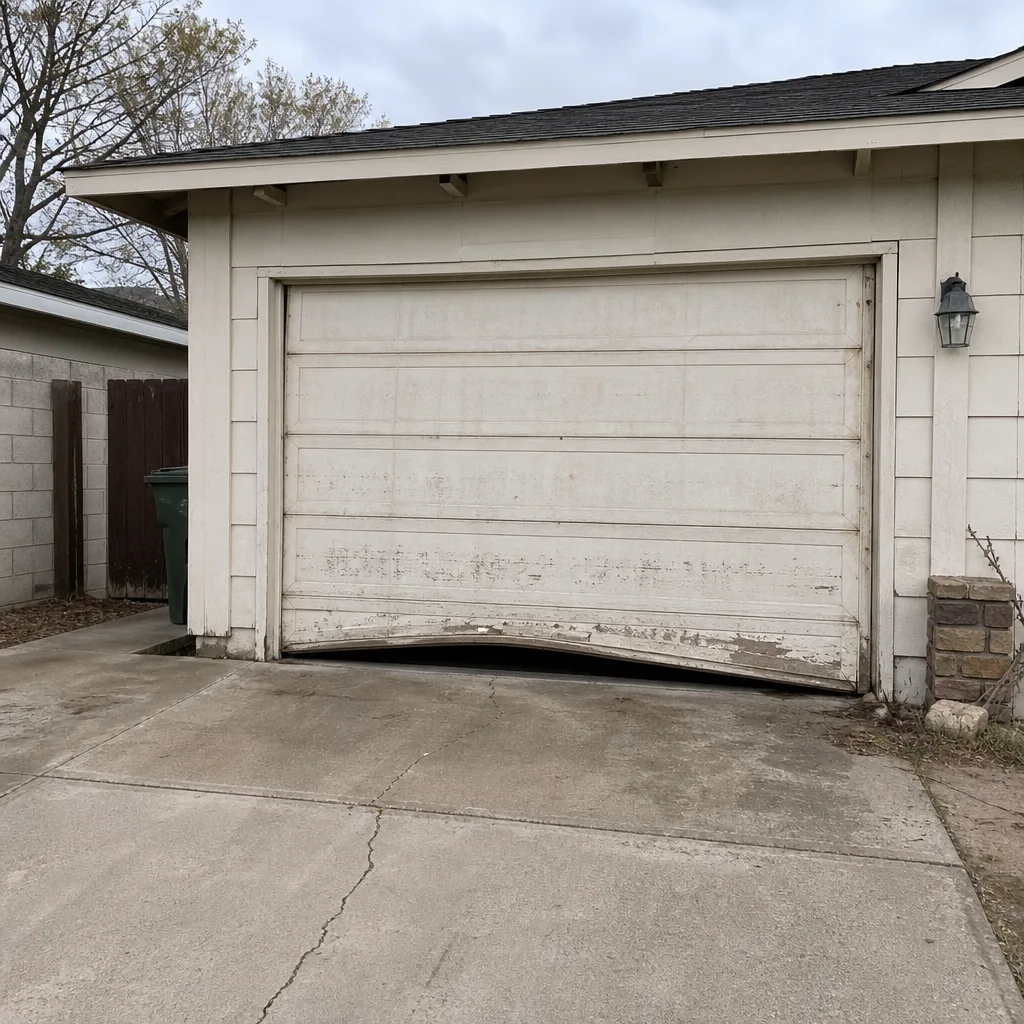 Before
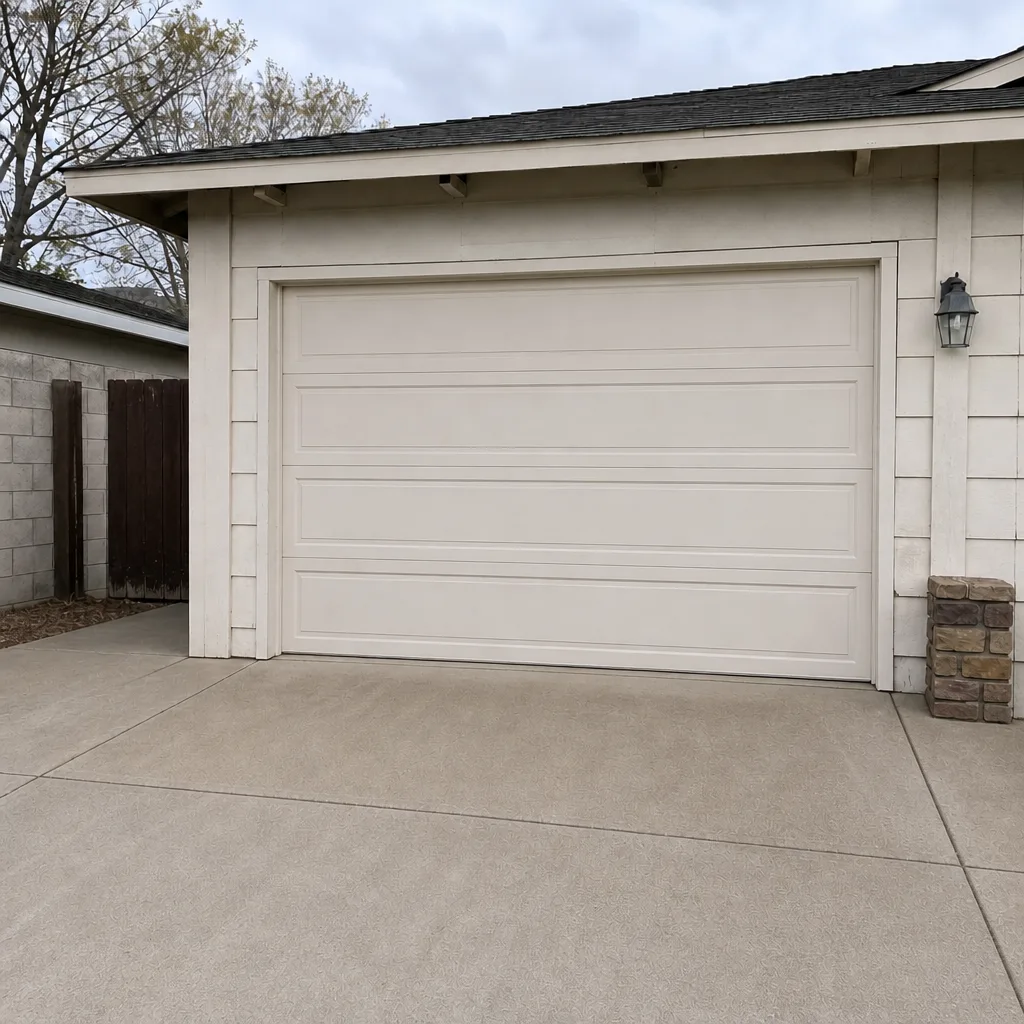 After
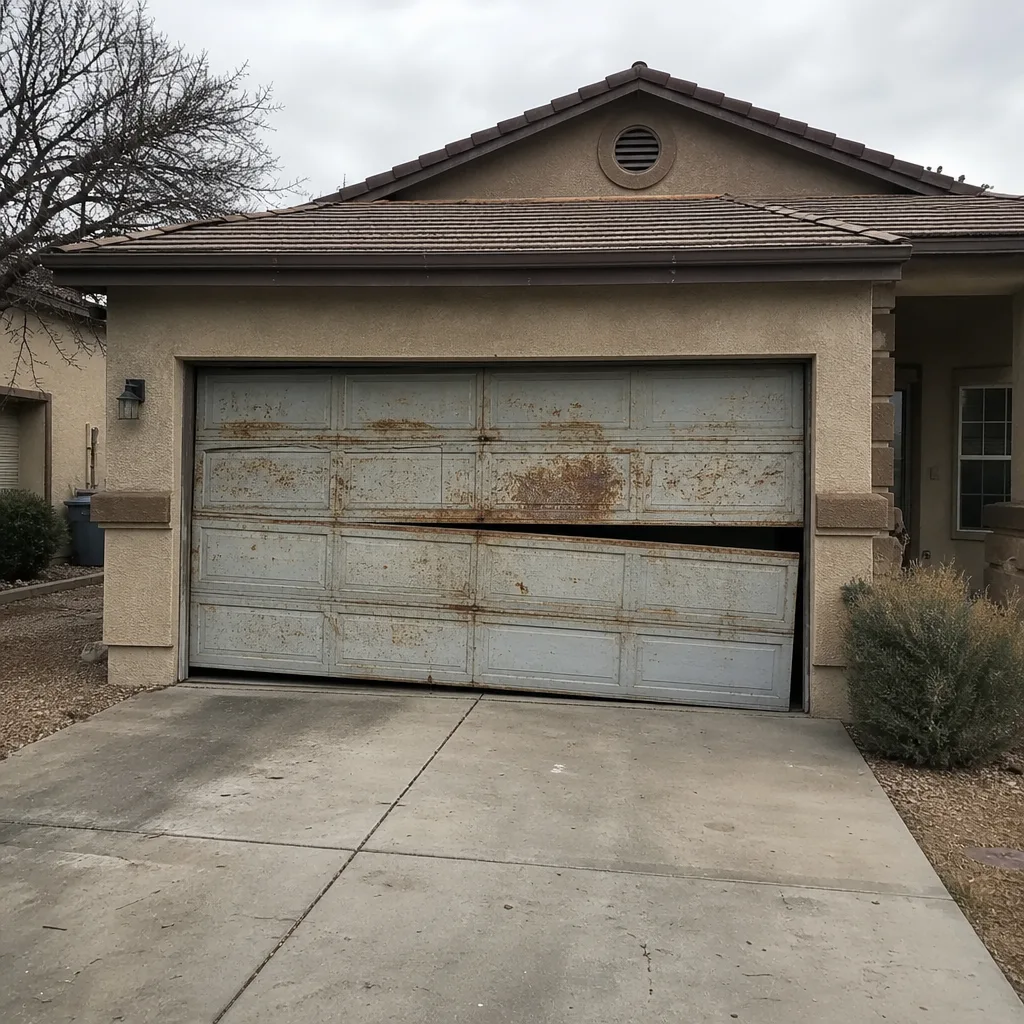 Before
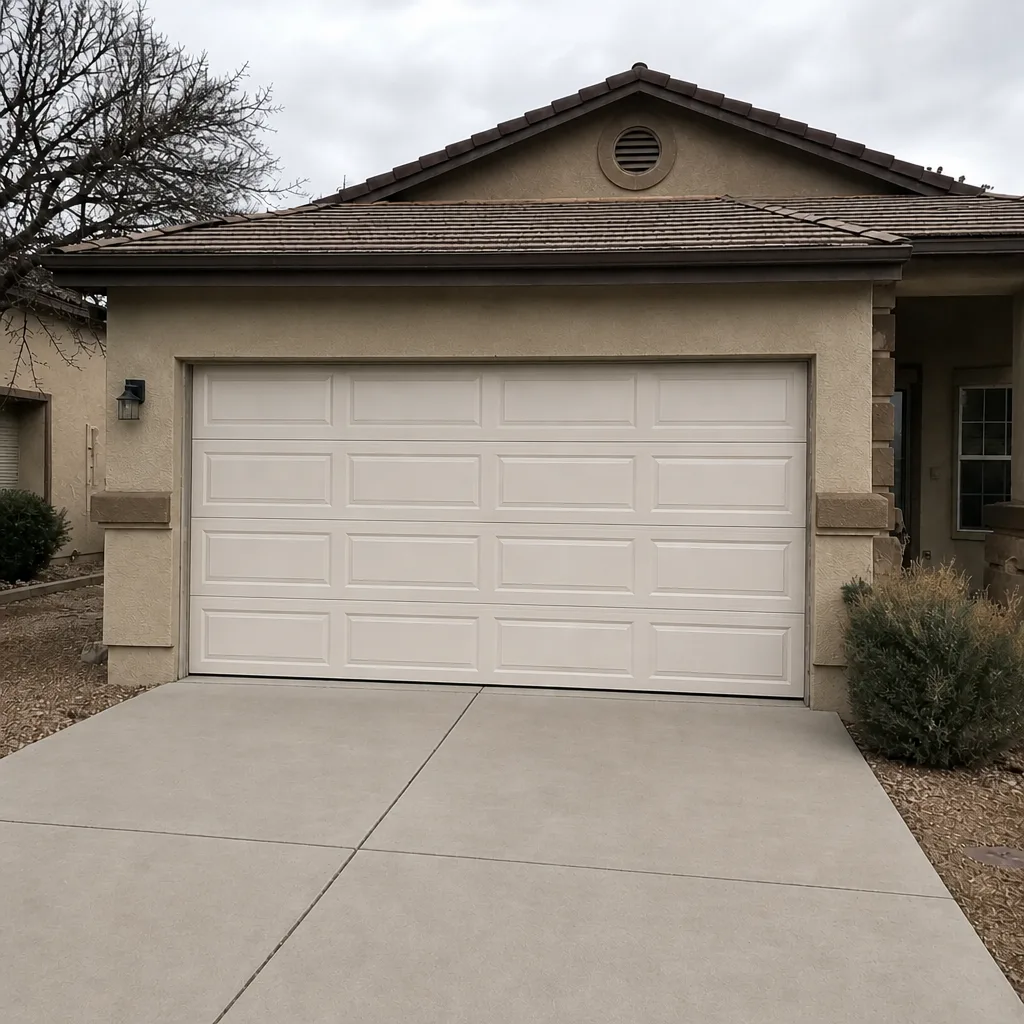 After
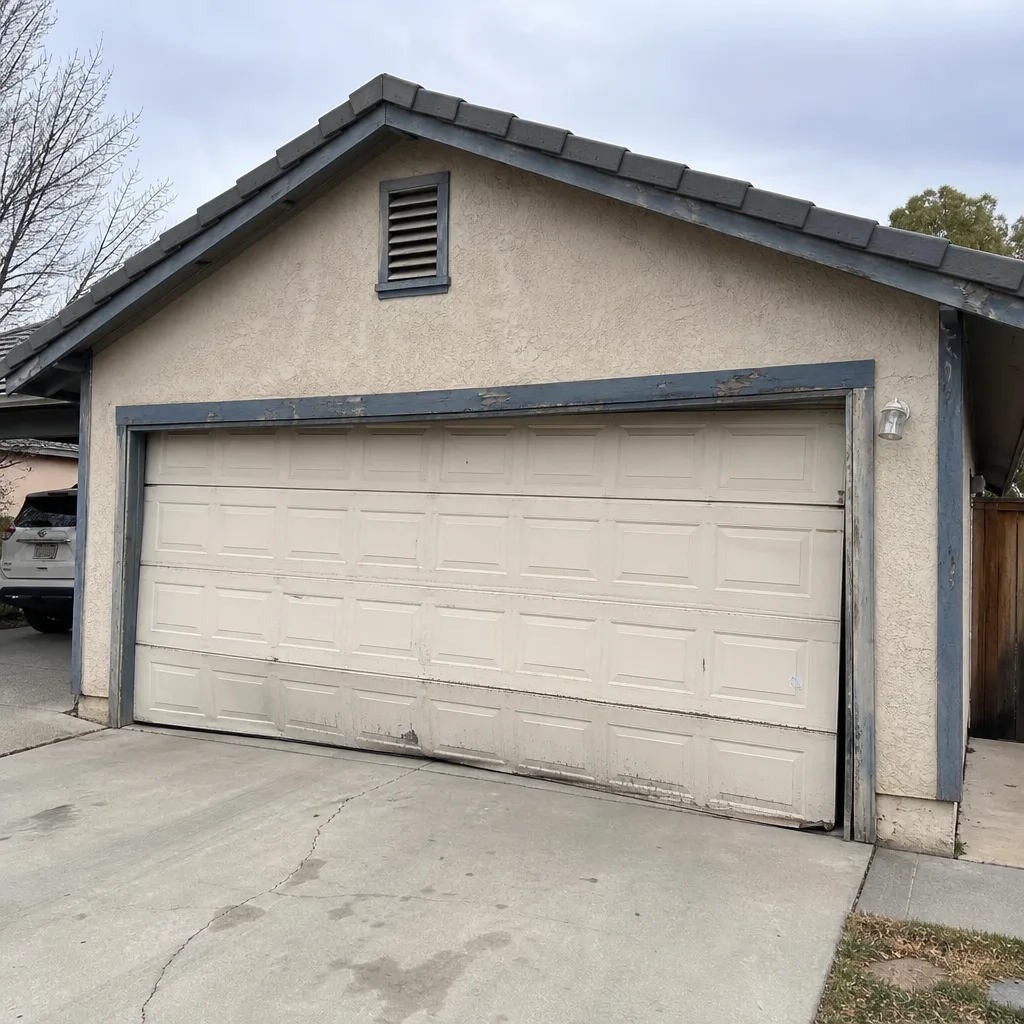 Before
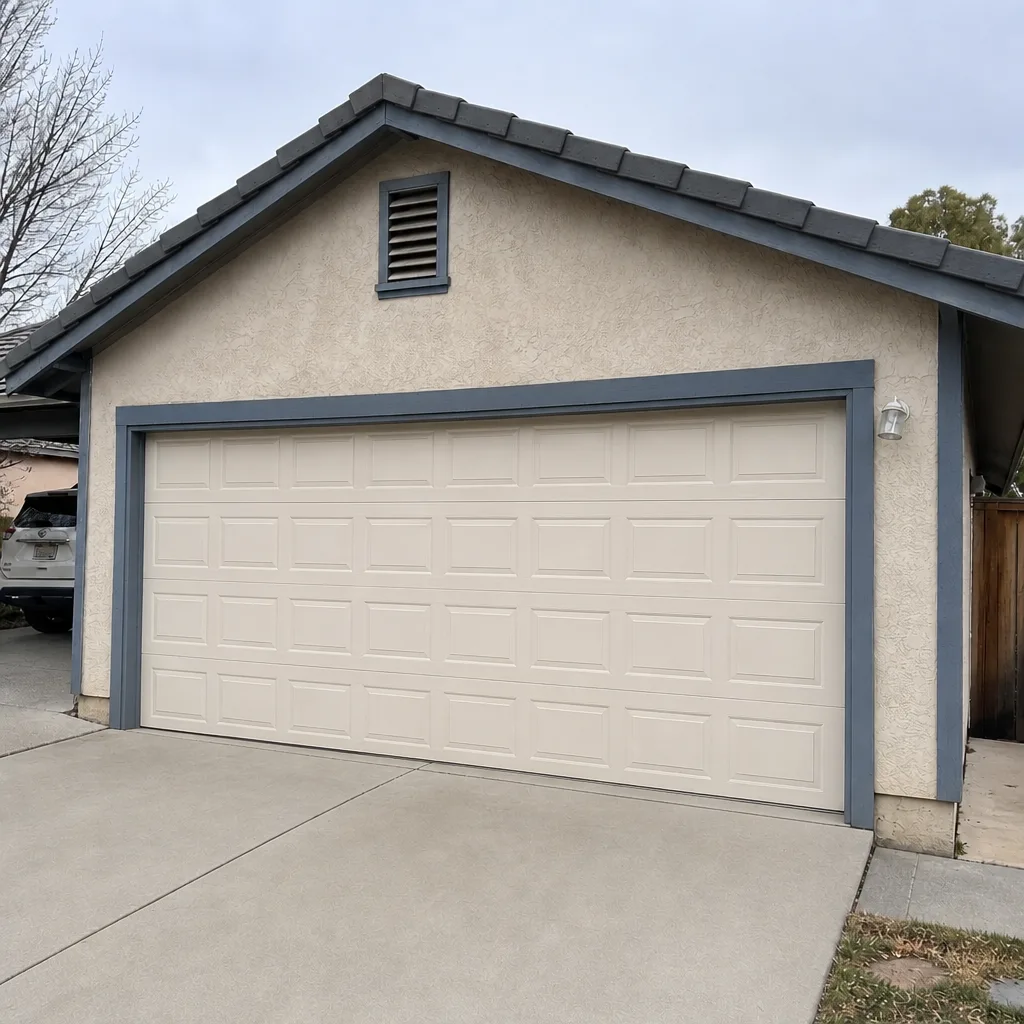 After
Common Mistakes to Avoid
- Hiring off the first Google result without checking the license. National networks buy the top ad slot and route your call out of state. Two minutes on the NSCB lookup prevents most of those calls before they happen.
- Accepting a verbal quote. The tech’s recollection of what he promised you is not a warranty. If it isn’t in writing, assume it doesn’t exist, especially on labor.
- Choosing the lowest bid without a scope comparison. The low bid is often $80 lower because the spring grade is lower, the disposal is excluded, or the warranty is one year on parts only. Compare scopes, not totals.
- Ignoring the spring cycle rating. A 10,000-cycle spring on a door you use twice a day will need replacing sooner than you think. Ask what cycle rating the quote includes.
- Booking a repair during a heat wave without asking about the opener board. In Enterprise, a spring that goes in August often takes the opener’s circuit board with it. Ask the contractor to check the opener while they’re out.
- Paying a deposit before you have a written estimate. A deposit for a scheduled installation is normal. A deposit for a service call is not.
- Believing a same-day promise from a company that can’t name the technician. Same-day service is real from a local shop. From a dispatch center, it means “we’ll try to find someone.”
When to Call a Professional
Some garage door issues are safe to look at. Some aren’t. A torsion spring or extension spring under tension is a 200-pound door riding on stored energy – respect it. Don’t try to adjust, lubricate, or replace a spring or cable yourself. The same goes for a door that has come off its track, a bent bottom section with a crushed panel, and any situation where the door is stuck half-open and the opener keeps trying to lift it. In each of those cases, the door can come down hard on a person or a vehicle. Call a professional.
The safe things to look at yourself: whether the photo-eye sensors at the base of the track are aligned, whether the wall button works when the remote doesn’t, and whether the door is making new noises. Those are cheap diagnostics you can do from a safe distance. Everything behind the spring, cable, or panel is the trained professional’s work. Our technicians have up to 22 years of experience with LiftMaster, Chamberlain, Raynor, and Genie systems, and we’ll tell you honestly what’s worth fixing versus replacing. Otto’s Garage Door Enterprise offers free estimates in Enterprise – call (833) 620-7107.
Frequently Asked Questions
Most garage door repairs in Enterprise run $180 to $340 for a torsion spring replacement, $150 to $400 for opener repair or replacement, and $200 to $500 for cable or roller service. Door panel replacement depends on the brand and model. Call (833) 620-7107 for an exact quote – estimates are free, and the price you’re quoted is the price you pay.
Yes, same-day service is often available for spring failures, broken cables, and doors stuck open or closed. Call early in the day for the best chance, and remember that if your car is sealed inside, that’s the priority. Dispatch is not a thing we do here – Otto or one of our trained technicians will be at your door. Call (833) 620-7107.
No. The price Otto quotes on the phone is the price you pay at the door, unless the job turns out to be genuinely different from what was described. We confirm the scope before we book. If we see something that would change the number, we tell you before we start, not after. Call (833) 620-7107 for an exact quote.
Yes. Otto’s Garage Door Enterprise is locally owned and owner-operated, with a published address and license number any homeowner can verify through the Nevada State Contractors Board before the truck arrives. Technicians are background-checked, trained across all major brands, and carry the owner’s name on their back. Call (833) 620-7107 with any questions about our credentials.
Yes – the 90-Day Done Right Promise is written on every invoice. If something we touched isn’t right within ninety days, one call brings us back, no runaround, no customer-service queue. That’s the point of hiring an owner-operator. Call (833) 620-7107 to book.
No. A qualified garage door contractor in Enterprise handles both, and it’s usually better to work with the same shop for both since they’ve seen how your existing door is set up. New door installation is scheduled around a measure, a door order, and a site visit – not same-day service. For installation planning, see Garage Door Installation in Enterprise, or call (833) 620-7107 for a free measure.
The Bottom Line
The trap in Enterprise isn’t a bad product or a bad price – it’s a company you can’t verify. Fix that first. Run the license through the NSCB lookup before you call. Ask the three questions about who’s coming, whether the price is firm, and whether the license and address are available in writing. Demand a written estimate that itemizes the scope, spring grade, warranty, and disposal. Read reviews for patterns, not stars. Do those things, and the low bid stops being tempting because you’ve seen what it leaves out. Then hire the shop that answers with a name, a number, and a guarantee that fits on one page.
When you’re ready, give us a call. Otto’s Garage Door Enterprise quotes every job honestly, backs it with the 90-Day Done Right Promise, and keeps our prices where we said they’d be. Call (833) 620-7107 for a free estimate – and if you need a second opinion on a written estimate you’ve already got, that one’s free too.
Written by the team at Otto’s Garage Door Enterprise.