
Last updated November 17, 2026
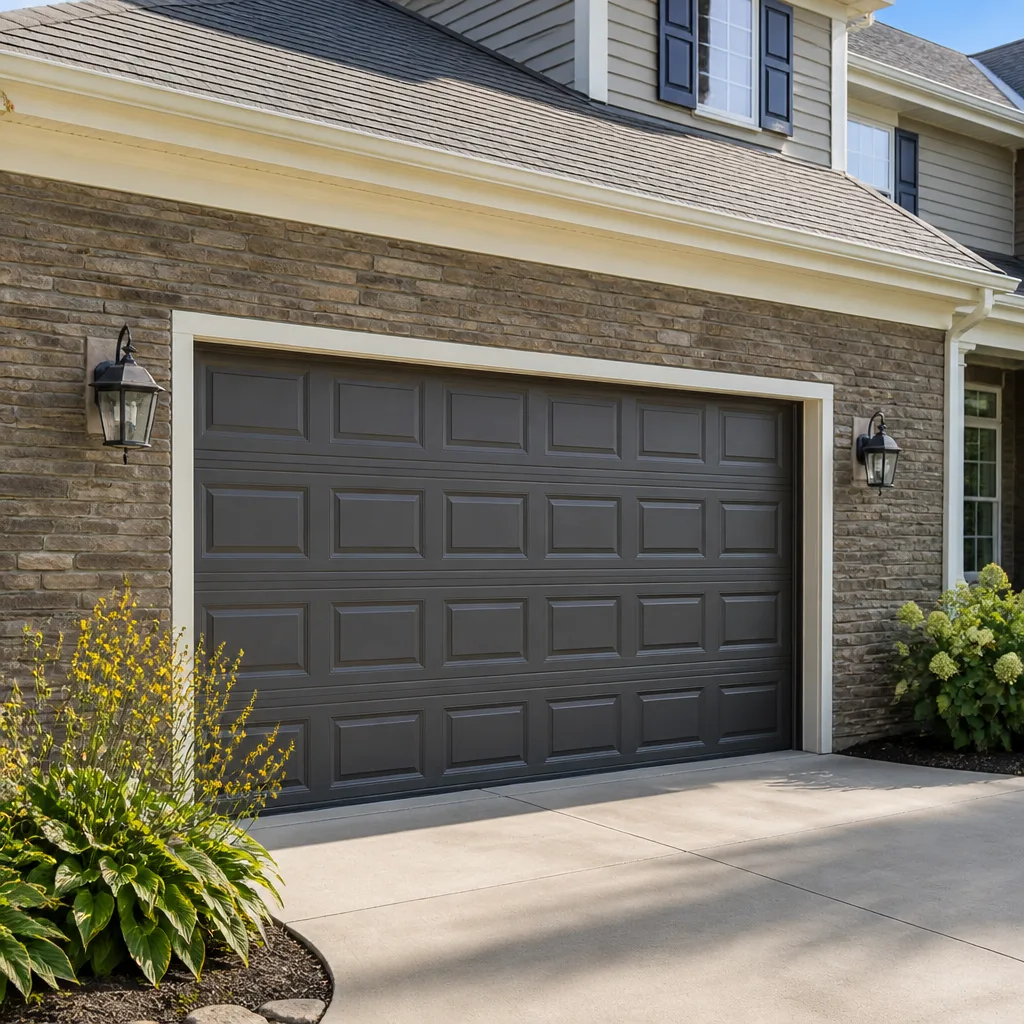 Raised-panel steel
 Carriage house
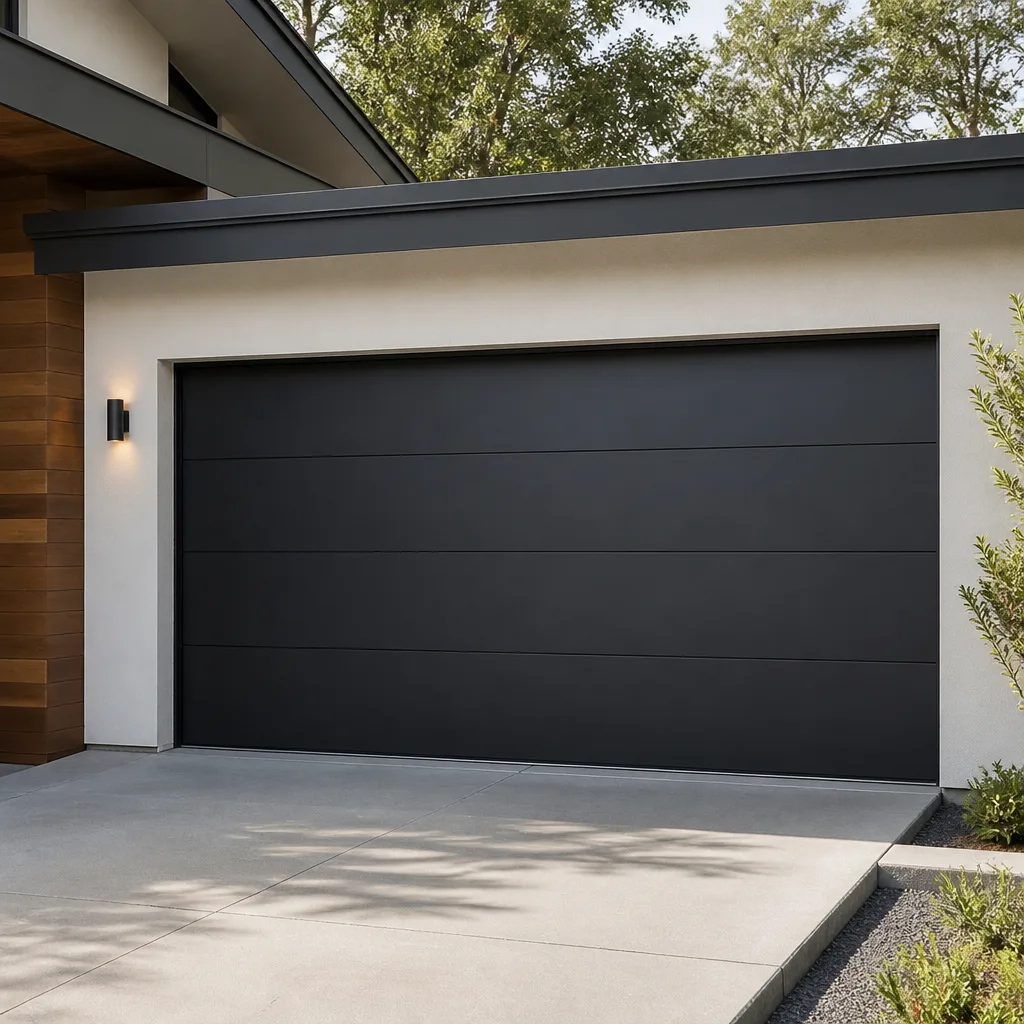 Modern flush
 Full-view glass
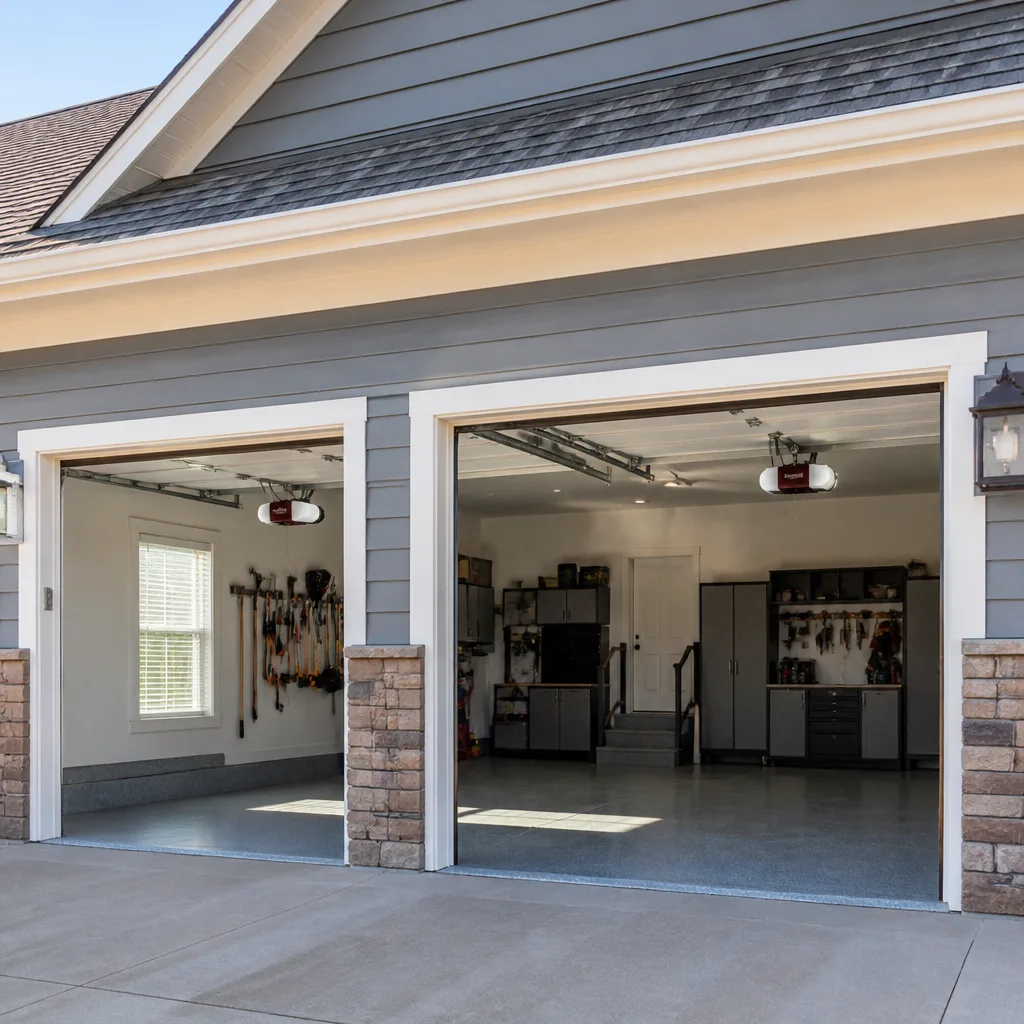 LiftMaster openers
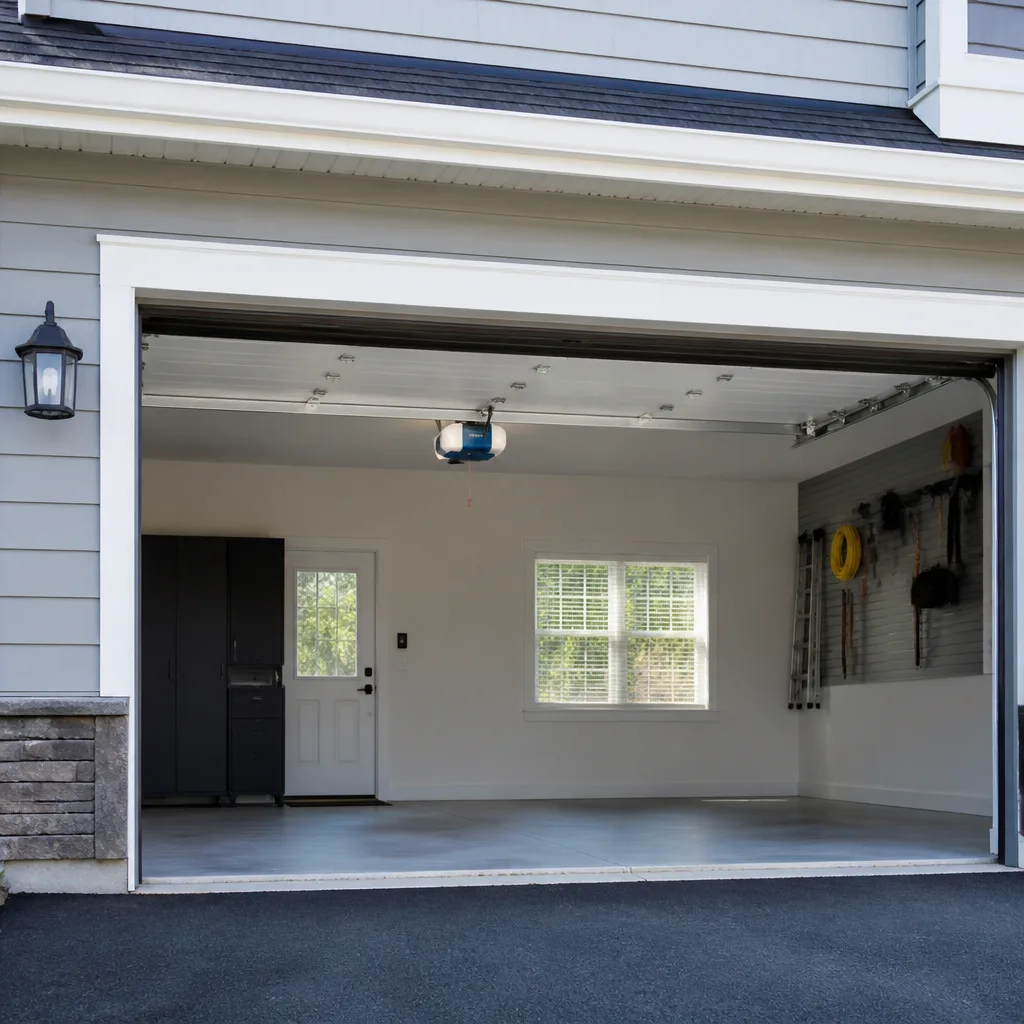 Chamberlain openers
Full 25-point door and opener safety check with every visit - springs, cables, rollers, tracks, and your LiftMaster or Chamberlain opener included
You get a price before we start. It does not change when the pro arrives.
Get your free estimateGarage Door Parts Maintenance Schedule: What to Do and When
A torsion spring rated for 10,000 cycles in moderate humidity can fail closer to 7,000 in sustained 110°F heat. That’s the number most homeowners never hear, because the owner’s manual was printed in Ohio and the chart inside it assumes Ohio weather. Enterprise isn’t Ohio. Between June and September, your door lives in an oven, and the roller bearings, cables, and bottom seal wear at a pace the manufacturer never budgeted for. Below is the maintenance schedule we actually recommend for doors in Enterprise, NV, month by month, including which parts you can check yourself and which ones need a trained eye before they give any warning at all.
Quick Answer
In Enterprise, a garage door should be lubricated and inspected every 3 to 4 months instead of the standard annual schedule, springs should be cycle-counted by a professional every 2 to 3 years, and the bottom seal should be checked monthly because desert sand grinds through it faster than anywhere else. The three tasks that matter most are lubrication, balance testing, and seal inspection, and only the first one belongs on a true DIY list. Springs, cables, and anything under tension should be handled by a trained professional every time.
Styles & brands we work with
- Raised-panel steel
- Carriage house
- Modern flush
- Full-view glass
- LiftMaster openers
- Chamberlain openers
Table of Contents
- Why Enterprise’s Heat Rewrites the Manual
- The Month-by-Month Enterprise Maintenance Calendar
- The Right Lubricant for Nevada’s Dry Climate
- What You Can Inspect Yourself vs. What Needs a Trained Eye
- The Bottom Seal: The Part Everyone Skips
- Building a Simple Logbook for Warranty Proof
- The 3-Minute Balance Test You Should Run Monthly
- Common Mistakes to Avoid
Why Enterprise’s Heat Rewrites the Manual
Most garage door manufacturers publish a maintenance chart that assumes roughly 60 to 80 inches of seasonal rain and average humidity near 50 percent. Enterprise sits in the Mojave, where summer highs routinely push past 110°F and humidity drops below 15 percent for weeks at a time. Two things happen to your garage door in that climate. First, the steel and galvanized hardware expand and contract through a wider daily swing, and that motion slowly pushes lubricant out of the moving joints. Second, dust rides in on the wind and settles into every roller bearing and cable track, turning whatever grease is left into a fine abrasive paste.
In our experience servicing doors across Enterprise, that combination roughly halves the interval between lubrications compared to the national average. A plain-bearing nylon roller rated for a five-year lifespan might start squealing at 30 months here. Cables that would last eight years in a humid climate may develop fraying near the drum in five or six. This isn’t a sales pitch, it’s what a door goes through when the ambient temperature inside an attached garage can reach 130°F by mid-afternoon.
Two things in the Enterprise housing stock make this more critical. Most neighborhoods here have attached garages facing west or south, which means the door panel itself is the hottest surface on the house by 3 p.m. And the windblown sand that comes off the open desert after a spring gust deposits grit in the bottom track every single week. If your door is a LiftMaster or Chamberlain opener with a belt drive, the dust doesn’t damage the opener nearly as fast as it damages the rollers and hinges. The schedule below is built around those realities, not a generic national chart. If you’ve already noticed a grinding sound or a door that hesitates, that’s a repair conversation, not a maintenance one – our Garage Door Repair in Enterprise page covers what to expect there.
The Month-by-Month Enterprise Maintenance Calendar
Here’s the calendar we hand to homeowners in Enterprise who ask us how often to touch each part. It breaks the year into four quarters rather than a single “annual service,” because half the tasks need to happen four times a year in this heat.
Quarterly (every 3 months): January, April, July, October
- Lubricate rollers, hinges, and the torsion bar bearings. Use a silicone-based or lithium-free garage door spray, not WD-40 or motor oil.
- Wipe down the tracks. Damp rag, no solvent. Remove sand before it becomes an abrasive.
- Run the balance test (covered below). This tells you if the springs are tiring.
- Check the auto-reverse safety feature by placing a 2×4 flat in the door’s path. The door should reverse on contact.
- Test the photo-eye sensors. Wave a hand between them while the door closes.
Monthly (every 30 days)
- Inspect the bottom seal for cracking, splits, or sand packed into the channel.
- Look for loose hinge screws and torque any that have backed out.
- Listen for new sounds: squeaks, pops, or a low groan from the opener.
Every 2 to 3 years: professional inspection
Bring in a trained technician to count spring cycles, inspect the cables for fraying at the drum, check the opener’s drive gear, and verify the door’s overall balance. Spring cycle life matters here more than anywhere. A standard torsion spring rated for 10,000 cycles may hit its fatigue limit at 7,000 in Enterprise, and the only way to know how close you are is to have the cycles counted against the door’s age and daily use.
Every 5 to 7 years: bottom seal replacement
In most of the country, a bottom seal lasts 10 years or more. In Enterprise, sun exposure and sand infiltration shorten that window considerably. Plan on replacement every five to seven years if your door faces west.
The Right Lubricant for Nevada’s Dry Climate
The wrong lubricant is worse than no lubricant in a desert climate. Heavy grease traps dust and turns into grinding paste. Light oil evaporates off the roller pin within weeks in summer heat. WD-40 is a solvent, not a lubricant, and it will strip whatever protective film is left on your hinges. What actually works in Enterprise is a silicone spray or a lithium-complex grease applied sparingly to the torsion bar bearings only.
Here’s a short guide to matching the product to the part:
- Rollers and hinges: silicone spray, applied to the pivot points only, not the roller face.
- Torsion bar bearings and end plates: one drop of lithium-complex grease per bearing, twice a year. Not more.
- Tracks: nothing. Tracks should be wiped clean and dry. Any lubricant here attracts sand.
- Opener drive screw (if screw drive): the manufacturer’s specified grease, usually a light white lithium. Belt and chain drives use a small amount of chain lube on the chain only, and nothing on the belt.
If you can’t remember the last time the door was lubricated, do it now before the summer heat sets in. July is too late – the door stops accepting new grease once the ambient temperature climbs over 110°F, and you’ll be waiting until October. We keep all the right products on hand and can tell you in a phone call which grade to look for if you’d rather do it yourself. For anything past lubrication, our Garage Door Opener Repair & Installation in Enterprise page is a good place to start.
What You Can Inspect Yourself vs. What Needs a Trained Eye
The single biggest mistake we see is homeowners trying to “fix” a problem they discover during a routine inspection. Maintenance is not the same as repair, and in this trade that distinction matters because a door is 200 pounds riding on two springs. Here’s the honest line between the two.
Safe for you to check and adjust
- Lubrication of rollers, hinges, and pivot points
- Wiping down the tracks and clearing debris
- Testing the safety reverse and photo-eye sensors
- Listening for new sounds and noting them
- Visual inspection of the bottom seal and outer panel
- Tightening loose hinge screws with a screwdriver, hand-tight only
- Lubricating the torsion bar bearings with a single controlled drop
Requires a trained technician
- Torsion springs and extension springs – they carry enormous stored tension and can cause serious injury if handled incorrectly
- Cables and drums – a slipping cable can whip with enough force to break bone
- Bottom brackets – under constant load from the cable
- Opener gear replacement and force adjustment – a misadjusted force limit defeats the safety reverse
- Panel replacement and track realignment – a mis-set track can drop the door
Before you try to fix a spring or a cable yourself, remember this: a garage door spring under load is not a car part. If it snaps the wrong way, the result is a hospital visit. Even the visual signs of a failing spring aren’t always obvious. A torsion spring can lose tension slowly without a visible crack, which is why the balance test below is the best check you can run. It tells you the spring is weak without asking you to get near it.
The Bottom Seal: The Part Everyone Skips
If a maintenance schedule has one blind spot, it’s the bottom seal. Homeowners think of it as weatherstripping and figure it only matters in winter. In Enterprise, the bottom seal is doing a job no other part does: it’s the barrier against sand blowing in under the door on every gusty day from March through June. A cracked or shrunken seal lets that sand ride up onto the panel’s lower edge, where it grinds slowly against the door every time it opens and closes. Over three or four summers, you get paint worn through, then exposed steel, then rust at the very bottom of a panel that otherwise looks fine.
The other failure is a seal that has hardened to a brittle strip. When that strip meets the concrete, it doesn’t seal – it flaps. That’s a gap of half an inch, and half an inch of gap is enough to let a scorpion in, let cooled air out, and let dust deposit into every hinge below the middle panel. If you live in a neighborhood like Foothill Vista or any of the newer builds near the 215 corridor, you know exactly what a windstorm can push under a door.
Check the seal monthly by running your hand along its underside. It should be soft, pliable, and touch the concrete evenly across the full width. If it’s hard, cracked, torn, or has visible daylight when the door is closed, it needs replacement. That’s a job most homeowners can do themselves with a new seal and a set of pliers, but if it’s been more than five years, have a technician look at the bottom panel at the same time. If rust has already started, you’re looking at a panel repair, not a seal swap. Our Garage Door Installation in Enterprise team can tell you whether a new door is more economical than repeated panel replacement on an older one.
Building a Simple Logbook for Warranty Proof
Warranty questions rarely come up until something fails, and when they do, the first thing a manufacturer or installer will ask is whether the door was maintained. If you can’t answer that, you’re at the mercy of goodwill. A simple logbook solves this in about ten minutes a month.
Here’s what to track:
- Date and task. “March 12, lubricated rollers and hinges, wiped tracks.”
- Observations. “Bottom seal starting to crack at the left edge.” A camera photo on your phone works.
- Professional visits. Date, technician name, what was serviced, invoice number. Keep the invoice itself in the same envelope.
- Part replacements. What was replaced, by whom, and the warranty length. Springs and openers carry their own warranties separate from the door.
- Repairs vs. maintenance. Keep them separate in the log. A repair is a warranty event; maintenance is proof you didn’t neglect the door.
Paper notebook in the garage works fine. So does a shared note on your phone. The point isn’t the format, it’s having the record if a spring fails at month 34 and someone asks whether you did your part. Enterprise homeowners who keep this logbook have a much easier time getting spring replacements covered under warranty than ones who call us cold. If you’d like the logbook to be an easy handoff, any maintenance visit from our team includes a written record of what was checked. Otto’s Garage Door Enterprise has been serving the area since 2004, and our 90-Day Done Right Promise is written on every invoice – same idea, different scale.
The 3-Minute Balance Test You Should Run Monthly
This is the single most useful DIY check in the entire schedule, and it takes less time than making coffee. It tells you whether your springs are tiring, before the door gives you a warning you can’t ignore.
- Close the door and disconnect the opener using the manual release cord (usually a red handle hanging from the carriage).
- Lift the door by hand to about waist height. It should lift with steady resistance, roughly 10 to 15 pounds of force.
- Let go at the halfway point. A properly balanced door stays put. If it drops, the springs are weak. If it rises on its own, the springs are overtightened.
- Lower the door by hand and re-engage the opener.
Do this and nothing else. Do not attempt to adjust the spring tension yourself, even if the test says the door is heavy or light. That adjustment happens on the torsion bar and is one of the most dangerous DIY jobs in home repair. Note the result in your logbook and call a technician if the door doesn’t hold at the halfway point. In our experience running these tests on doors across Enterprise, we see more weak-spring cases in July and August than the rest of the year combined, because the summer heat stresses the metal through more cycles.
Common Mistakes to Avoid
- Using WD-40 as a lubricant. It’s a solvent, not a grease. It evaporates in the Enterprise heat and leaves your rollers drier than before. Use silicone spray for hinges and rollers, and grease only on the torsion bearings.
- Greasing the tracks. Every national guide says “lubricate the tracks.” Don’t. In a dusty climate, grease in the tracks collects sand and turns into grinding paste. Tracks stay clean and dry.
- Skipping the balance test because the door “seems fine.” Weak springs don’t announce themselves. The door runs, but the opener is quietly working double-time and heading toward early failure.
- Ignoring the bottom seal for years. Half-inch gaps let in sand, heat, and small pests. Inspect it every month, especially after a spring windstorm.
- Adjusting the opener force limit to compensate for a stiff door. If the opener is straining, the problem is almost never the opener. The door needs service, and forcing the opener to push harder defeats the safety reverse. If your opener is a LiftMaster or Genie, our repair page can help you identify the real cause.
- Tightening hinge screws with a drill. Over-torquing strips the hinge holes. Hand-tight with a screwdriver is the correct move.
- No written record. If you can’t prove maintenance when a warranty claim comes up, you’re at the mercy of the manufacturer’s opinion. Keep the log.
See the difference
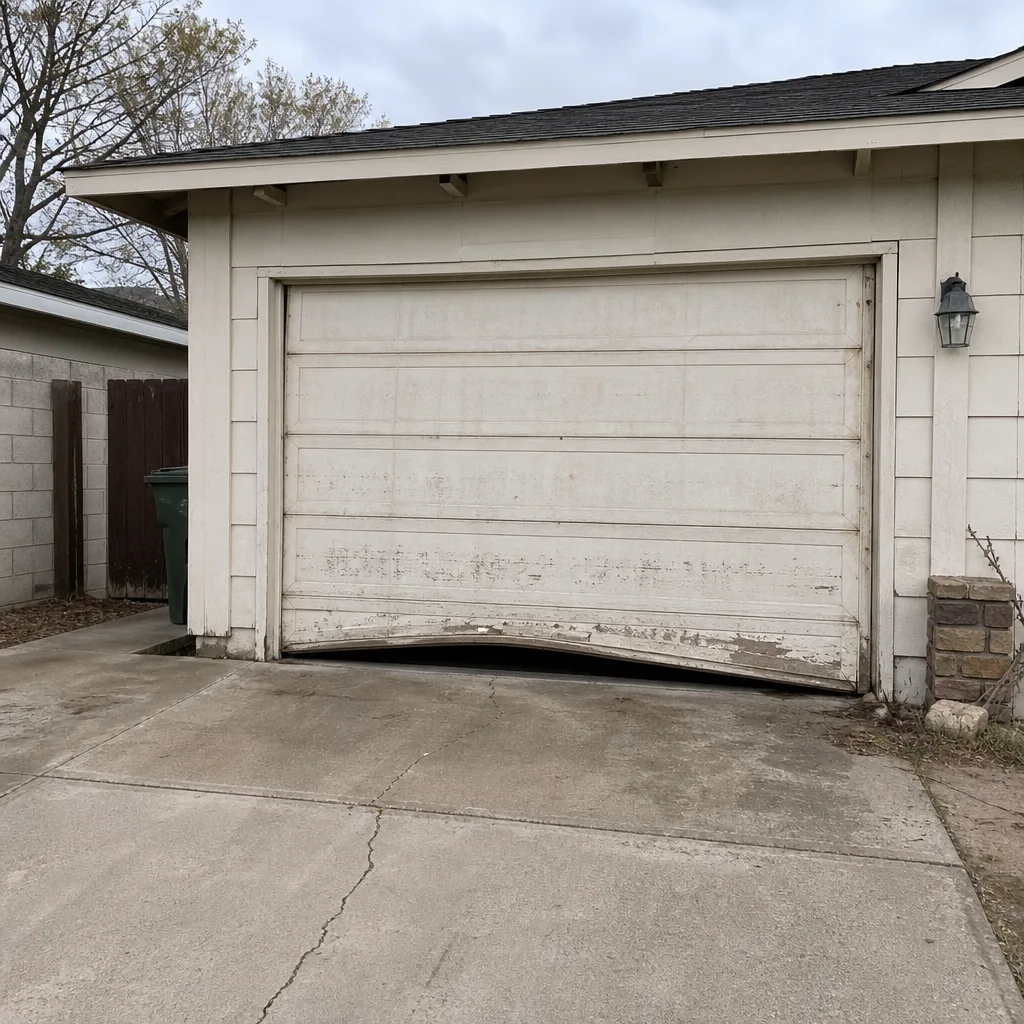 Before
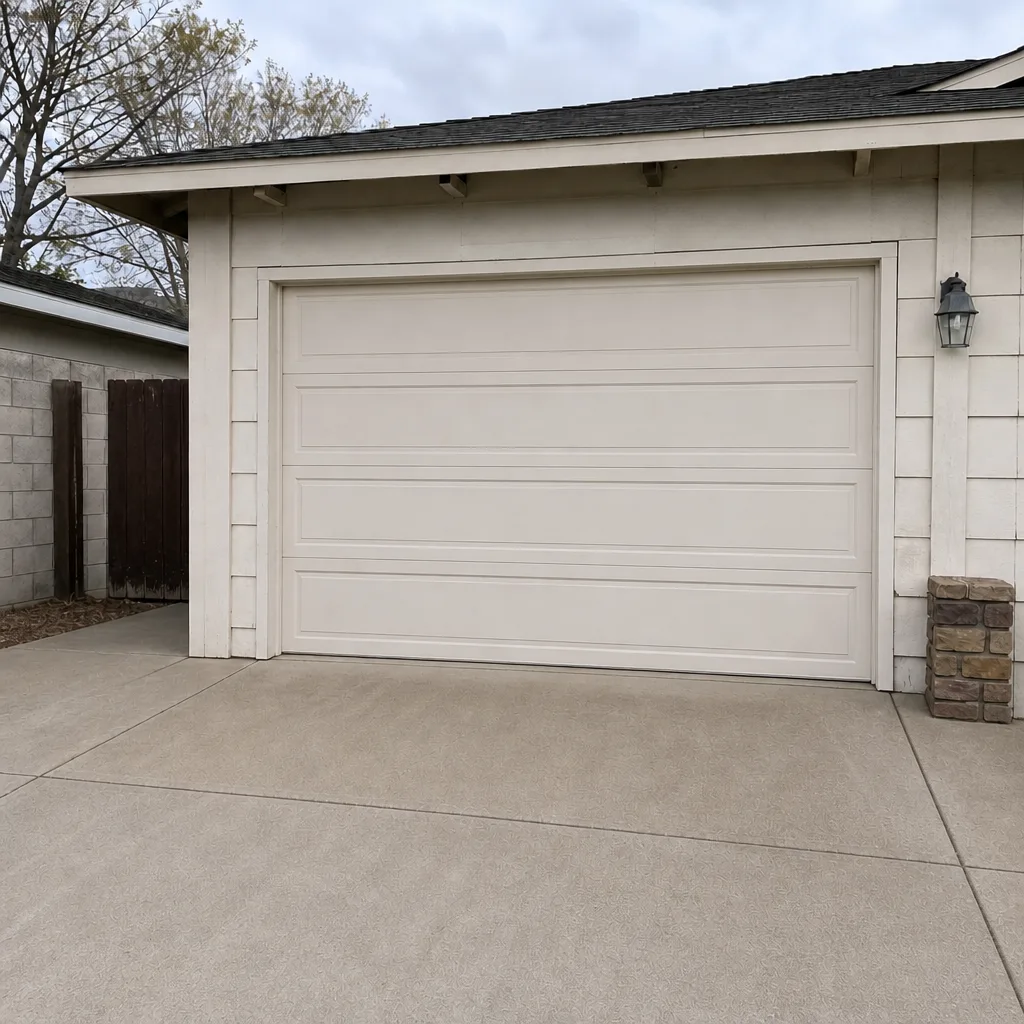 After
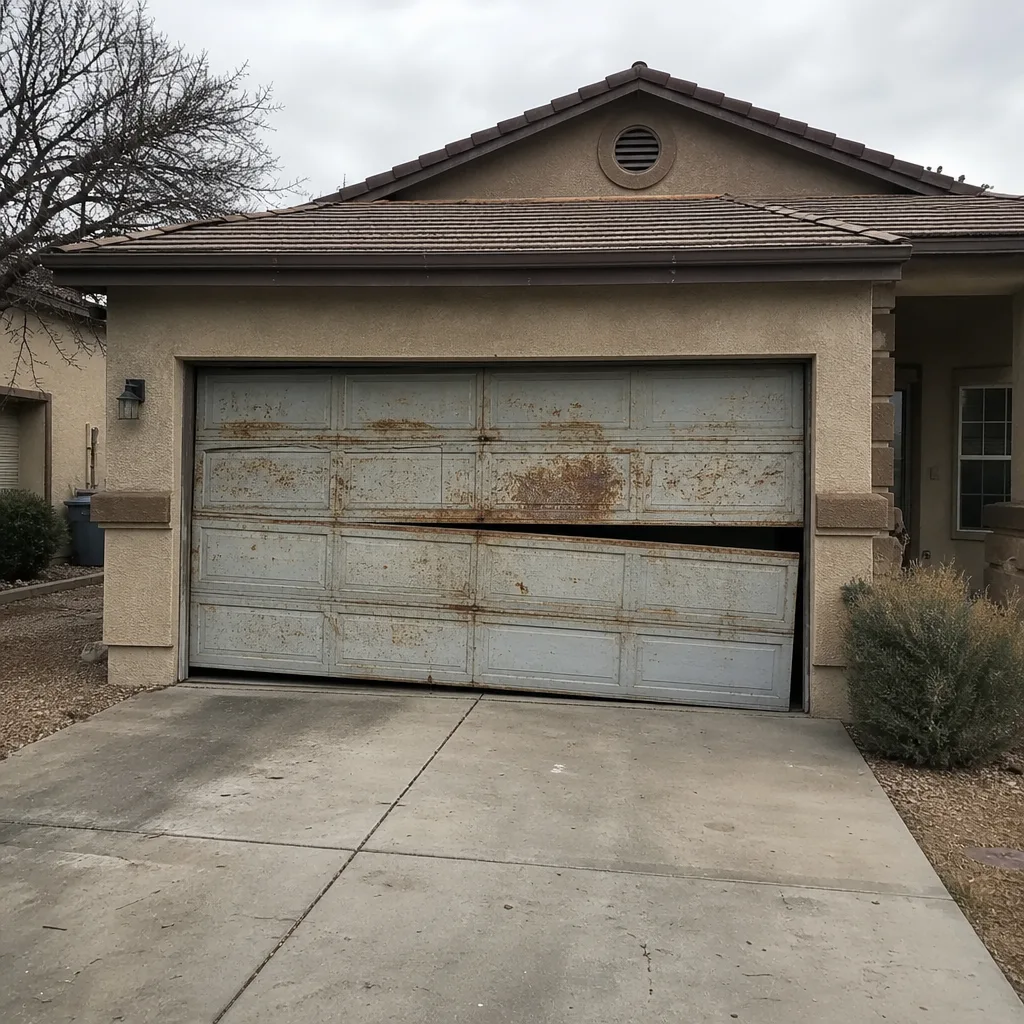 Before
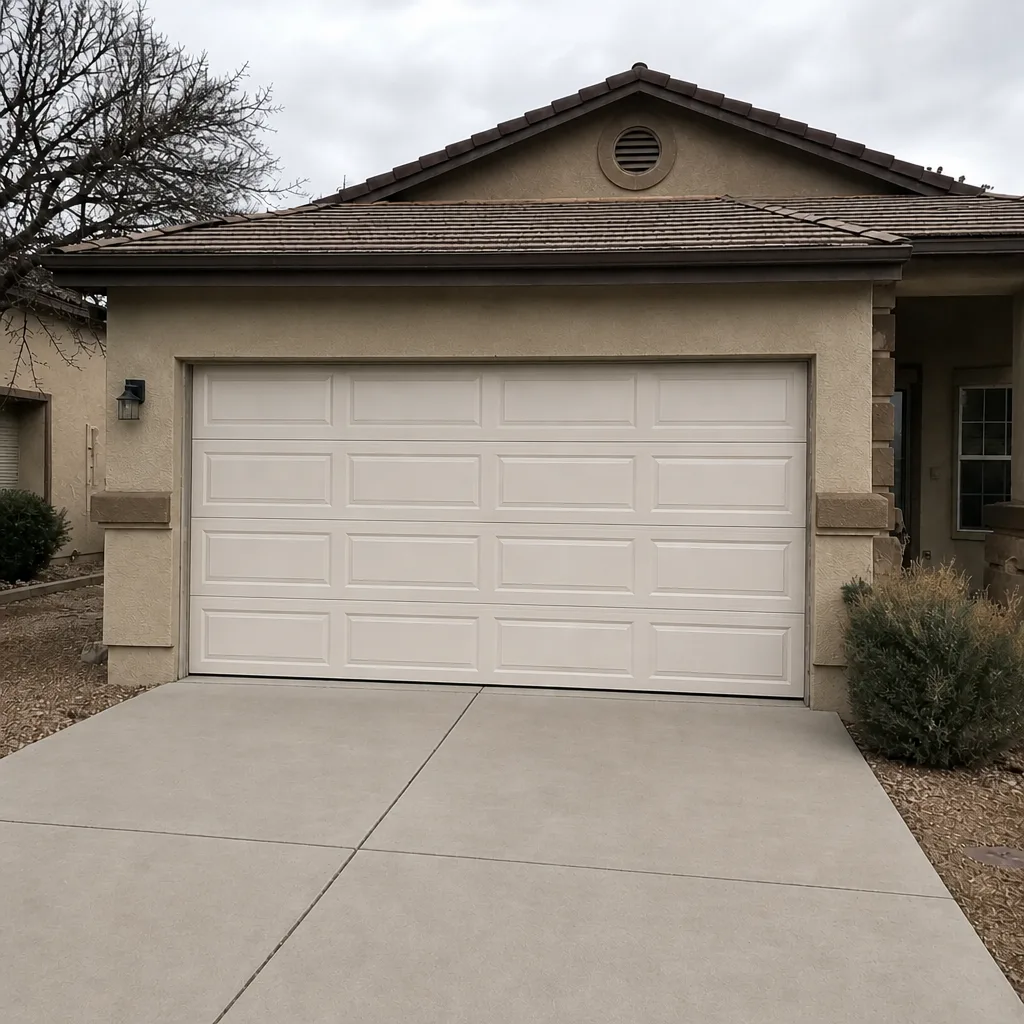 After
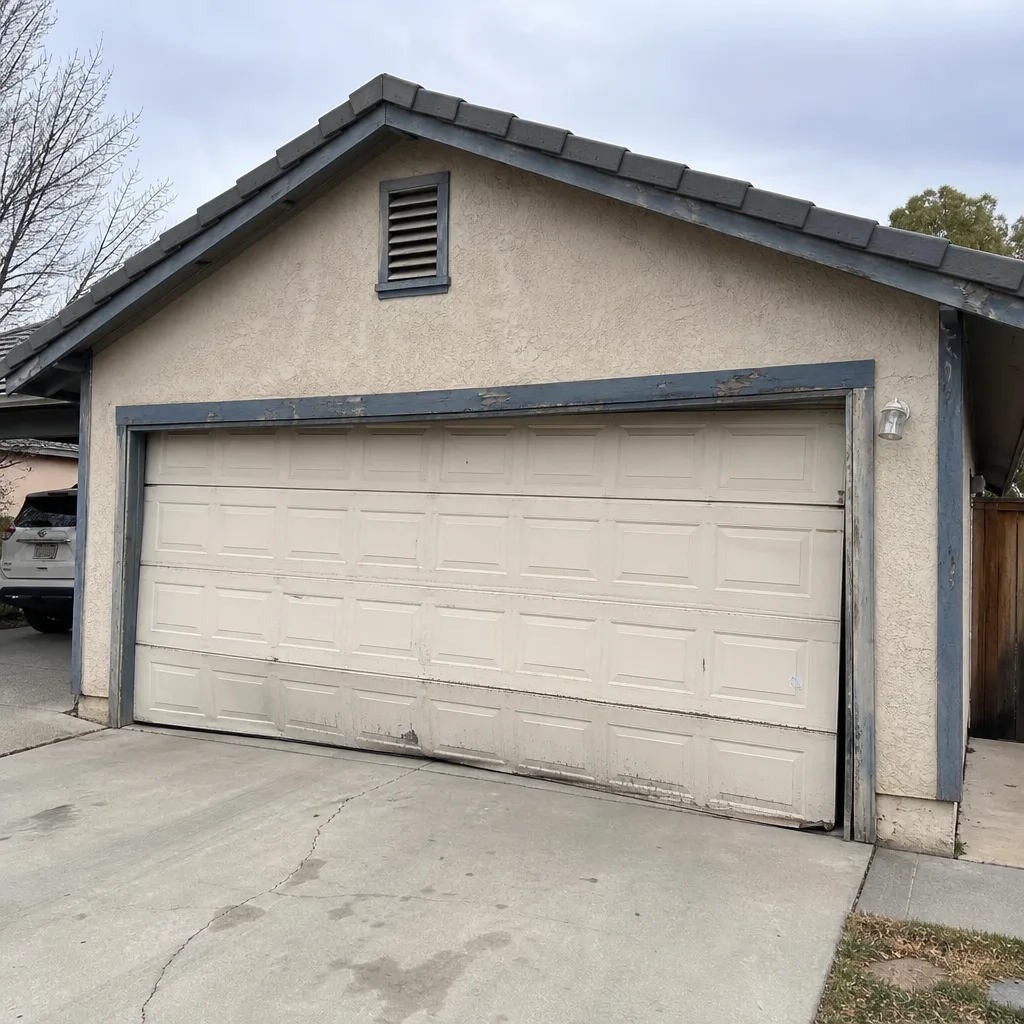 Before
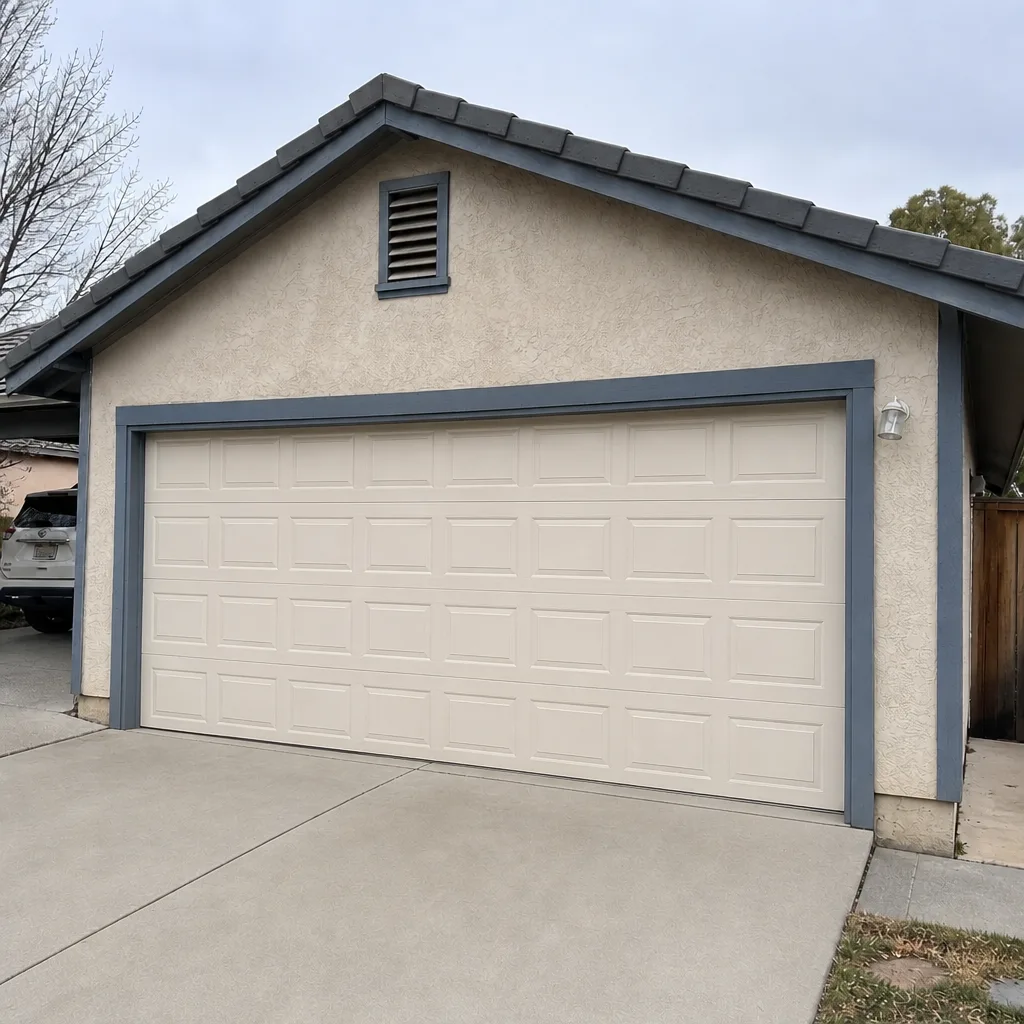 After
When to Call a Professional
Call a technician when the door fails the balance test, when you hear a loud pop from the torsion bar, when the door hesitates halfway up, or when you see any fraying on the cables near the drum. Those are all spring-and-cable issues, and none of them belong on a DIY list – the stored energy in a torsion spring under load can injure you badly in a fraction of a second, and a snapping cable can whip hard enough to break bone. Call us if you’re facing a broken spring with your vehicle trapped inside. Call us before buying a replacement if the door is over 15 years old and you’re weighing repair against new. Otto’s Garage Door Enterprise offers free estimates in Enterprise – call (833) 620-7107. A live person answers, day or night, and we quote the job on the call and hold that number when we get there.
Frequently Asked Questions
Every 3 months, not the annual schedule most manuals recommend. Sustained 110°F summer heat and constant dust combine to push lubricant out of moving joints roughly twice as fast as the national average. If your door faces west or south and gets full afternoon sun, don’t skip a single quarter. Call (833) 620-7107 for a free estimate if you’d rather have us handle the lubrication and inspection.
No, and we strongly advise against it. A torsion spring on a 200-pound door is stored energy waiting to release, and the correct procedure requires specialized winding bars and training. A wrong move can break a wrist or worse. Replace the spring, replace the bottom seal, replace the rollers – but leave the springs and cables to a technician. Call us and we’ll quote the spring replacement in one phone call.
Roughly 30 percent less than their rated cycle count expects. A spring rated for 10,000 cycles in moderate humidity may fail near 7,000 in sustained desert heat. If your door cycles four times a day, that’s about five years instead of seven. Have a technician count the cycles every 2 to 3 years to know where you stand.
Sand. Windblown grit from the open desert deposits against the seal and grinds through it faster than anything else will in an arid climate. West-facing doors see the worst of it. Check the seal monthly and plan on a replacement every 5 to 7 years instead of the 10+ you’d get elsewhere. Carl’s Jr. isn’t responsible for that, the desert is. Call (833) 620-7107 for a free estimate on seal replacement.
Start a logbook the day you move in and get a professional inspection to establish a baseline. A technician will document the current state of the springs, cables, rollers, and seal, which becomes your record from that point forward. From then on, log every maintenance task and every professional visit. If a warranty question ever arises, your logbook is the difference between a covered repair and a customer-pays repair.
No, but you need to apply it before summer, not during. Silicone spray and a single drop of lithium-complex grease on the torsion bearings work year-round in Enterprise. Apply them in spring and fall when the garage is cool enough to let the product settle into the joints properly. July applications mostly evaporate before they do any good.
The Bottom Line
Your garage door needs a different maintenance rhythm in Enterprise than the manual calls for. Lubricate quarterly with silicone spray, wipe the tracks clean, test the balance monthly, and check the bottom seal every 30 days. Those four habits alone will roughly double the lifespan of your rollers compared to what the national chart predicts. Have a technician count the springs every 2 to 3 years, replace the bottom seal on a 5-to-7-year cycle, and keep a logbook so a warranty question never catches you without records. The door is doing more work than you think in this heat. Respect it. Call (833) 620-7107 for a free estimate.
Written by the team at Otto’s Garage Door Enterprise.