
Last updated November 17, 2026
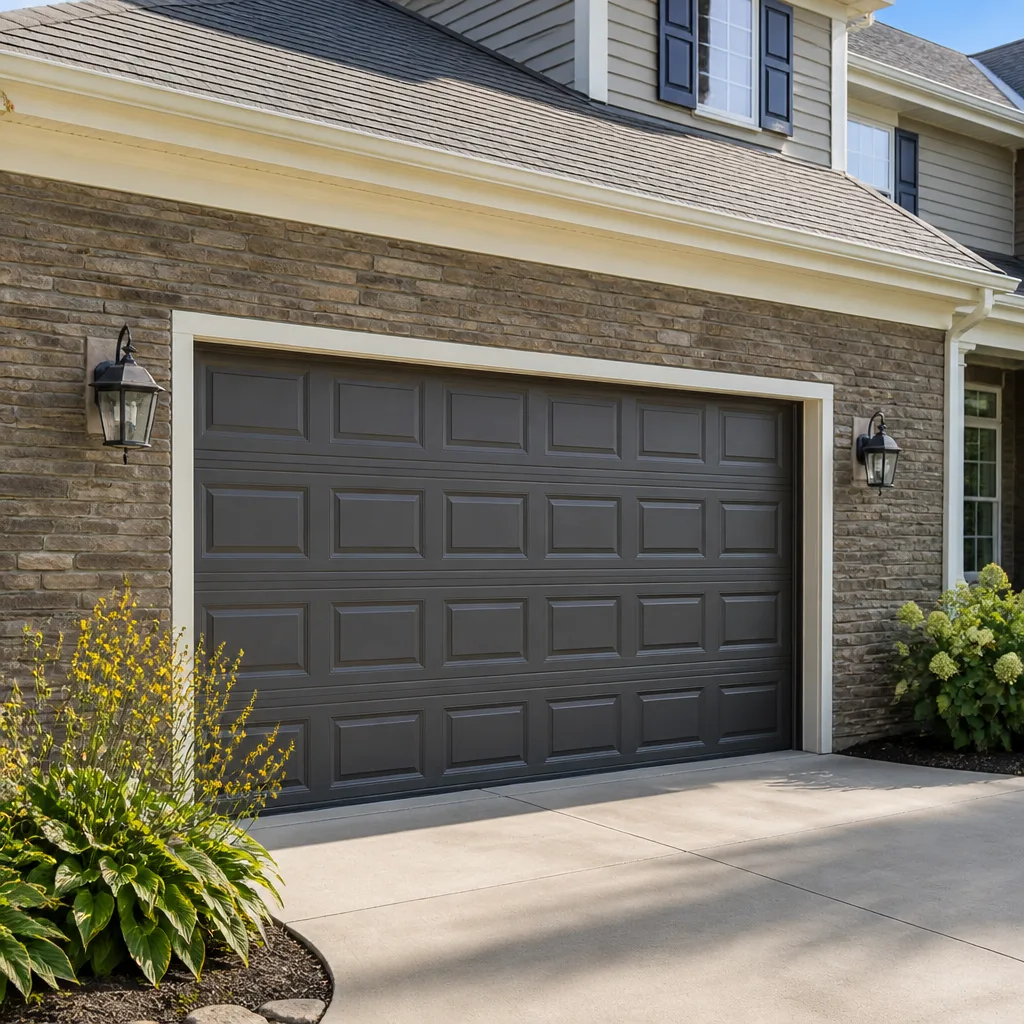 Raised-panel steel
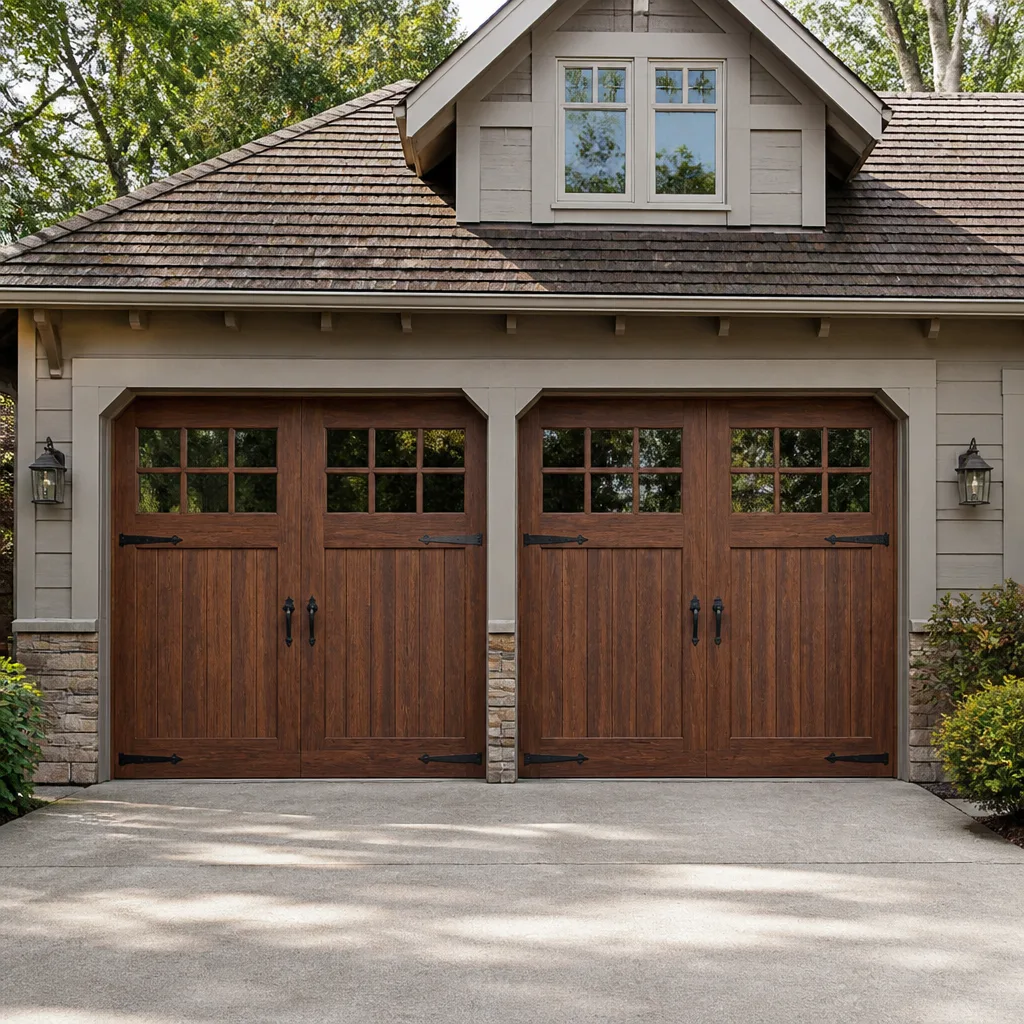 Carriage house
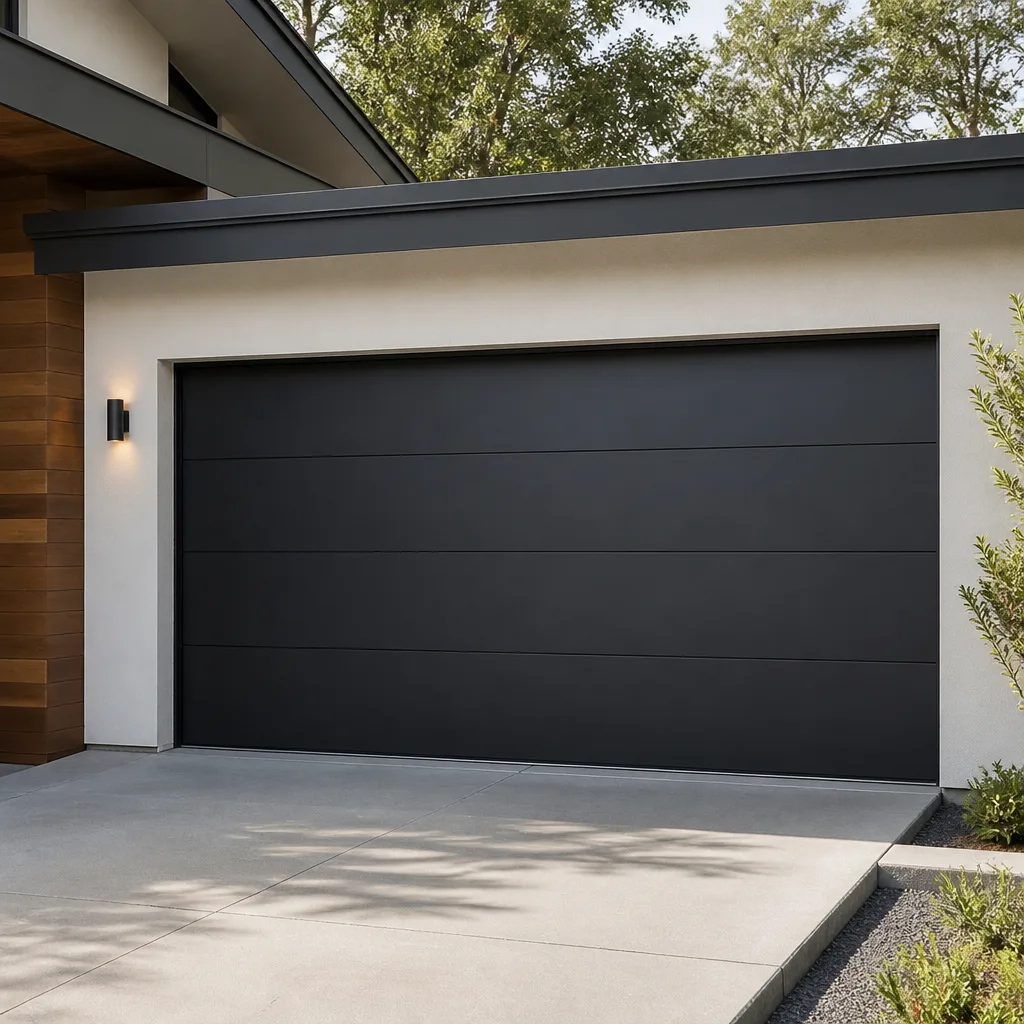 Modern flush
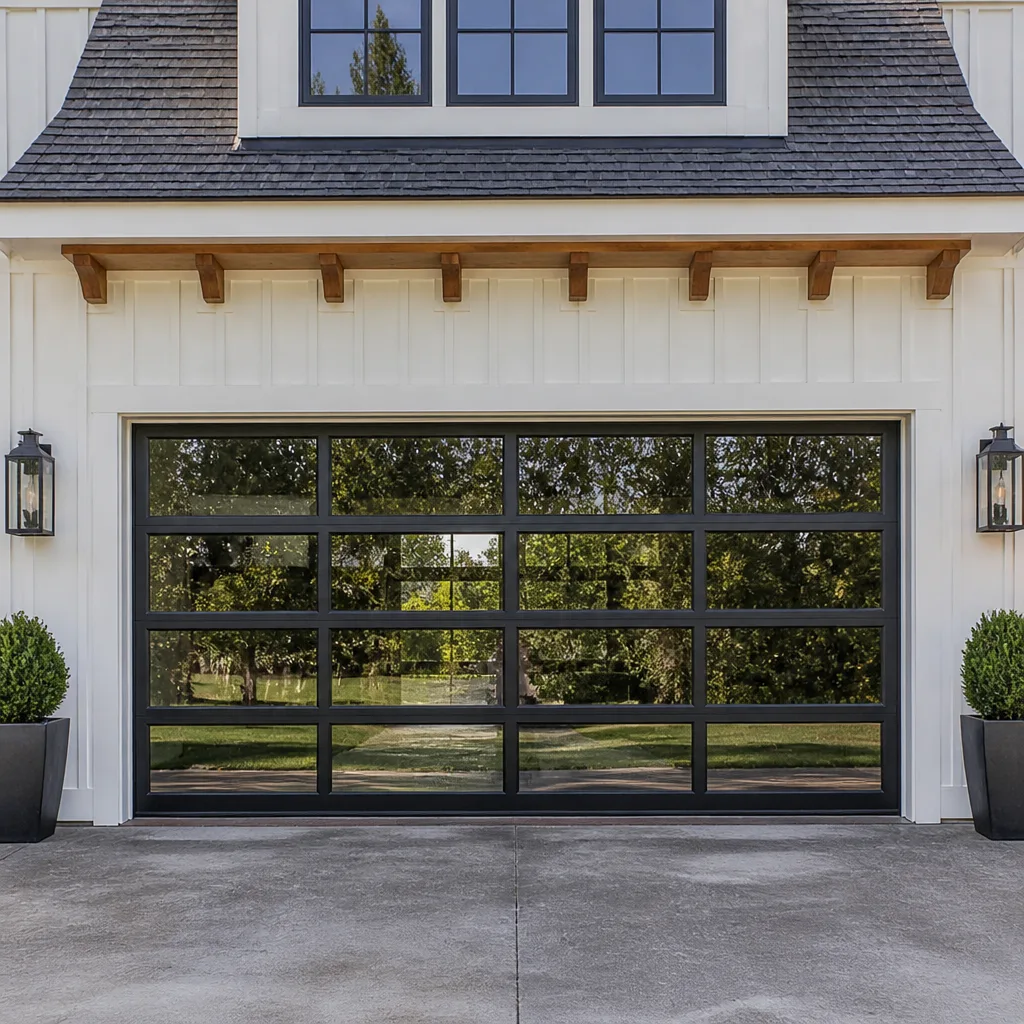 Full-view glass
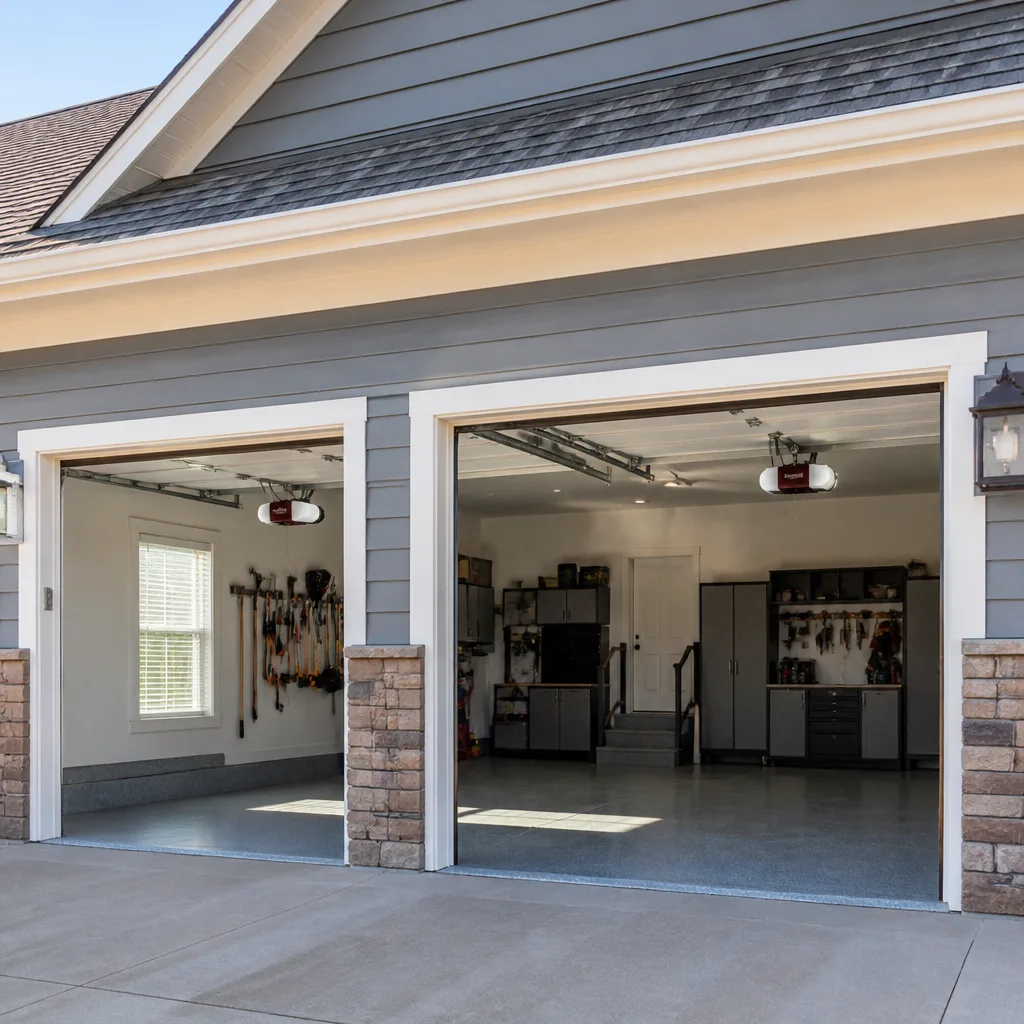 LiftMaster openers
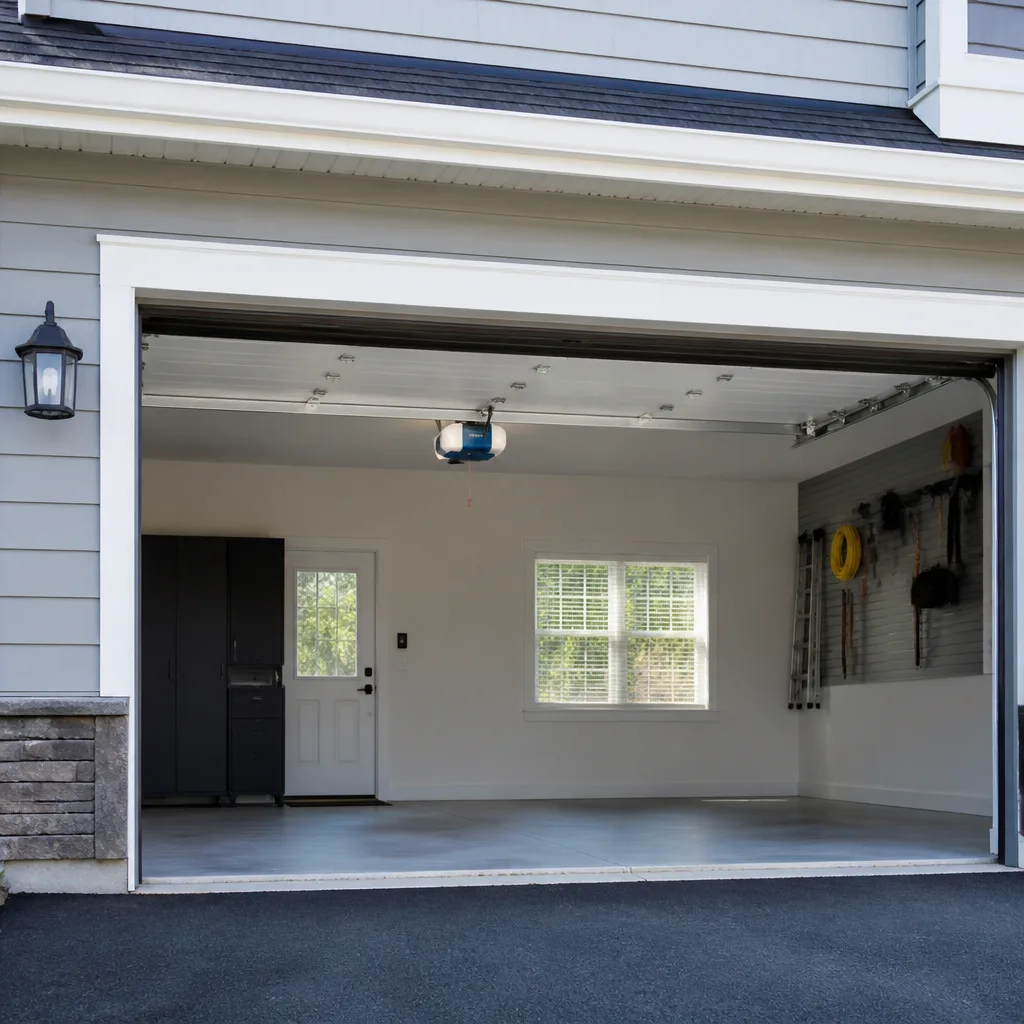 Chamberlain openers
Full 25-point door and opener safety check with every visit - springs, cables, rollers, tracks, and your LiftMaster or Chamberlain opener included
You get a price before we start. It does not change when the pro arrives.
Get your free estimateGarage Door Parts Troubleshooting: Common Problems and How to Fix Them
There are four distinct sounds a garage door makes when something’s wrong, and each one points to a different part. A squeal on the way up is usually a dry roller or a worn hinge. A sharp bang followed by silence is almost always a torsion spring letting go. If you can call and say “it’s grinding on the way down, not up,” you’ve just saved fifteen minutes of guessing and likely gotten a more accurate quote before anyone pulls in the driveway. That specificity is what this guide is for. We wrote it from Enterprise so you can walk into any service call already knowing which part broke, what it sounds like when it does, and roughly what it costs to set right.
Quick Answer
Most garage door problems trace back to one of six parts: the torsion spring, the lift cables, the rollers, the track, the bottom seal, or the hinges. Diagnosing from the ground means listening for sound changes, watching how the door moves side to side, and looking for visible damage without touching spring hardware. Springs and cables are under extreme tension and are not a homeowner repair – everything else on this list can usually be checked safely at eye level.
Styles & brands we work with
- Raised-panel steel
- Carriage house
- Modern flush
- Full-view glass
- LiftMaster openers
- Chamberlain openers
Table of Contents
- The Symptom-to-Part Map
- How to Safely Inspect Your Door from the Ground
- The Cascade Failure Problem
- How to Describe Your Problem Over the Phone
- Parts That Look Broken but Just Need Adjustment
- Springs and Cables: What You Should Never Touch
- Common Mistakes to Avoid
- When to Call a Professional
The Symptom-to-Part Map
Here’s the map we run through on every call. Match the symptom to the part, and you already know what you’re dealing with before we arrive in Enterprise.
- Door won’t stay open, or slams down. A broken torsion spring or a snapped cable. The spring balances the door’s weight – when it goes, the door drops without warning. Stop using it immediately.
- One side droops or looks crooked. Almost always a broken or loose lift cable on that side. Uneven tension on the drums is the culprit.
- Loud bang on operation. Spring failure. Think of it as a gunshot wrapped in a garage. Stop and call. Do not run the opener again.
- Grinding or scraping noise. Worn rollers or a track that’s been pushed out of alignment. Rollers develop flat spots; tracks bend when something strikes them.
- Gaps at the floor seal. A worn bottom seal, or a slab that’s settled since it was poured. In Enterprise’s heat, the vinyl seal dries out and cracks faster than most people expect.
- Shaking panels or rattling. Loose hinge bolts, cracked hinge straps, or a panel that’s worked loose from the stile.
Two or three symptoms together usually means one root cause. A droop plus grinding is a cable problem that also took out a roller. A bang plus a door that won’t open is a spring, full stop.
How to Safely Inspect Your Door from the Ground
You can learn a lot without ever touching the moving hardware. Here’s the sequence we recommend to homeowners across Enterprise who want to describe their problem accurately. Stand back, use your eyes and ears, and keep your hands off the springs.
- Look at the door from the driveway, not from inside. Stand at the edge of the concrete. Do the panels sit level with each other? Is there a gap on one side that isn’t on the other?
- Check the springs by sight only. Torsion springs run horizontally across the top. Extension springs run parallel to the horizontal tracks. A visible gap in a torsion spring, or a stretched-out extension spring with no tension, means it’s broken. Don’t touch it – just note it.
- Inspect the cables. Cables run from the bottom corners up to the drums. Look for fraying, a slack loop, or a cable that’s clearly off its drum. Any of those are cable failures.
- Watch the door move. Hit the opener and watch. Does the door lift evenly? Does it hesitate? Does it shake? Any of these tells us which side is struggling.
- Look at the rollers in the track. Shine a flashlight into the tracks. Missing wheels, flat spots, or rollers cocked sideways are visible from the ground.
- Check the seal at the floor. Slide a piece of paper under the door. If it pulls out with no drag, the seal is worn or the door isn’t closing fully.
If any step reveals a broken spring, a slack cable, or a door that stopped mid-travel, close the inspection and pick up the phone. That’s a trained-professional job – the danger is real, and a door is 200 pounds riding on two springs. Respect it.
The Cascade Failure Problem
Here’s the part most homeowners learn the hard way. A broken cable doesn’t just break the cable. It lets one corner of the door drop, which twists a panel out of square, which racks the door in the track, which bends the track, which makes the opener strain harder than it was ever built to, which eventually burns out the opener motor. One part fails and three follow.
We’ve seen this in Enterprise more times than we can count. A homeowner hears a small snap, assumes it’s nothing, and by the time the door comes down fully it’s not a $250 cable repair anymore – it’s a cable, two panels, a track section, and an opener. The math on waiting never works. Fixing the first symptom fast is almost always cheaper than letting it run.
This is why we say if the opener is straining, the problem is almost never the opener. It’s telling you something else broke. The opener is the symptom, not the disease. For a fuller breakdown of what to do when a door comes down hard, see our Garage Door Repair in Enterprise page, where we walk through the repair diagnosis in more depth.
How to Describe Your Problem Over the Phone
There’s a big difference between “my garage door is broken” and “the door went up about a foot and then banged, and now it hangs on the right side.” The second one gets you a real range on the call. The first one gets you “could be a lot of things.” Here’s the language that helps:
- Timing: “on the way up,” “on the way down,” or “when it’s all the way open.” Sounds change depending on direction.
- Sound: squeal, grind, bang, rattle, snap. Each one maps to a different part.
- Position: “hangs on the left side,” “sags in the middle,” “won’t close the last six inches.”
- Age: “the door is original to the house” tells us the rollers and hinges are likely factory stock.
- Cycle count: “we run it maybe four times a day” helps us estimate spring life. I count spring cycles the way you count tire miles – I will tell you what’s left on yours.
- Weather: “it started the week it got cold” points to seal shrinkage. “It started after the 110-degree week” points to thermal expansion in the track.
When Otto answers the phone – and in Enterprise, often Otto himself picks up – he will quote the job right there on the call and hold the number when he gets there. That’s why the better the description, the tighter the quote.
Parts That Look Broken but Just Need Adjustment
Not every problem is a parts replacement. Some of the calls we run in Enterprise turn into a lubrication job or a five-minute adjustment, and we say so before we start.
- Rollers. A squeaky roller is often just dry. A light dose of white lithium grease on the roller stem can quiet it for months. If the roller is cracked or flat-spotted, it needs replacing – but squeak alone isn’t replacement territory.
- Hinges. Loose hinge bolts rattle. A wrench and a minute can silence a lot of rattle. Cracked hinge straps are a different story and do need replacement.
- Tracks. A slightly bent track can often be straightened with the right tool. A badly racked track needs replacing. The line between them is a judgment call.
- Bottom seal. Sometimes the seal is fine and the door just isn’t closing far enough – the limit switch on the opener needs adjusting. That’s a two-minute fix, not a new seal.
- Photo-eye alignment. If the door won’t close and the opener is blinking, the safety photo-eyes are probably misaligned. Straightening them costs nothing.
We’d rather tell you “this is a $90 adjustment” than sell you a $400 replacement. The 90-Day Done Right Promise is on every job we do, and it works both ways: if we said we’d fix it, and the fix doesn’t hold, we come back.
Springs and Cables: What You Should Never Touch
Torsion springs on a residential door in Enterprise are usually wound to somewhere between 150 and 250 pounds of torque. Extension springs on older doors can fail with enough force to send hardware across the ceiling. Cables run under the same tension. Neither is a homeowner project.
Here’s what we need you to know: nothing about spring or cable repair is safe to do without the proper winding bars, the training to know how many turns to put on, and the experience to feel a spring that’s about to go. Homeowners who attempt this end up in the ER in Clark County more often than people realize. We are not going to describe a procedure that could take a finger, an eye, or worse.
What you can do is keep the door closed and leave the opener alone until we get there. Cycle count matters: most torsion springs are rated for 10,000 cycles. Run your door four times a day, and you’re looking at a spring that’s ready to break around seven years. We’ll tell you how many cycles are left on yours when we do a service call – that number is worth knowing in Enterprise because summer heat accelerates fatigue. For spring and cable repairs, don’t guess. The door is 200 pounds riding on two springs.
How Much Do These Repairs Cost in Enterprise?
Homeowners in Enterprise want a real number before they call, and we understand why. Here are the typical ranges we quote in and around Enterprise, with the caveat that we don’t send a truck without agreeing on the price first.
- Torsion spring replacement (single spring): $180 to $340, depending on cycle rating and door weight.
- Extension spring pair: $160 to $280.
- Lift cable replacement (one side): $140 to $220.
- Roller replacement (set of 10): $90 to $180.
- Track adjustment or straightening: $100 to $200.
- Bottom seal replacement: $120 to $240, depending on door width.
- Hinge replacement (per hinge): $25 to $60.
- Full spring + cable + roller service (common after a spring break): $350 to $550.
What you’ll notice is that the smaller repairs are much cheaper than waiting for a cascade. That said, prices vary by door weight, cycle rating on the spring, and access to the torsion bar. What never varies with us: we quote the job before we start, in writing, and we don’t change the number at the door. If the estimate goes up after we look at the job, that conversation happens before any tool comes out of the truck.
For a full breakdown of opener-specific costs and installation options, see our Garage Door Opener Repair & Installation in Enterprise page.
How Do I Know Which Part Broke Without Touching It?
You match the symptom to the part. A door that won’t stay open is almost always a spring. A door that hangs on one side is almost always a cable. A grinding noise is almost always a roller or a track. A gap at the floor is usually a seal or a limit setting on the opener. If you can’t tell, don’t force it – the sound and the movement pattern are what matter, not the part name.
What we’re listening for is direction. A door that squeals on the way up but is quiet on the way down has a different problem than one that squeals both ways. That one detail narrows the diagnosis to the torsion system or the lift rollers. It’s the kind of thing that saves everyone fifteen minutes.
Do I Need a New Door or Just New Parts?
Unless panels are cracked through, the stiles are rotted, or the door is more than 25 years old with visible structural damage, repair almost always beats replacement. A door with one broken spring is not a replacement candidate – it’s a $200 to $300 repair. We’ve walked away from replacement jobs that weren’t needed in Enterprise more than once. If you’re wondering about the difference, our Garage Door Installation in Enterprise page covers the replacement side in more depth.
See the difference
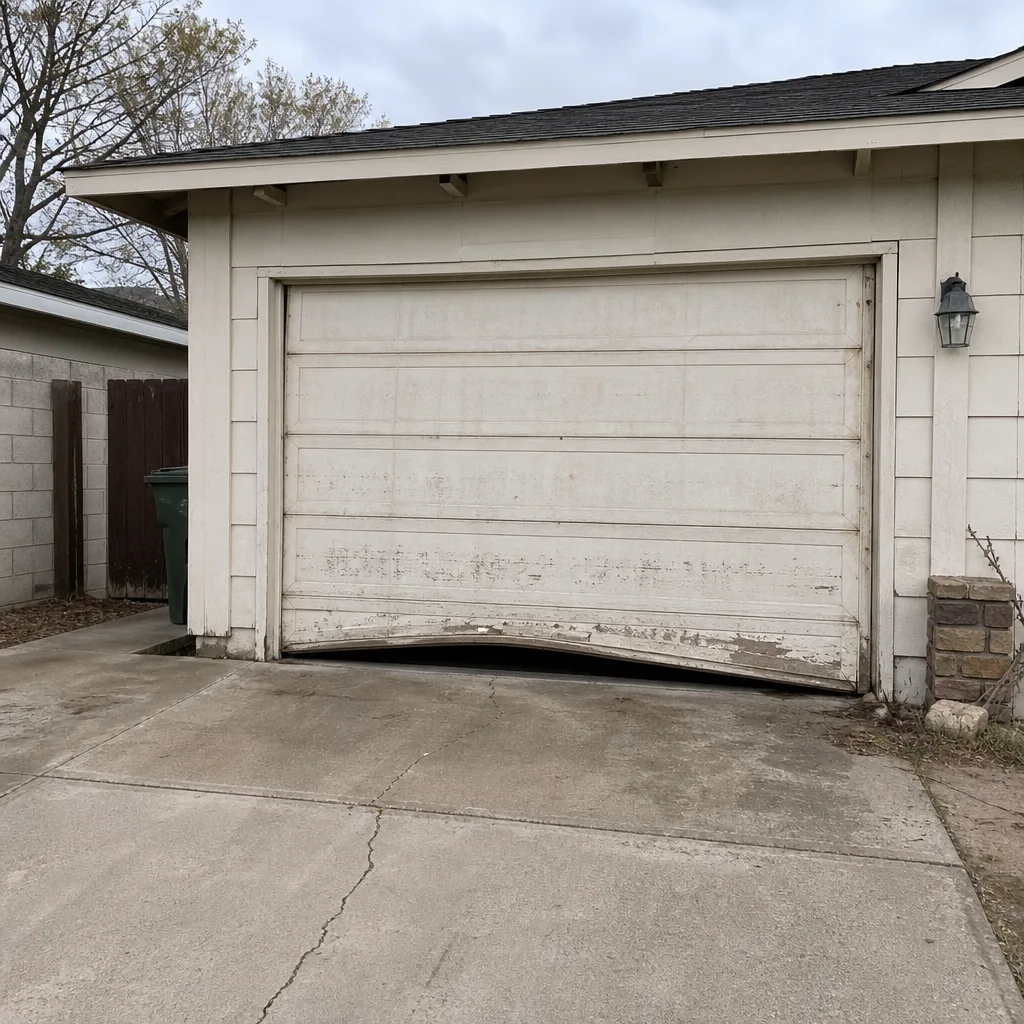 Before
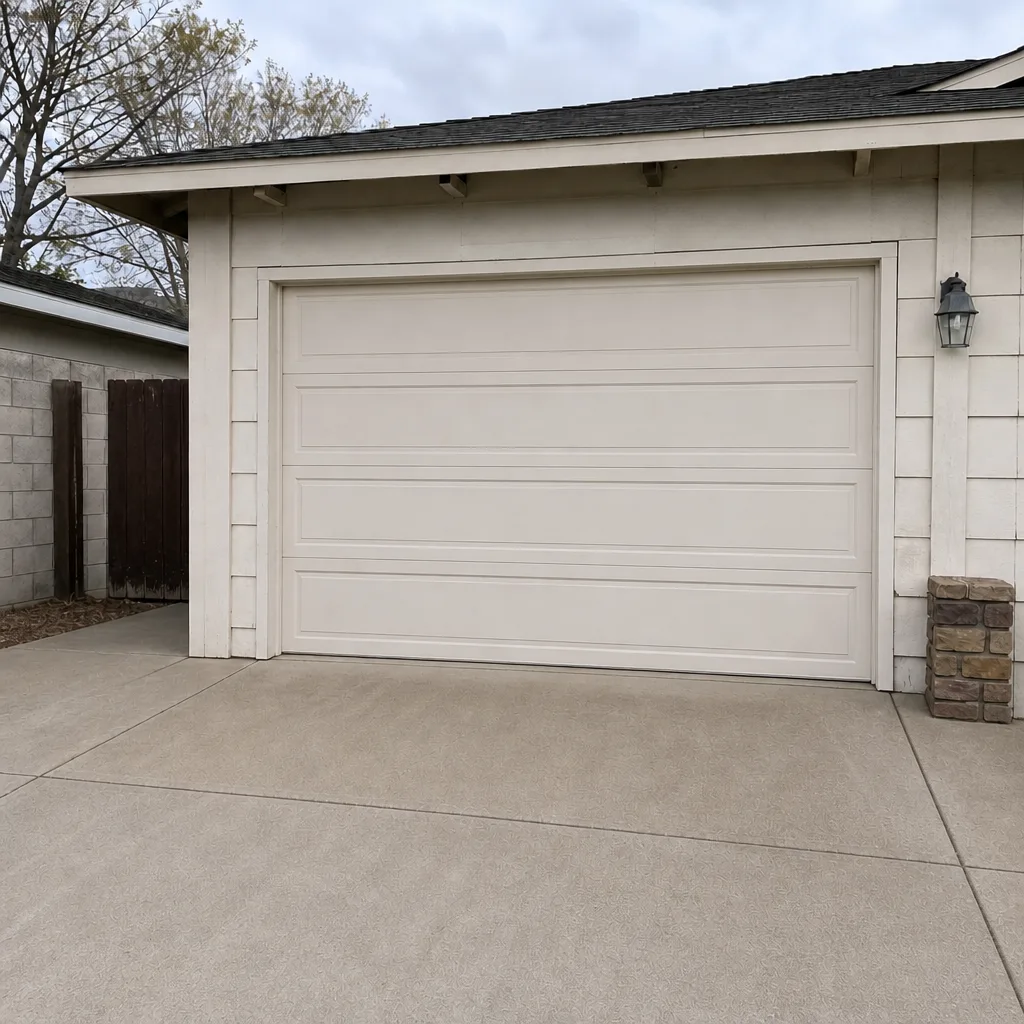 After
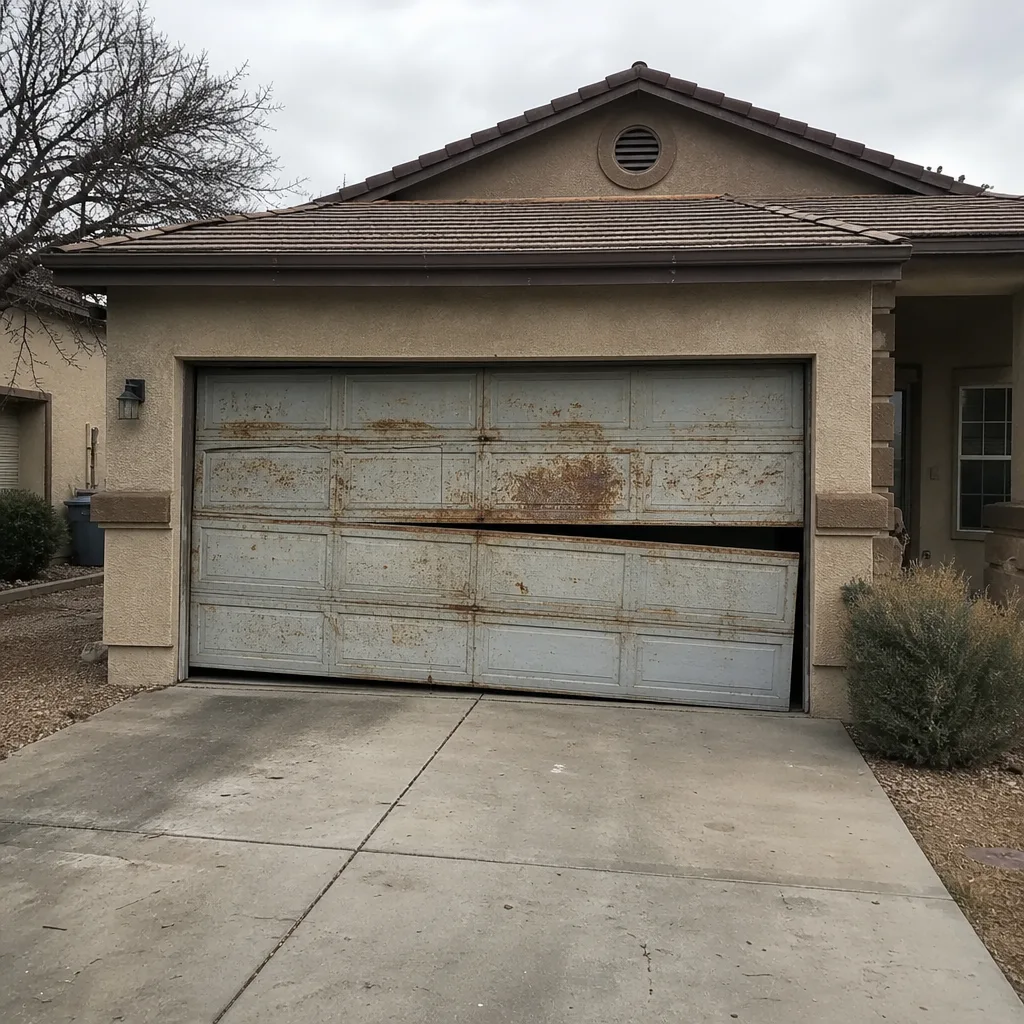 Before
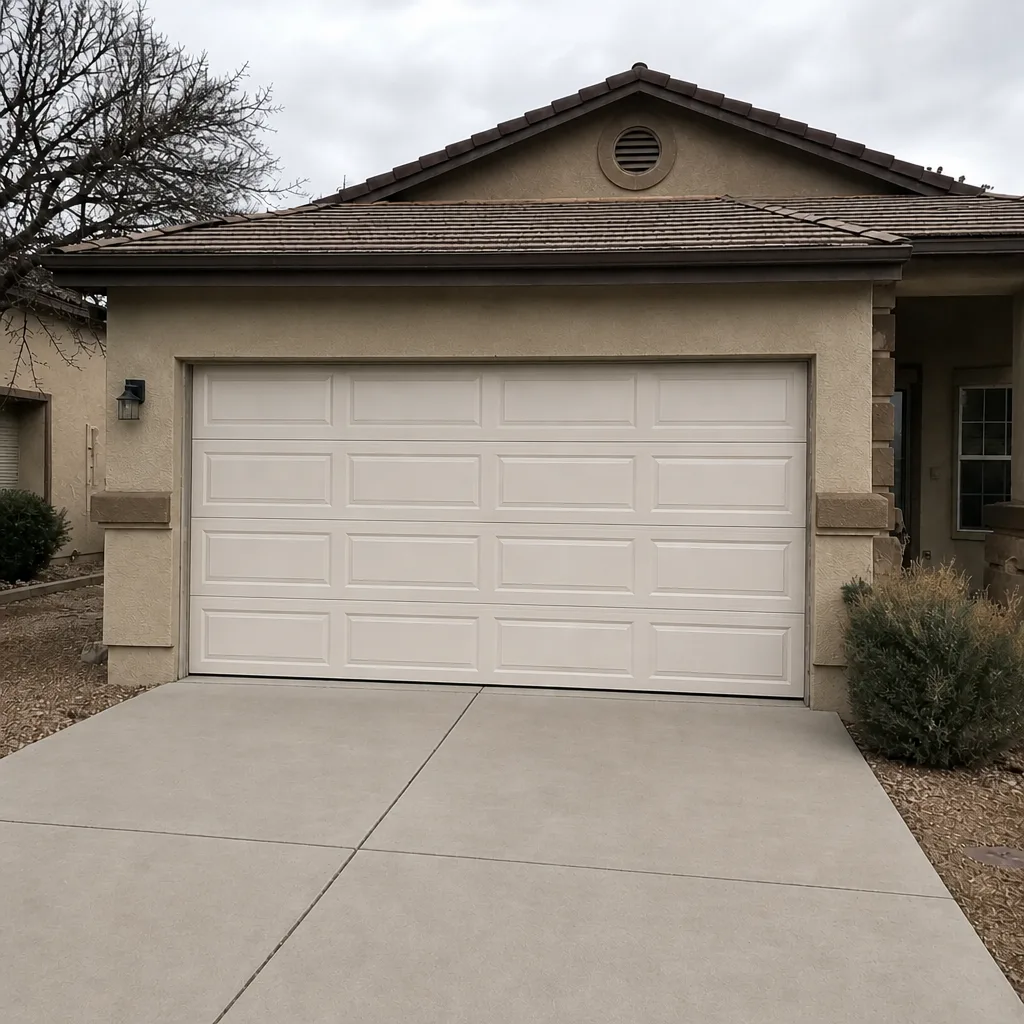 After
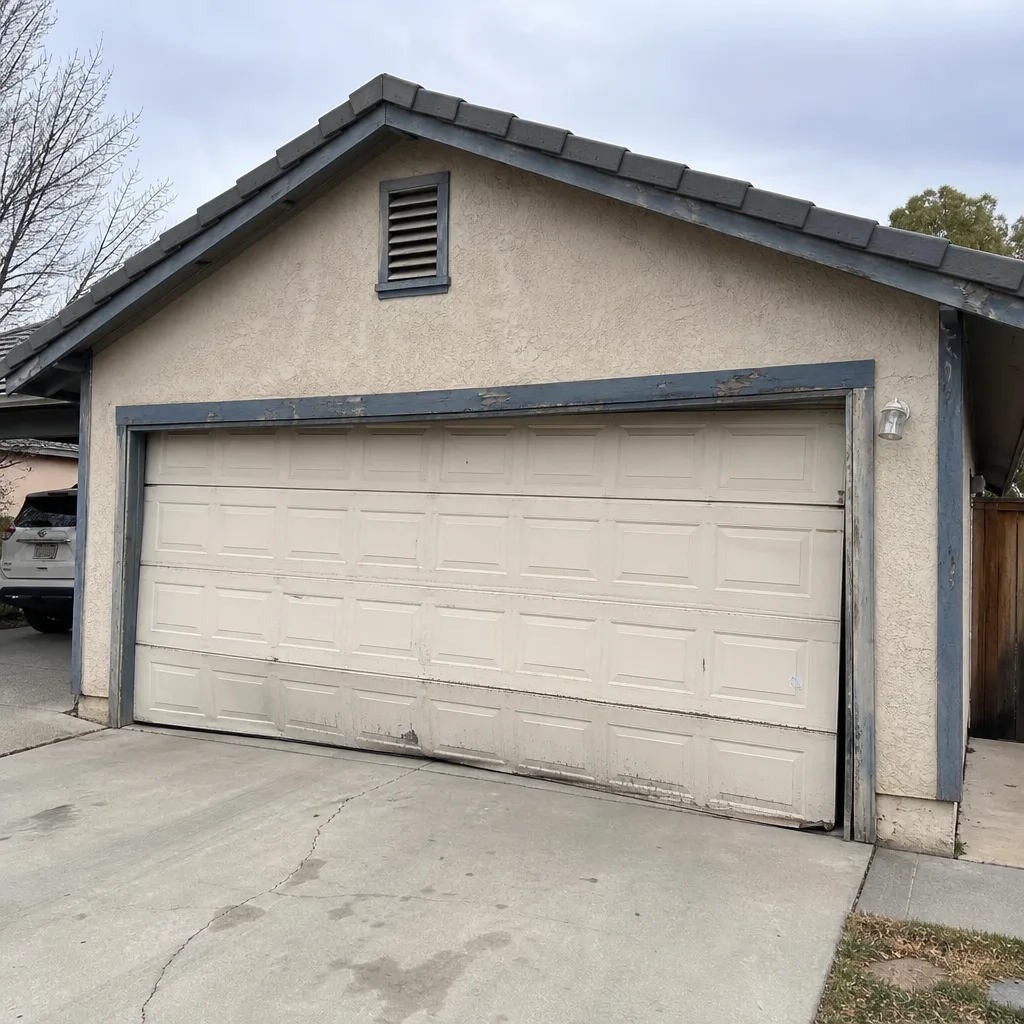 Before
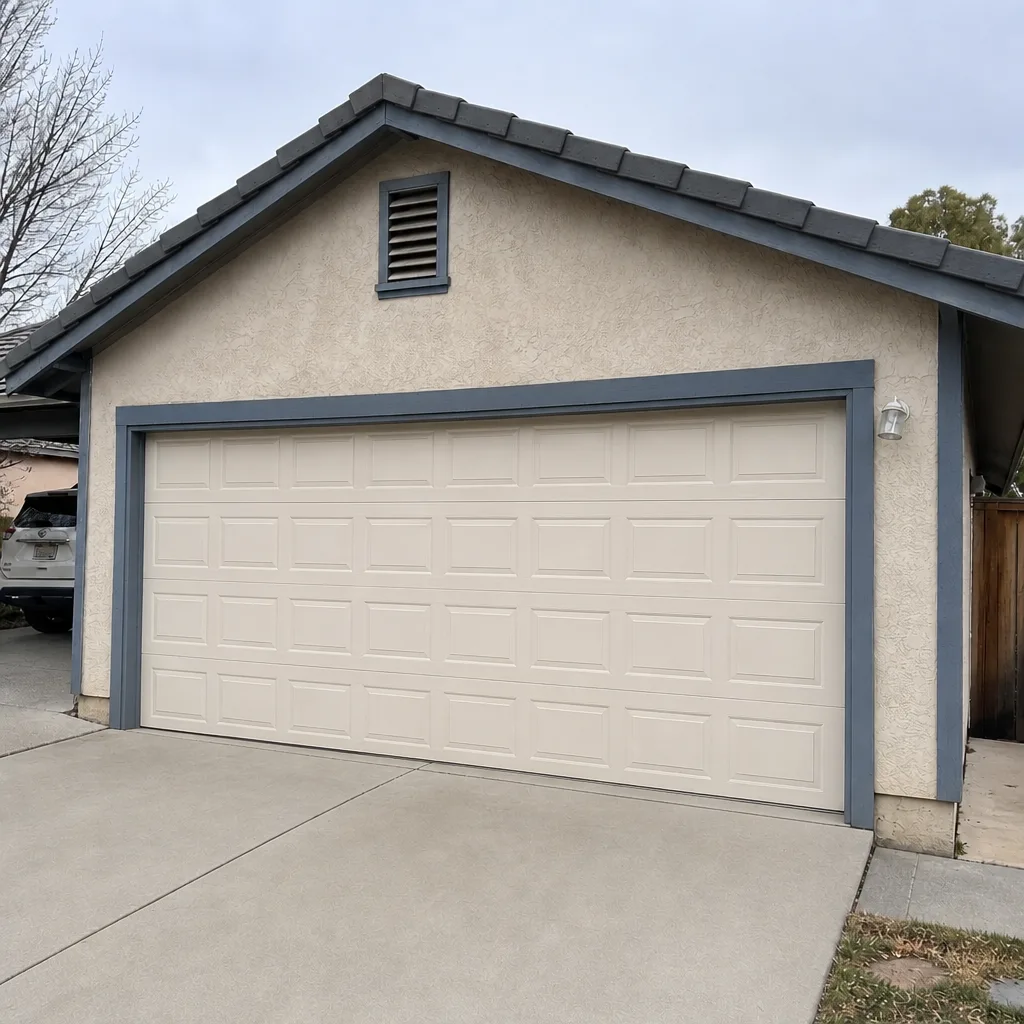 After
Why do doors near the Enterprise foothills have more seal problems?
Two things stack up here. First, the summer heat – weeks above 100 degrees bake the vinyl seal and speed up cracking. Second, the settled concrete on a lot of older slabs means the floor isn’t perfectly flat anymore. A new seal helps, but we sometimes need to shim the retainer to follow the concrete. It’s a repair we do regularly in Enterprise, and it’s why a bottom seal replacement here isn’t always the same as in other parts of Clark County.
Common Mistakes to Avoid
- Running the door after you hear a bang. If the opener is running and the door isn’t moving, you’re burning the motor and possibly the capacitor. Stop and call.
- Pulling on a broken cable. Cables are under load even after they snap. Pulling on one is how people lose fingers. Leave it.
- Cranking the torsion spring yourself after watching a video. We’ve repaired too many homeowner spring attempts in Enterprise. The tools are specialized, the tension is dangerous, and the video left out the part where the door came down on someone.
- Spraying WD-40 on the tracks. That’s a popular internet fix, and it’s wrong. Tracks are supposed to be dry. Lubricant on the track makes rollers slip and the door gets unstable. Grease the rollers and the springs, not the track.
- Ignoring the “one side droops” symptom. That’s the exact window where a cable failure cascades into a racked panel. Fix it that week, not next month.
- Letting the opener carry the whole door weight. If the springs are broken, the opener is trying to lift 200 pounds on its own. It will fail. Sometimes loudly, sometimes by dropping the door.
- Assuming the cheapest phone quote will hold. Out-of-county operations often quote a low number and revise it up at the driveway. Ask for the price in writing before the truck moves.
When to Call a Professional
Call us for anything that involves a spring, a cable, a track that’s clearly bent, or a door that’s hanging off level. Those four are the danger zone, and they’re not homeowner repairs. Call us sooner than later if the door made a bang and stopped, if the opener is running without lifting the door, or if one side is visibly drooping by more than an inch compared to the other. That last one almost always means a cable failure in progress. Also call us if the photo-eye safety system won’t stay aligned – it’s a small fix, but getting it right matters, especially in households with kids or pets. We’ll quote the job on the call and hold the price when we get there, no surprises.
Otto’s Garage Door Enterprise offers free estimates in Enterprise – call (833) 620-7107. A live person answers around the clock, including nine at night when a spring lets go and your vehicle is sealed inside the garage.
Frequently Asked Questions
Torsion spring replacement in Enterprise typically runs $180 to $340, and extension spring pairs run $160 to $280. The range depends on door weight, cycle rating, and whether the cables or rollers were damaged when the spring let go. Call (833) 620-7107 for an exact quote – estimates are free, and we’ll quote on the phone and hold the number at the door.
Yes, we take same-day emergency calls in Enterprise, and a live person answers 24/7. If the door is stuck open or blocked mid-travel, that’s a call-now situation, not a tomorrow situation. We’ll walk through what to do to secure the door while we head your way.
No. We quote on the phone and hold the number when we get there. If something buried reveals an extra problem, we talk about it before we do anything, and you decide. The 90-Day Done Right Promise is on every invoice, so if it’s not done right, we come back.
Yes. Background-checked, licensed, insured, and trained across all major brands, including LiftMaster, Genie, Clopay, and Amarr. The name on the van is the name on the invoice and the name on the license – nothing routed through a national dispatch center.
Most torsion springs are rated for about 10,000 cycles. At four open-and-close cycles a day, that’s around seven years. In Enterprise, the extreme summer heat accelerates the fatigue, so we usually tell homeowners to expect closer to six or seven years of hard use. We can tell you how many cycles are left on yours during a service call.
No. Springs and cables are under extreme tension and are not homeowner repairs. We’ve repaired too many self-attempts in Enterprise to recommend it. The tools are specialized, the load is 200 pounds, and a mistake can take a finger or worse. Call (833) 620-7107 and we’ll come out.
The Bottom Line
Match the sound to the part, and you’re already halfway to a correct quote. Springs bang, cables droop, rollers grind, seals gap, hinges rattle. Fixing the first symptom is cheaper than letting it cascade, and calling with a good description is cheaper than calling with a vague one. If you’re in Enterprise and you’ve got a sound you can’t place, start at Otto’s Garage Door Enterprise home to see what we handle, or pick up the phone and let us quote it. We’ve been in this county since 2004, and Otto is a palindrome: reads the same from either end, same as the door.
Contact
Call (833) 620-7107 for a free estimate. Up top or out in the driveway, we’ll tell you what broke, what it costs, and what we’d do if it were our door. $40 off any repair over $200, free second opinion on any written estimate, no trip charge inside the county, and a permanent 10% discount for seniors and veterans – always.
Written by the team at Otto’s Garage Door Enterprise.