
Last updated November 17, 2026
 Raised-panel steel
 Carriage house
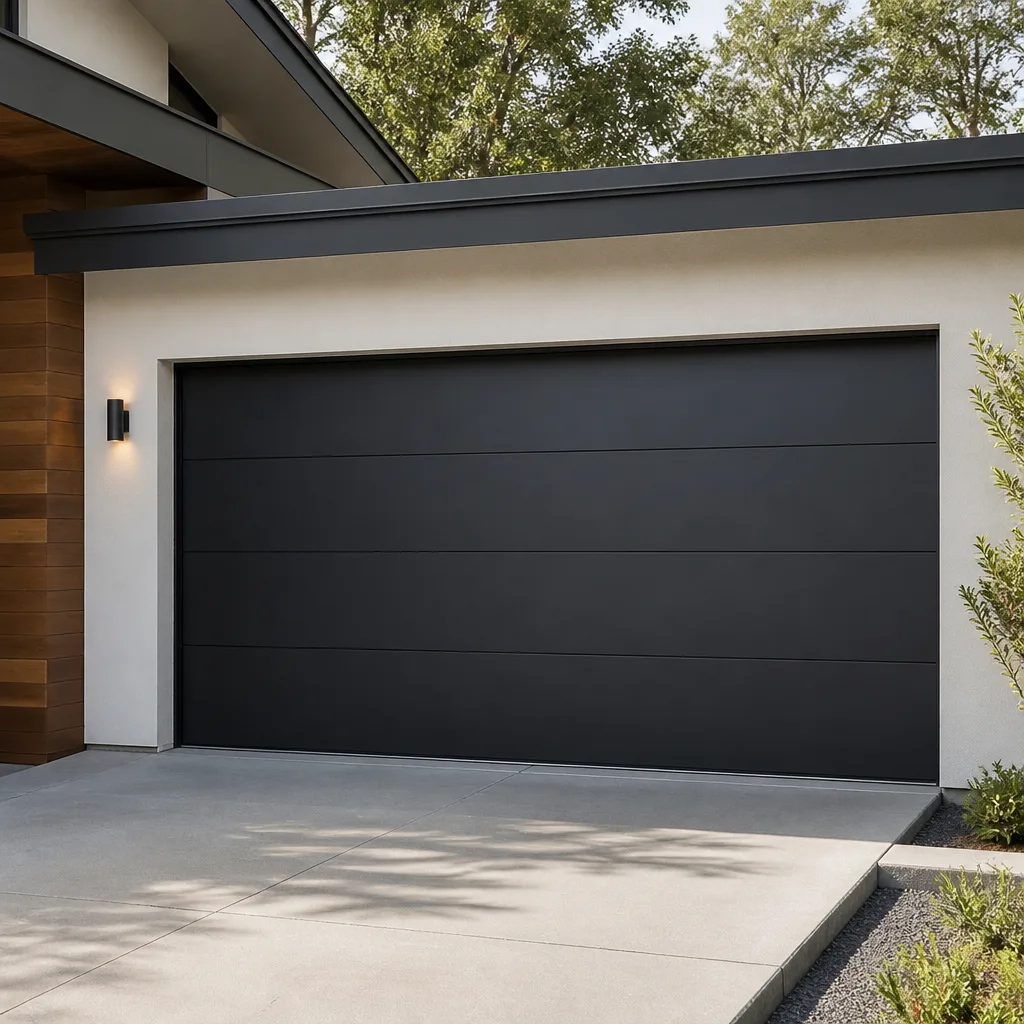 Modern flush
 Full-view glass
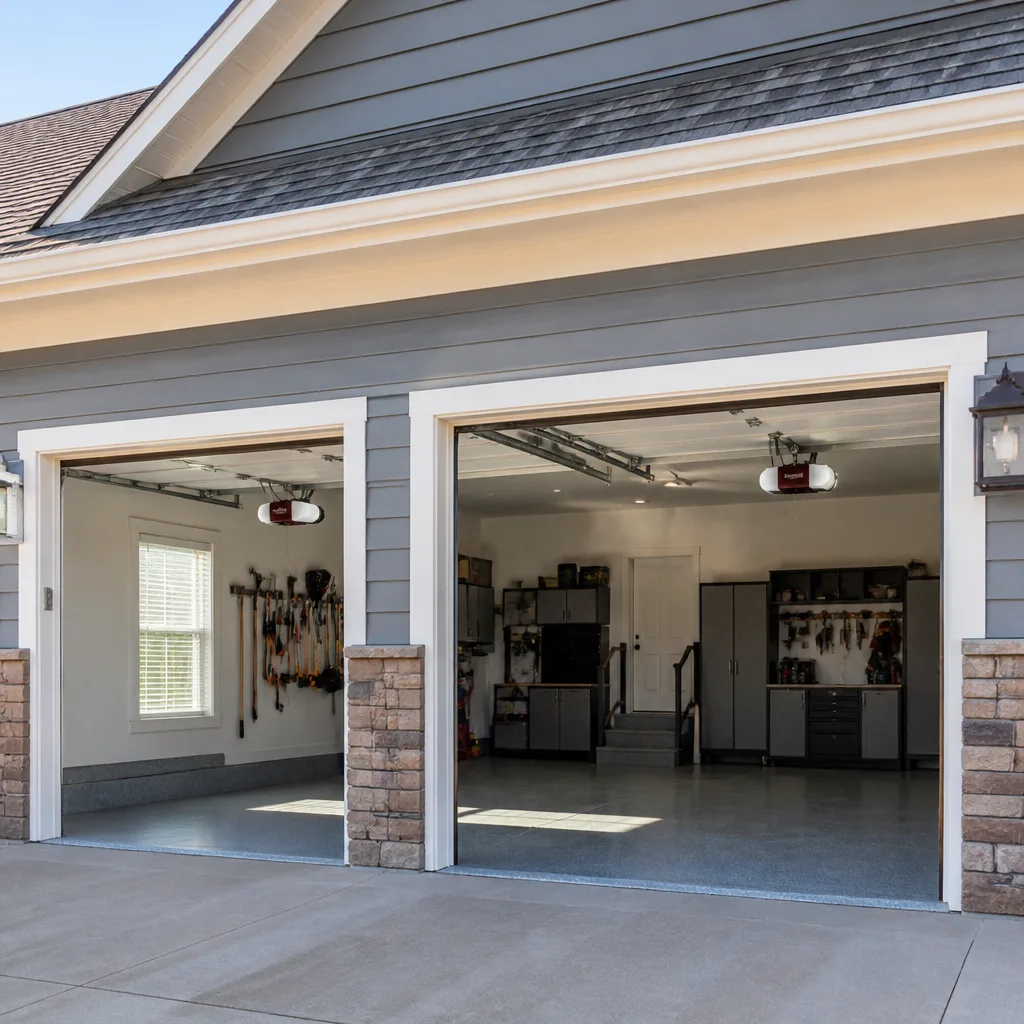 LiftMaster openers
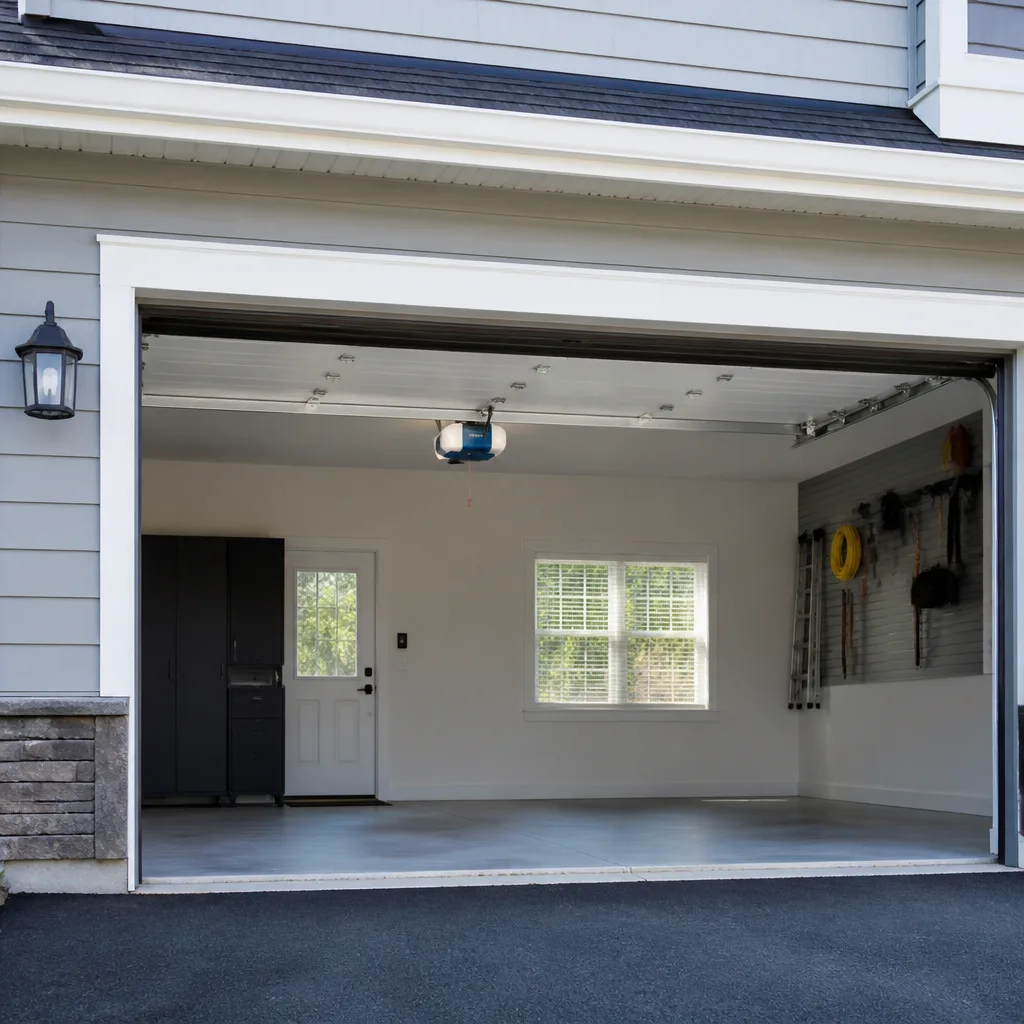 Chamberlain openers
Full 25-point door and opener safety check with every visit - springs, cables, rollers, tracks, and your LiftMaster or Chamberlain opener included
You get a price before we start. It does not change when the pro arrives.
Get your free estimateGarage Door Opener Repair & Installation Maintenance Schedule: What to Do and When
Lubrication is the task everyone says they do and almost nobody does on schedule. Otto can tell within two minutes of watching a door move whether it’s been lubed in the last six months, and in Enterprise’s dry heat, six months is already pushing it. A 200-pound door rides on two springs and a set of rollers, and the opener gets blamed for a lot of strain it didn’t cause. This guide lays out a real calendar: what to do each season in Nevada, which lubricant goes where, which reversal test to run every month, and why the whole annual commitment is about 45 minutes. Call (833) 620-7107 for a free estimate.
Quick Answer
A garage door opener needs about 45 minutes of maintenance spread across four seasonal check-ins per year. In Enterprise, the schedule runs: a pre-summer heat and lubrication check in April or May, a monsoon-season seal and track inspection in July, a post-summer hardware retorque in October, and a winter battery swap in December for the opener’s backup and your remotes. Run the reversal force test monthly between those visits. Total dust-and-grease labor is small. What it prevents is a mid-August opener failure with the car sealed inside.
Styles & brands we work with
- Raised-panel steel
- Carriage house
- Modern flush
- Full-view glass
- LiftMaster openers
- Chamberlain openers
Table of Contents
- Why Enterprise’s Climate Changes the Schedule
- Pre-Summer Heat Check (April or May)
- Monsoon-Season Seal and Track Inspection (July)
- Post-Summer Hardware Retorque (October)
- Winter Battery Swap (December)
- Which Lubricant Goes Where (and What Damages rollers)
- The Monthly Reversal Force Test
- Full Annual Timeline at a Glance
Why Enterprise’s Climate Changes the Schedule
Most garage door maintenance schedules are written for a generic American suburban climate, which means a homeowner in Enterprise follows advice calibrated for somewhere with four wet, mild seasons and no summer that cracks the ground. That doesn’t work here. The Mojave summer dries out and shrinks the wood framing around a door opening, which throws a door’s track out of plumb by fractions of an inch. Multiply that by two months of 105-degree afternoons and the door is rubbing a stile against a jamb it cleared fine in March. Opener motors run hotter too, since the sun hits an uninsulated garage door for seven hours and the motor sits in that radiant oven.
The other half of the year, monsoon season, pushes moisture through door seals and dust into the track. A door that’s been hot and dry for three months suddenly swells its weatherstripping at the first humid week of July. In Enterprise we see seal failures stack up in late July and August specifically, because the wood expands after we’ve spent all spring retightening hardware that the dry heat had loosened. So this schedule isn’t the same one you’d run in Ohio, and it isn’t the same one you’d find at the top of a search result. It’s built around the Nevada calendar.
If you haven’t had a seasonal check in a while, a garage door opener repair and installation service in Enterprise will catch the strain before the opener motor burns out. The motor is usually the victim; the door and its track are usually the cause.
Pre-Summer Heat Check (April or May)
This is the most important check-in of the year in Enterprise, and it takes about 15 minutes. Do it before the first 100-degree week, which usually means the first half of May. The point is to catch anything the dry winter left loose and lubricate the moving parts before they rub under summer heat.
- Test the balance. Close the door, then pull the manual release. Lift the door halfway by hand. It should stay put. If it drops or falls fast, the springs are tired and the opener will be doing work it was never built to do. Don’t force it under motor power.
- Lubricate the rollers, hinges, and torsion spring coil. White lithium grease on the torsion spring coil (if it’s the oil-tempered type, not a dry spring), a spray-on white lithium or silicone on the hinges and bearing plates, and a light coat of lithium grease on any polyurethane rollers you’ll keep. Never grease nylon rollers.
- Wipe and grease the opener’s rail. A chain-drive rail needs a thin coat of white lithium. A belt drive uses none; just wipe the belt clean of grit.
- Check the wall-mounted opener button and safety sensors. Both should be within reach and the sensors should show a clear, steady LED on each side. A sensor that needs realignment before summer is a sensor that’ll fault out at 3 p.m. in July.
- Photograph the door. Take a picture of the door and the opener from the ceiling down. It’s your baseline for comparing the wear you’ll see in October.
If the balance test fails, don’t run the door. Call for a same-day repair; a snapped spring in September with a car inside is a much more expensive conversation.
Monsoon-Season Seal and Track Inspection (July)
July is the second check-in. In Enterprise, this is monsoon season: hot, humid air, dust pushed sideways by wind, and afternoon rain the dry spring didn’t prepare the weatherstripping for. Fifteen minutes here saves the seal replacement and the interior water stains.
- Inspect the bottom seal. Run a hand along the underside of the door. The bottom seal should be soft and compress against the floor all the way across. A dry, cracked, or compressed seal lets water and dust in and lets the door chatter against the floor.
- Inspect the perimeter stops. The vertical and horizontal trim on the sides and top is usually T-style or wood. Check for gaps at the corners, which is where monsoon drafts and water go first.
- Clear the track. Wipe the track channel of grit. A quarter inch of fine dust in the track under a 200-pound door will grind the rollers flat within a season.
- Check the track for plumb and alignment. Both side tracks should be parallel to each other and vertical from wall to floor. A miss here is why the door binds one side only.
- Look at the bottom corners of the door panel. Software like a Clopay or Amarr door can show rot at the bottom rail first if water has been pooling there for a few seasons.
If you find the seal hogging or the track out of line, a same-day service call in early July beats waiting for the August rain to find the leak.
Post-Summer Hardware Retorque (October)
After four months of dry heat expansion and contraction, every hinge bolt, the torsion spring plate fasteners, and the track end brackets have had a lot of tiny movements. This 10-minute check-in is about tightening what loosened.
- Retorque the hinges and brackets. Use a socket wrench. Snug the bolts at every hinge, the bottom bracket, and the track brackets. Don’t overtorque the fasteners into wood; the goal is snug, not stripped.
- Check the torsion spring plates and the center bearing plate. These are the anchor points of a 200-pound door. If any mounting bolt is loose, stop and call us. Don’t try to adjust a torsion spring under tension.
- Check the opener’s mounting brackets and rail bolts. A loose rail bolt will cause vibration and premature motor wear. This is also when a residential Craftsman opener with a chain gets a fresh lithium coat on the chain.
- Check the door panel for dents or warp. Compare against your April photograph.
- Run the monthly reversal test (explained below) and note any change.
The retorque is the one item most homeowners skip, because everything looks fine until a bracket lets go under load. It’s why we recommend a professional garage door repair service in Enterprise if you’re not comfortable with a socket wrench near a torsion system.
Winter Battery Swap (December)
December isn’t a heavy snow month in Enterprise, but it is the month every battery in the house gets tested by cold nights. This is the cheapest maintenance item on the entire schedule and it prevents the most embarrassing service calls.
- Replace the opener’s backup battery if your opener has one (most chain and belt drives with a battery backup from LiftMaster or Chamberlain do). These are often a sealed lead-acid pack, and they last 3 to 5 years. A dead backup means no door operation when the power is out – which in Enterprise is more likely to happen in a windstorm than a snowstorm, but it happens.
- Replace every remote battery. CR2032 or A23, depending on the model. If you have two cars and three remotes, that’s five dollars and ten minutes for the whole house.
- Test the wall console battery if it has one (rare, but some models do).
- Wipe the keypad clean of suntan lotion and desert dust, then press each button once. A sticky button on a keypad due to dust goes bad in July, not December, so if you’re cleaning it now you’ll save the call.
That’s the full December check-in. Five minutes of work, and you’ve prevented the “my clicker quit working” call that really means “the battery died three months ago and I didn’t want to pay for a service call.”
Which Lubricant Goes Where (and What Damages Rollers)
Here’s the part almost no maintenance schedule gets right. Two products we see constantly in Enterprise garages actively damage the moving parts they’re meant to protect.
- WD-40 (the standard spray, in the blue and yellow can) is not a lubricant. It’s a water-displacing solvent. It will clean and protect for a week, then evaporate and leave the nylon roller or plastic trolley carriage dry and gritty. Repeated WD-40 use on nylon rollers makes them brittle. We’ve seen rollers split from this alone within a year.
- Heavy motor oil or general-purpose grease on nylon rollers and plastic trolley carriages will soften the plastic and attract grit. Nylon rollers should stay dry. If they’ve gone concave or flat-spotted, replace them – don’t grease them.
What actually goes where:
- Torsion spring coil (oil-tempered): white lithium grease, thin coat.
- Hinges and bearing plates: white lithium spray or a light lithium grease.
- Steel rollers (if you have them): a drop of light machine oil at the bearing.
- Nylon rollers and plastic trolley carriage: nothing. Wipe clean, replace when worn.
- Chain-drive rail and chain: thin white lithium spray.
- Belt-drive rail: dry-wipe only. Never oil a belt.
A Wayne Dalton or Craftsman door with steel rollers is a different lubrication conversation than a newer Clopay door with nylon rollers. Know which you have before you spray anything.
The Monthly Reversal Force Test
This 60-second test should be run every month, more than any of the seasonal tasks. It’s the safety check on the opener’s most important function: reverse the door if it senses an obstruction. Federal standard since 1993 requires it, and a failed reversal test is one of the only maintenance issues we treat as an emergency.
- Place a 2×4 flat on the ground in the middle of the door’s path. Lay it across the width, so when the door comes down it hits the board.
- Close the door with the wall button and watch what happens. The door should contact the board and reverse back to the open position within about two seconds.
- If the door stops and stays down, or presses on the board before reversing, the force settings are wrong. Stop using the door and call for a service visit. This is a genuine safety issue.
- After the test, check the safety sensor path with a hand or a box – the door should stop before hitting anything in the sensor path, not just reverse after contact.
If the door fails the test, don’t try to adjust the force settings yourself. Those screws affect closing force on a 200-pound door. Call us and we’ll do it right.
Full Annual Timeline at a Glance
Total annual commitment: about 45 minutes spread across four check-ins, plus monthly reversal tests (60 seconds each).
- April or May (pre-summer, ~15 min): Balance test, lubricate springs, hinges, rollers, rail, check sensors, photograph baseline.
- July (monsoon, ~15 min): Bottom seal and perimeter stops, clear track grit, check plumb and alignment, check bottom panel for rot.
- October (post-summer retorque, ~10 min): Snug every hinge and bracket bolt, check torsion plates and rail bolts, compare to April photo.
- December (winter battery swap, ~5 min): Opener backup battery, remote batteries, keypad clean and test.
- Every month (60 sec): 2×4 reversal force test and safety sensor path check.
If you want an annual professional check beyond that, the garage door installation service in Enterprise team can set up a proper inspection while you’re considering a new door. For scheduling a pre-summer check while you’re on the calendar, call (833) 620-7107.
Common Mistakes to Avoid
- Using WD-40 on nylon rollers. It dries them out and makes them brittle. We see split rollers in Enterprise every summer because of this alone.
- Skipping the pre-summer balance test. A spring that’s tired in May fails in August if it isn’t caught.
- Waiting until it fails to retorque. The October retorque is the cheapest insurance against a bracket letting go at 8 a.m. on a weekday.
- Adjusting the reversal force screws yourself. Those screws affect closing force on a 200-pound door. A DIY adjustment is how doors crush people.
- Ignoring the backup battery. A dead battery is a five-dollar part. Skipping it means a door that won’t open in a windstorm power outage.
- Oiling the belt. Belt-drive openers never get oiled, ever. Oil on a belt is a foreign contaminant, not a lubricant.
- Skipping the July seal check because it didn’t rain last July. Monsoon season in Enterprise isn’t consistent. The seal check is about the dry months that preceded July, not the rain itself.
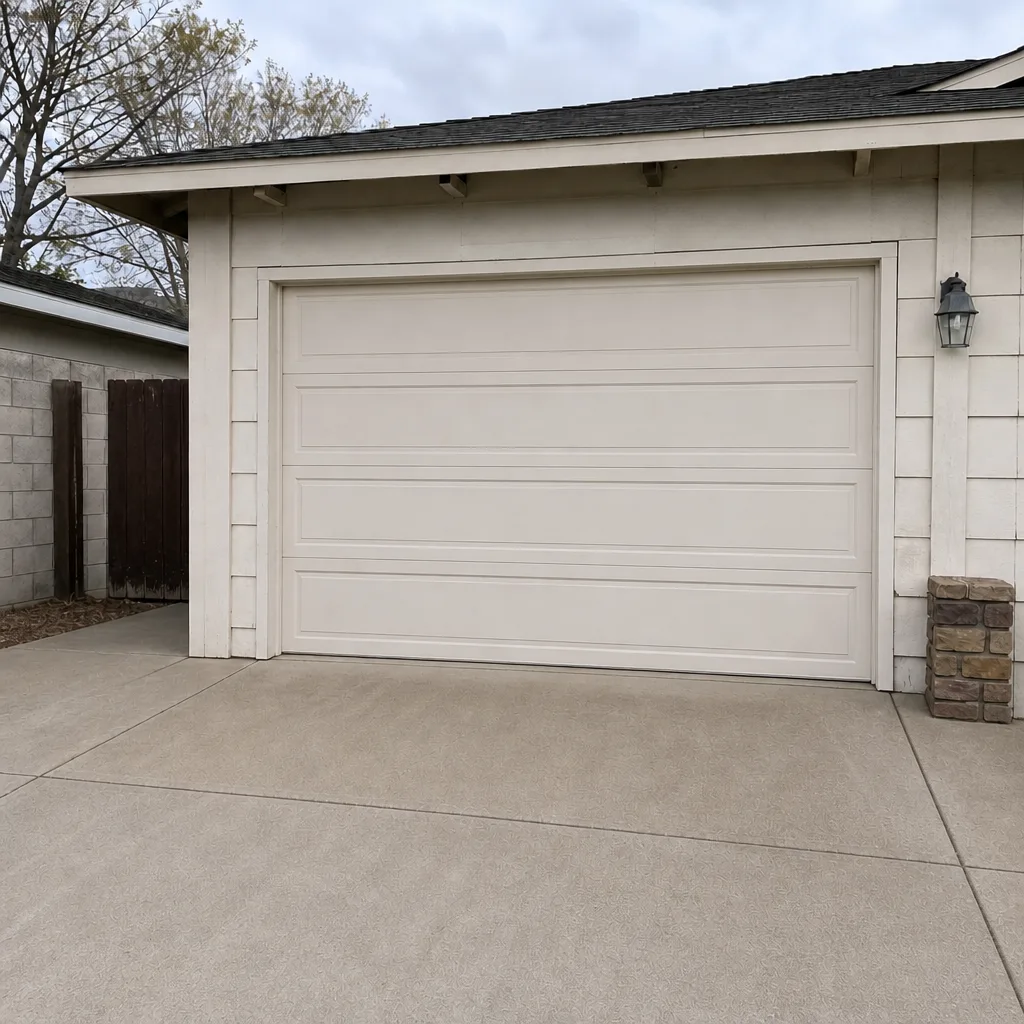
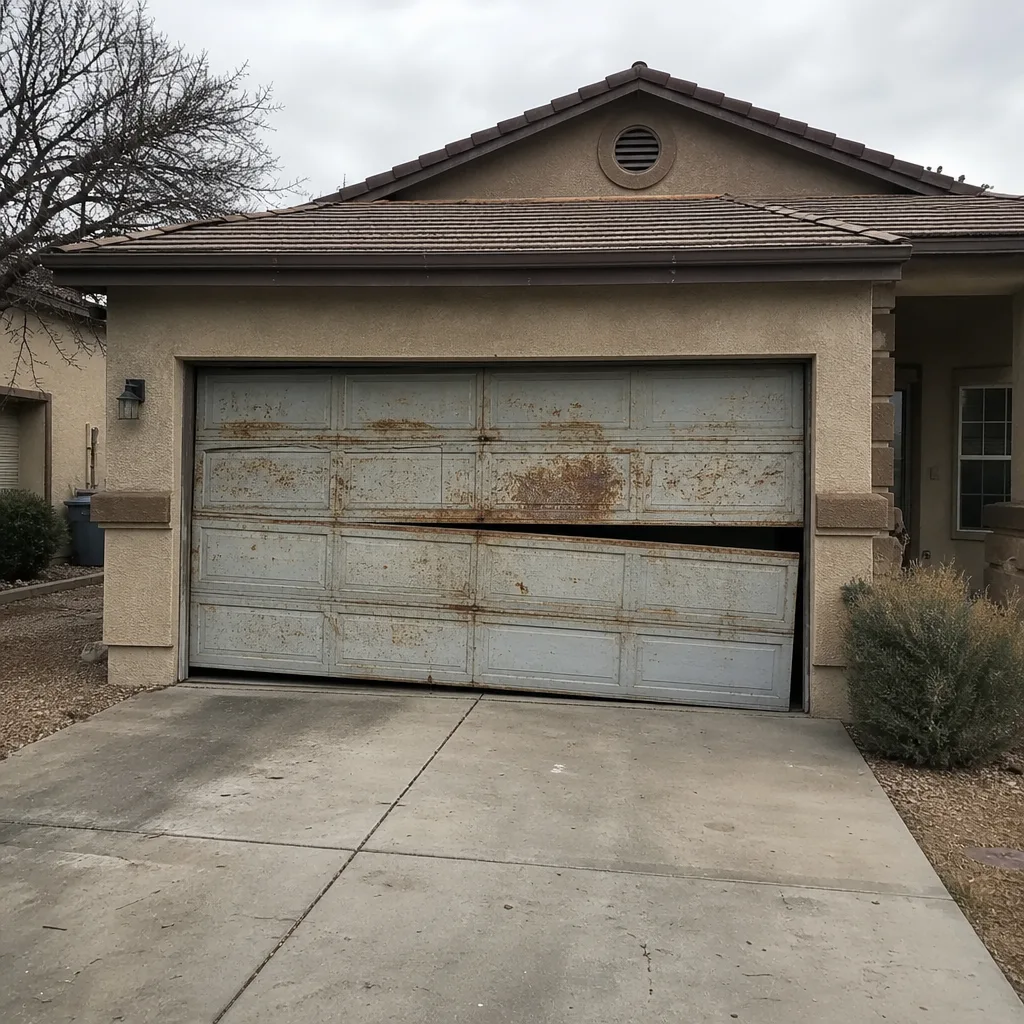
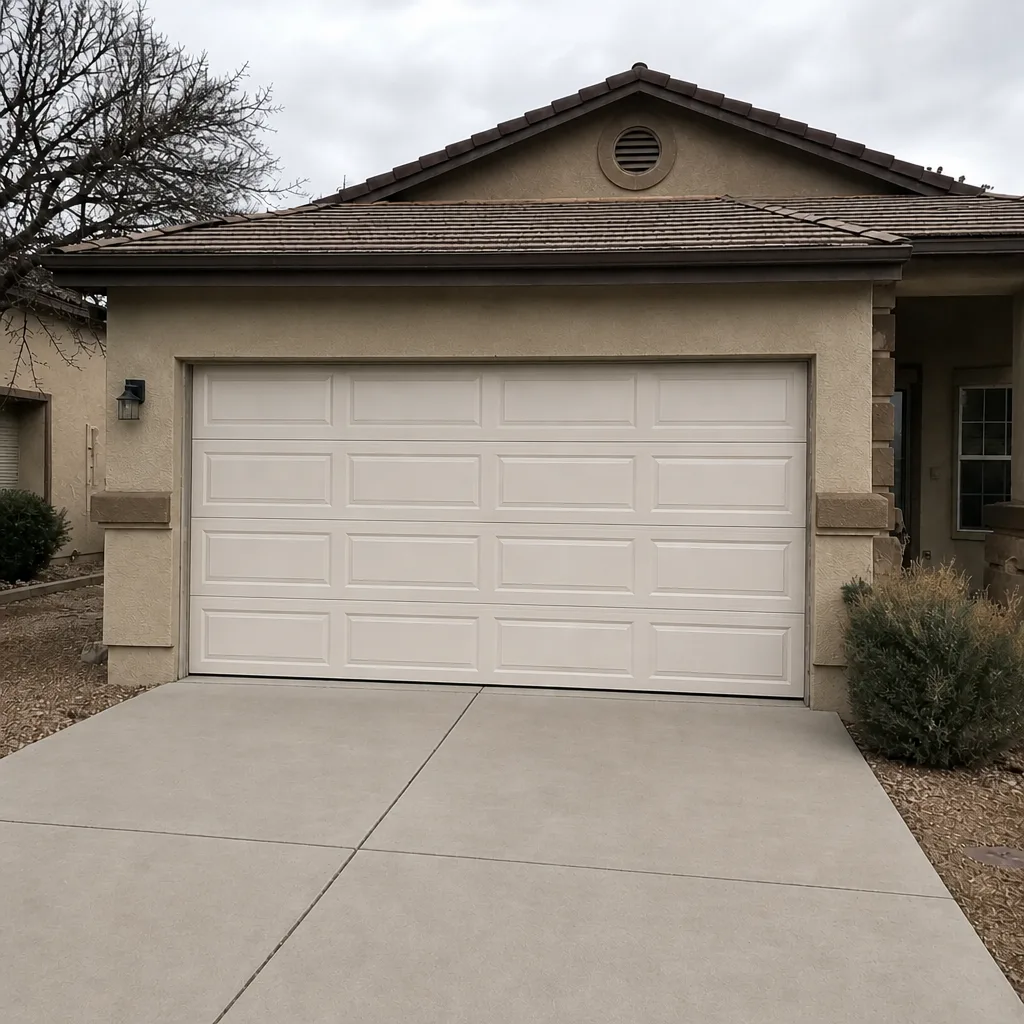
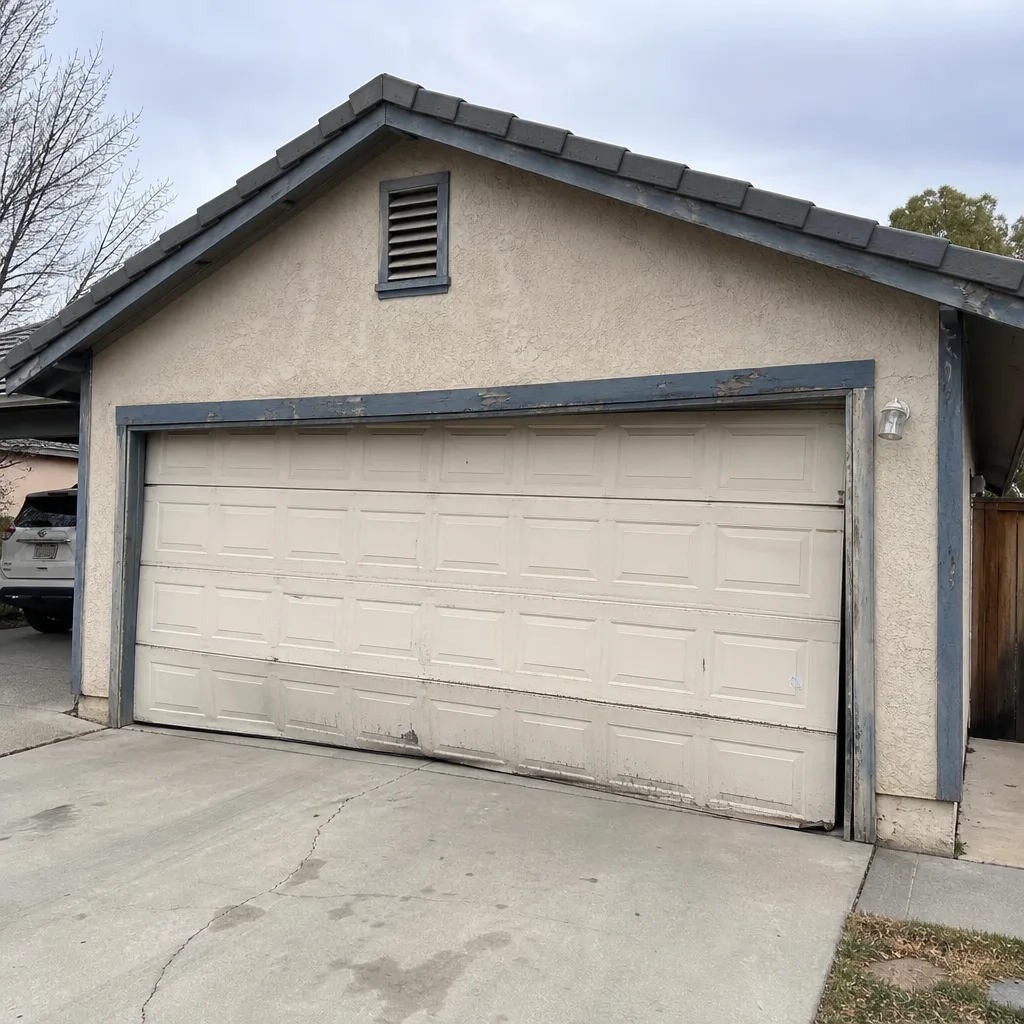
See the difference
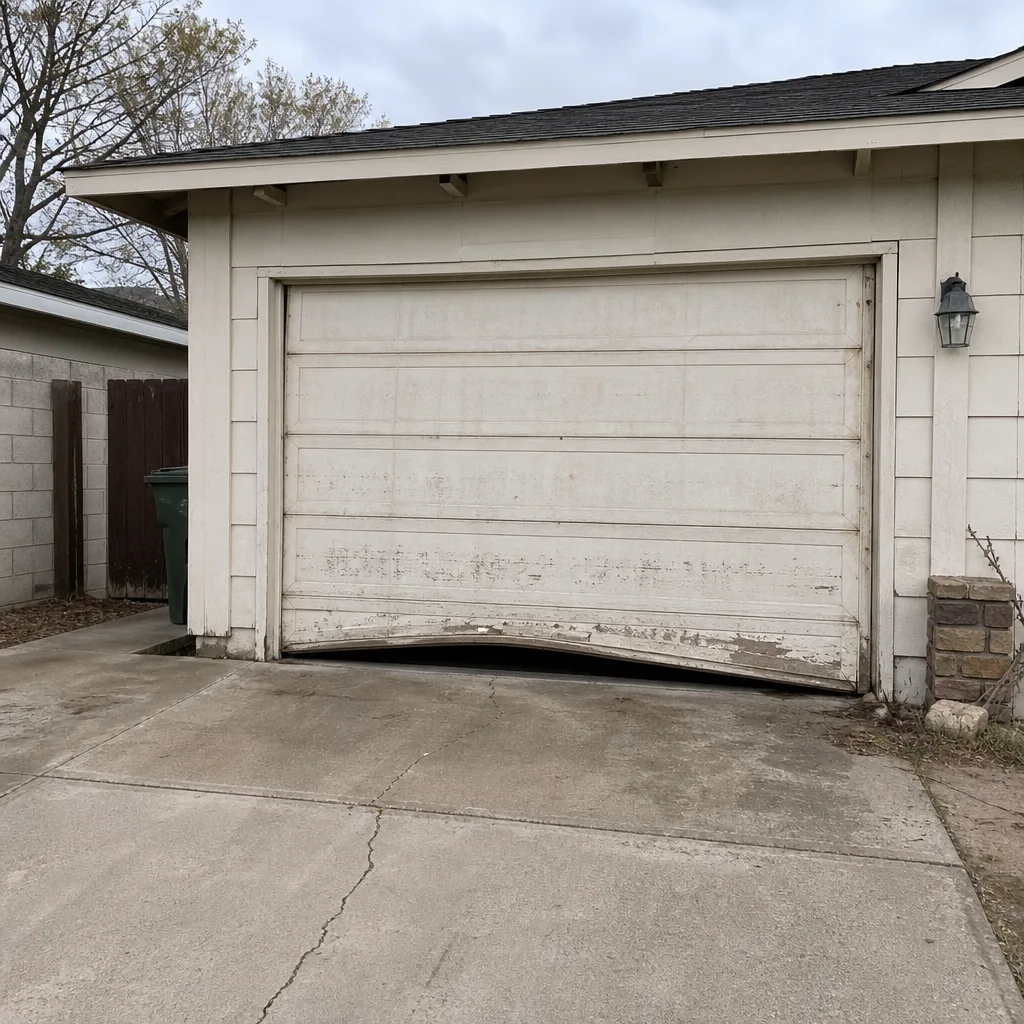 Before
 After
 Before
 After
 Before
 After
When to Call a Professional
Some maintenance is homeowner-level. Some isn’t. Call a professional immediately if: the balance test fails and the door won’t stay at half-height; the reversal force test fails and the door won’t reverse on contact; a torsion spring has snapped or a cable has come loose; the opener hums without moving the door chain or belt; a hinge bolt is loose at a torsion spring plate or center bearing; or the door is binding on one track. Those are spring, cable, and structural failures – respect the two springs carrying a 200-pound door. Also call if you’ve already had a bad quote from another outfit and you want a second look. Otto’s Garage Door Enterprise offers free estimates in Enterprise and a free second opinion on any written estimate you’ve received. Call (833) 620-7107 and Otto quotes on the call, and the number holds when he arrives.
Frequently Asked Questions
Lubricate the opener’s chain or rail once a year in spring, and the door’s hinges, rollers, and torsion springs at the same time. In Enterprise, white lithium grease is the right product for the spring coil and steel rollers, but nylon rollers should stay completely dry. Every six months is pushing it in our dry heat, so April is the right month.
The remote and backup battery swap in December. A dead CR2032 in a clicker is a five-dollar part and a five-minute fix, and it accounts for a large share of the “my door quit working” calls we take. The opener backup battery is a similar case. Neither is expensive, both are easy, and both fail without warning during the worst possible week.
A full professional seasonal inspection is typically 45 minutes to an hour, including the reversal force and safety tests, lubrication, retorque, and a look at the door’s balance and alignment. That’s a more thorough version of what a homeowner can do in 10 to 15 minutes at each seasonal check-in, because a pro is also checking spring cycles and door balance under hands-on load.
Yes. The pre-summer lubrication check is more critical here than in cooler climates, since summer heat accelerates the drying and shrinking of wood framing and evaporates lubricant faster. The post-summer hardware retorque is also more important, because the expansion and contraction cycle is wider. In cooler climates, the retorque can be a once-every-two-years item. In Enterprise, it’s annual.
Yes, and check it every season. The manual release is the safety escape hatch if the door’s stuck or the opener fails. Test it during the pre-summer balance check – pull it, lift the door halfway by hand, and confirm the door stays. A stuck or jammed release lever is a service call, because it’s the one lever you need to work.
Homeowners can safely handle lubrication, the reversal test, remote and backup battery replacement, and visual inspection of seals and tracks. Spring, cable, and torsion work is not homeowner-safe. If you can do the easy steps and know when to stop, you can run this schedule yourself and call us for the annual spring balance check and any repair. Call (833) 620-7107 for a free estimate if you’d rather have it done once, correctly.
The Bottom Line
The schedule is shorter than the internet makes it sound. About 45 minutes a year across four check-ins (April pre-summer lube, July monsoon seal and track, October retorque, December battery swap), plus a monthly 2×4 reversal test, is the entire annual commitment. The Enterprise-specific parts – greasing the torsion coil before the first 100-degree week, checking seals the week before monsoon humidity hits, and retorquing after the summer expansion – are what most generic schedules leave out. Do the easy steps, know where the safe homeowner work ends, and call us for the spring, cable, and structural checks. Otto’s Garage Door Enterprise has been locally owned and owner-operated since 2004, and a live person answers the phone around the clock. Call (833) 620-7107 for a free estimate and we’ll get your door on the right calendar.
Written by the team at Otto’s Garage Door Enterprise.