
Last updated November 17, 2026
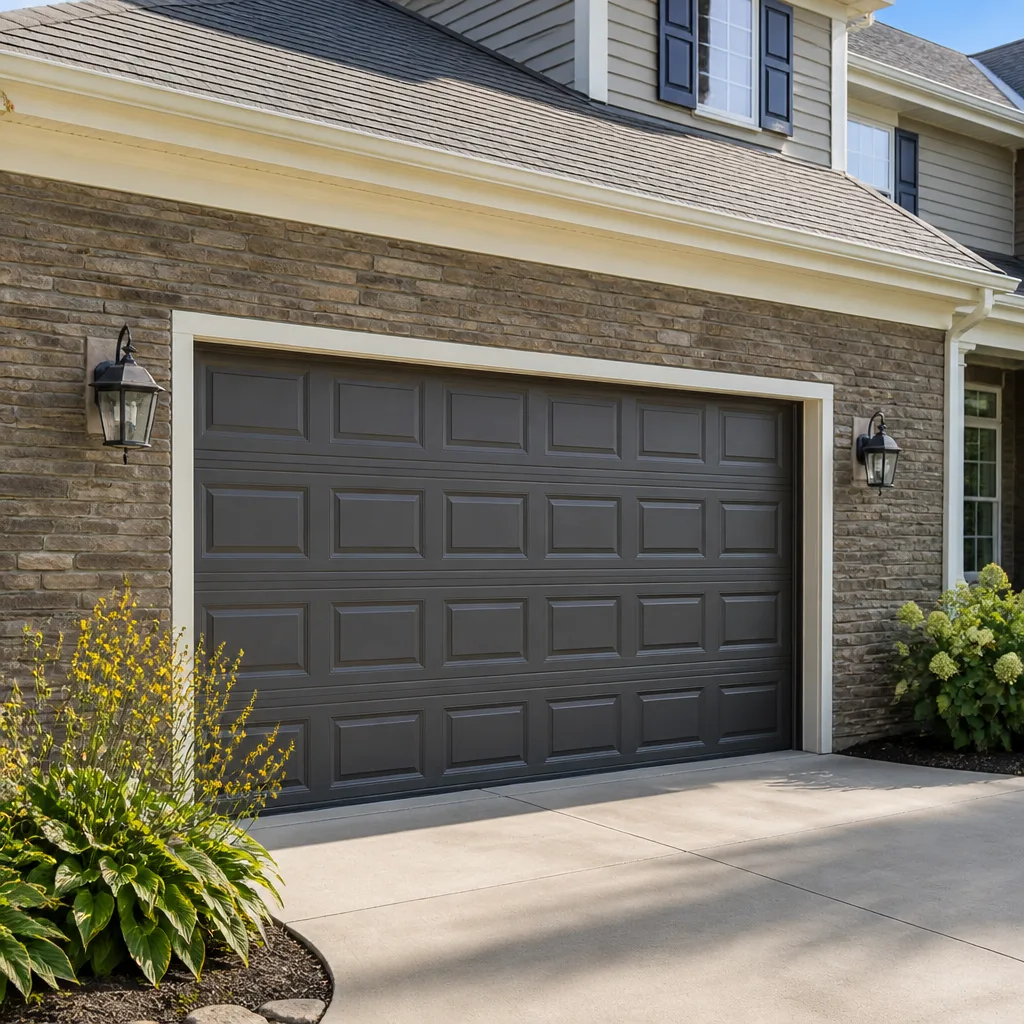 Raised-panel steel
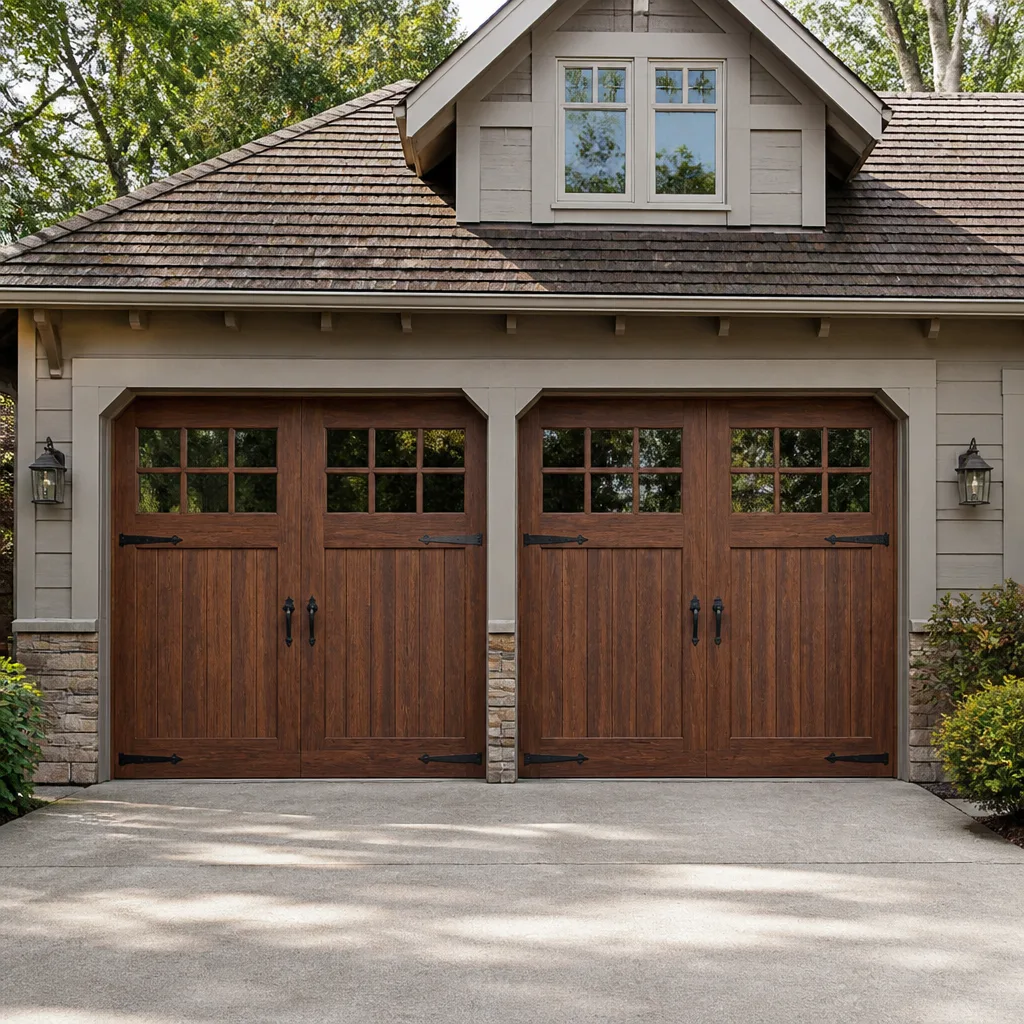 Carriage house
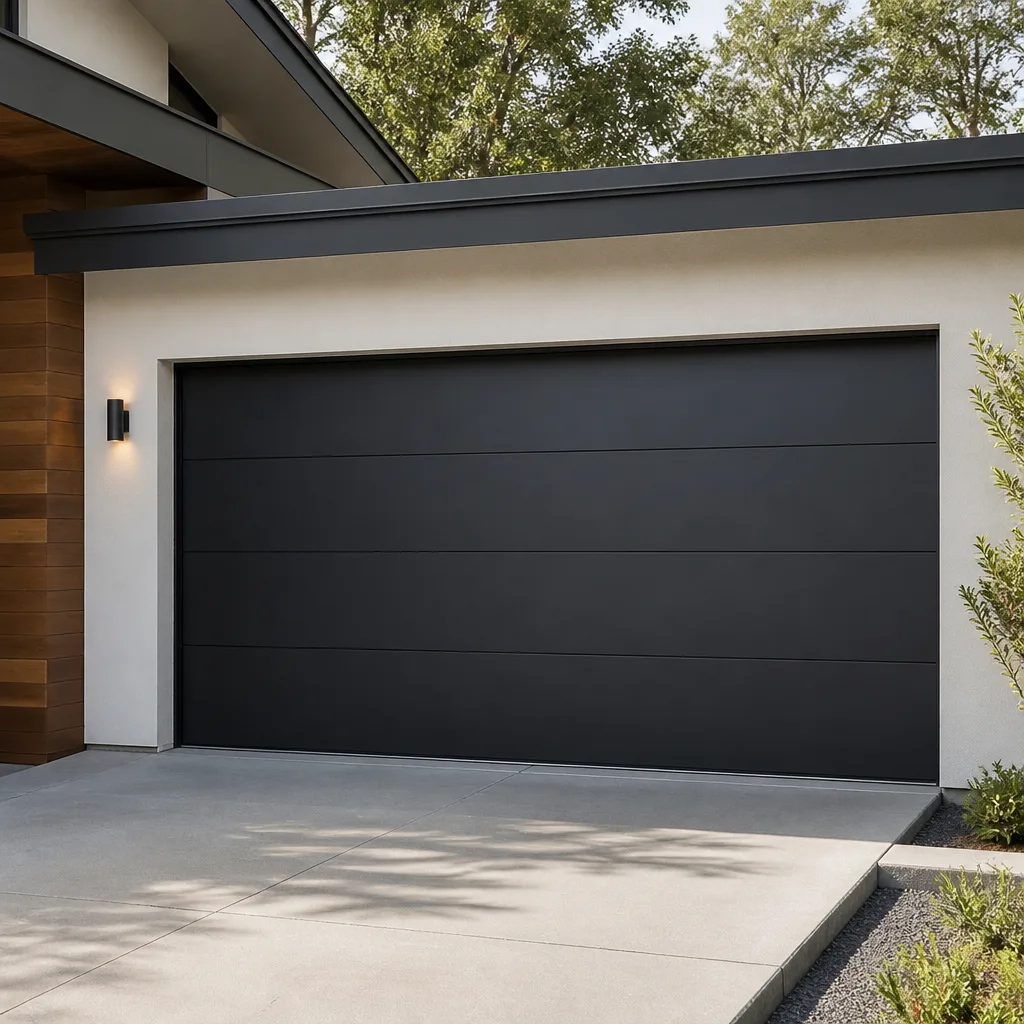 Modern flush
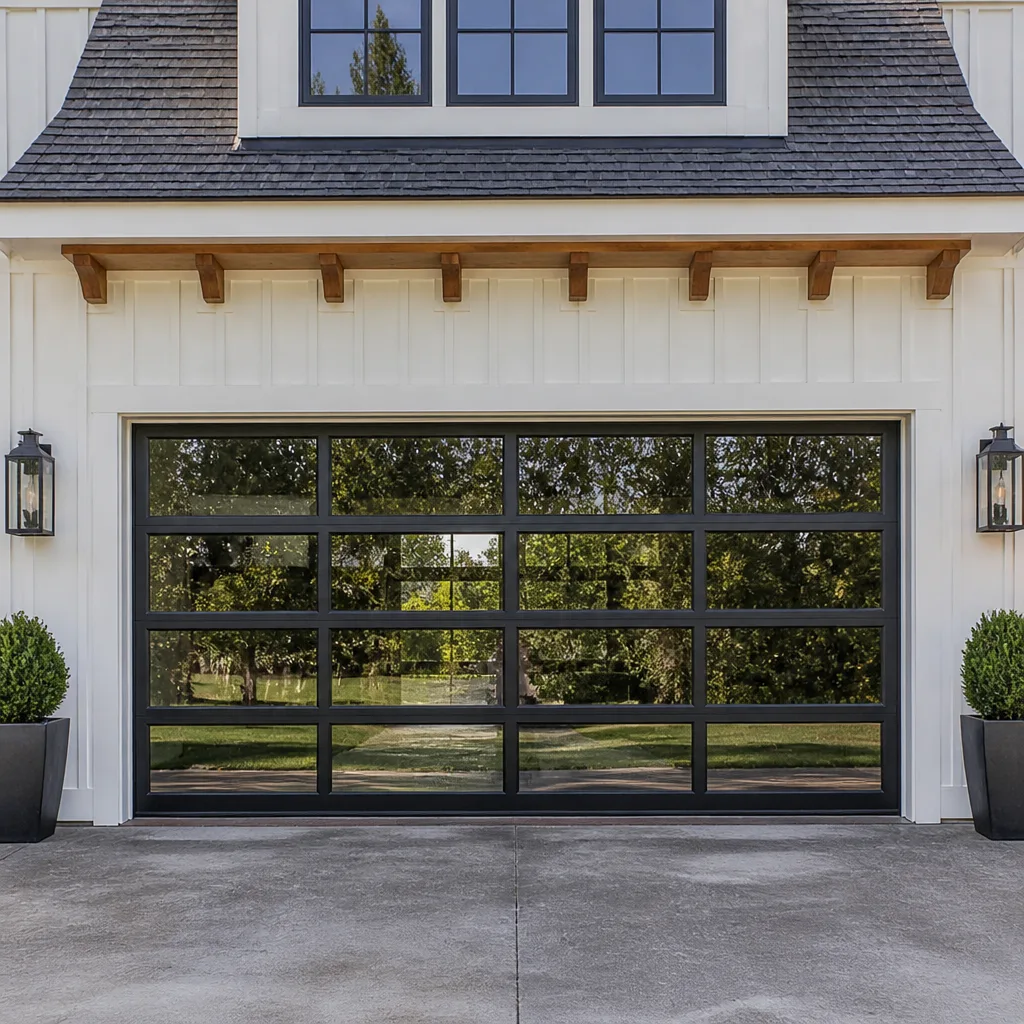 Full-view glass
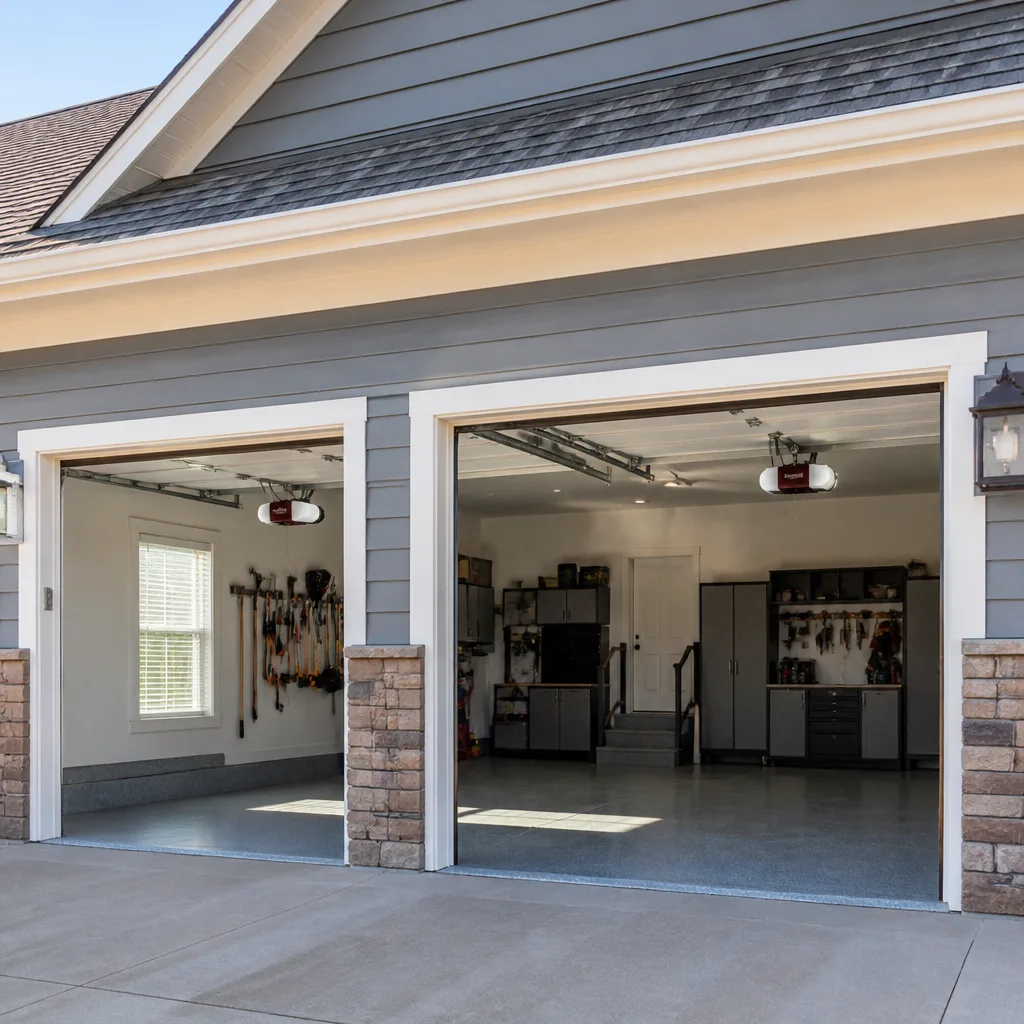 LiftMaster openers
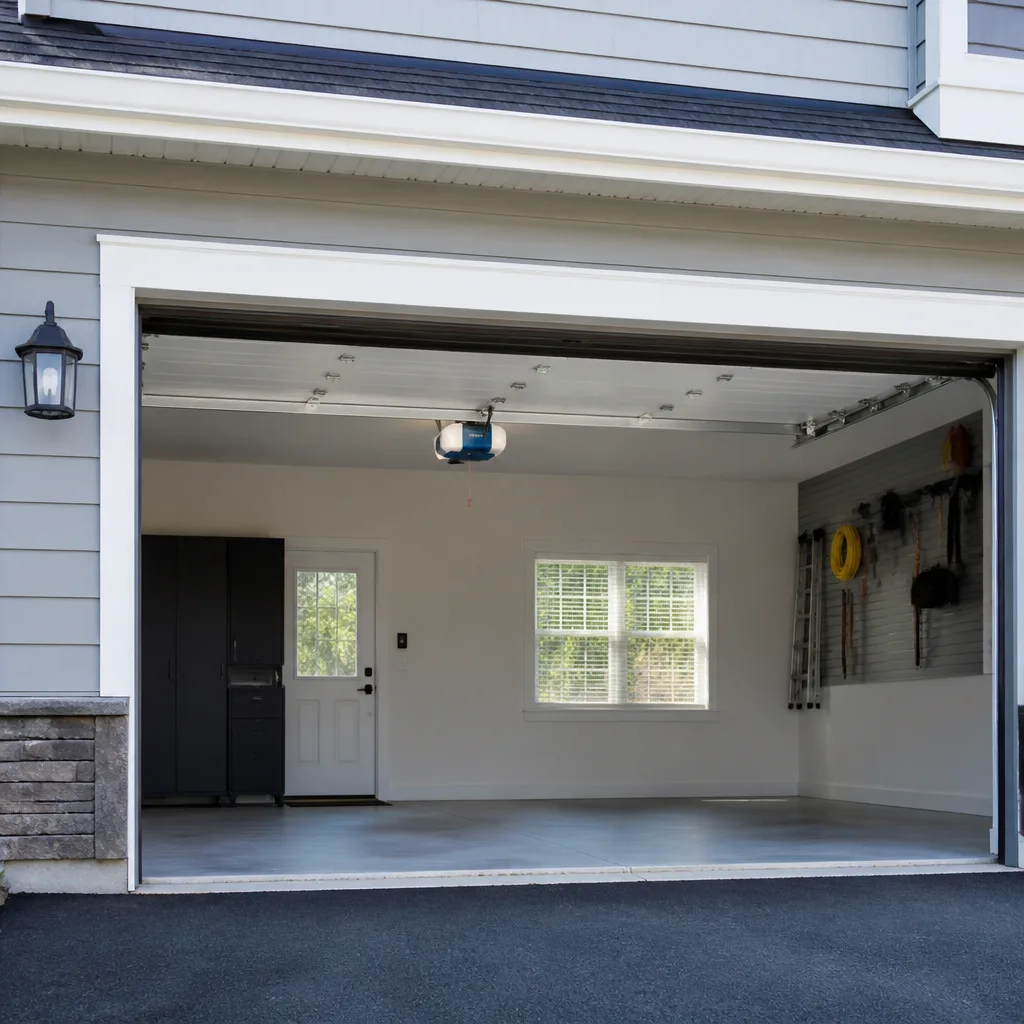 Chamberlain openers
Full 25-point door and opener safety check with every visit - springs, cables, rollers, tracks, and your LiftMaster or Chamberlain opener included
You get a price before we start. It does not change when the pro arrives.
Get your free estimateThe Complete Garage Door Repair Guide for Enterprise Homeowners
Most garage door guides are written for somewhere in Ohio. Enterprise sits at roughly 2,000 feet, hits 115°F in July, and watches the mercury drop into the twenties on January mornings – and your springs are paying for that swing in ways a coastal technician would never flag. The heat is the first thief, the dust is the second, and the cold snap is what finishes the job. This guide maps the exact failure pattern we see across Enterprise so you know what breaks first, what it costs, and which repair to tackle when three things go wrong at once. No filler, no low-ball phone quotes.
Quick Answer
Garage door repair in Enterprise, NV typically runs $150 to $340 for torsion spring replacement, $95 to $180 for a service call with roller and seal work, and $280 to $520 when an opener needs replacement. Most non-emergency fixes are done in a single visit, and heat-related spring failures are far more common here than in cooler climates because the metal cycles through wider temperature swings. Every price should be quoted before anyone touches the door and should hold at the driveway.
Styles & brands we work with
- Raised-panel steel
- Carriage house
- Modern flush
- Full-view glass
- LiftMaster openers
- Chamberlain openers
Table of Contents
- How Enterprise Heat Kills Springs Faster Than Anywhere Else
- Why Desert Dust Wrecks Seals and Rollers First
- The Enterprise Repair Priority Order
- Which Repairs Need a Permit in Enterprise and Clark County
- What Garage Door Repair Really Costs in Enterprise
- When It’s the Opener and When It’s the Door
- Common Mistakes to Avoid
- Frequently Asked Questions
How Enterprise Heat Kills Springs Faster Than Anywhere Else
National guides quote a torsion spring lifespan of 10,000 cycles, roughly seven to nine years for a typical household. In Enterprise, we routinely see springs fail at five to seven years, and the reason is thermal fatigue. A torsion spring is a piece of steel under constant load. Every time the temperature swings from a 45°F winter morning to a 105°F afternoon, that steel expands and contracts. Multiply that by two cycles a day, 365 days a year, and the metal simply works harder here than it does in a mild climate.
The tell is usually a snap you hear from inside the house, and then a door that won’t lift more than a few inches. If your door has one spring and it breaks, the door is stranded until it’s replaced. That’s why we recommend replacing both springs at once on a two-spring door – the second one is usually within months of the first, and doing them together saves you a second service call and a second labor charge.
What the lifespan looks like here vs. national averages
- National average spring life: 7-9 years, or 10,000 cycles
- Enterprise average spring life: 5-7 years due to heat cycling
- Springs facing west or south sun exposure: often closer to 5 years
- High-cycle (25,000) springs on a heavily used door: worth the upgrade here
One important safety note: torsion springs are under extreme tension and can cause serious injury if handled without the correct winding bars and training. This is not a job for a homeowner with a YouTube video and a pair of pliers. A door is 200 pounds riding on two springs, and that weight doesn’t care how careful you are. Call a trained professional. Garage door repair in Enterprise is a phone call away if your spring has let go.
Why Desert Dust Wrecks Seals and Rollers First
Most repair guides assume rain. Enterprise doesn’t get rain, it gets wind-blown dust, and that dust works its way into every moving part of the door. The bottom seal – the rubber strip that meets the concrete – is the first casualty. Grit gets trapped between the seal and the floor and slowly grinds the rubber down. Within a couple of years, the seal is cracked and the door no longer sits flush, which lets in more dust and drives up your cooling bill in the summer and your heating bill in January.
The second casualty is the rollers. Dust mixes with the light factory lubricant on the rollers and hardens into a paste that acts more like sandpaper than grease. The bearings wear, the door gets noisy, and eventually a roller seizes or jumps the track. This is the wear pattern that a technician trained in a wet climate often misses, because they’re used to looking for rust, not dry grit.
Inspection sequence to catch it early
- Open the door and look along the bottom seal for cracks, splits, or daylight showing under it.
- Wipe a roller with a rag – if it comes back gritty or black, the rollers need cleaning and re-lubing.
- Run the door by hand (with the opener disconnected) and listen for grinding, squealing, or popping.
- Check the track for dust buildup and gravity – a laser level or a string line will show a bend.
- Look at the hinges where the panels connect – grit collects there and eats the pin.
A quick spring-cleaning of the tracks, a fresh coat of white lithium grease on the rollers, and a $40-70 replacement seal will often add years to the door before a bigger repair is needed. That’s the cheap service call that saves the expensive one.
The Enterprise Repair Priority Order
When multiple things are failing at once, and in Enterprise they often do, the order matters. Fixing the wrong thing first can actually make the door more dangerous or more expensive. Here is the order we’ve settled on after years of seeing doors that were “fixed” in the wrong sequence and had to be redone.
- Safety first – springs and cables. A broken spring or a frayed cable means the door is unsupported. Do not run the opener. This is the first and only priority until it’s resolved.
- Track alignment. A bent or out-of-plumb track binds the door and accelerates wear on everything else. This comes before rollers or opener work.
- Rollers and hinges. Once the track is true, replace the worn rollers and hinges. Doing this before the track is aligned means the new parts wear out within months.
- Bottom seal and weatherstripping. After the door is moving cleanly, seal it against the dust. If the seal is bad, the dust gets back into everything you just fixed.
- Opener. The opener is the last thing to address, because an opener that strains to lift a misaligned door is doing the door’s job, not its own. Replace the door parts, then test the opener.
- Cosmetics and paint. Panels, windows, and finish come last, once the door operates correctly.
If you’re facing all of that at once, honestly, sometimes a new door makes more sense than a full rebuild. Garage door installation in Enterprise costs more upfront but resets the clock on every wear item at the same time, and on a door that’s sixteen years old with original springs, the math often goes that way.
Which Repairs Need a Permit in Enterprise and Clark County
This is where a lot of Enterprise homeowners get surprised. The answer depends on your address. Enterprise itself is an unincorporated community, and much of the residential territory is under Clark County jurisdiction rather than the City of Henderson or City of Las Vegas. General repairs – spring replacement, roller replacement, opener swap, seal replacement – typically do not require a permit. Replacement of the entire door and any structural modification to the header or framing usually do.
How to check your address
- Look up your address on the Clark County Assessor’s parcel map – it will tell you which jurisdiction handles your parcel.
- Call the Clark County Department of Building & Fire Prevention if you’re on county land; call the City of Henderson if you’re inside city limits.
- Describe exactly what you’re doing – “replacing a sectional door” gets a different answer than “replacing a torsion spring.”
- Get the answer in writing or in an email before work begins, and keep it on file.
We’ve seen Homeowners Association rules in some Enterprise neighborhoods require pre-approval of the new door’s color, panel style, and window configuration, independent of any permit. Check the HOA first – a swapped door that violates the association code can mean repainting or replacing panels later at your cost. On a Clopay or Amarr replacement door, matching the original style is usually doable, but it takes ordering the right panel, not just the one closest on the shelf.
What Garage Door Repair Really Costs in Enterprise
The national average quoted by directory sites is often $50 to $100 below real Enterprise pricing, and that gap is the bait-and-switch trap. A homeowner reads “spring replacement from $95” online, calls the outfit, and by the time the truck pulls away the bill is $380 because the “from” price didn’t include the spring, labor, the trip charge, or the after-hours fee. Here’s what honest Enterprise pricing looks like.
- Service call and diagnosis: $65-$95, usually waived or applied toward the repair
- Torsion spring replacement (one spring): $180-$260
- Torsion spring replacement (both springs, recommended): $280-$380
- Rollers, all four corners: $90-$150
- Bottom seal replacement: $55-$90
- Hinge replacement, per hinge: $25-$45
- Track realignment: $100-$180
- Cable replacement: $85-$140
- Opener replacement (belt or chain, installed): $280-$520
- Full door replacement (single-car, standard panel): $950-$1,800
The rule we hold ourselves to: the price is quoted and agreed before any work starts. If we quote $340 on the phone, that is the number on the invoice at the driveway – not $340 plus “shop supplies” plus “emergency rate.” A great many Enterprise homeowners tell us the same thing about the national outfit they used before: nobody at the door had the authority to honor the phone quote. That’s not a pricing problem, it’s a trust problem, and it’s the reason we quote on the call and hold the number.
The one thing that legitimately changes a phone quote is something we can’t see until we’re on site – a bent track, a damaged panel, a cable that’s ready to go. In that case we stop, show you what we found, quote the additional work, and you decide. No surprise invoices.
When It’s the Opener and When It’s the Door
If the opener is straining, the problem is almost never the opener. A LiftMaster or Genie that’s thirteen years old and suddenly won’t lift a door it lifted easily last week is telling you the door is binding. It could be a spring that’s lost tension, a roller that’s seized, or a track that’s bent. Replacing the opener to fix a binding door just wears out the new opener faster and leaves the actual problem in place.
You can run a quick check yourself. Disconnect the opener with the release handle, then lift the door by hand. A balanced door should lift easily with one hand and stay put when you let go at half height. If it drops, the springs are weak. If it’s heavy the whole way up, something is binding. If it moves freely by hand, then yes, the opener is the problem.
We install and service all the major brands, and the repair and replacement cost varies little between a Genie belt drive and a Chamberlain chain drive – what varies is how much the opener is being asked to do. If your opener is on a sixteen-year-old door with original springs, expect to hear that replacing the opener without addressing the springs is spending money in the wrong direction. Garage door opener repair and installation in Enterprise covers the full battery of tests we run before recommending a new unit.
Common Mistakes to Avoid
- Accepting a phone quote that seems too low. If a spring repair is quoted at $75, one of two things is true: the price will change at the door, or the spring isn’t the one you need. Compare the quote against the ranges above.
- Replacing one spring when both are original. The second spring fails within months of the first. Doing both in one visit is cheaper and gets you home once instead of twice.
- Greasing the tracks. Tracks should be clean and dry. Grease on tracks attracts Enterprise dust and turns into an abrasive paste that eats the rollers.
- Running the opener on a broken spring. This is how an $80 repair becomes a $400 repair. The opener is not designed to lift the dead weight of the door.
- Skipping the bottom seal on the “it’s fine” theory. Our dust finds every gap. A failing seal in Enterprise costs you comfort, and it accelerates roller wear.
- Assuming a permit is always or never required. It depends on your address and what’s being replaced. Check with the county, not with the contractor’s opinion.
- Forgetting the HOA. A door replacement in an Enterprise HOA neighborhood can be bounced on color or style. Get pre-approval in writing before the door is ordered.
See the difference
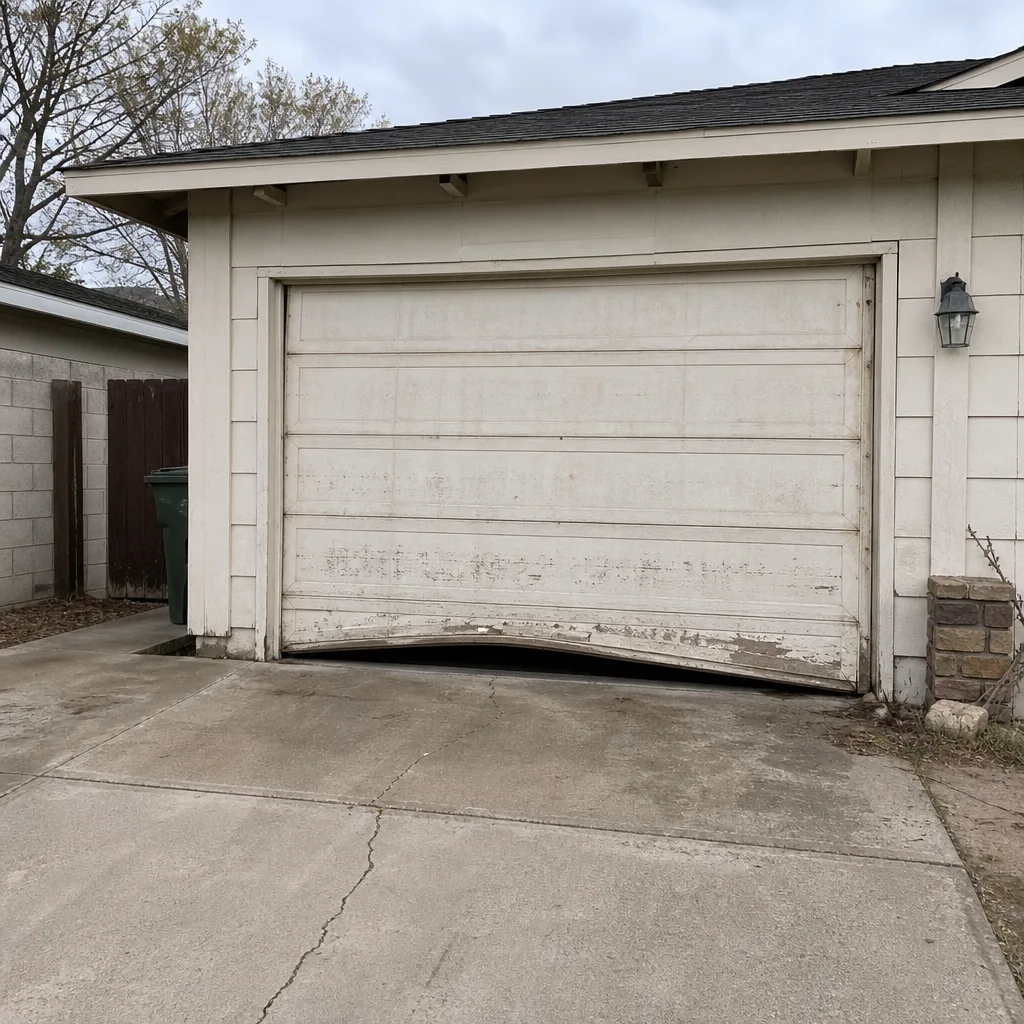 Before
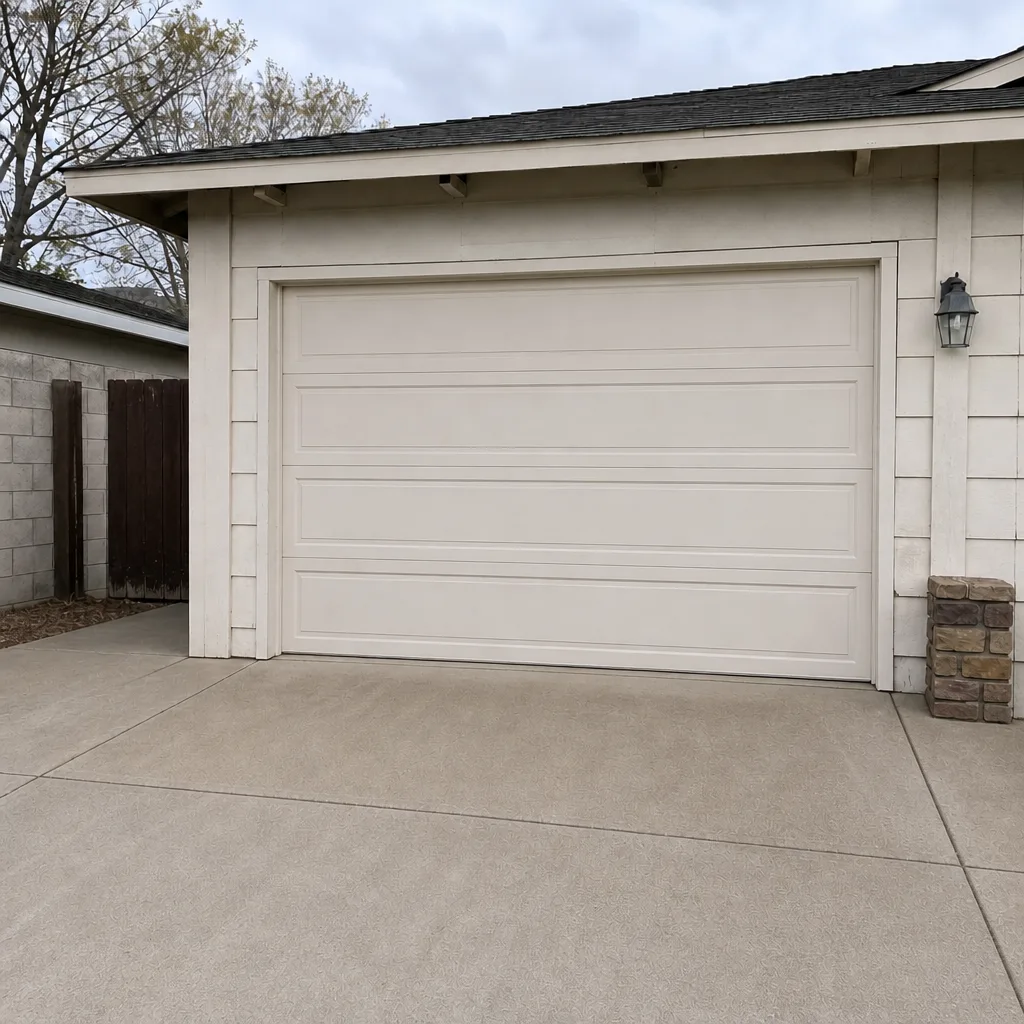 After
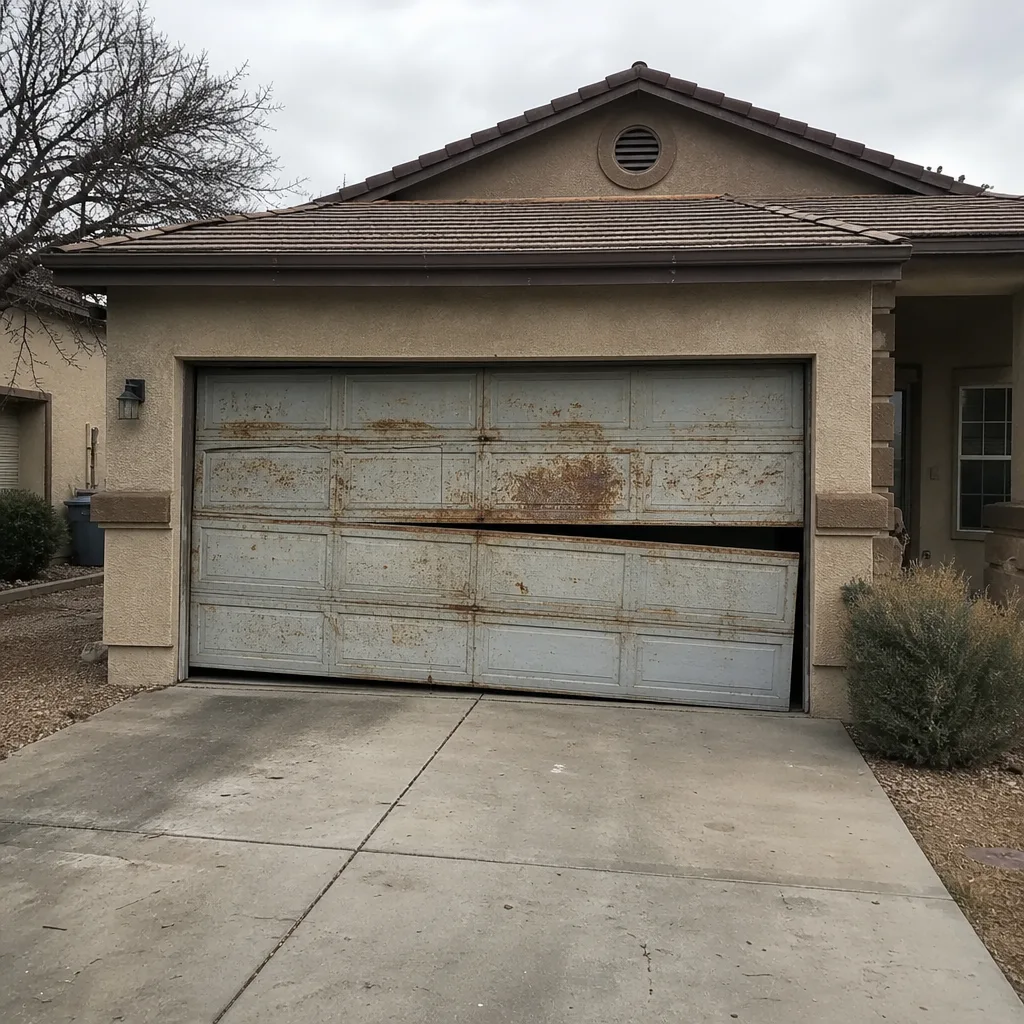 Before
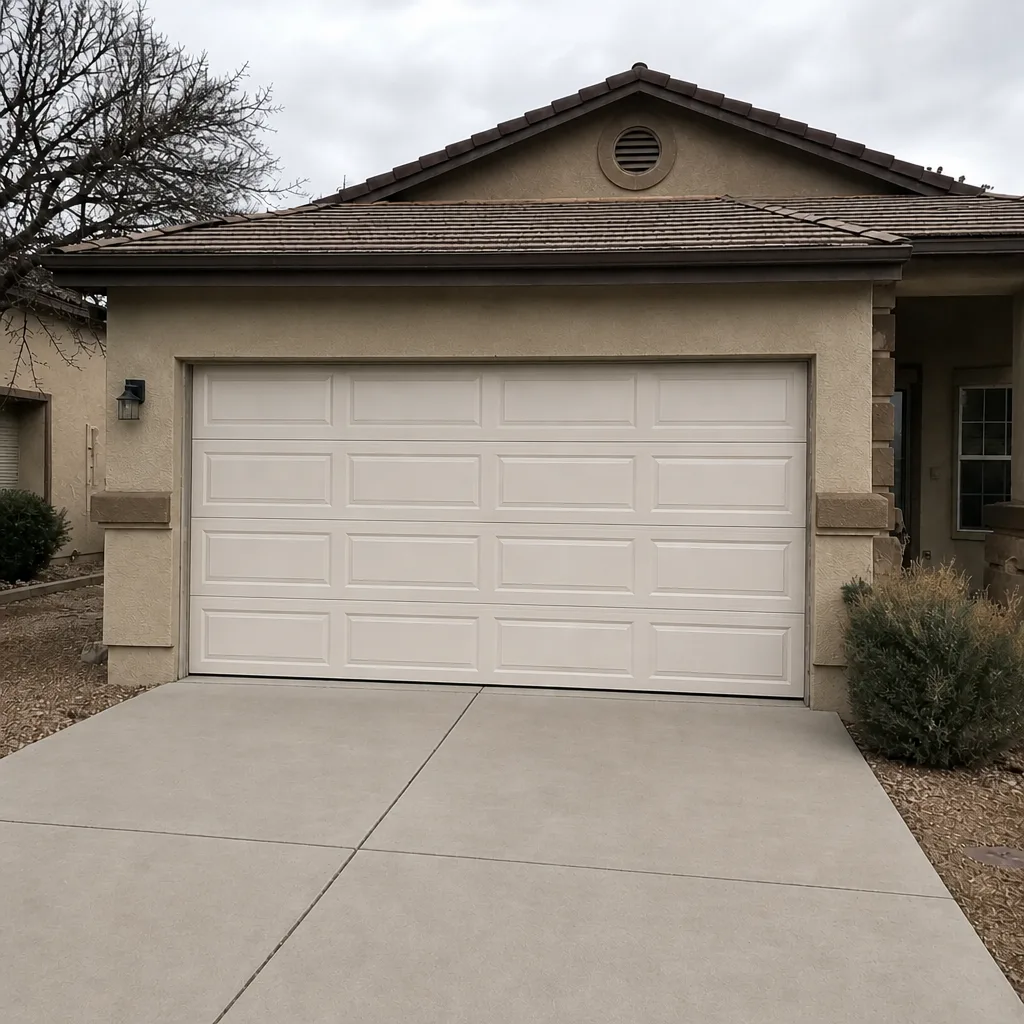 After
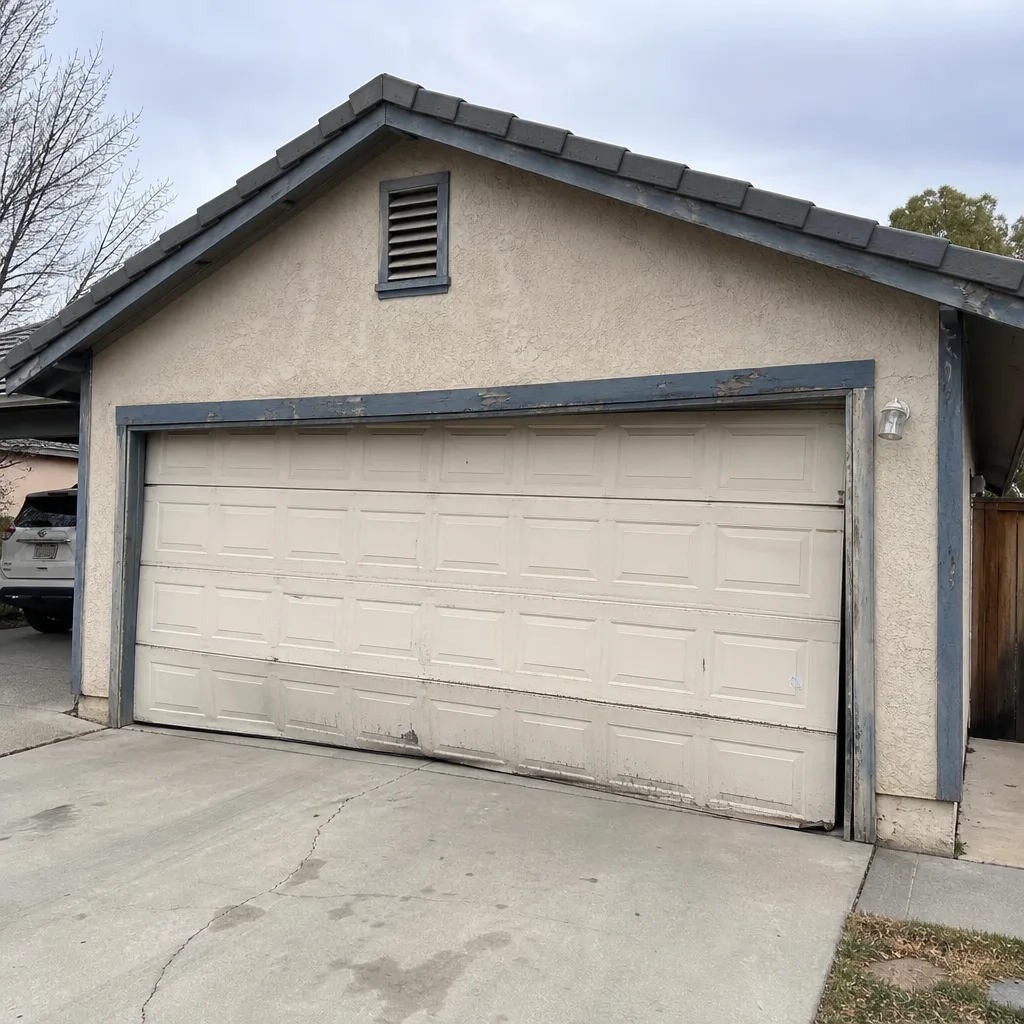 Before
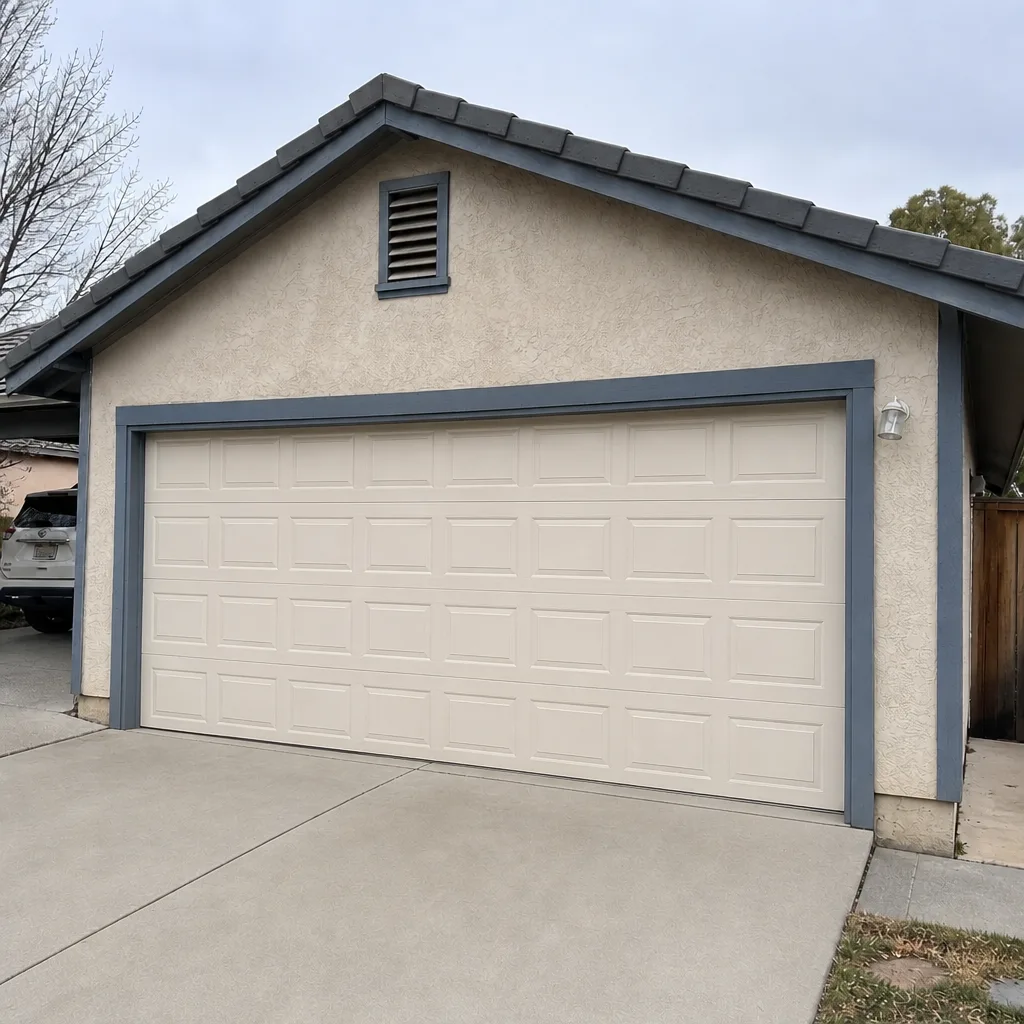 After
When to Call a Professional
Call a professional for anything involving torsion springs or cables – these are under extreme tension and can cause serious injury. Call when the door comes off the track and won’t go back on cleanly, when the opener is lifting a door that won’t stay up by hand, or when you hear a loud snap from the ceiling and the door won’t open more than a foot. Also call when the bottom seal is clearly compromised and you’re feeling desert heat or January cold through the door. Watch for the moment when you’d be guessing – guessing at what’s wrong, guessing at what it should cost, guessing whether the part on the shelf is the right one. That’s the moment. Otto’s Garage Door Enterprise offers free estimates in Enterprise – call (833) 620-7107 anytime, day or night.
One more thing worth saying out loud: our technicians have up to 22 years of experience with the brands you’ll find on Enterprise doors – Genie, Clopay, Amarr, Wayne Dalton, and the rest – and we’ll give you a straight answer on what’s safe to keep and what needs to go.
Frequently Asked Questions
Torsion spring repair in Enterprise runs $180 to $260 for one spring and $280 to $380 for both, including labor and the spring. Prices are quoted on the call and agreed before work begins, so the number doesn’t move when the truck arrives. Call (833) 620-7107 for an exact quote – estimates are free.
Yes, spring failure is an emergency call we handle same-day, and if you’re locked inside or the door is blocking a vehicle, we treat it as priority. Calls are answered live around the clock, including at night. Call (833) 620-7107 and describe what you’re hearing – we can usually tell what’s wrong on the phone.
No, not in the ordinary case. The price we quote on the phone is the price on the invoice. The only thing that changes it is a problem we couldn’t see until we were on site – a bent track, a damaged panel, a cable that needs replacing – and in that case we stop, show you the problem, quote the extra work, and you decide before anything else happens.
Yes, we’re licensed and insured, and the license number is published so you can verify it before the truck shows up – not after. The technicians are background-checked, and every job carries the 90-Day Done Right Promise in writing. Call (833) 620-7107 to schedule.
Five to seven years is typical in Enterprise, versus seven to nine years national average, because of the temperature swing from summer highs near 115°F down to below freezing in January. South- and west-facing doors often fail at the shorter end. If your springs are over five years old, have them inspected before they snap in the middle of your morning.
Usually not for a spring, roller, or opener replacement, but a full door replacement often does require a permit depending on whether your address falls under Clark County or the City of Henderson. Check with the county building department using your address before you order the door. We’ll tell you what we’ve seen, but the county has the final word.
A standing 10% off, always, no expiration, because the community comes before the margin. It stacks with the $40 off any repair over $200 that we run regularly, and there’s no trip charge inside the home county. Call (833) 620-7107 to confirm which offers apply to your repair.
The Bottom Line
Enterprise is hard on garage doors in a way that generic repair guides don’t account for – the heat thins spring life by two to three years, the dust eats seals and rollers before rain-country wear would, and the January cold is the final straw. Fix the safety items first, get the door moving true, seal it against the dust, and only then look at the opener. Watch for the low-ball quote that doubles at the door, and know that the honest Enterprise range for a spring repair is $180-$380, quoted and agreed before anyone touches your door. If you’re not sure what you’re looking at, call the shop where the name on the van, the license, and the invoice all match. You’ll see us again at the hardware store on Saturday, and we’d rather keep you for twenty years than win one big ticket. Start with Otto’s Garage Door Enterprise home or call (833) 620-7107 for a free estimate.
Written by the team at Otto’s Garage Door Enterprise.