
Last updated November 17, 2026
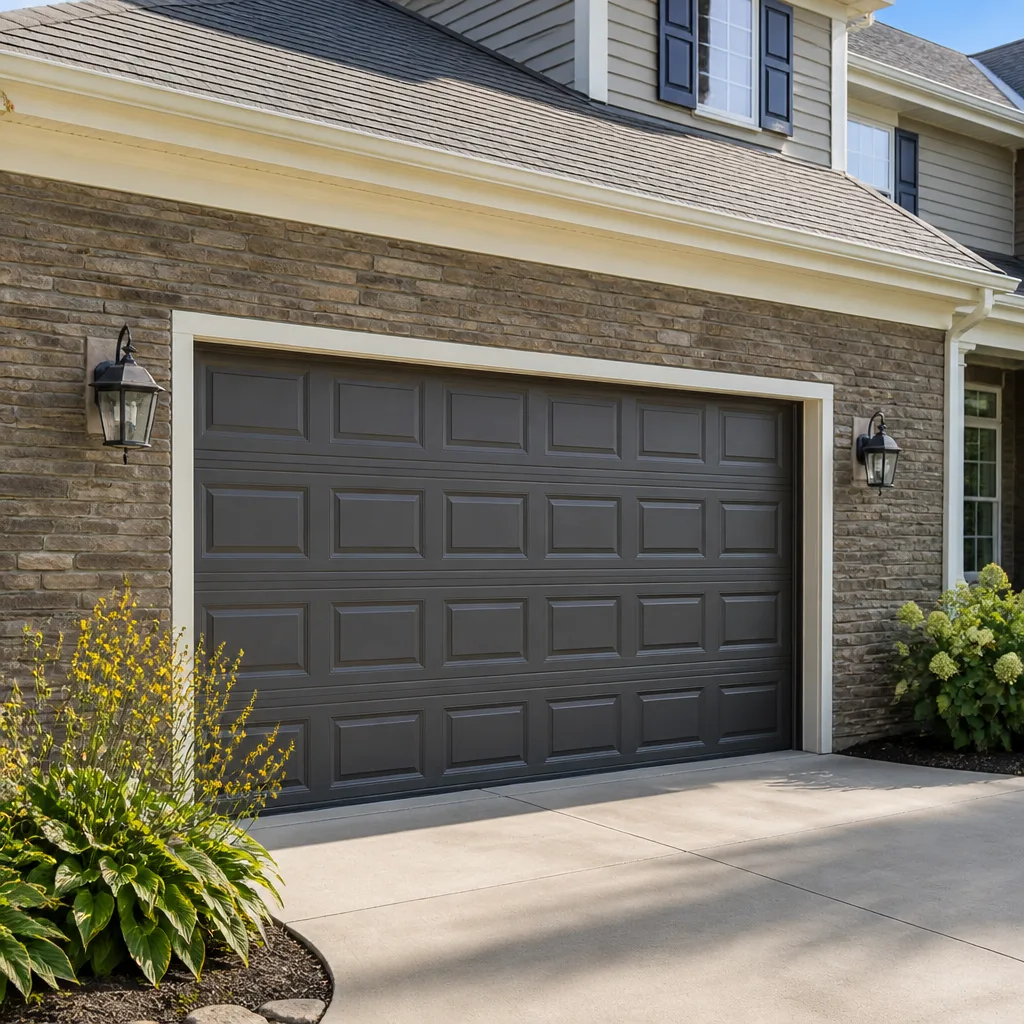 Raised-panel steel
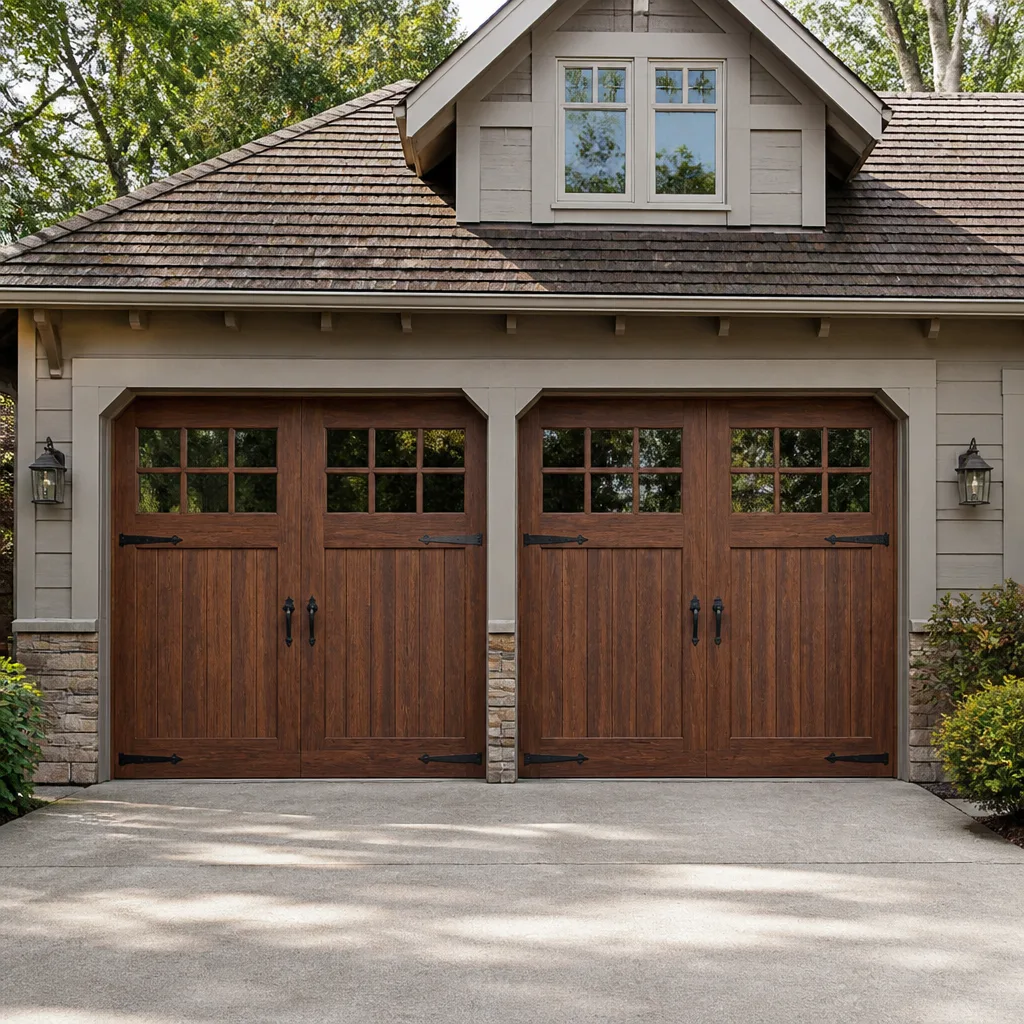 Carriage house
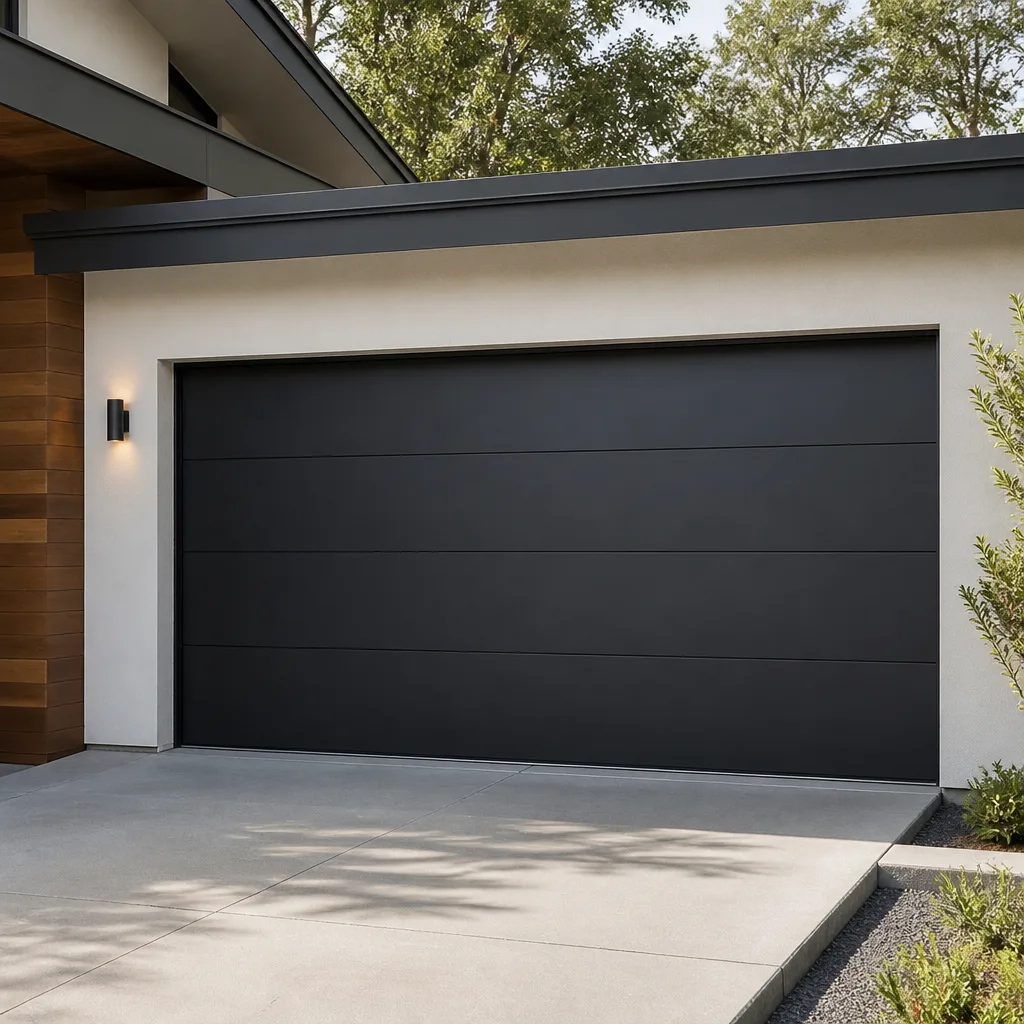 Modern flush
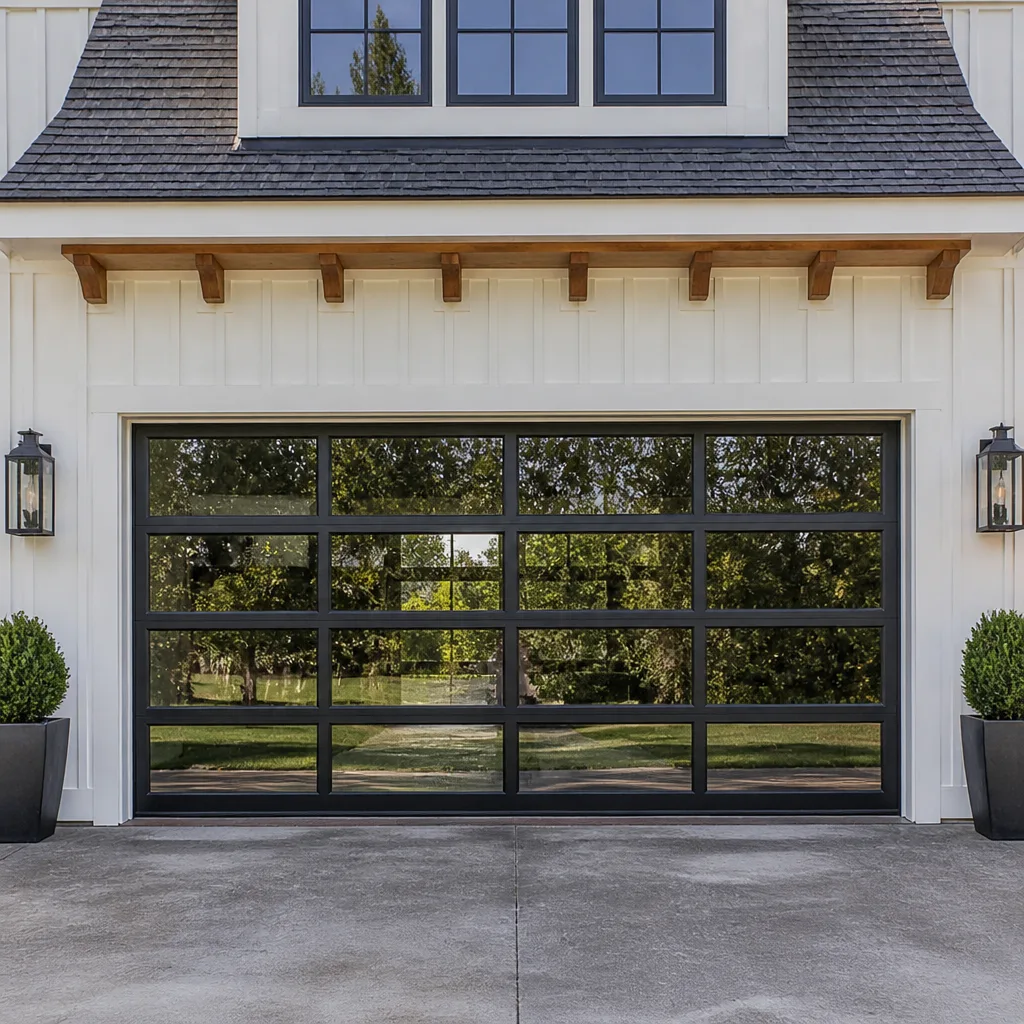 Full-view glass
 LiftMaster openers
 Chamberlain openers
Full 25-point door and opener safety check with every visit - springs, cables, rollers, tracks, and your LiftMaster or Chamberlain opener included
You get a price before we start. It does not change when the pro arrives.
Get your free estimateGarage Door Cost Breakdown: The Enterprise Homeowner’s Reference for 2026
Here’s a number that surprises most homeowners: the difference between a $400 garage door job and an $1,800 one is almost never the contractor’s margin. It’s the parts grade, the spring rating, and whether the quote includes what happens when the tech opens the panel and finds something ugly underneath. We’ve repriced exactly zero jobs upward without calling the homeowner first and explaining why. We’ve also walked away from jobs where the homeowner wanted a cheap spring on a door that would snap it in under a year. This guide is the price conversation worth having before the van leaves the driveway, written for Enterprise homeowners who want a straight answer.
Quick Answer
Most common garage door repairs in Enterprise, NV in 2026 run $185 to $650, with spring replacement averaging $240 to $420 and cable repair $175 to $320. A full door replacement typically lands between $1,100 and $3,800 depending on door grade, insulation, and size. The single biggest driver of where you fall in that range isn’t labor, it’s the cycle rating on the parts and whether the quote covers haul-away, hardware grade, and warranty in writing.
Styles & brands we work with
- Raised-panel steel
- Carriage house
- Modern flush
- Full-view glass
- LiftMaster openers
- Chamberlain openers
Table of Contents
- What garage door work actually costs in Enterprise in 2026
- The spring rating question that changes your ten-year math
- What “labor included” really means in a low quote
- How to read a garage door quote line by line
- Repair or replace: our honest decision tree
- Panel replacement vs. full door swap
- When to call a professional
- Frequently asked questions
What garage door work actually costs in Enterprise in 2026
Enterprise sits in the southern Nevada desert, which shapes garage door pricing more than most homeowners realize. The dry heat and temperature swings between a 105-degree July afternoon and a 40-degree January morning work the springs harder than a mild coastal climate would. That’s why we count spring cycles the way you count tire miles, and why we tell Enterprise homeowners to expect springs to fail on a shorter clock than the manufacturer’s estimate suggests.
Here are the real 2026 ranges for the most common Enterprise jobs:
- Spring replacement (torsion or extension): $240 to $420 installed, per spring. A two-spring door replaces both at once as a rule.
- Cable repair or replacement: $175 to $320 per side. Cables fray at the drum, and desert dust accelerates the wear.
- Roller and hinge refresh: $140 to $260 for a full set of nylon rollers and hinges.
- Panel replacement (single section): $320 to $750 depending on door brand and matching availability. Wayne Dalton and Clopay panels are usually easier to source than discontinued Raynor models.
- Opener repair: $150 to $340. Opener replacement runs $380 to $650 installed.
- Full door replacement: $1,100 to $3,800, with insulated steel doors at the mid-to-upper end of that band.
The honest reason ranges vary: door weight, spring configuration, brand part availability, whether the previous install was done correctly, and whether the frame and track are sound. A door hanging on a bent track needs the track fixed before the springs matter. In Enterprise neighborhoods where homes went up fast during the 2000s building boom, we regularly find opener brackets lagged into drywall instead of studs, and that turns a simple opener swap into a reinforcement job.
The spring rating question that changes your ten-year math
This is the section most homeowners have never had explained, and it’s where the price gap lives. Garage door springs are rated in cycles, meaning one full open-and-close. A standard spring is rated for about 10,000 cycles. A high-cycle spring is rated for 25,000 or more.
If you open and close your door four times a day, that’s roughly 1,460 cycles a year. A 10,000-cycle spring is done in about seven years on paper, and in Enterprise’s heat it often goes sooner. A 25,000-cycle spring is good for seventeen years or more.
Here’s the math homeowners miss: the high-cycle spring typically costs $60 to $120 more per spring than the standard one. Spread over the extra decade of service, that’s a few dollars a year for a part that will likely outlast your ownership of the home. We’ve seen Enterprise homeowners pay for a cheap spring twice in five years, spending more than the premium spring would have cost once.
The other thing to check: a spring rated for a door weight it wasn’t matched to. When we open a panel and find a 150-pound-rated spring on a 200-pound insulated door, that spring is on borrowed time from day one. A door is 200 pounds riding on two springs. Respect it. Matching the spring to the door weight is not optional, and any quote that doesn’t mention the cycle rating and the door weight is a quote worth questioning.
What “labor included” really means in a low quote
When you see a low phone-quoted price, ask what the tech does when they arrive. A stripped-down quote covers the swap and nothing else. That leaves out steps that matter.
Here’s what a complete spring or cable job includes, and what gets skipped in a bare-bones price:
- Full door balance check: The door should hold at halfway when released. Skipping this means the new springs may be mismatched to the door and fail early.
- Track and roller inspection: A warped track eats new springs. Cheap quotes swap the spring and leave the bent track.
- Lubrication and hardware torque: Bolts and hinges loosen over years. Skipping torque means rattles and premature wear.
- Safety reverse test: The opener’s auto-reverse has to be verified after any spring or cable work. This protects kids and pets, and it’s non-negotiable in a real job.
- Haul-away of old parts: Some quotes add a fee for disposal. Ours doesn’t, but read the line.
- Written warranty terms: Parts and labor should both be spelled out. A verbal “we stand behind it” isn’t a warranty.
That skipped-step list is where a $400 job and an $1,800 job diverge. The $400 quote skips three or four of those six items. The $1,800 quote includes them, plus premium parts. In Enterprise, where summer heat is brutal on lubricant and rubber, skipping lubrication and the balance check is how a “cheap” spring job turns into a second repair call in eighteen months.
How to read a garage door quote line by line
Before you sign anything, read the quote for six things. If any are missing, ask.
- Parts grade and cycle rating: Not just “spring,” but the cycles and the door weight it’s rated for.
- Hardware grade: Nylon rollers versus steel, gauge of hinges, bearing plates versus plastic.
- Haul-away: Old door, old panels, old springs. Confirm it’s included, not billed after.
- Warranty terms: How long on parts, how long on labor, and what voids it.
- Permit line if required: New door installation sometimes triggers a permit depending on your jurisdiction. A legitimate quote states whether the permit is included or handled by the homeowner.
- Price lock language: The quote should state that the price is quoted and agreed before any work starts, and that it won’t be revised upward at the door without your approval.
We’ve been called to Enterprise homes where the “quote” was a text message with one number and no breakdown. That isn’t a quote, it’s a guess with a deposit attached. A real estimate is a written document you can hold next to a second opinion. We offer a standing Free Second Opinion on any written estimate for exactly this reason: a second set of eyes on the line items costs you nothing and often catches the missing piece.
Repair or replace: our honest decision tree
Here’s how we walk a homeowner through the call. Start with the age of the door.
If the door is under 10 years old: Repair is almost always the right call unless the door has structural damage (crushed panels, a bent bottom section, a rotted frame). Springs, cables, rollers, and opener issues are repairs, not replacements. Spending $350 on a well-built door beats spending $2,200 on a new one.
If the door is 10 to 20 years old: Repair is fine if the panels are sound and the hardware isn’t failing in multiple places. Once you’re looking at springs plus cables plus a bent track plus a failing opener in the same year, adding up to half the cost of a replacement, the math flips. A new door also comes with a fresh warranty and a modern spring rating that ends the cycle of repeated repairs.
If the door is over 20 years old: Replace it. Old doors often have 10,000-cycle springs that will fail repeatedly, opener safety features that predate modern auto-reverse requirements, and panel wear that’s not fixable. In Enterprise’s heat, a two-decade-old door is on its last legs anyway.
The trap homeowners fall into: replacing a door when a repair would have bought another decade, or repairing a door that’s rusted through and will need replacing next spring. The decision tree above keeps you out of both. And when the cheaper fix really is the right call, we tell you so, because we’d rather keep a customer for twenty years than win one big ticket.
Panel replacement vs. full door swap
Cosmetic damage is the most common reason homeowners in Enterprise consider a new door. A dented bottom panel from a backed-into bumper or a hailstorm doesn’t mean the whole door is done. Panel replacement runs $320 to $750 for a single section, versus $1,100-plus for a full swap.
Before you commit to panel replacement, three things have to be checked:
- Model still in production or in stock: Wayne Dalton, Clopay, and Amarr often keep panels available for a decade or more. Discontinued Raynor and older Craftsman models can be hard to match.
- Color and finish match: A panel that’s been in desert sun for ten years has faded. A new panel may sit a shade lighter. Some homeowners accept it; others replace the whole door to keep the finish uniform.
- Structural damage underneath: A dent that hides a bent section frame or a cracked vertical stile is a bigger job than cosmetics.
We tell Enterprise homeowners the same thing every time: if two panels are damaged and the door is over fifteen years old, a full door swap is the cheaper long game because you stop chasing matching panels and start fresh with a new warranty. If one panel is dinged and the door is eight years old, replace the panel and keep your money. That decision is worth a phone call before you spend either amount. For the full picture on replacement, our Garage Door Installation in Enterprise page walks through sizing, insulation, and door types in detail.
See the difference
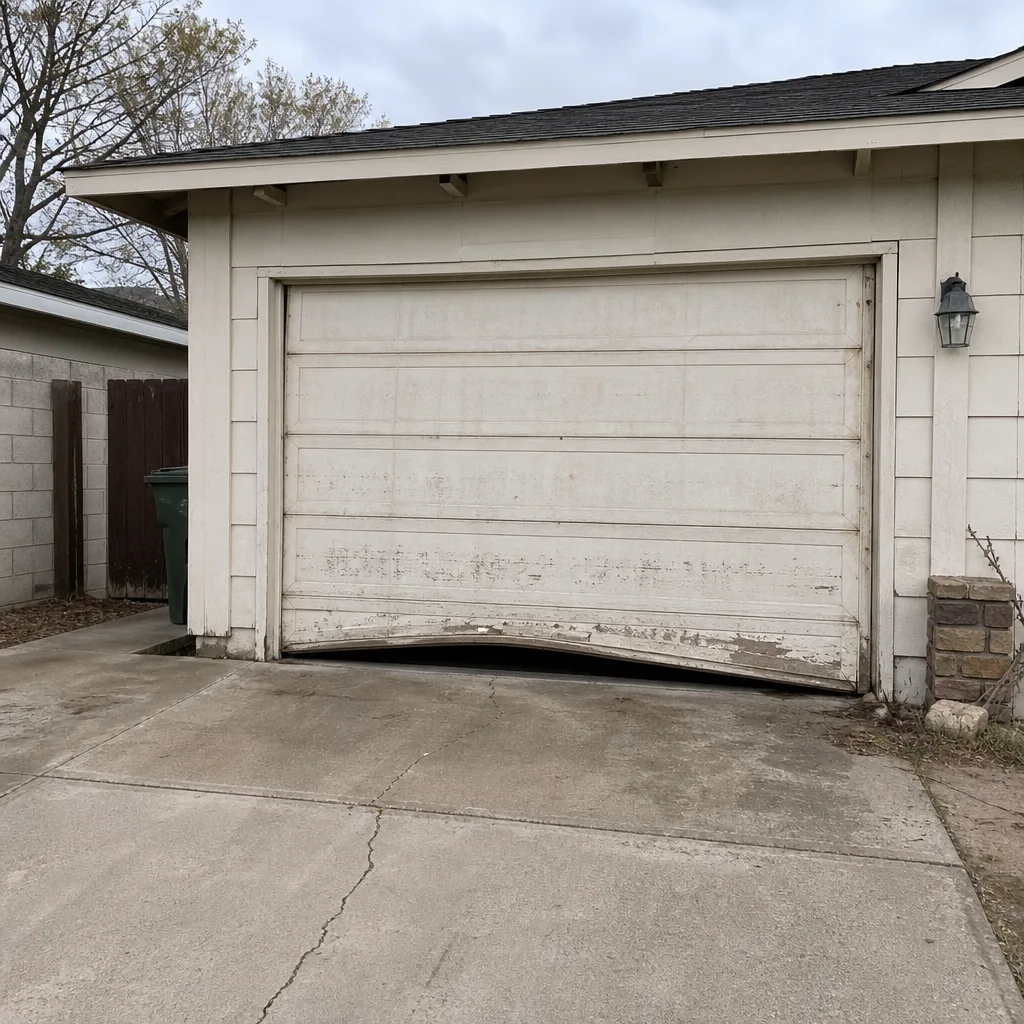 Before
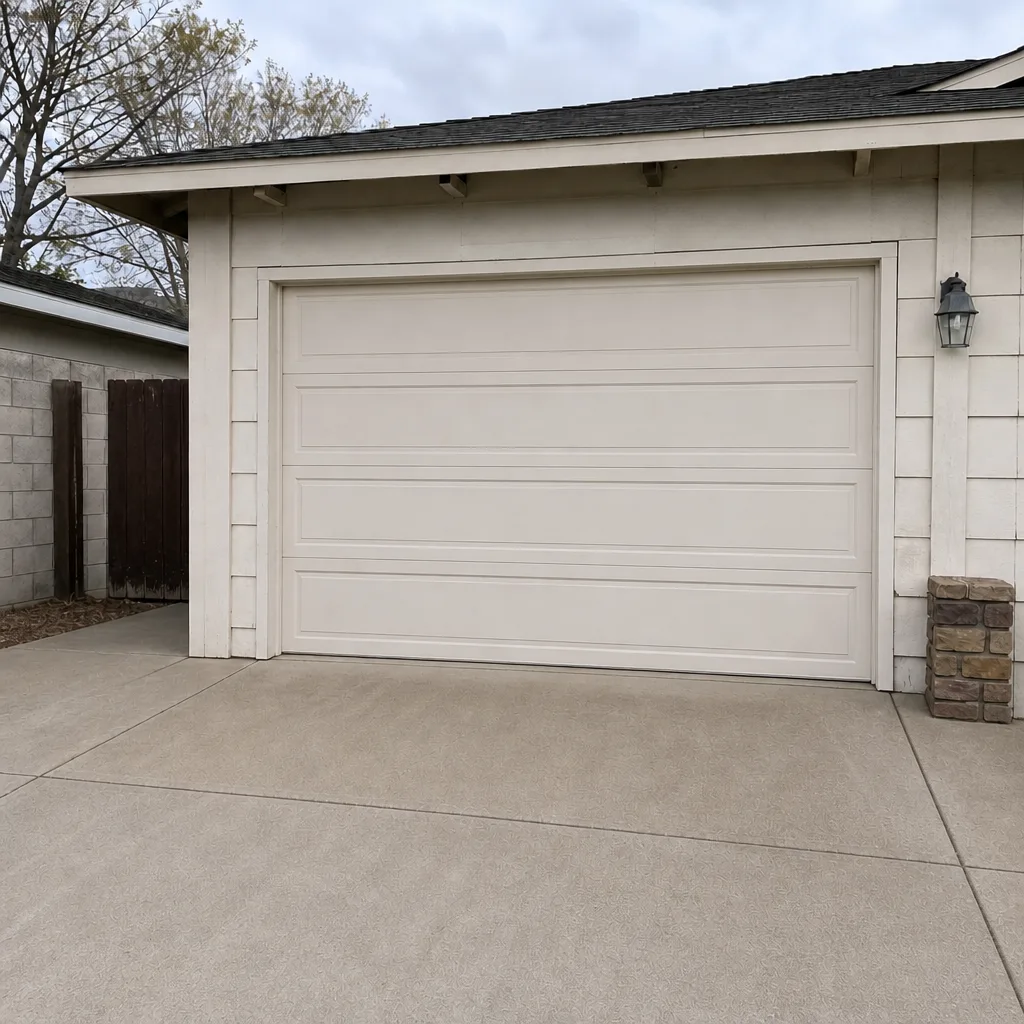 After
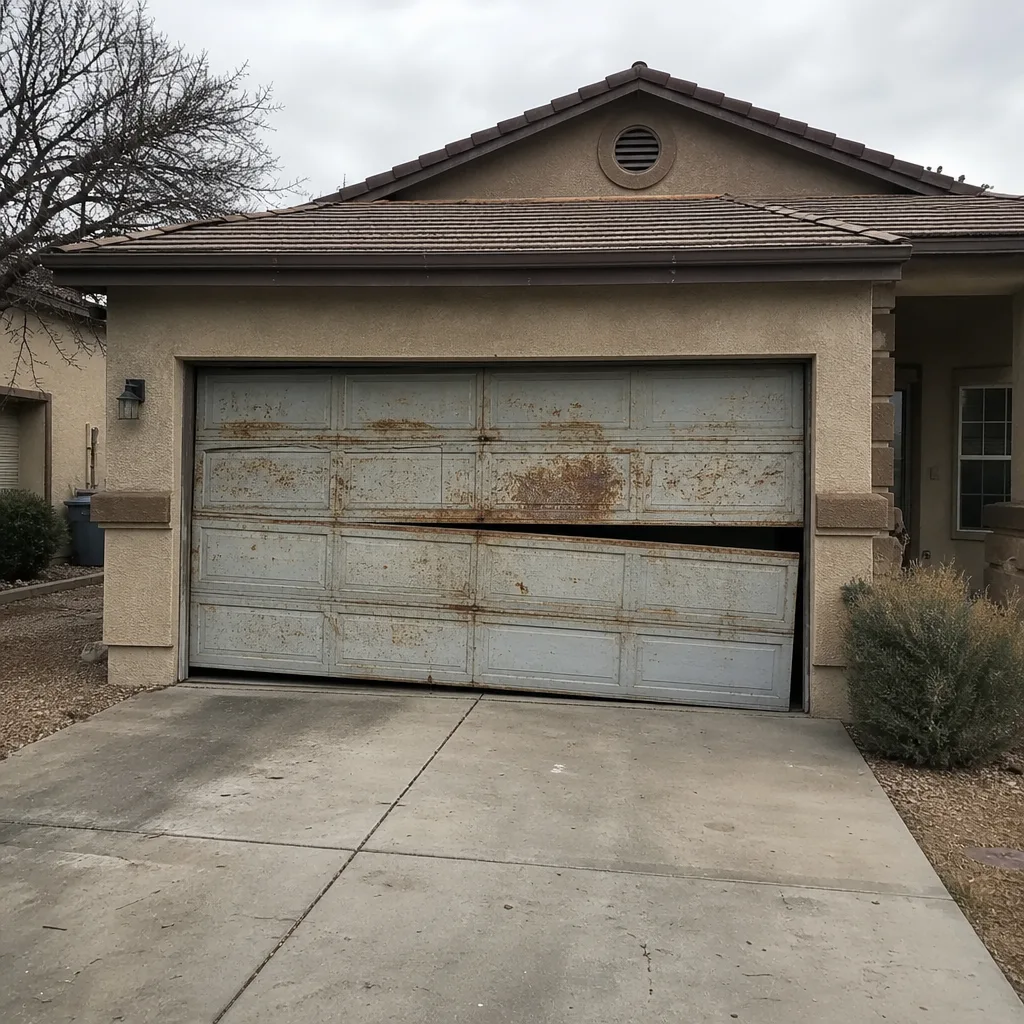 Before
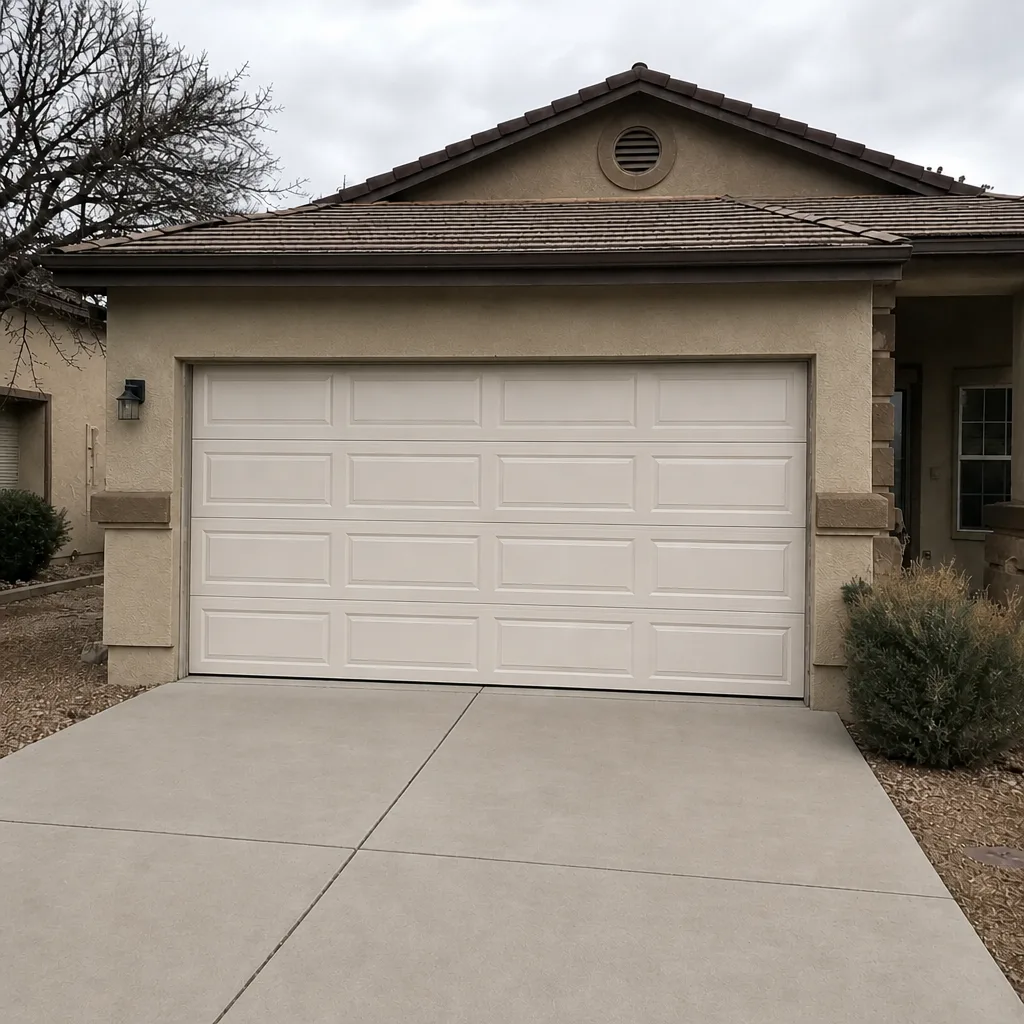 After
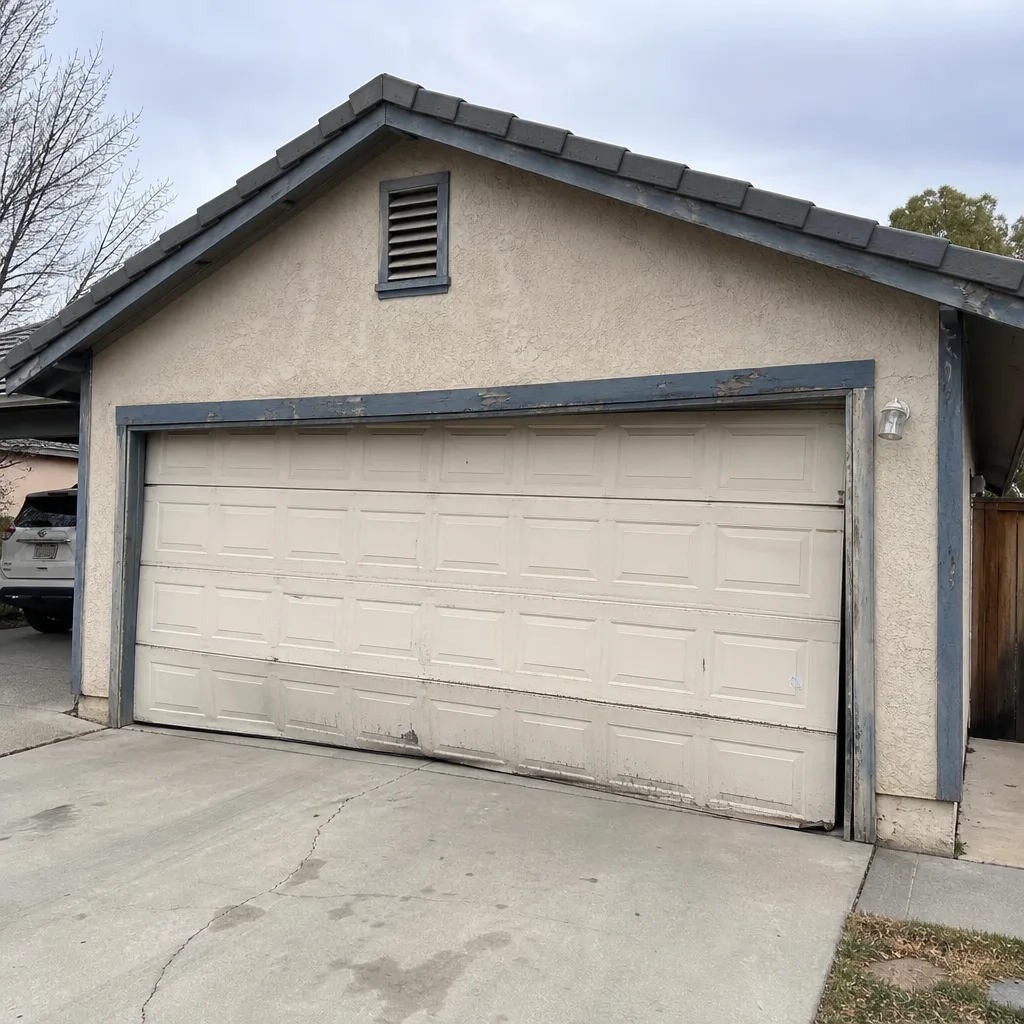 Before
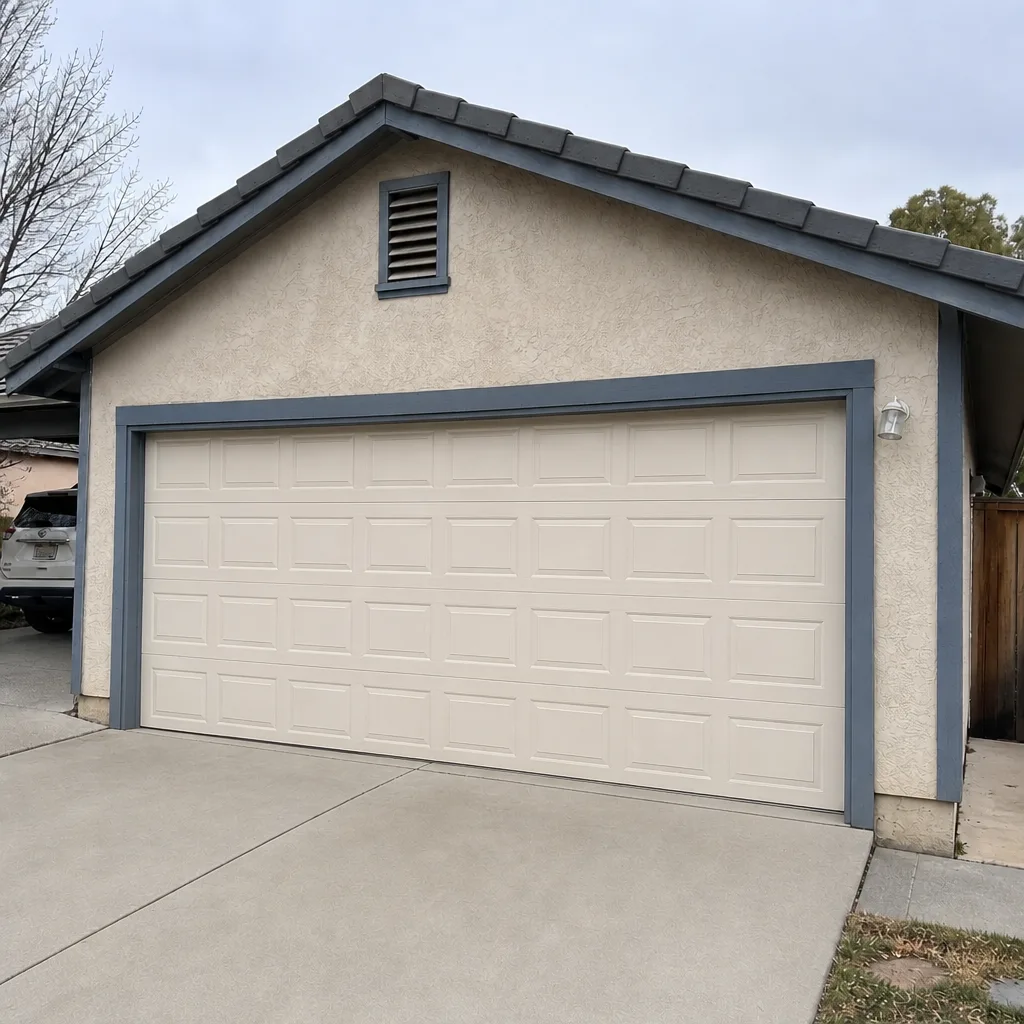 After
Common Mistakes to Avoid
- Taking a phone quote as the final price. A price without a written line-item breakdown is a starting point, not a promise. Ask for it in writing before anyone leaves the driveway.
- Buying the cheapest spring. A 10,000-cycle spring on a four-use-a-day door in Enterprise’s heat fails in a handful of years. The high-cycle spring costs a little more and outlasts the cheap one twice over.
- Skipping the balance and safety-reverse check. After any spring or cable job, the door must balance at halfway and the opener’s auto-reverse must be tested. A cheap job that skips this leaves a heavy door with an untested safety feature.
- Ignoring a bent track because the door “still works.” A warped track eats new springs fast. Fix the track when the spring gets replaced, not after.
- Assuming a new opener fixes a straining door. If the opener is straining, the problem is almost never the opener. It’s binding, track alignment, or spring tension. Swapping the opener just moves the problem downstream.
- Not asking who answers the phone. If a live person doesn’t pick up when you call, you’re likely routed to a dispatch center that quotes one number and bills another at the door. Ask directly.
- Paying before you see the warranty in writing. Parts coverage, labor coverage, and the length of each must be on paper. A 90-day written guarantee on the whole job is the floor, not the ceiling.
When to Call a Professional
Call us the moment any of these happen: a spring snaps (you’ll hear it), the door hangs crooked or won’t close flush, the opener strains or reverses without warning, a cable is frayed or loose, or the door is stuck halfway. Springs and cables are under extreme tension and can cause serious injury. Do not try to adjust or replace a torsion spring or cable yourself. A door is 200 pounds riding on two springs, and a sudden release can break bones or worse. Leave that work to someone trained for it.
For a door that’s merely noisy, slow, or due for a tune-up, call and we’ll give you a straight answer about whether it needs anything at all. Otto’s Garage Door Enterprise offers free estimates in Enterprise. Call (833) 620-7107 and a live person will quote you on that call and hold the number when we get there.
Frequently Asked Questions
Most garage door repairs in Enterprise run $185 to $650, with spring replacement at $240 to $420 and cable repair at $175 to $320. The range varies by door weight, part grade, and whether the quote includes haul-away and a written warranty. Call (833) 620-7107 for an exact quote; estimates are free and quoted before any work starts.
Yes. A live person answers around the clock, and spring and cable emergencies are the calls we take first. A snapped spring means the door is sealed shut, so we treat it as urgent and quote the job on that call. Call (833) 620-7107 and we’ll get you a straight number today.
No. Upfront pricing is quoted before the visit and doesn’t get revised upward at the door. If we open the panel and find something that genuinely changes the scope (a bent track, a cracked section), we call you, explain what we found, and you approve the change before any extra work. We reprice zero jobs upward without a conversation first.
Yes. Otto’s Garage Door Enterprise is locally owned and owner-operated with a published license number any homeowner can verify before the van arrives, and the technicians are background-checked. Every job is backed by the 90-Day Done Right Promise in writing on the invoice. Call (833) 620-7107 with questions before you book.
Repair if the panels and frame are sound and only one component is failing. Replace if you’re facing springs, cables, track, and opener all in the same year, since that adds up to half the cost of a new door. We’ll walk the decision with you and tell you honestly when the cheaper fix is the right call. Call (833) 620-7107 for a free estimate.
The cycle rating is how many open-and-close cycles the spring is rated for. A 10,000-cycle spring lasts about seven years on a four-use-a-day door; a 25,000-cycle spring lasts seventeen or more. The high-cycle spring costs $60 to $120 more per spring, which works out to a few dollars a year for an extra decade of service.
The Bottom Line
The gap between a $400 garage door job and an $1,800 one is parts grade, spring rating, and what the quote actually includes. In Enterprise, the heat makes cycle ratings matter more than they do in milder climates, so a high-cycle spring earns its extra cost fast. Read every quote for cycle rating, hardware grade, haul-away, warranty, and price lock before you sign. If a door is under ten years old and structurally sound, repair it. If it’s over twenty, replace it. For questions about a specific repair, our Garage Door Repair in Enterprise page covers symptoms and fixes, and our Garage Door Opener Repair & Installation in Enterprise page covers opener issues. When you’re ready to price your job, call Otto’s Garage Door Enterprise at (833) 620-7107 for a free estimate. A live person answers around the clock, quotes the job, and holds the number when we get there.
Written by the team at Otto’s Garage Door Enterprise.