
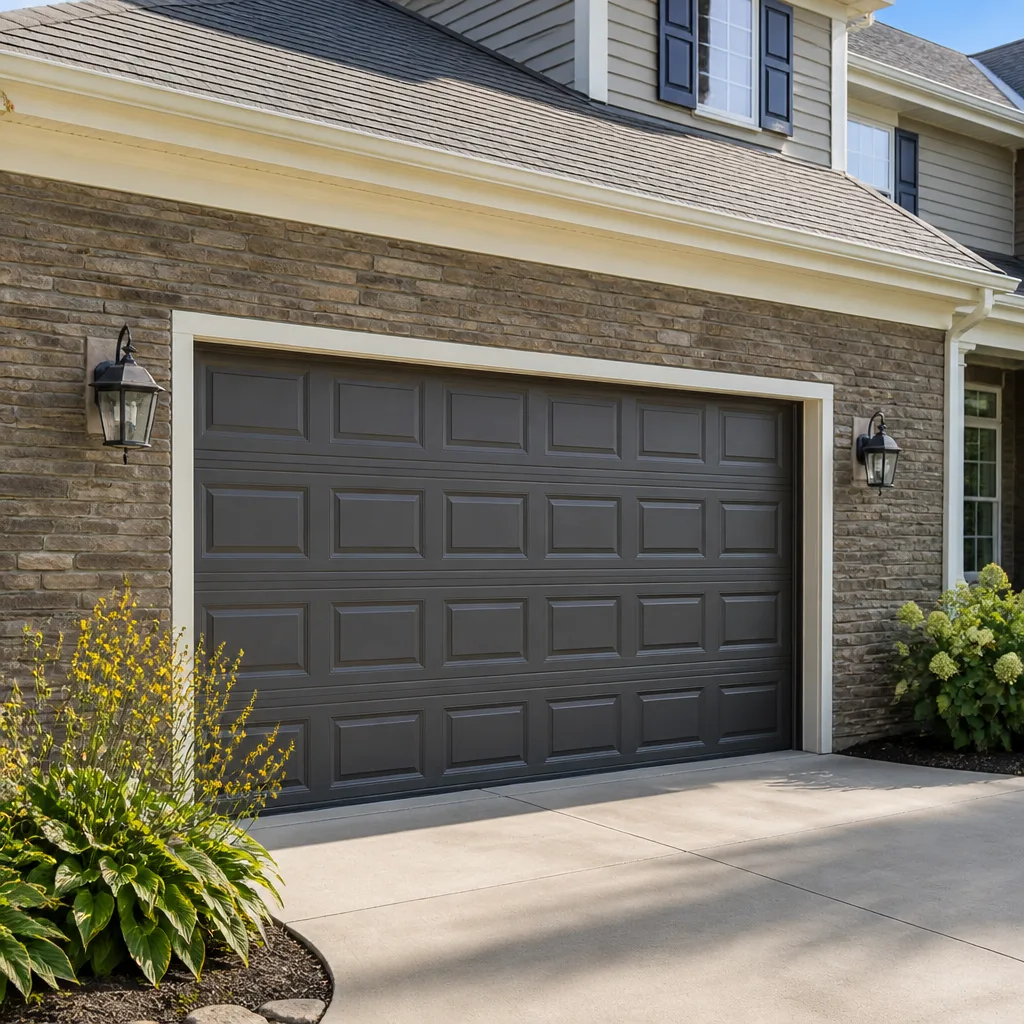
 Raised-panel steel
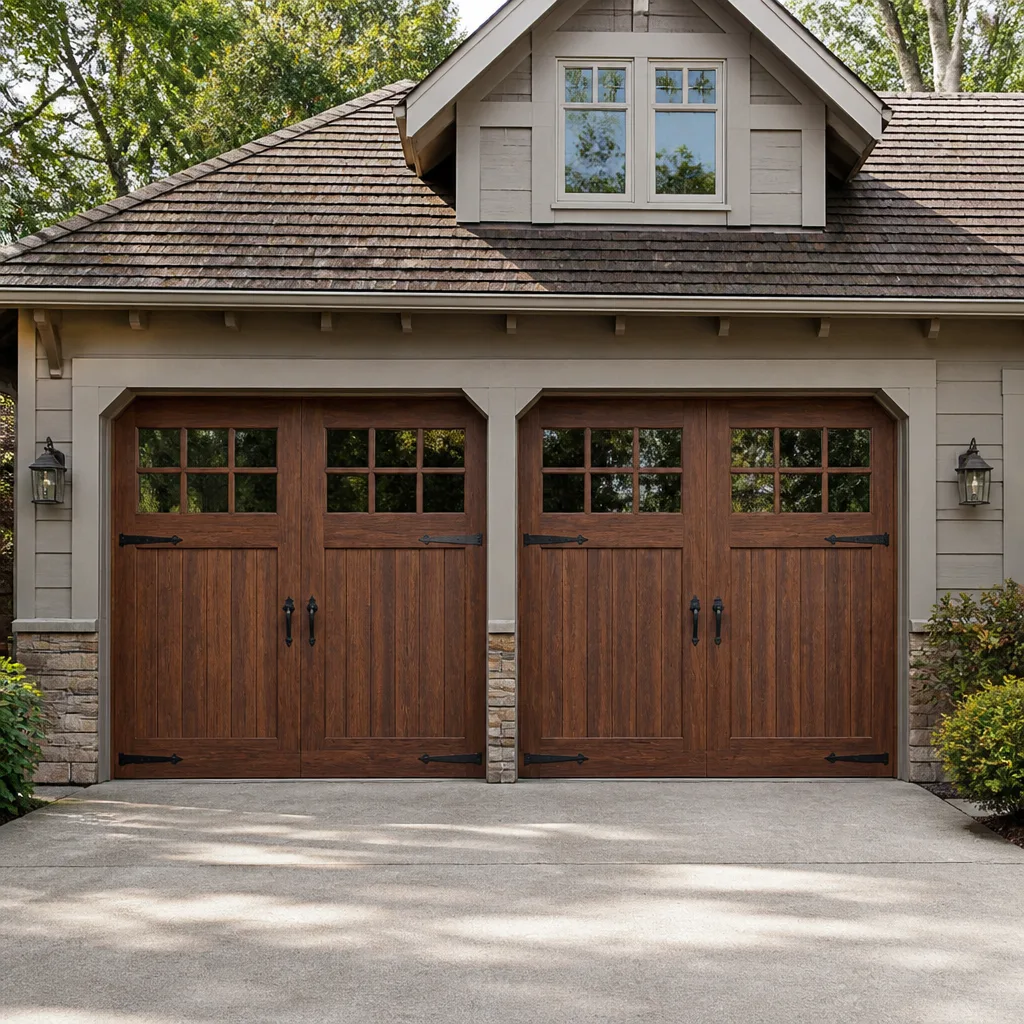 Carriage house
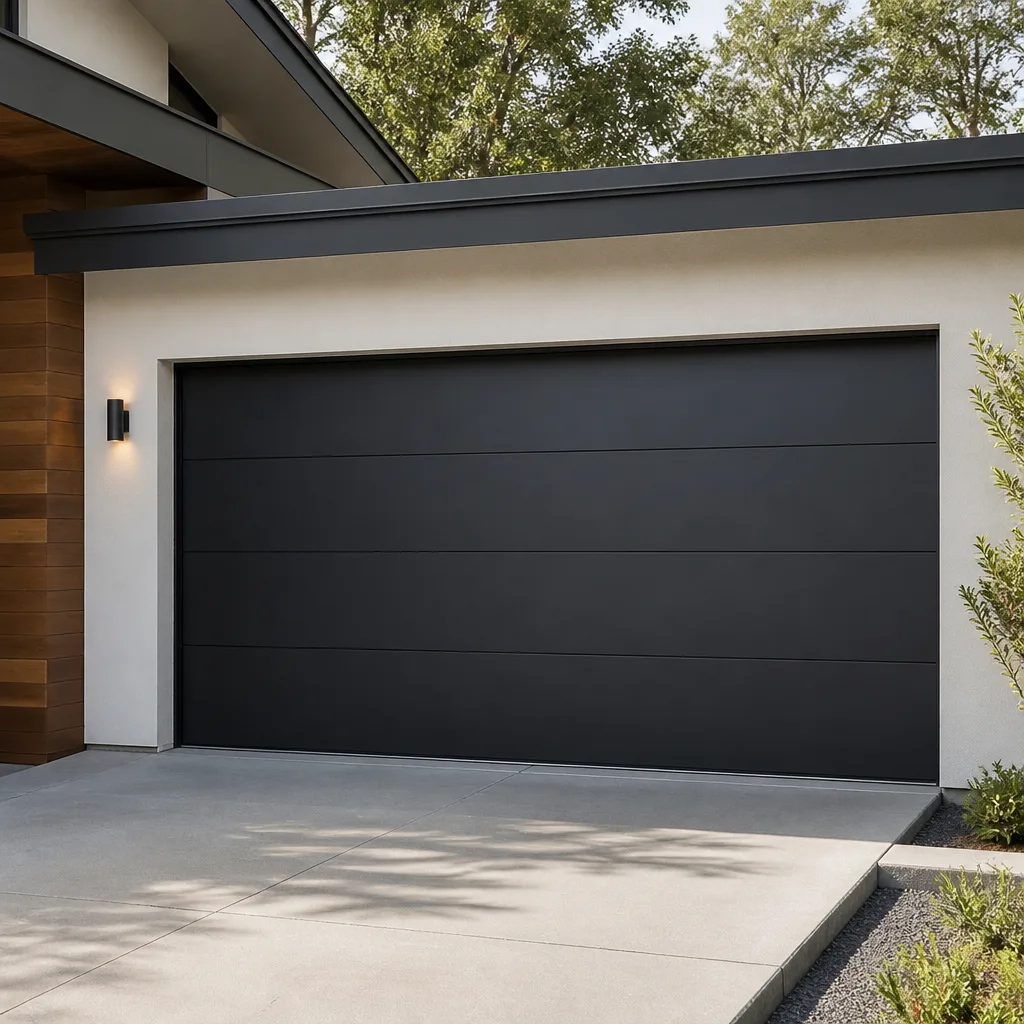 Modern flush
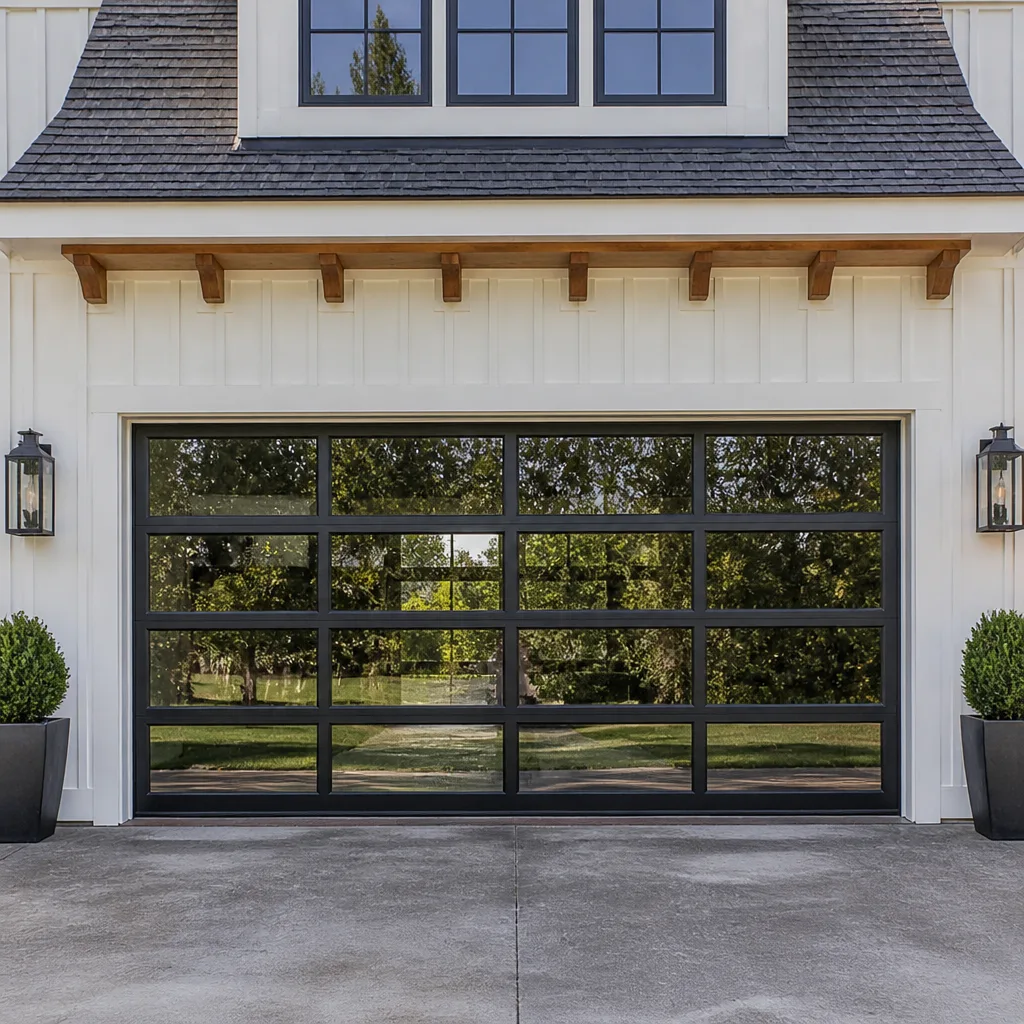 Full-view glass
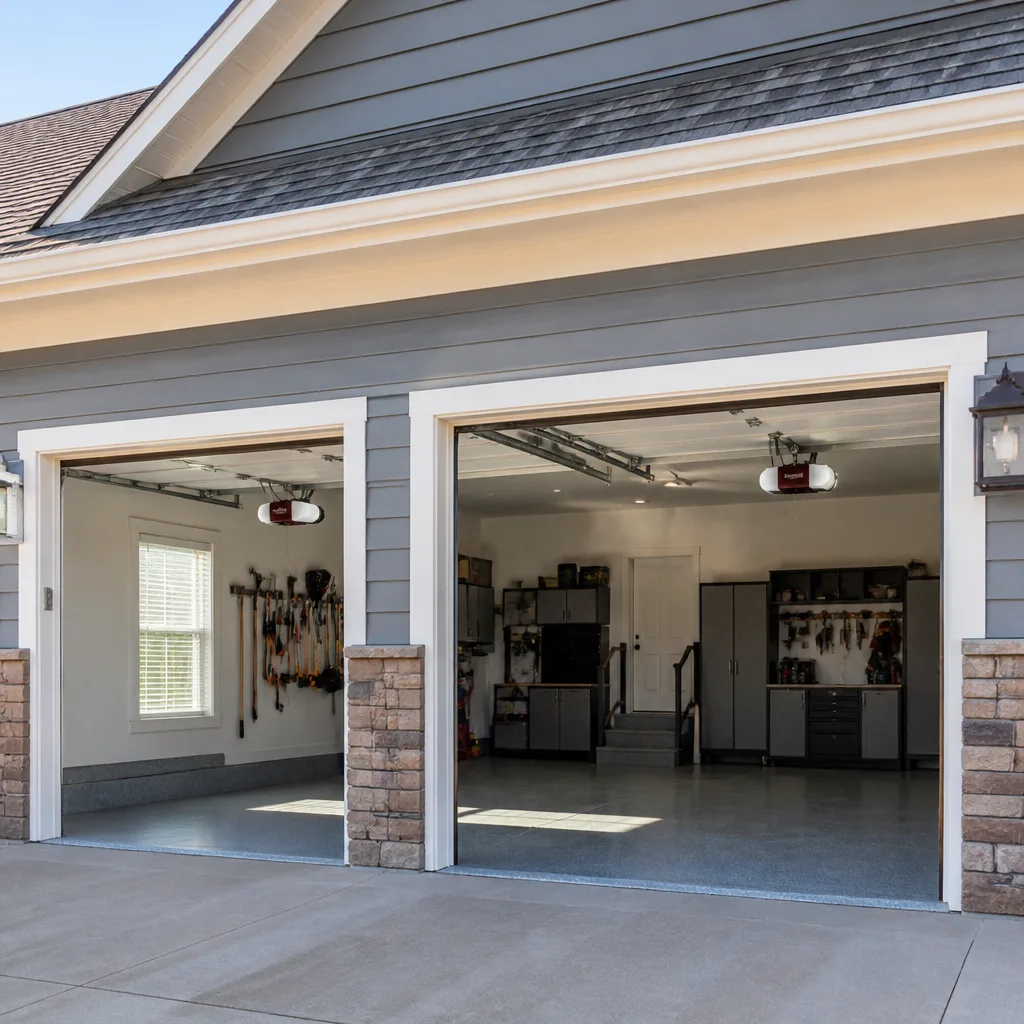 LiftMaster openers
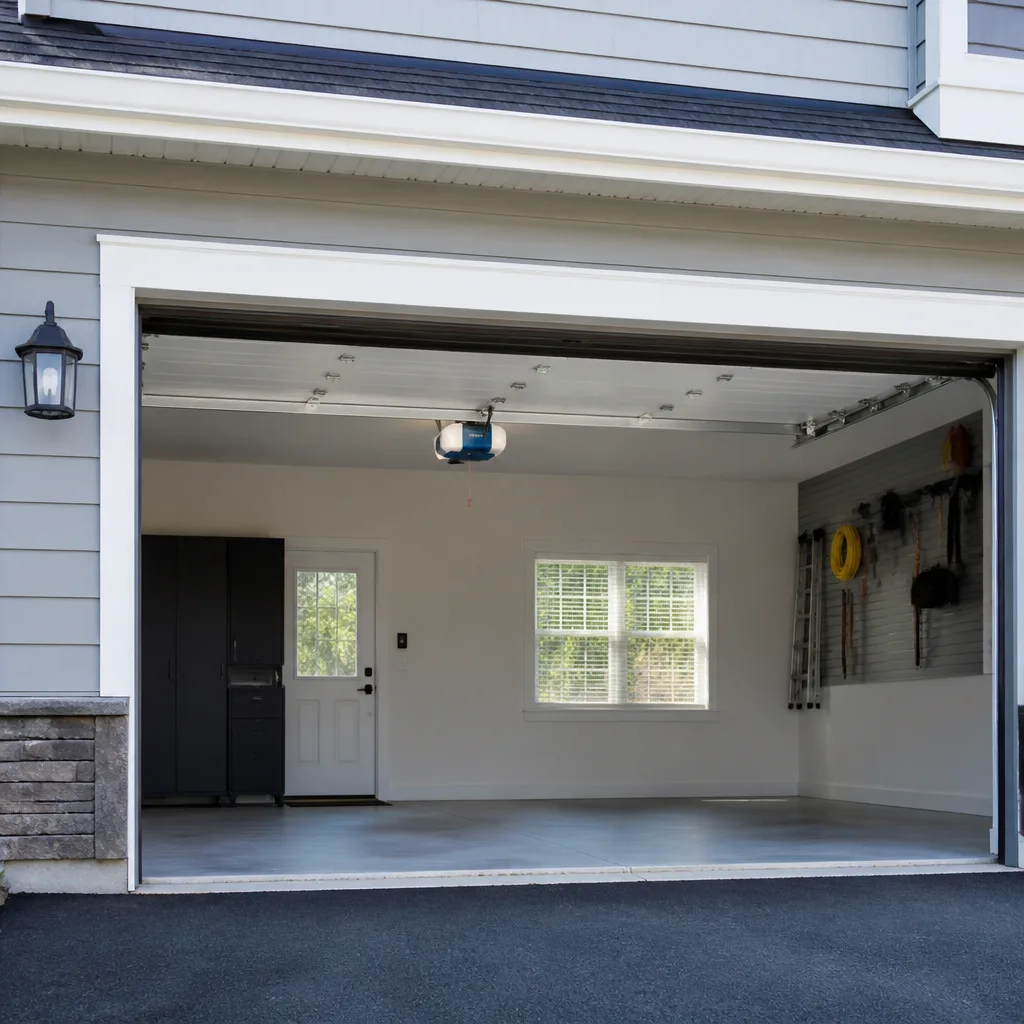 Chamberlain openers
Full 25-point door and opener safety check with every visit - springs, cables, rollers, tracks, and your LiftMaster or Chamberlain opener included
You get a price before we start. It does not change when the pro arrives.
Get your free estimateStyles & brands we work with
- Raised-panel steel
- Carriage house
- Modern flush
- Full-view glass
- LiftMaster openers
- Chamberlain openers
See the difference
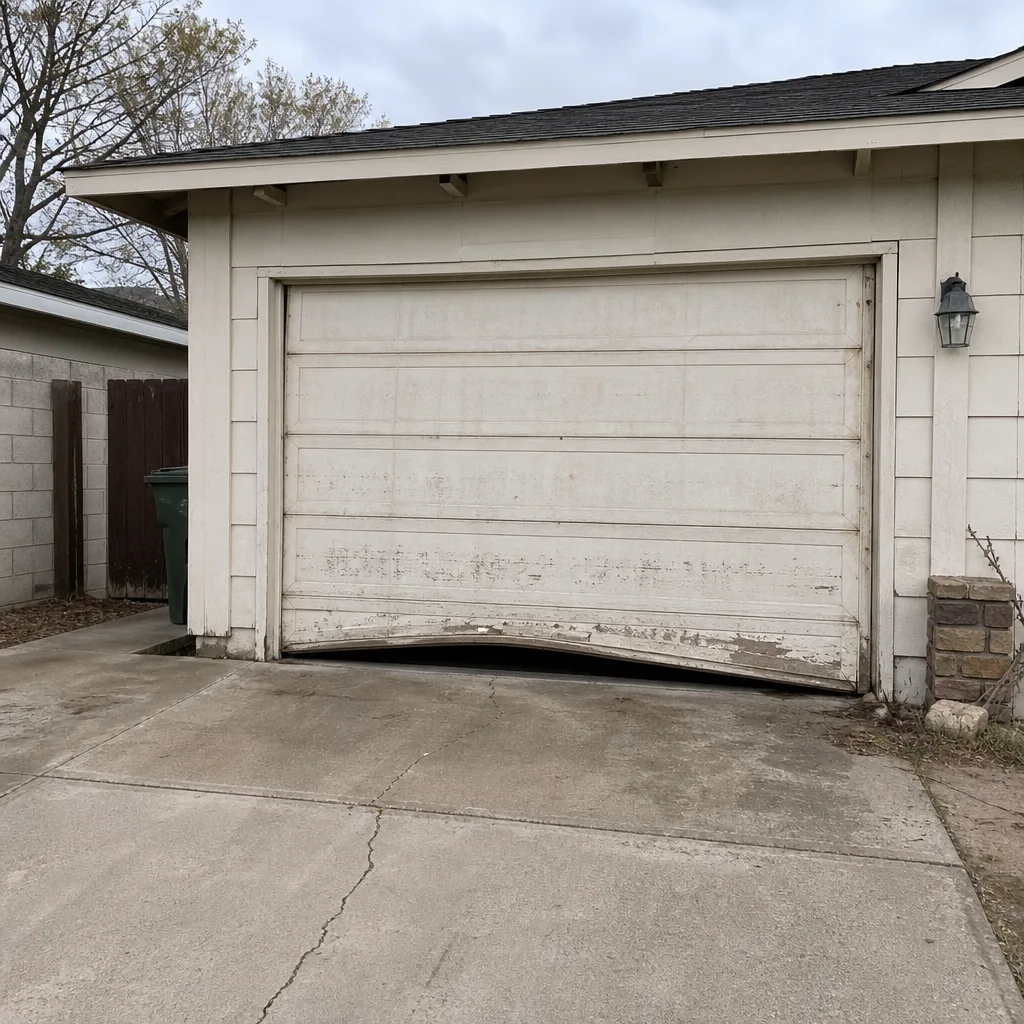 Before
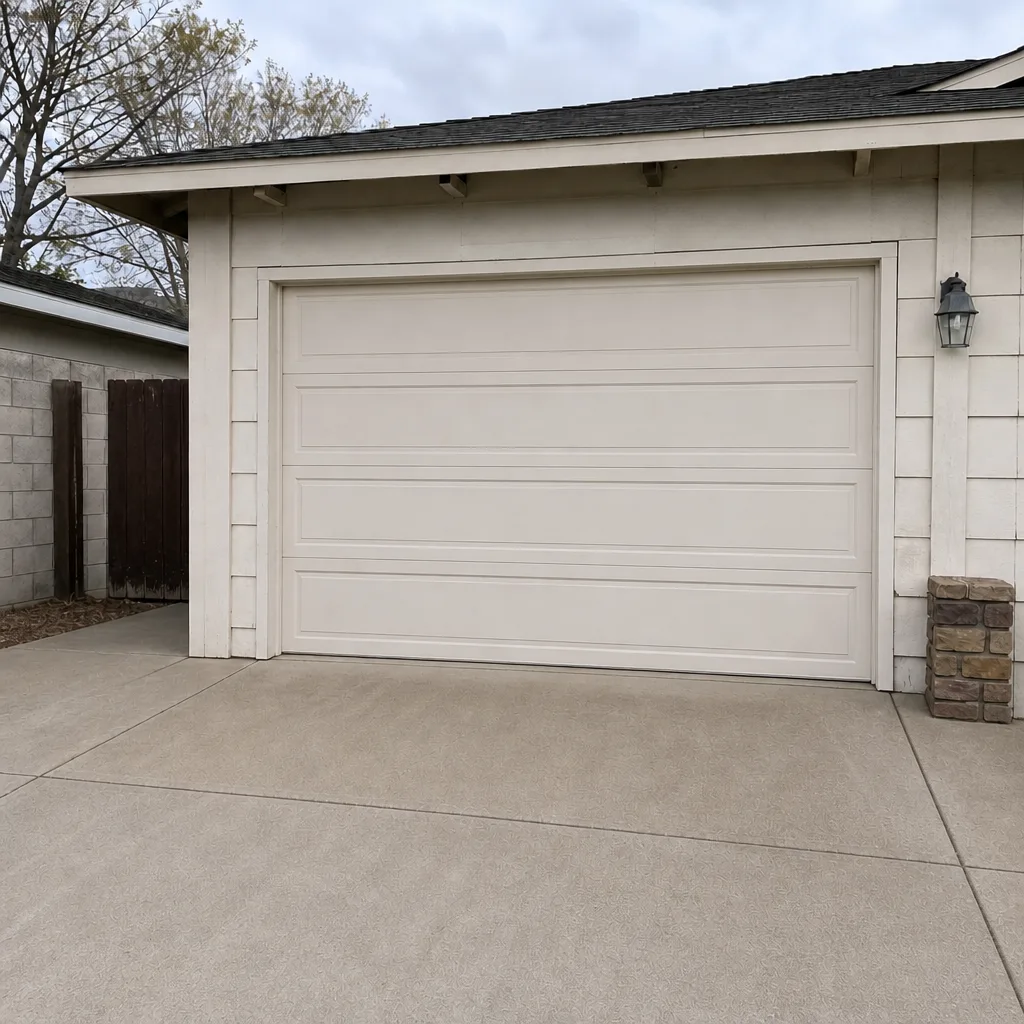 After
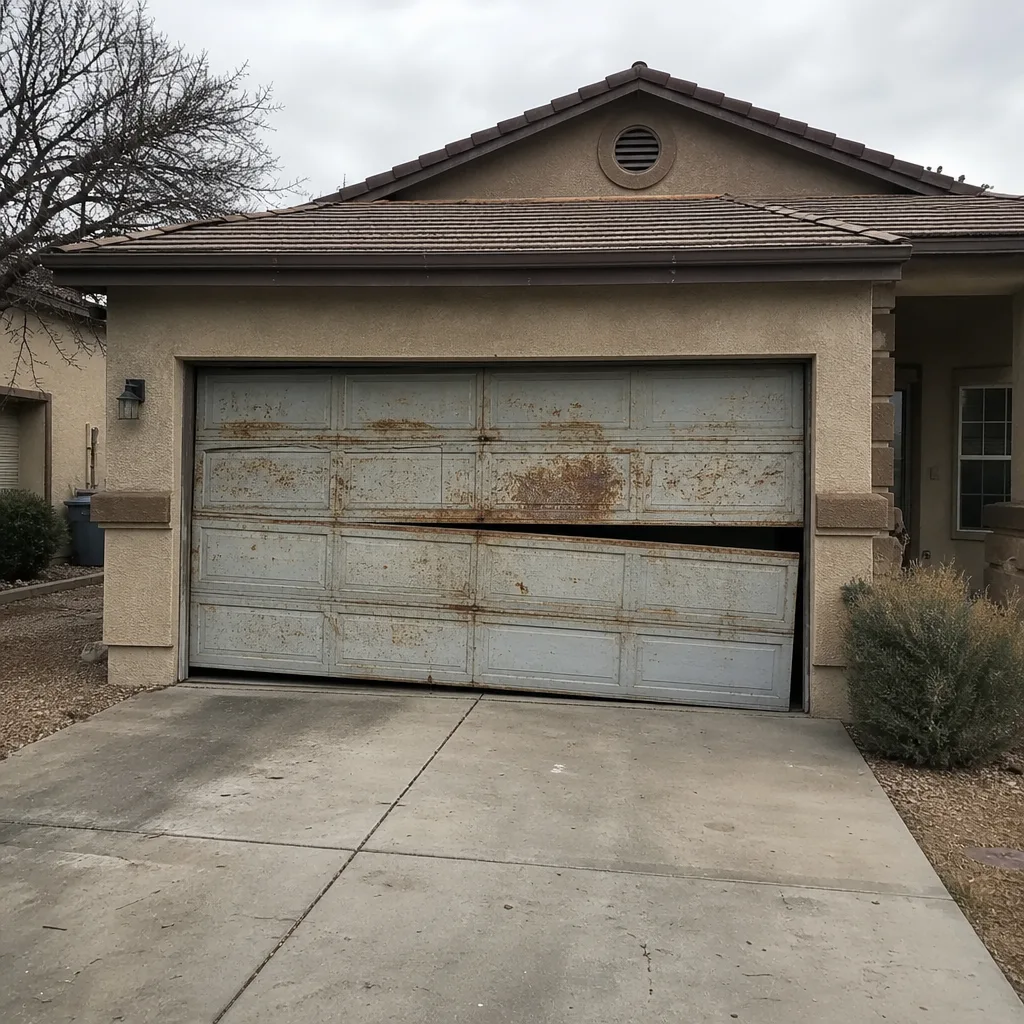 Before
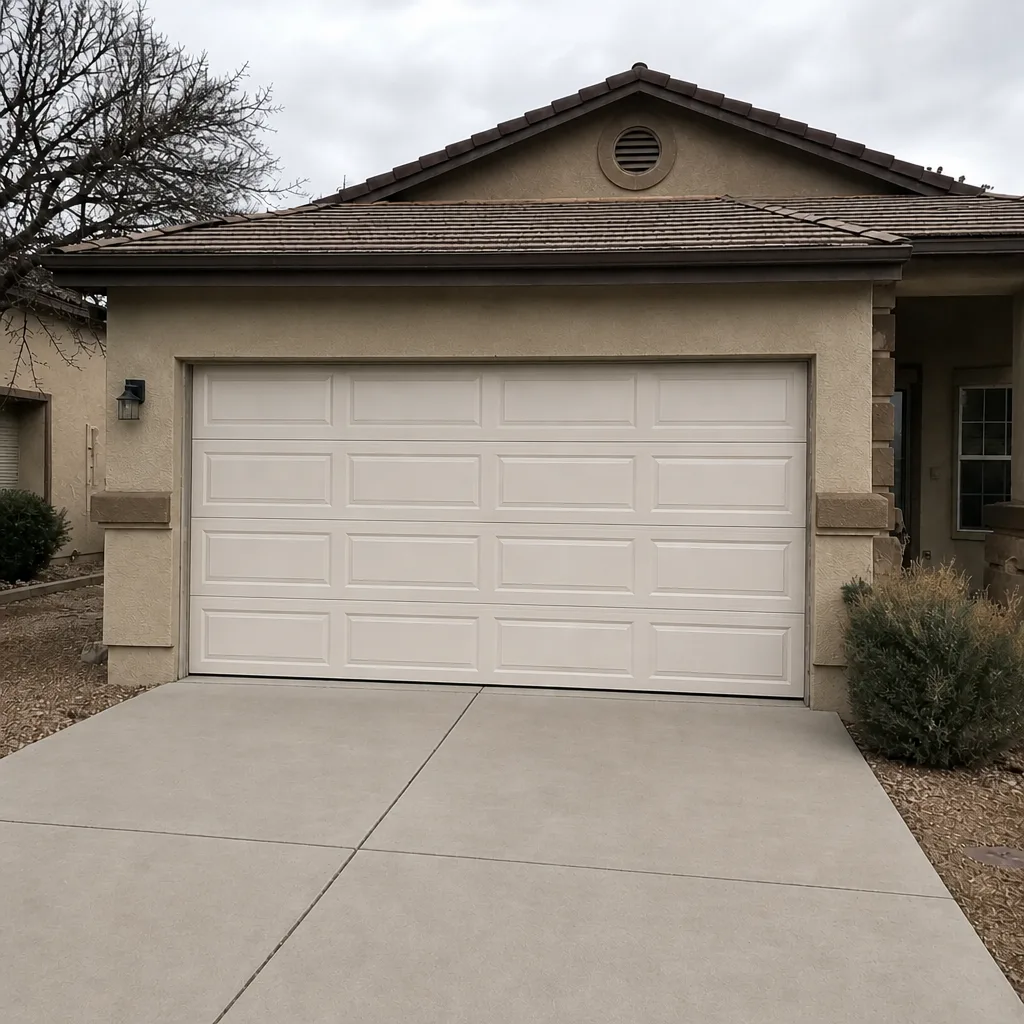 After
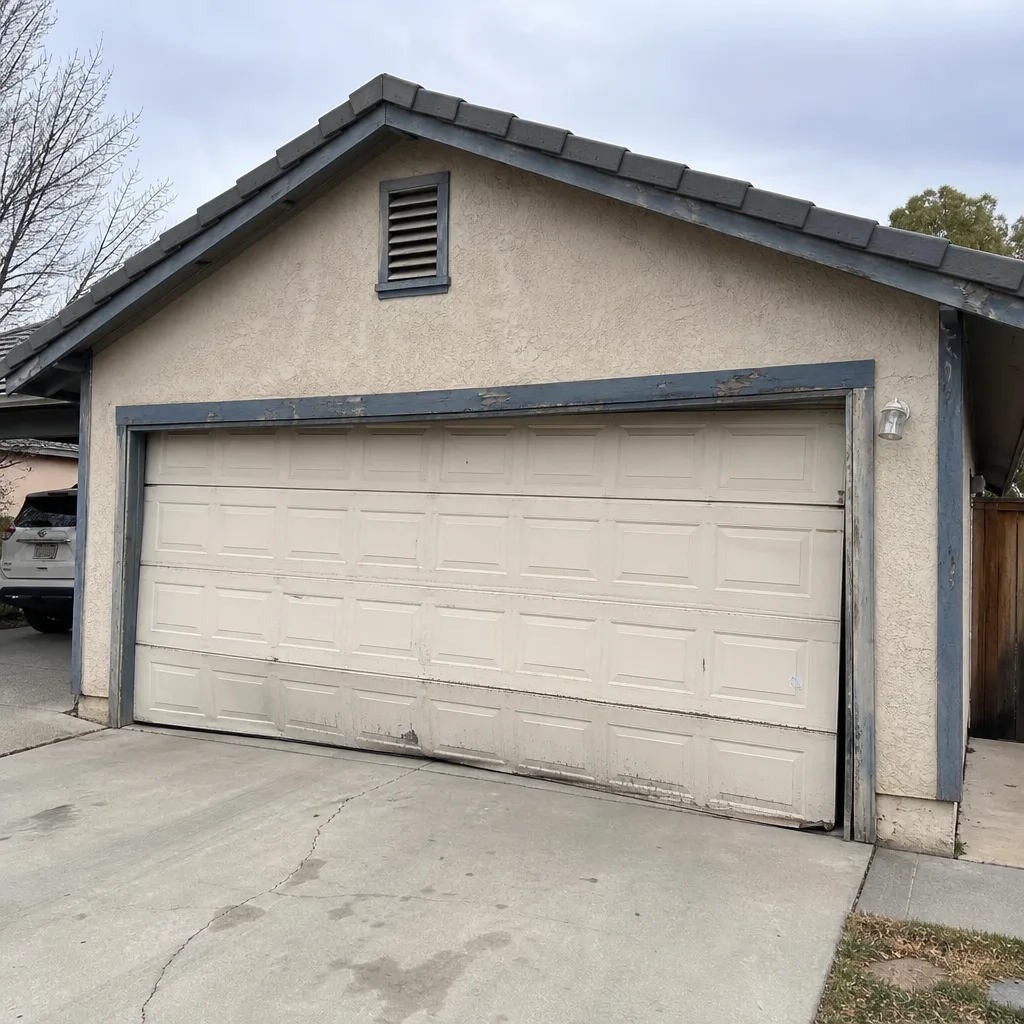 Before
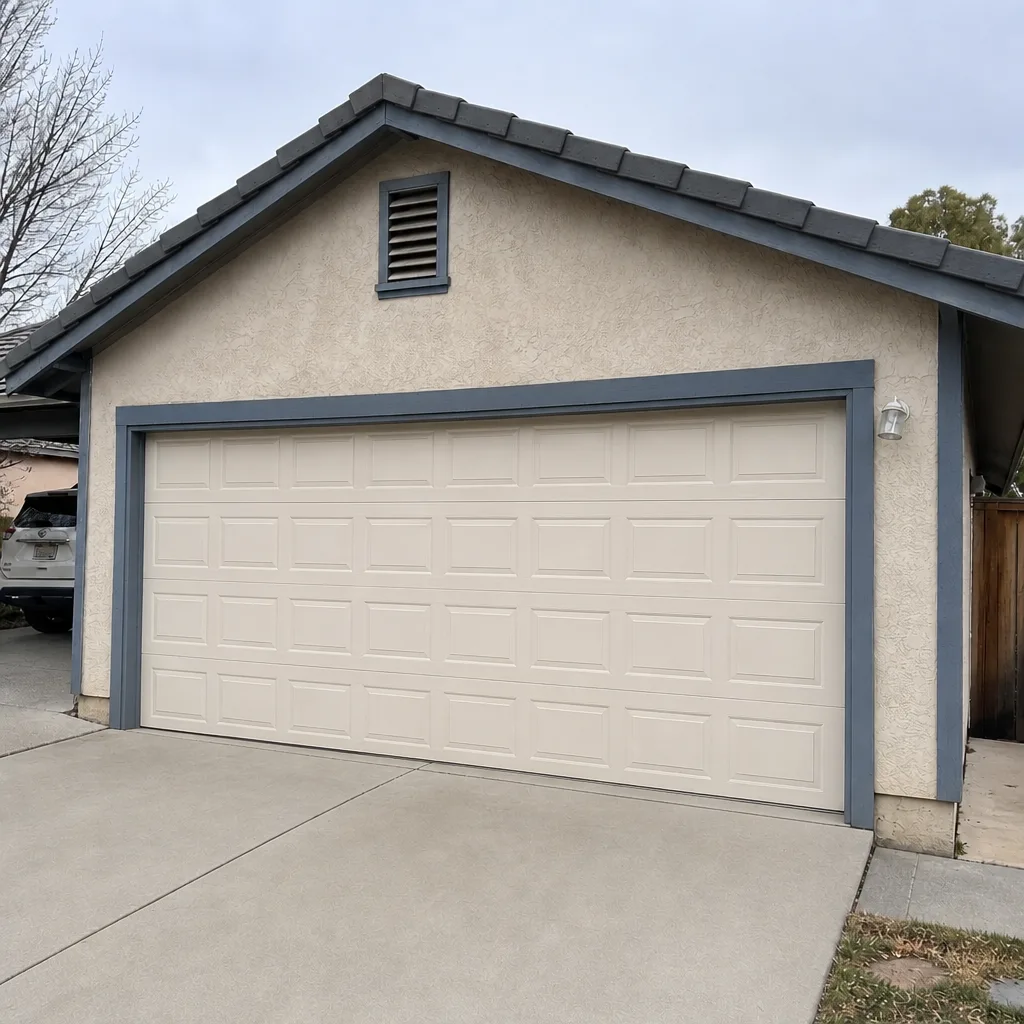 After
Why Your Garage Door Won’t Close in Enterprise, NV (And How to Tell Which of the Three Causes It Is)
The most common reason a garage door won’t close in Enterprise is a photo-eye problem: the two small lenses near the floor get fogged with desert dust, knocked out of alignment, or lose signal through sun-cracked wiring, so the opener thinks something is in the way and reverses the door. The second most common cause in this climate is heat-softened weatherstripping dragging on the slab and tripping the force sensor. The third is a down-limit setting that has drifted a fraction of an inch. Same symptom, three different fixes. If you’d rather have it diagnosed on the spot, call Otto’s Garage Door Enterprise at (833) 620-7107 – the line is answered by a live person, day or night.
Here’s the part that surprises people. In Enterprise, “door won’t close” calls spike hard every July and August, and it isn’t the doors getting older all at once. It’s the heat working on three separate parts of the same system at the same time. Enterprise is a fast-built master-planned suburb off Blue Diamond, Sunset, and Eastern, and nearly every house here has the same builder-grade steel sectional door and original Chamberlain or LiftMaster opener from the 1990s through the 2010s. When the thermometer sits over 105°F for weeks, those identical doors start failing in identical ways. That’s good news for you – it means we’ve seen your exact problem a few hundred times.
What to Check First: The Heat-Specific Diagnostic Ladder
Work through these three checks in order. Each one rules out a different cause, and stopping at the first failure saves you a service call or points you straight at the right repair.
1. Look at the photo-eye LEDs and wipe the lenses
Find the two sensors mounted about six inches off the floor on each side of the door. Each has a small LED. The sending eye should glow steady. The receiving eye should glow steady too – if it’s blinking, the beam is interrupted or scattered.
In Enterprise, blowing desert dust is the culprit more often than a physical obstruction. A fine film on the lens scatters the infrared beam the same way a dirty windshield scatters headlights. Wipe both lenses with a dry cloth and watch the LED. If it goes steady, you’re done. If it keeps blinking with nothing in the way, the problem is alignment or wiring, and that’s where it gets less DIY-friendly.
2. Check whether the bottom seal is dragging
Rubber bottom weatherstripping in this climate dries out and cracks within three to five years – UV and heat see to that. A seal that’s past its life does one of two things. It stiffens into a hard ridge that the floor reads as an obstacle, or it cracks open and stops sealing the gap under the door entirely. Both are annual maintenance items here, not one-time installations.
Get down and look at the seal with the door about a foot off the ground. Run your hand along the bottom edge. If it’s brittle, cracked, or visibly deformed, it’s very likely triggering a false obstruction reading when the door meets the slab. That’s a weatherstripping replacement, not an opener repair.
3. Watch whether the door stops short or touches and reverses
These are two different failures. If the door stops an inch or two above the floor and reverses, the down-limit has drifted and the opener thinks it has already reached the ground. If it touches the floor and then bounces back up, the force sensor is being tripped – usually by that dragging seal. Knowing which one you’re seeing tells us what to check first when we arrive.
The Manual-Hold Test That Cuts the Diagnosis in Half
Here’s a test you can do safely. Press and hold the wall button continuously instead of tapping it. On most openers, holding the button forces the door to close in manual-hold mode even when the auto-reverse keeps kicking in. If the door closes smoothly while you’re holding the button and only reverses when you let go, your problem is sensor-related – photo eyes or the safety reverse. If it still won’t close all the way or strains against the floor, you’re looking at a force or limit issue instead. That single test tells you which half of the system to focus on.
Two things we won’t talk you through: adjusting the force or limit settings on the opener, and anything involving the springs or cables. A door is 200 pounds riding on two springs, and the torsion hardware under tension can injure you badly if it lets go. Leave that to a trained technician. When you’re ready to hand it off, our Garage Door Repair team handles the whole system, and you can see the full scope of what we fix on the Garage Door Repair in Enterprise page.
The Scenario We See Most in Enterprise: Sun-Cracked Photo-Eye Wiring
Plenty of Enterprise homes still have their original pre-2004 Chamberlain or Genie opener, and the photo-eye wiring on those units has been sitting in direct desert sun for two decades. The wire gets pinched against the mounting bracket, the insulation cracks, and the signal cuts in and out – sometimes fine in the morning, dead by afternoon. It looks exactly like misalignment. Homeowners loosen the bracket, nudge the sensor, get it working for a week, and then it fails again.
If you’ve realigned your sensors more than twice and the blinking keeps coming back, the fix isn’t alignment. It’s replacing the run of low-voltage wire or the sensor assembly. That’s a quick job for a tech who knows to look for it, and a maddening one for a homeowner who doesn’t.
What “Won’t Close” Repairs Actually Cost in Enterprise
Most won’t-close calls land on one of a handful of fixes. Here’s what they run in this market, quoted upfront before anyone shows up and held at the door.
| Repair | Typical Cost |
|---|---|
| Photo-eye / sensor repair or realignment | $120-$250 |
| Weatherstripping / bottom seal replacement | $110-$220 |
| Track realignment | $120-$240 |
| Opener repair | $120-$320 |
| Opener installation (replacement) | $250-$550 |
| Spring repair | $180-$340 |
| Cable repair | $130-$250 |
| Panel replacement | $250-$500 |
| Full garage door repair | $150-$600 |
| New door installation | $700-$2200 |
We quote the job on the phone and hold that number. No revisions upward at the driveway. There’s also $40 off any repair over $200, a free second opinion on any written estimate, no trip charge inside the county, and a standing 10% discount for seniors and veterans. Every job carries the 90-Day Done Right Promise in writing – if it’s not right, one call brings us back.
How to Tell If It’s Worth Fixing or Replacing
If your door is a builder-grade steel unit from the original tract build and your opener is 15 to 20 years old, you’re near the point where repairs start stacking up faster than they used to. A sensor repair on a solid door is almost always worth it. A new opener plus a failing seal plus a cracked panel on a 1998 door is usually the moment to price a replacement instead – and in Enterprise, that replacement has to match your HOA’s approved panel and color palette, not whatever looks good at the store. We keep the common HOA-approved styles on hand for Clopay and Chamberlain matches.
A few things to watch as the door ages:
- Photo-eye LEDs that blink intermittently, especially in the afternoon heat
- A bottom seal that’s brittle, cracked, or leaving daylight under the door
- An opener motor that strains, grinds, or sounds slow at the end of travel
- Panels that are bent, dented, or separating along the seams
- A door that reverses for no obvious reason more than once a week
If the opener is straining, the problem is almost never the opener itself. It’s usually the door balance, the track, or the seal. That’s worth knowing before you buy a new unit you don’t need.
When It Won’t Close at Night
If your car is sealed inside and it’s nine at night, don’t wait for morning. Calls to our line are answered by a live person around the clock – not a voicemail, not a national dispatch center reading a script. We quote the after-hours call on the phone before the truck rolls, so you know what you’re paying before anyone shows up. Call (833) 620-7107.
FAQs
The most likely cause is a photo-eye that’s blocked, misaligned, or fogged with dust, followed by heat-softened weatherstripping tripping the force sensor, then a drifted down-limit setting. Run the manual-hold test first: if the door closes while you hold the wall button, it’s a sensor issue. If it still stops short, it’s a limit or force setting. Call (833) 620-7107 for a same-day look and a free estimate.
You can safely clean the photo-eye lenses and check that nothing is blocking the beam, and you can replace a worn bottom seal if you’re comfortable on a step stool. Anything involving the opener’s force or limit settings, the springs, the cables, or the torsion hardware should go to a trained technician – a door is 200 pounds riding on two springs, and those parts can hurt you badly. Call us for the rest.
Most won’t-close repairs run $120-$340, depending on whether it’s a sensor, seal, track, or spring issue. Photo-eye repair and realignment typically lands at $120-$250, and seal replacement at $110-$220. We quote upfront on the phone and hold the number at the door. Call (833) 620-7107 for an exact quote – estimates are free.
Yes, most doors have a manual release – a red cord hanging from the trolley – that lets you lift the door by hand and open it from inside. But in Enterprise, we regularly find doors where that release has never been tested or has seized from heat and dust. Ask us to check it during any service visit. Call (833) 620-7107 and we’ll walk you through it.
Get It Looked At
If you’d rather have it looked at, Otto’s Garage Door Enterprise offers a no-pressure assessment in Enterprise – we’ll tell you what’s actually wrong, quote it upfront, and stand behind it for 90 days. Locally owned and owner-operated, and the name on the van is the name on the invoice. Call (833) 620-7107.
Written by the team at Otto’s Garage Door Enterprise, serving Enterprise, NV.